
Quick report
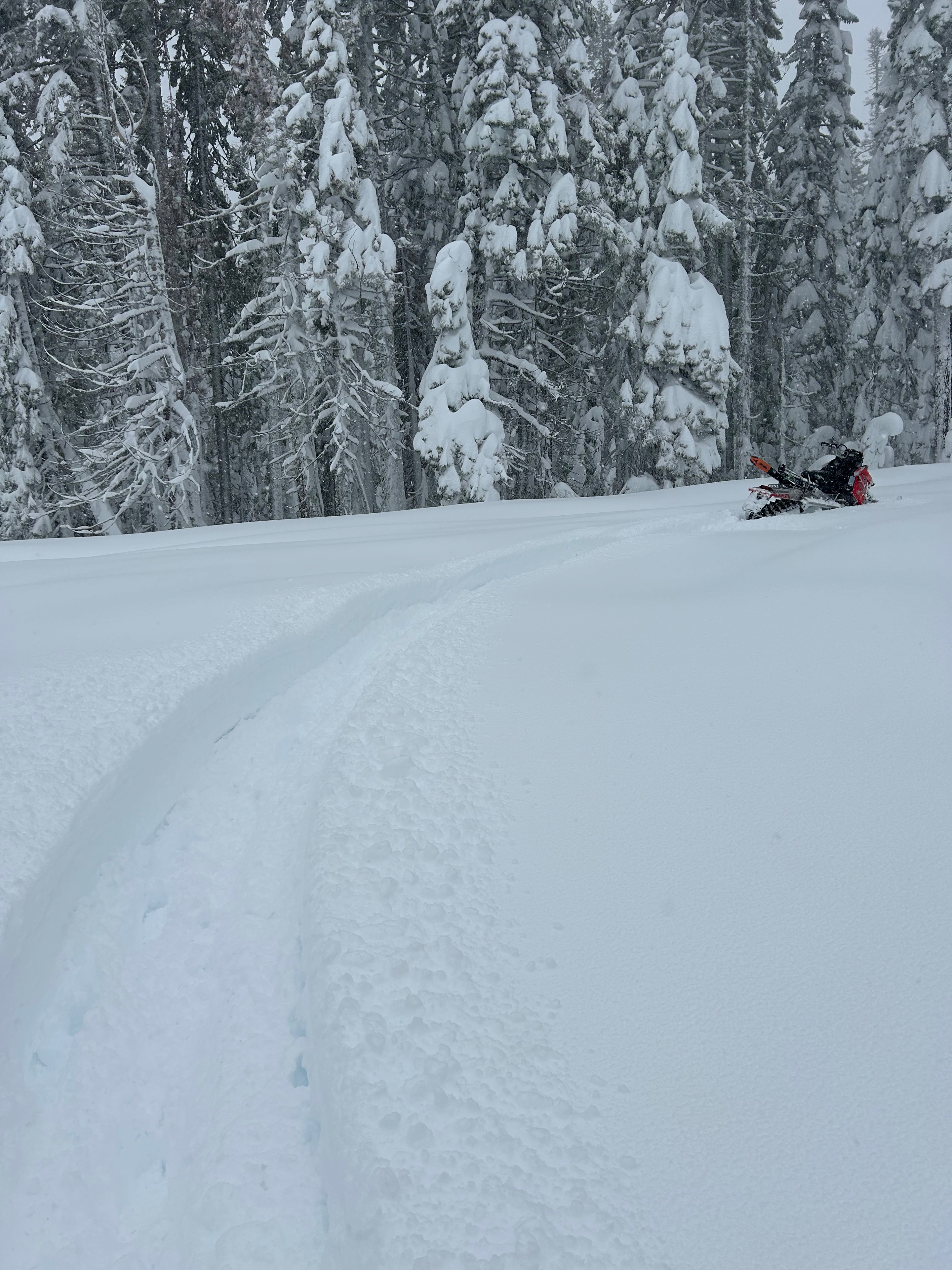
Upon setting out to assess storm conditions, it quickly became apparent that the snowpack has become upside down, with a foot and a half of denser snow above softer snow. This made for difficult snowmobiling conditions as the sleds track would easily dig down and trench into the softer snow. Traveling on skis was the opposite. The surface was very supportable to walk on and skis only penetrated 10-15 cm (5”). As soon as you stepped off your skis or sled, you would penetrate up to your crotch. This reflects the upside-down nature of the snowpack and the thickness of the surface slab.
Weather
- Air Temp
- 27
- Cloud Cover
- obscured
- Wind Loading
- unknown
- Recent Snowfall
- 40
- Snow Avail For Transport
- large amounts
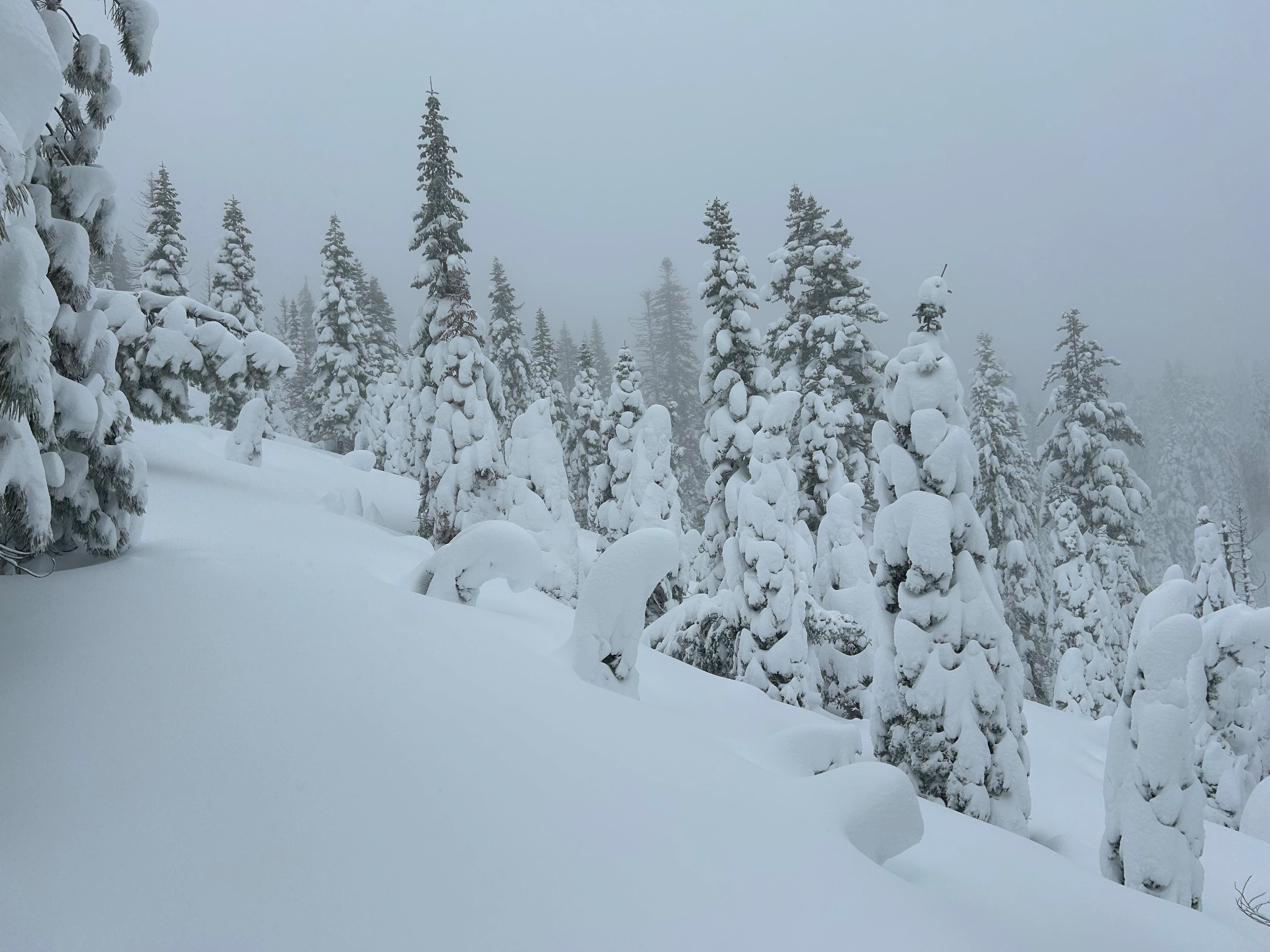
Snowing and blowing basically sums it up. Snow fell at a S2 rate for multiple hours, with light to moderate winds blowing from the south and southeast.
Snowpack
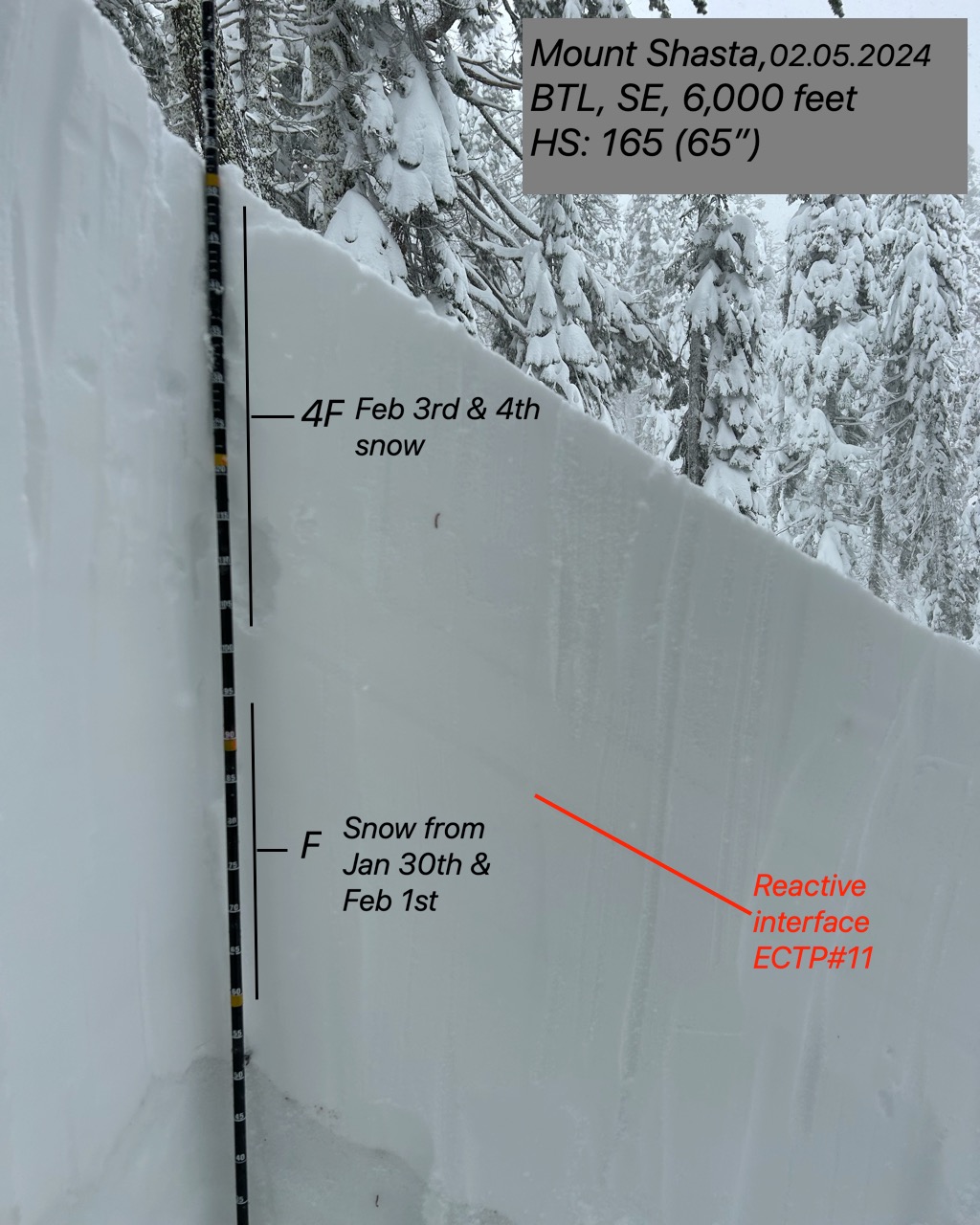
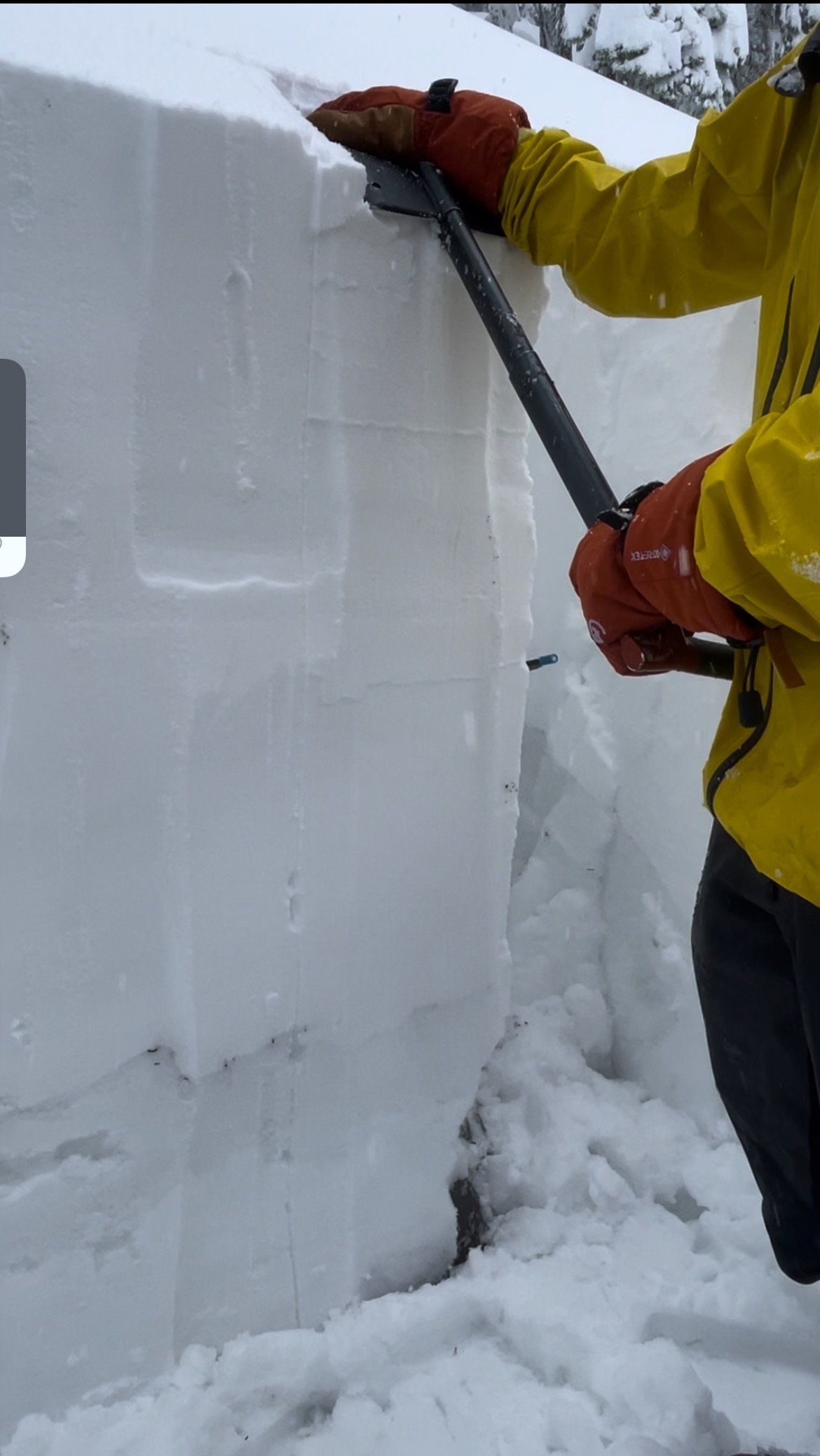
Over 100 inches of snow is on the ground below treeline on Mount Shasta. Warming temperatures have caused the upper snowpack to become inverted. A snow pit profile reflected a foot and a half of 4 finger snow above a layer of fist hard snow 60 cm (23”) down. Stability tests resulted in propagation multiple times on a separate interface 45 cm (17”) down. Otherwise, initiating any instabilities, like shooting cracks, within the surface snow was very difficult given its cohesive and supportive nature. No other signs of instability were observed.