
Quick report
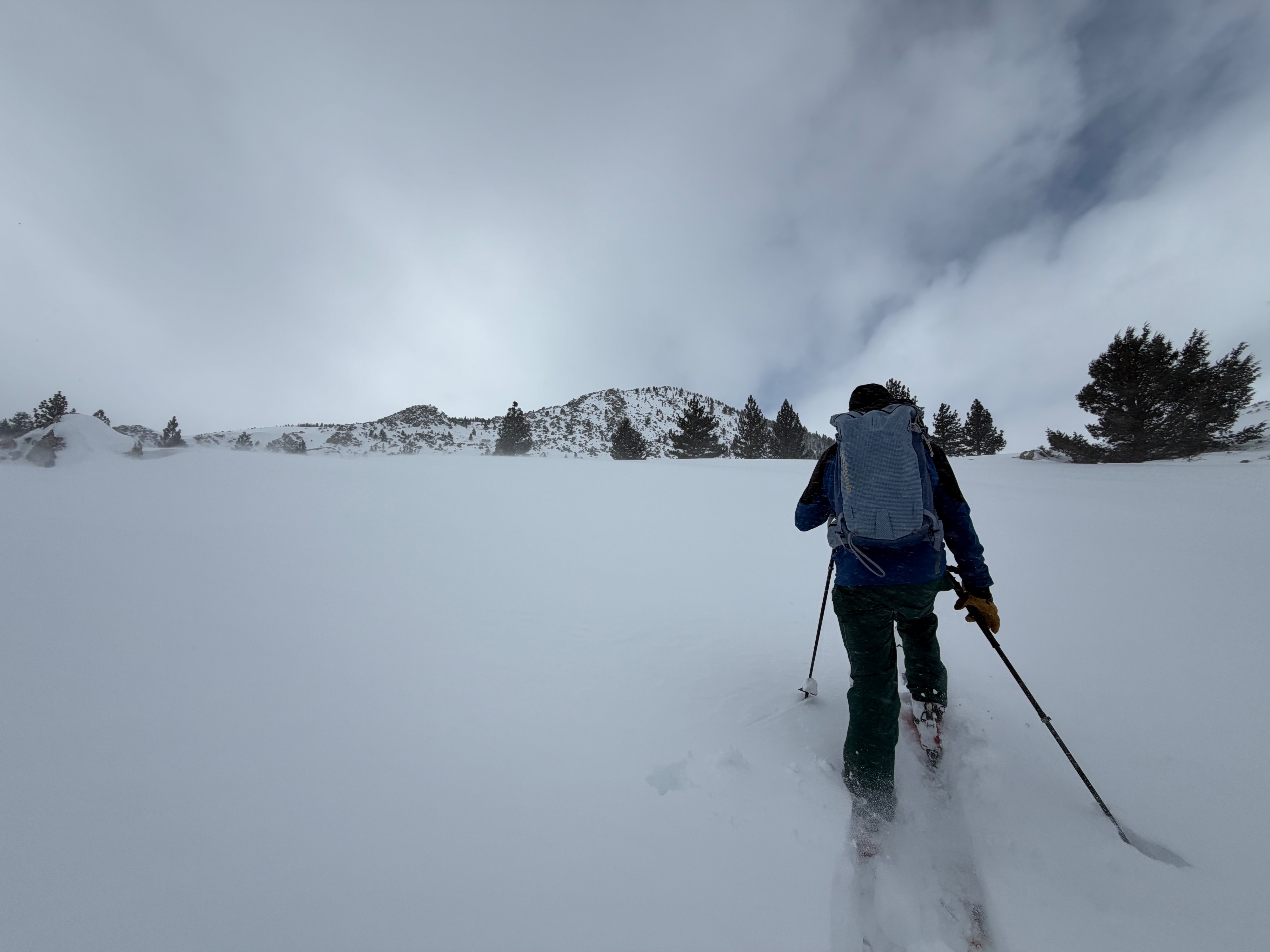
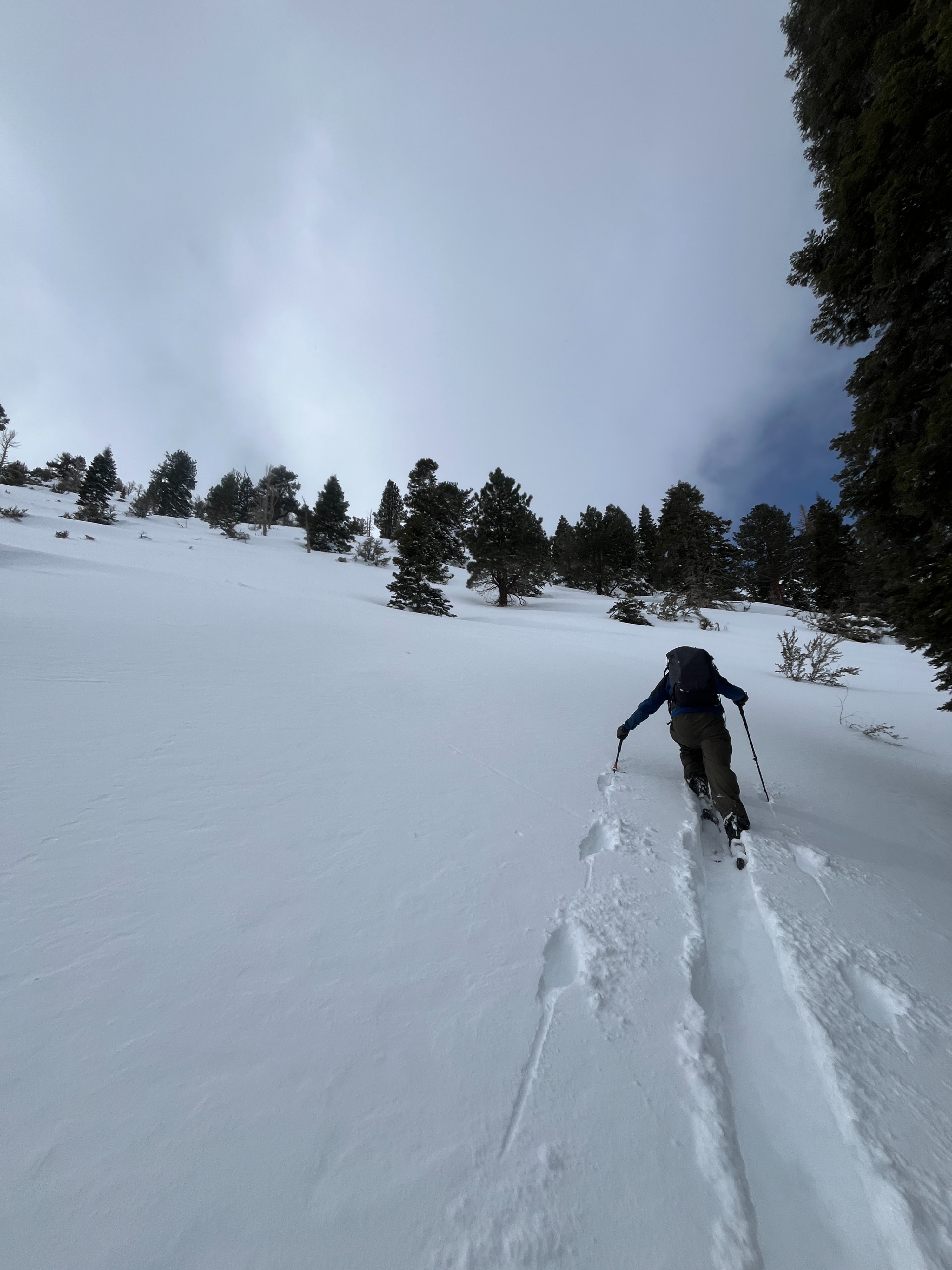
Our goals today were to get out in the new snow, travel safely, and investigate post-storm. In the June area, winds have redistributed much of our recent snow at all elevations, and we found wind to be the primary driver of avalanche hazard. 100-120cm of new snow is actively being transported onto the northern half of the compass, and large amounts of snow remain available for transport.
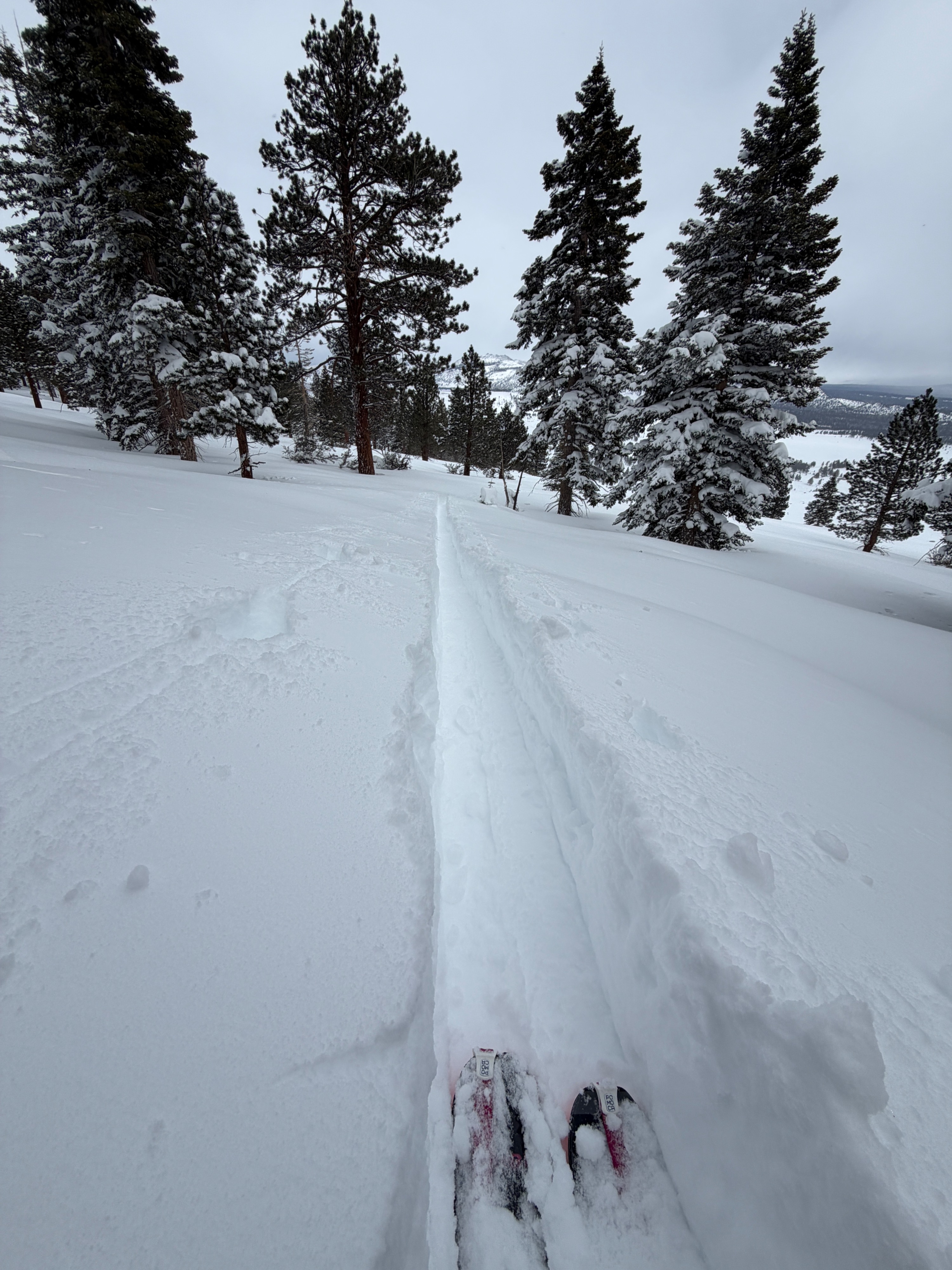
It's deep out there, and the snowlines are low. In places where much of this new snow is falling on dry ground or on minimal old snow, rocks, logs, and trees are hazards to consider.
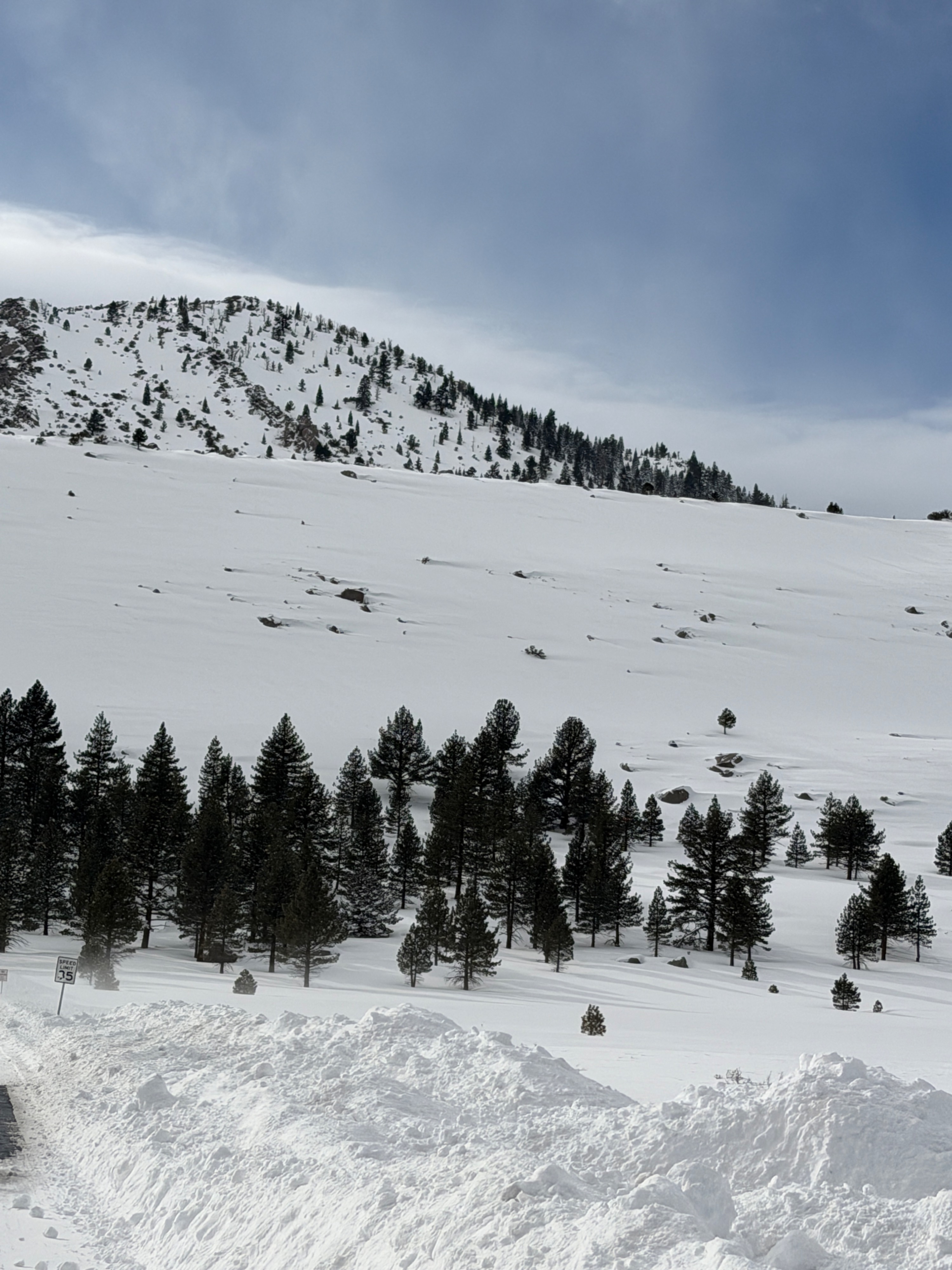
Signs of instability were minimal, and we observed only localized cracking underfoot on steep test slopes, where wind had stiffened/drifted a slab over soft new snow. Avalanche observations are from the drive.Weather
- Air Temp
- 19
- Cloud Cover
- broken
- Wind Loading
- moderate
- Recent Snowfall
- 100
- Snow Avail For Transport
- large amounts
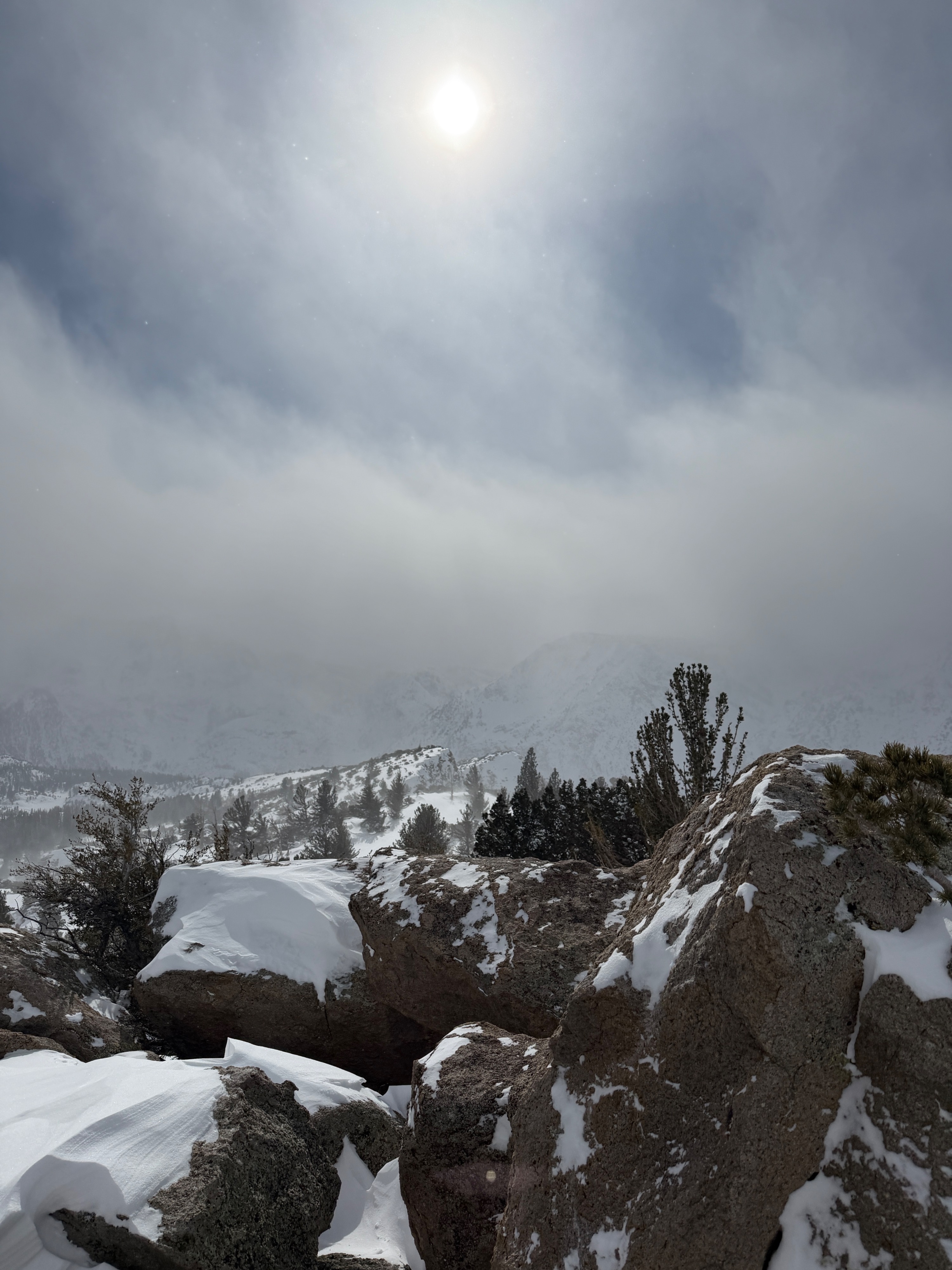
Intermittent cloud cover made for good visibility while we toured today. Winds were mostly moderate out of the southwest, with strong gusts at ridgetop. We found wind to be redistributing snow at all elevations.
Snowpack
We found 100-120cm of settled snow leftover from 2/16 in places less affected by the wind. Ski pen sat around 30-40cm while breaking trail.
In places less wind-wacked, our recent storm snow is "right-side-up," and we did not find any signs of instability within the new snow. In places where the wind has deposited recent snow, a wind-drifted slab sits above preserved fragments. For the most part, where we travelled, wind was the primary driver of hazard distribution across all elevations.
On east-facing slopes below treeline, a melt-freeze crust capped old facets from pre 2/10. This old snow was 20-40cm and less continuous across the terrain we travelled on.
Avalanche
- Size
- D2
- Type
- U
- Count
- 4
- Aspect
- NW
- Elevation
- 8500 ft
Observed from the road. Sharp crown seems like it happened at the very end of the storm or after the snow was done. Can not ID wind slab or persistent slab, but i thought p slab upon first impression based on lack of wind loading and fracture character.