
Quick report
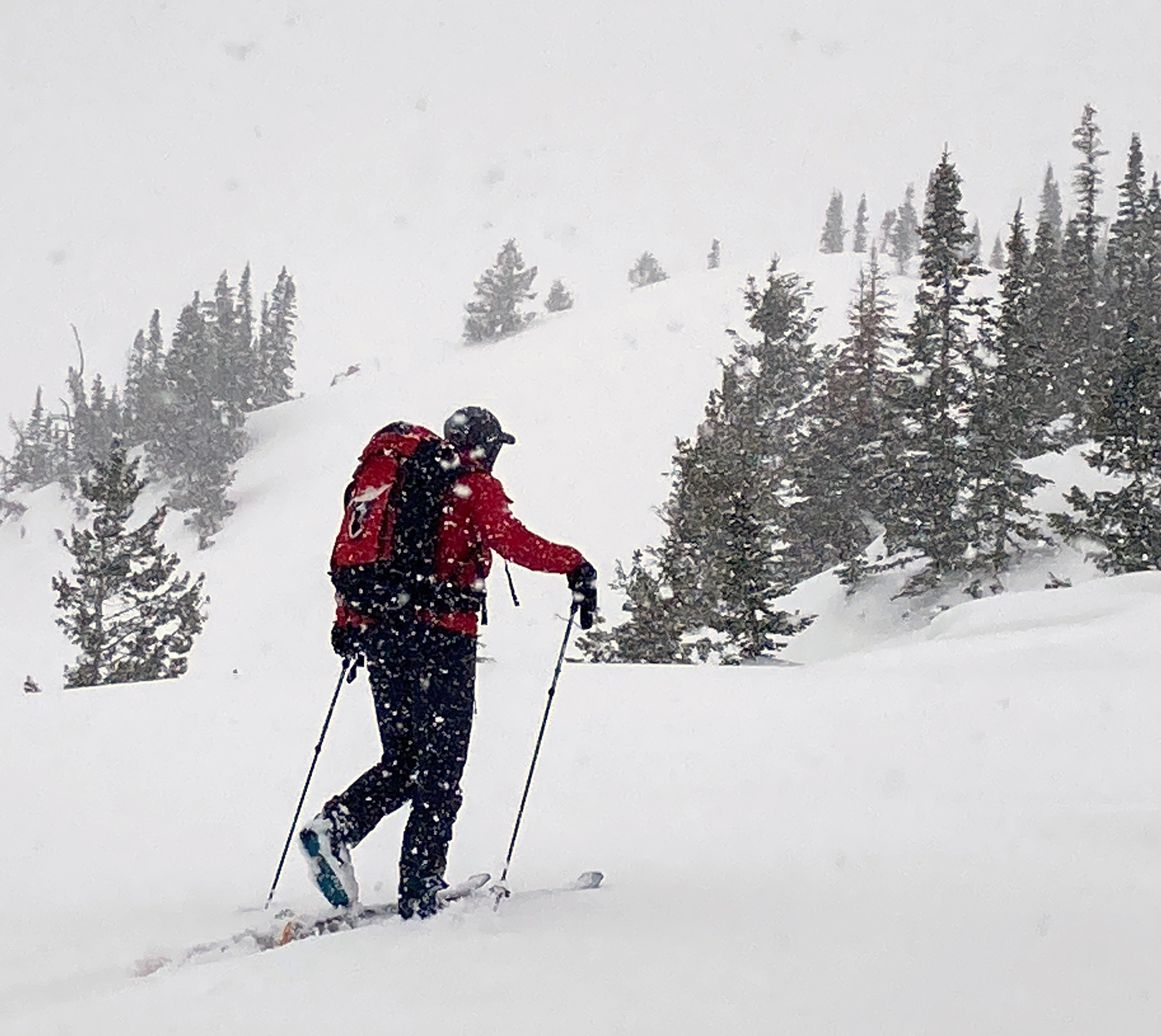
In anticipation of warming and sun forecast for the end of the week, BNSF forecaster Adam Clark and I checked out low and mid elevation slopes above the railroad. We found a weak, unconsolidated snowpack below 5000 feet; steep slopes at these elevations may be susceptible to wet snow avalanches that gouge below the surface. At mid-elevations, this hazard would seem to be limited to sunny slopes, where the snowpack is weak, with one significant failure plane. On shady slopes at mmid elevations, the snowpack is well-consolidated, stronger, and more resistent to wet snow slides growing in size as they run.
We found 3-6" of fresh snow and few signs of recent windloading below our high point at the Shed 7 Weather station (6300 ft).
Weather
- Air Temp
- upper 20s
- Cloud Cover
- broken
- Wind Loading
- previous
- Recent Snowfall
- 3-6"
- Snow Avail For Transport
- small smounts
Broken skies w S-1 snow showers and light winds til mid-day/ early afternoon. Then clouds lowered and snowfall intensity increased to S1-2. Winds remained light.
Snowpack
On low-elevation easterly slopes (below 5000 ft), the snowpack is shallow (< 100 cm) and soft. A semi-supportable melt-freeze crust buried 3/14 exists on both sunny and shady slopes. On the former, it sits above moist/ wet snow. On shady slopes, the snow below the crust is drier but unconsolidated; it's easy to push a ski pole to the ground. On both sunny and shady low-elevation slopes, wet snow avalanches may gouge below the snow surface and quickly grow in magnitude.
At mid elevations, the difference between sunny and shady slopes is more pronounced (see snow profiles). The mid January crust is two hard layers with a thin layer of softer snow between. On the sunny slope, a layer of large-grained, rounding facets was reactive in most but not all snowpack tests (ECTP4, CT 16 SC, ECTX). Though this structure was present on a shady slope, it was not reactive in tests.
The 3/14 crust extends to 6300 feet on the shady side of the ridge, though it was less than a cm thick at that elevation. It was thick and supportable on the sunny side of the ridge at that elevation and likely extends several hundred feet higher on steep slopes. We found shallow, 4F-hard slabs of drifted snow immediately on the lee side of the ridge above 5900; these were unreactive.