
Quick report
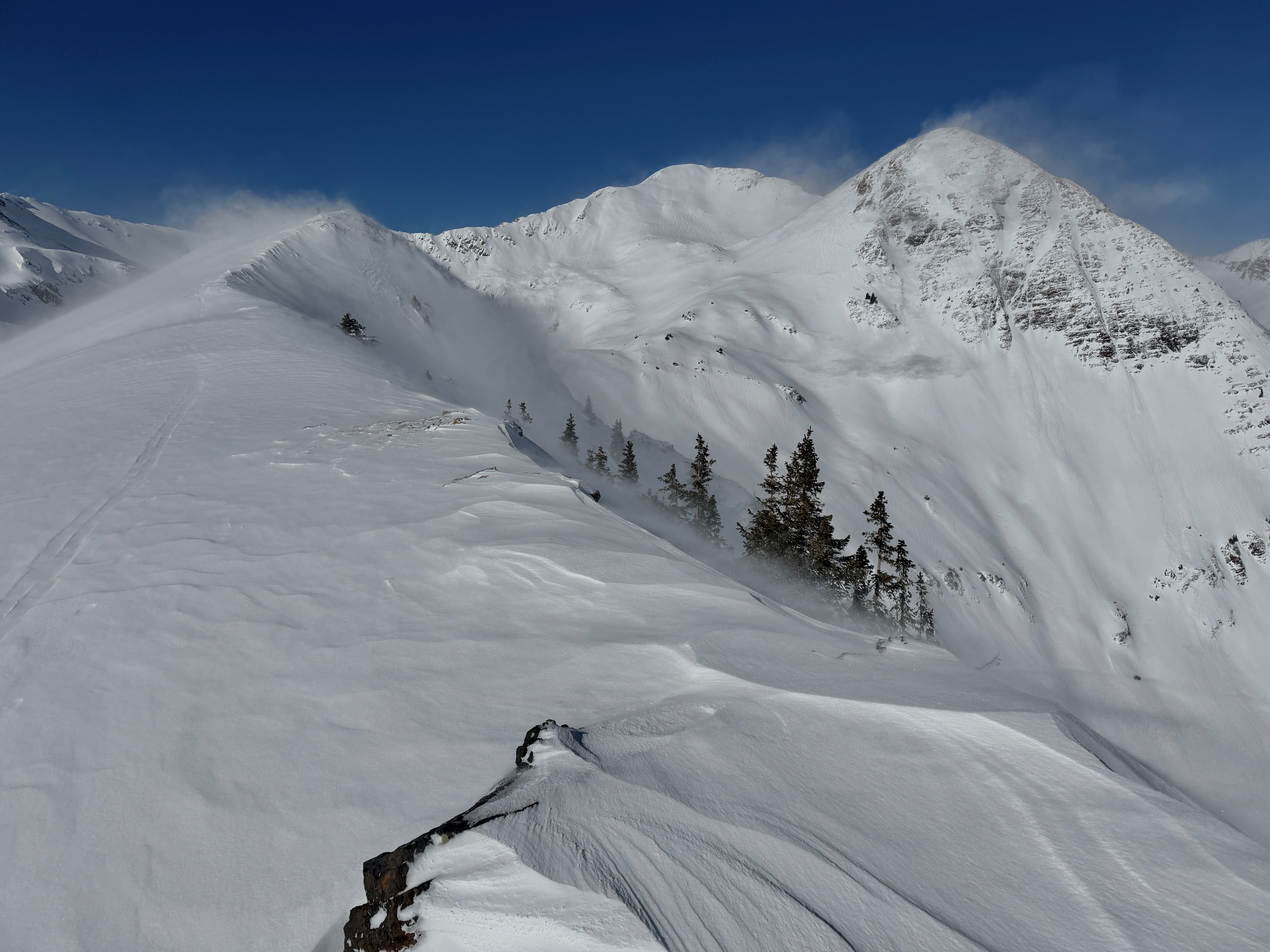
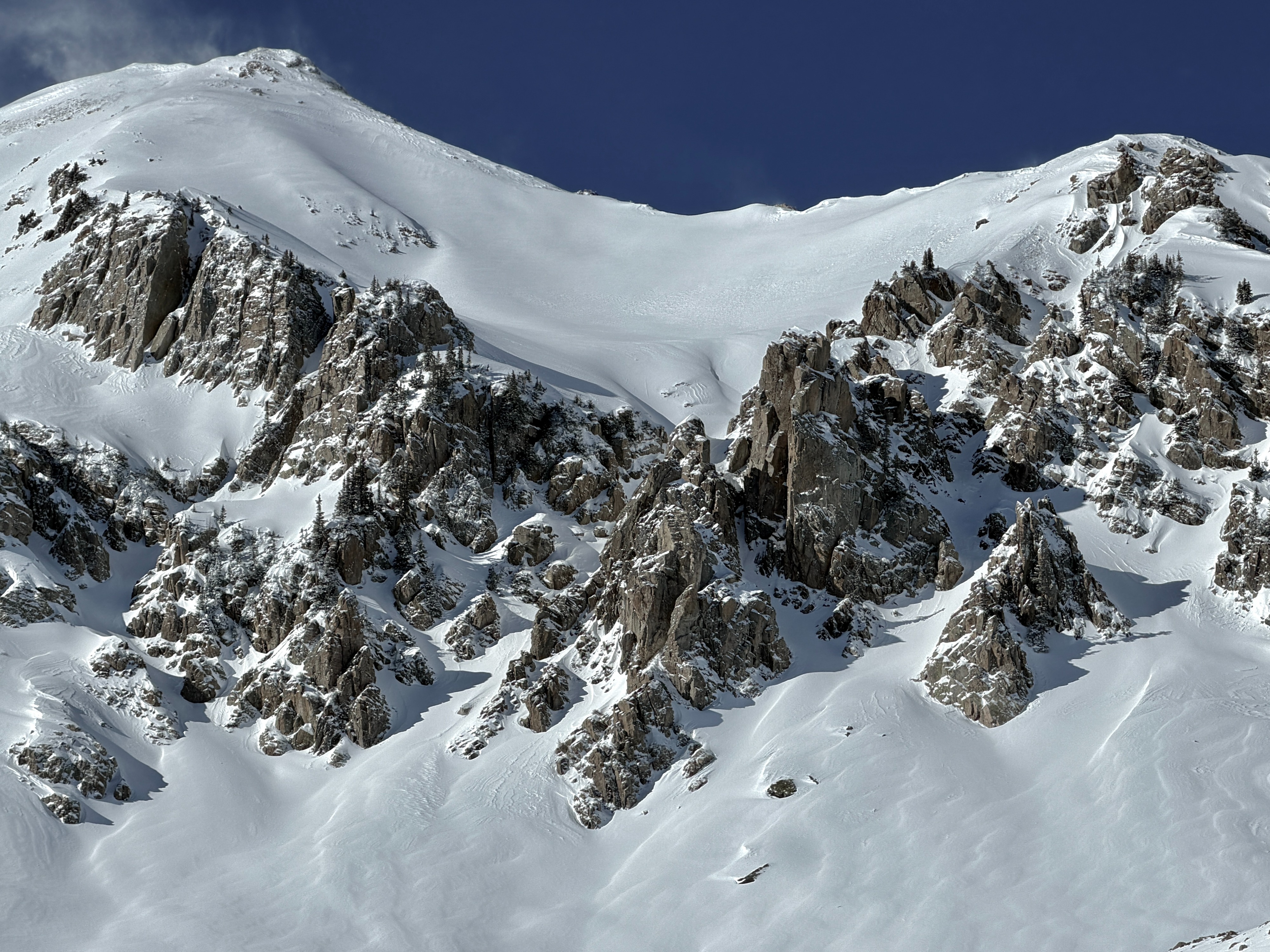
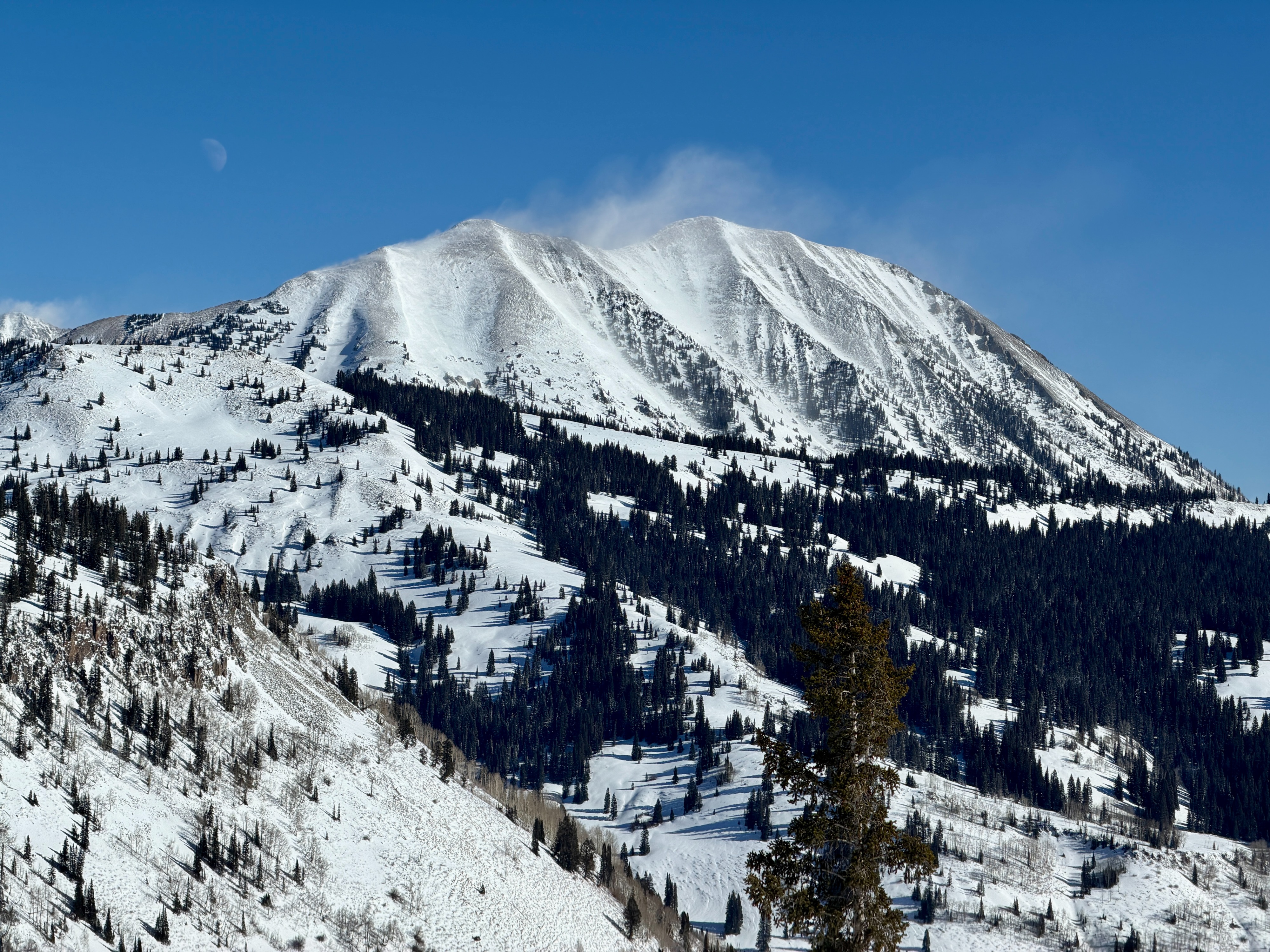
We found a foot of new snow that fell right-side-up. Strong winds drifted that fresh snow above treeline, building soft slabs. We saw three small natural avalanches in very steep east-facing wind-drifted features. These ran on top of the Christmas rain crust. Outside of the three small avalanches, we saw no signs of instability.
Weather
Skies cleared through the morning. Cold (finally). Strong winds drifted snow steadily all day.
Snowpack
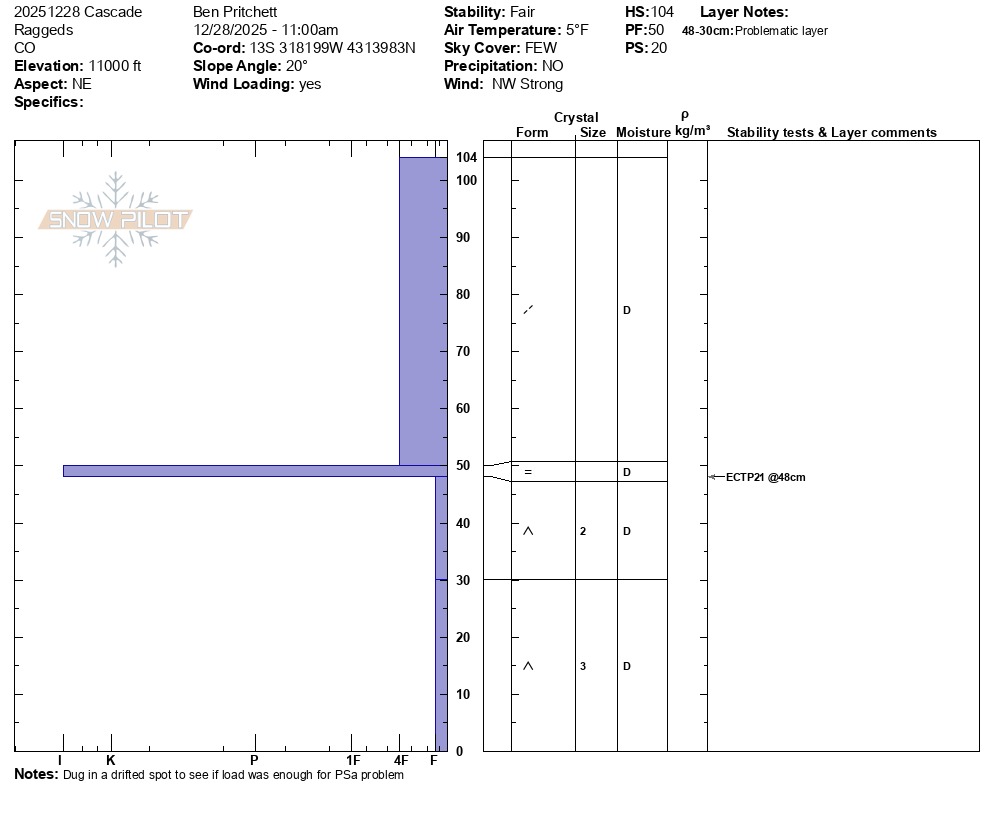
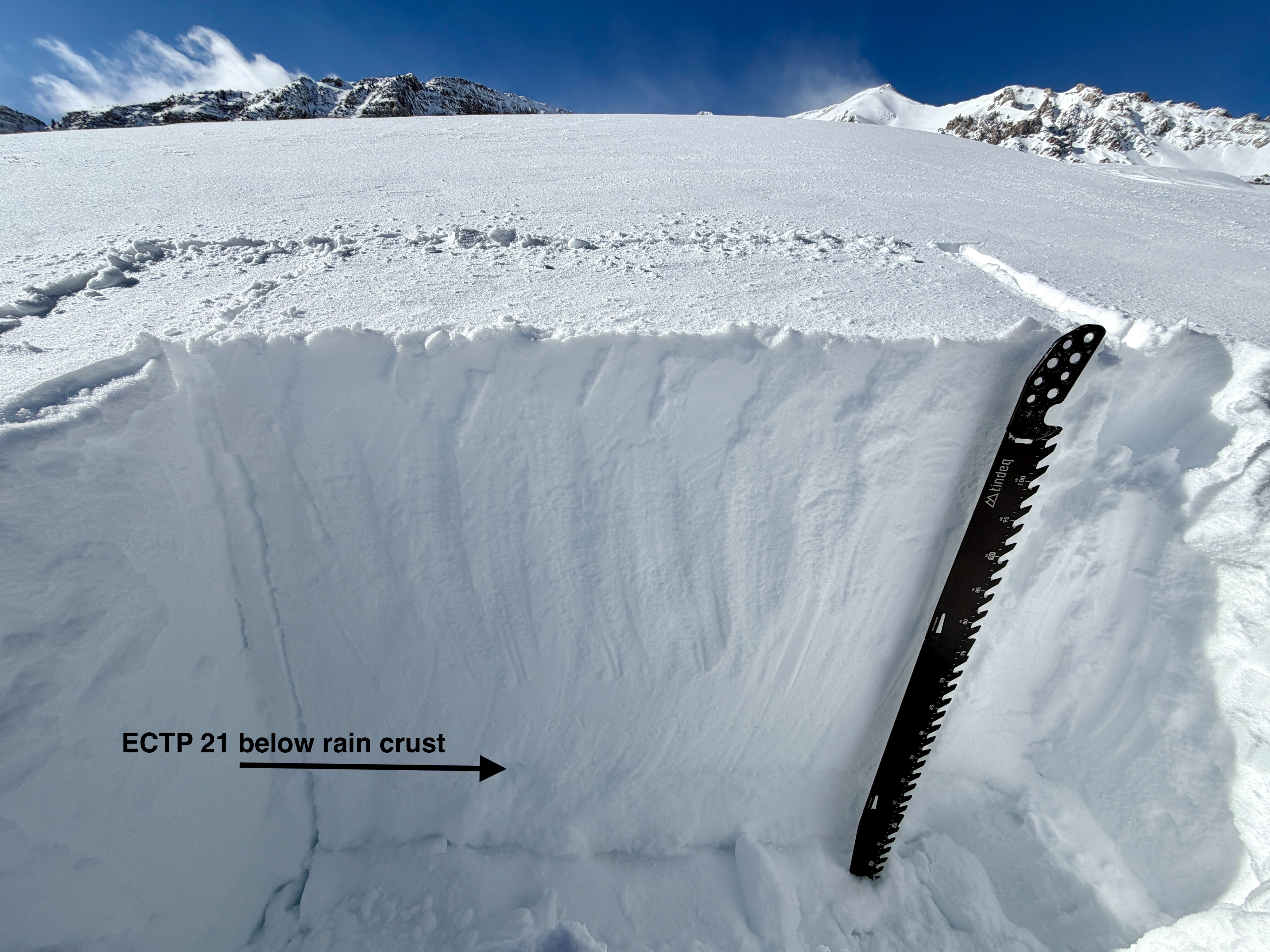
About a foot of new snow fell on top of the now-frozen rain crust. Snowpack tests show the new snow is well-bonded to the crust. We experienced no cracking or collapsing despite walking above and skiing through many drifted spots. The crust thins and becomes unsupportive to boots above about 11,500' and rests on still-dry and weak facets on the north half of the compass. The load from the new snow and even a few small Wind Slab avalanches was not enough to overwhelm the crust. When cut through and isolated in an ECT, the facets below the crust did propagate a crack. If you found a steep wind-drifted spot above about 11,500 or 12,000 feet, you might be able to trigger a Persistent Slab avalanche.
Avalanche
- Size
- D1 R1
- Type
- SS
- Count
- 3
- Aspect
- SE
- Trigger
- N
- Elevation
- 12000 ft
We saw three small Wind Slab avalanches that ran late morning. These slid on top of the rain crust.