
Quick report
- Cracking
- isolated
- Collapsing
- specific
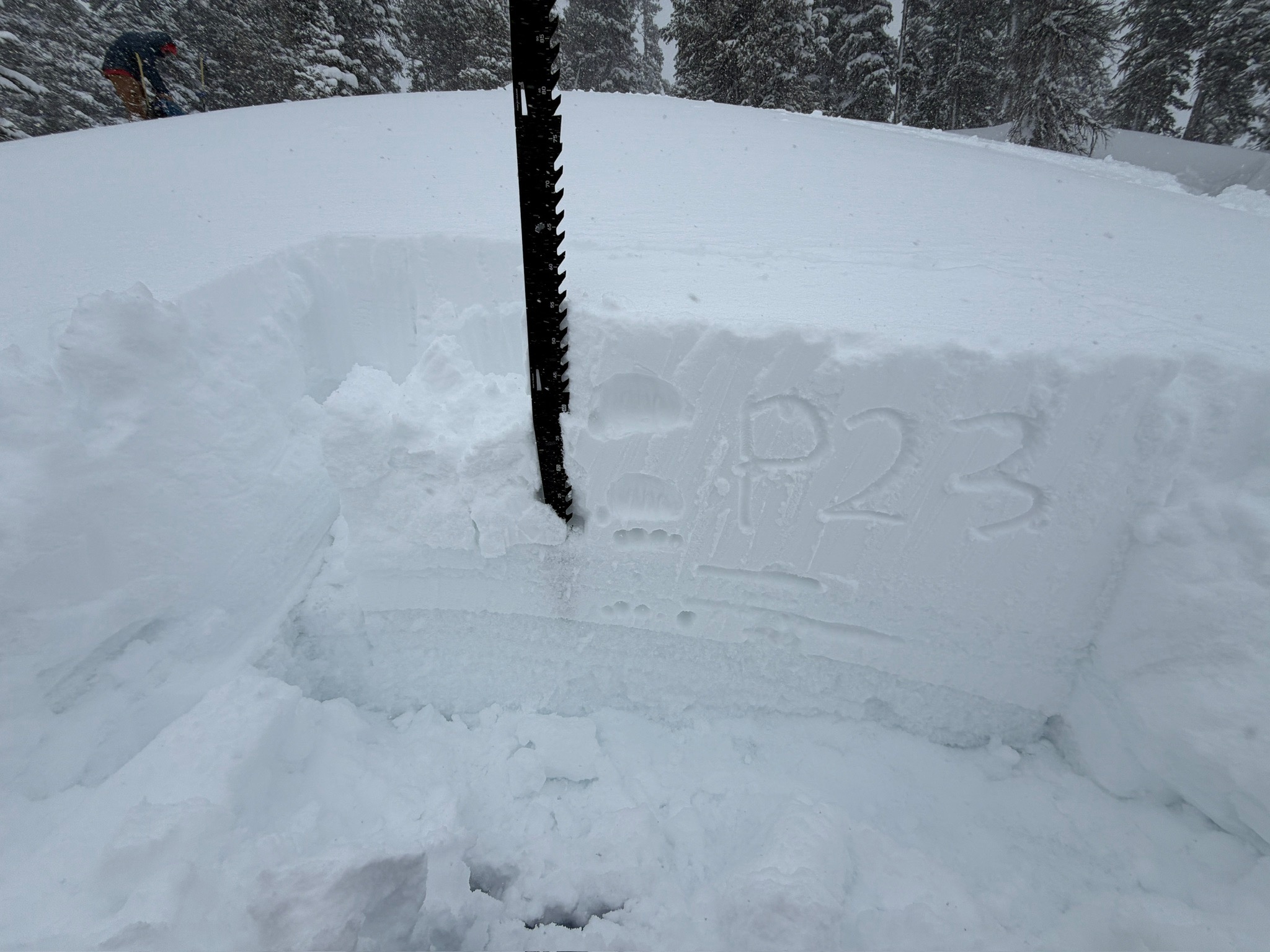
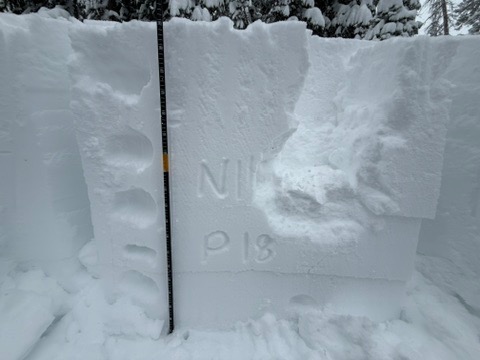
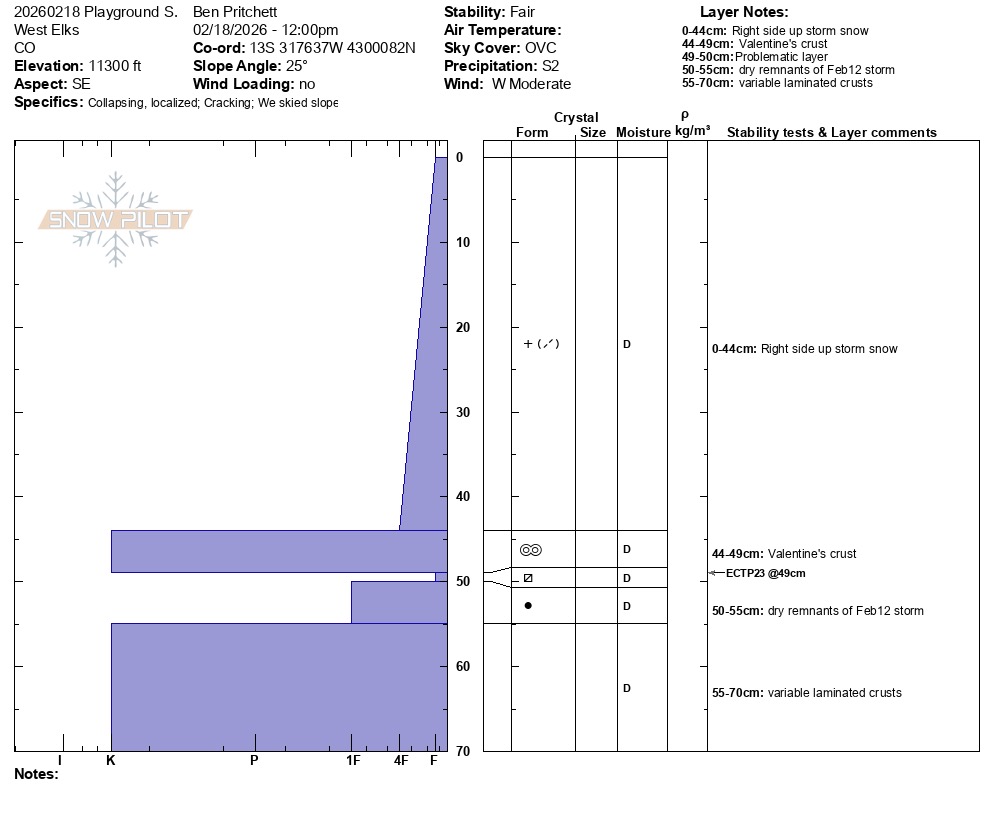
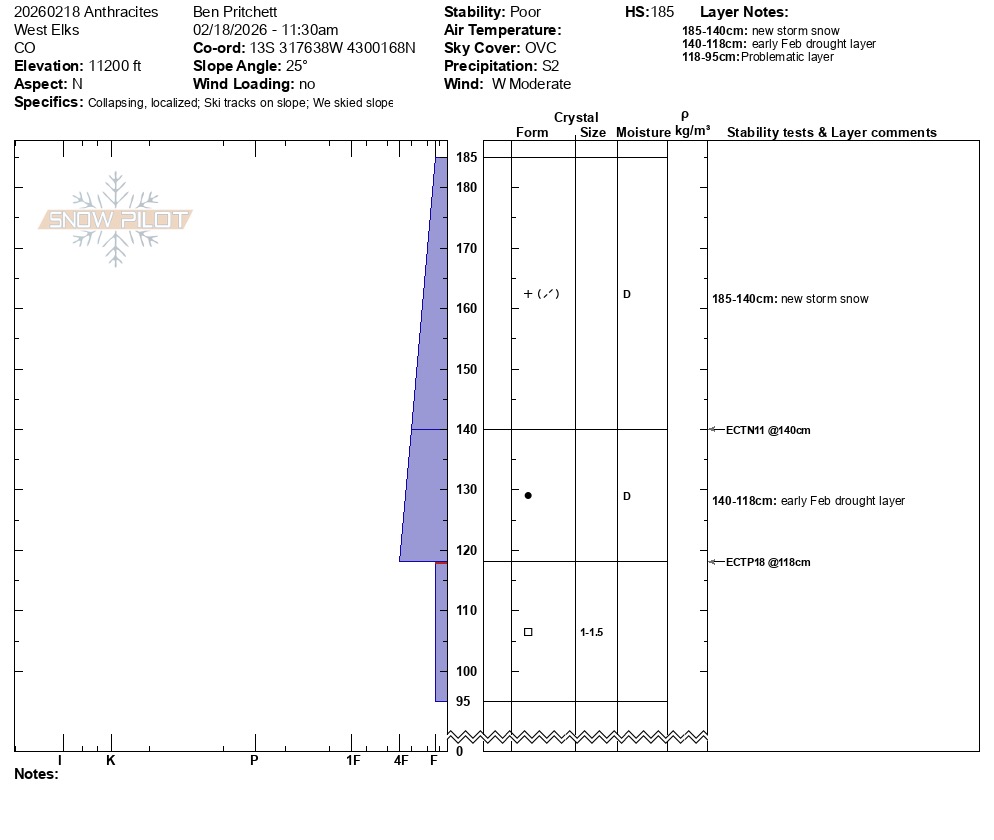
We found around 2 feet of new snow in wind-sheltered areas, but the storm snow depth varied greatly because of yesterday's intense winds. The new snow was right-side up, denser on the bottom. Where we travelled on north and south-facing terrain, the Persistent Slab avalanche problem was easy to find, breaking on the February 12th interface (below last weekend's storm snow). Muffled collapsing was easy to find in undisturbed northerly and easterly-facing areas, and where the storm snow rested on thin crusts on southeast. We selected specific slopes to avoid avalanches and triggered none. We saw no signs of instability that would indicate a new Storm Slab avalanche problem in the right-side-up new snow while travelling on steeper, due-south-facing slopes.
Weather
Steady high snowfall rates all day. Strong westerly winds mid-day into early afternoon as the cold front arrived. Much colder air settled in during the afternoon.
Snowpack
On northerly terrain, the facets buried on February 12th are the weak layer of concern. The now-buried Feb 12-14 slab above that is dangerously supportive - stiff enough to lure you into feeling strong, but easy to break through with heavy ski pressure or a snowmobile. The 2+ feet of new snow loading that slab is pushing the slab/weak layer combination to a dangerous tipping point. We didn't see any natural activity in the terrain we travelled in, but we travelled very cautiously and gave every potential north-facing path a lot of room.
Where that same Feb 12-14 layer was melted by the sun earlier this week, variable sun crusts rest below the storm slab. On due south the crusts were strong and connected to older crusts below. On southeast the crusts were thinner and cap a thin layer of facets. Sunnier, open, east and southeast-facing slopes that might have been safe a week ago are not now - the Persistent Slab avalanche problem now encompasses more aspects, to include the west and south-east-facing "shoulder" aspects with these thin facet / crust combos.