
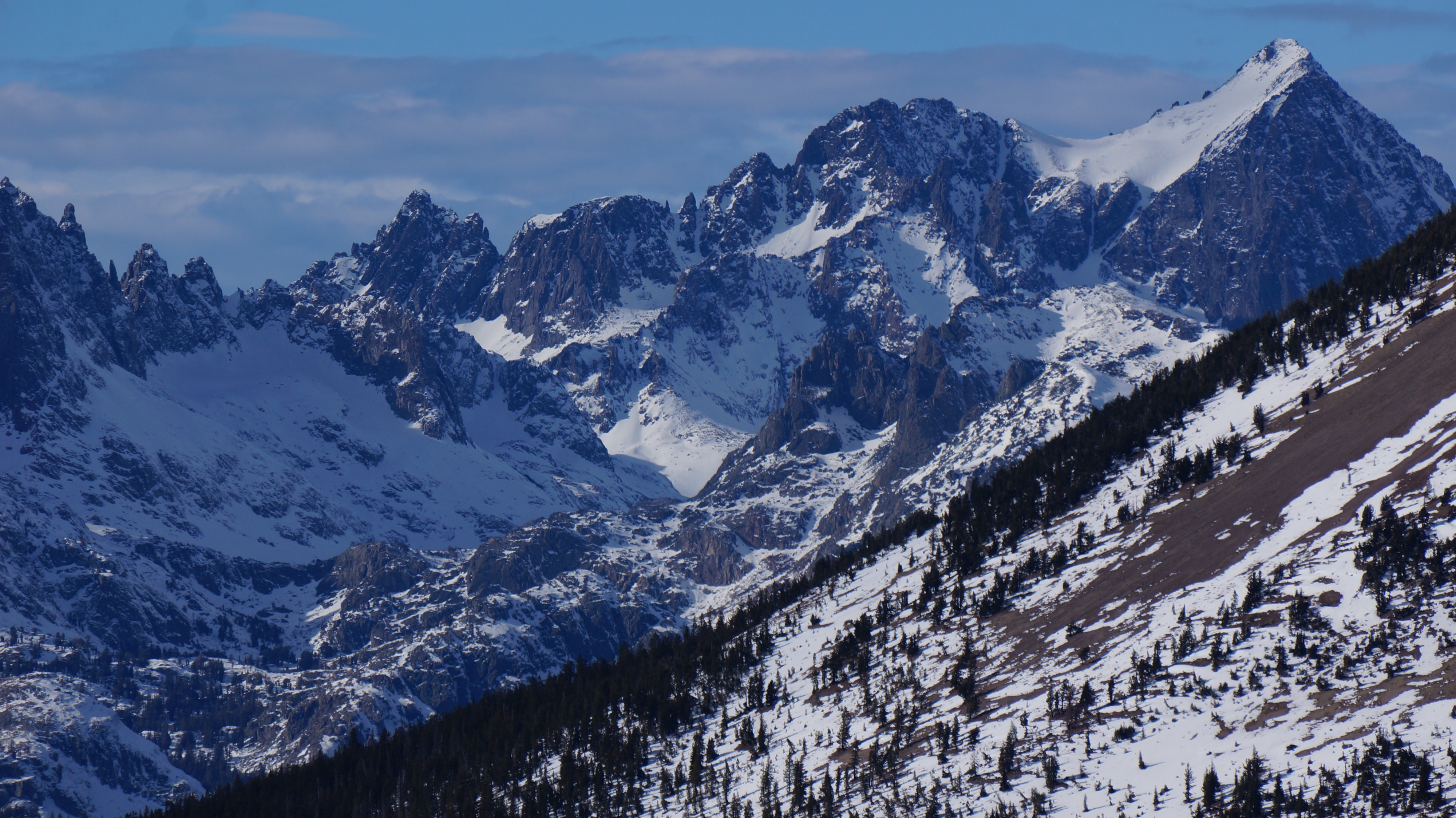
Quick report
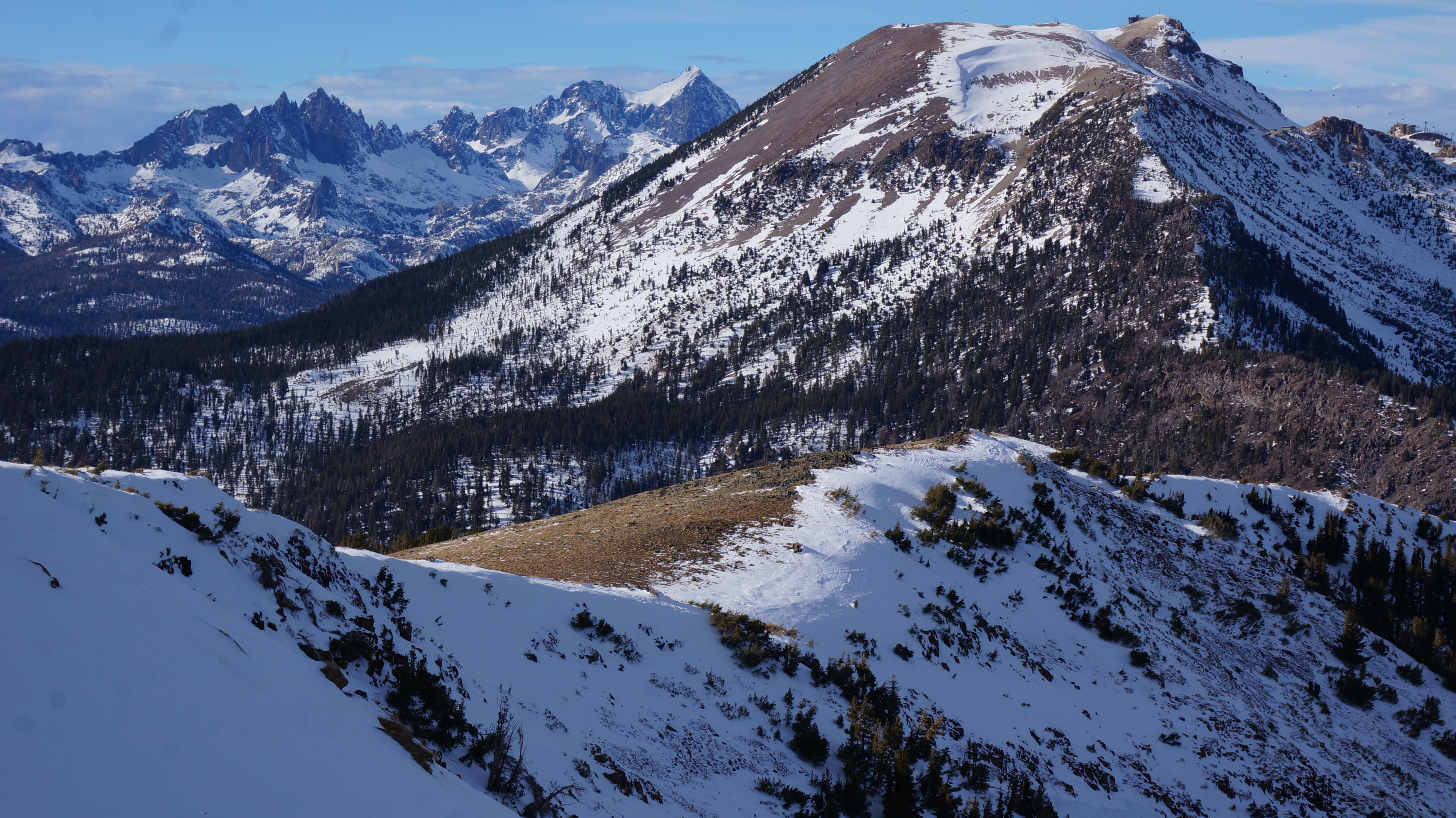
Today's field visit to the Sherwins was targeted towards continued evaluation of the current Persistent Slab problem, and investigation of any wind slab development caused by recent strong SW winds.
- No new avalanches were observed.
- There is just enough coverage in the upper start zones in the Sherwins to bury ground anchors and make slab avalanches possible.
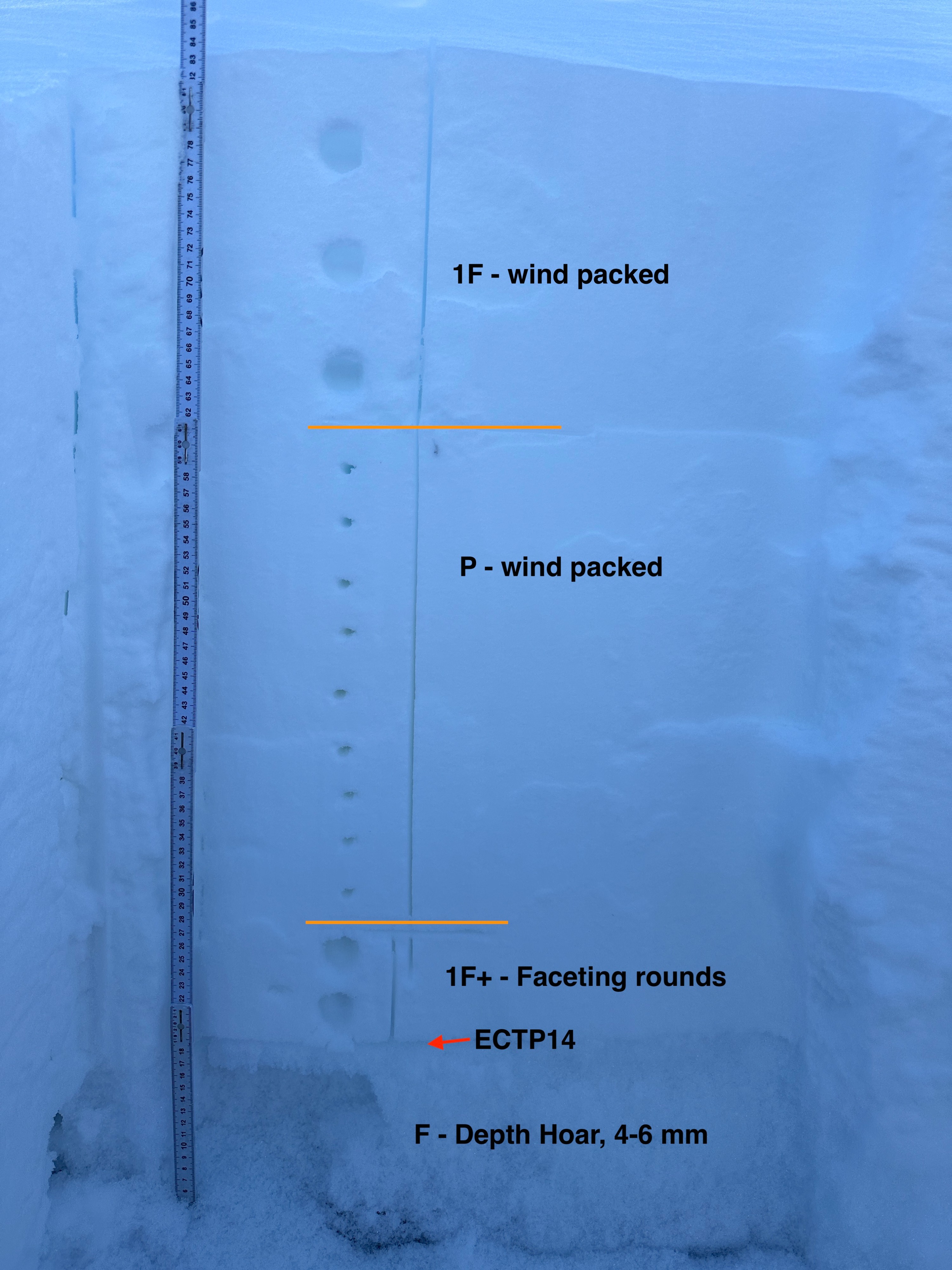
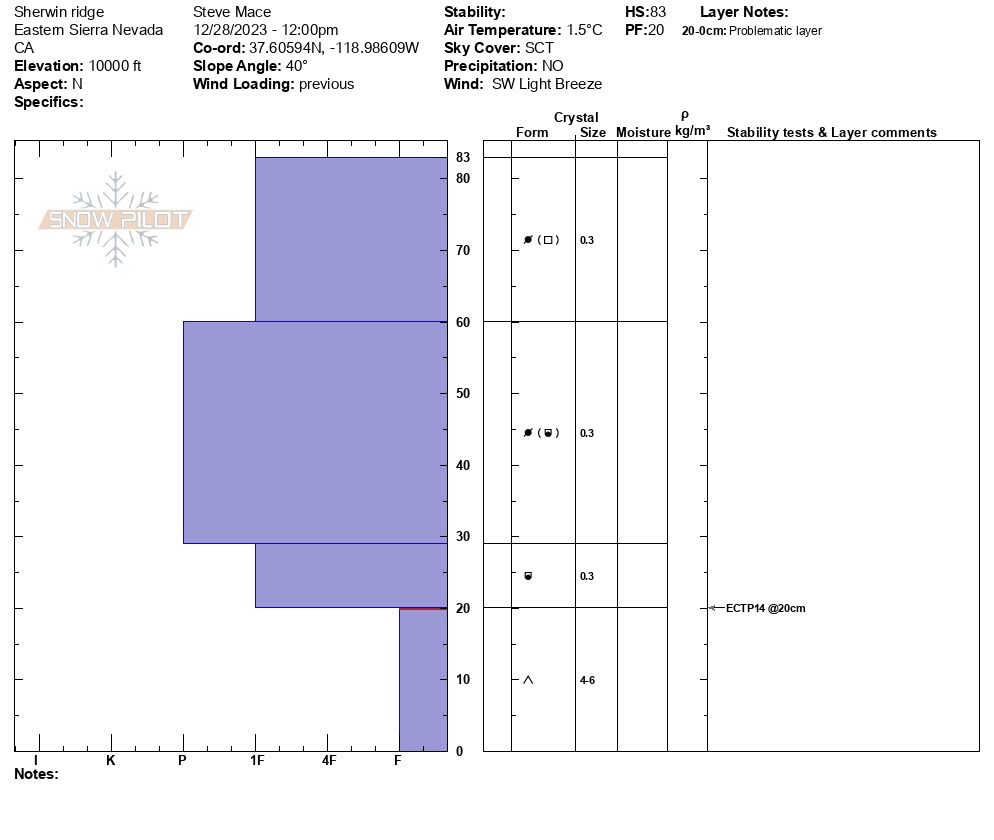
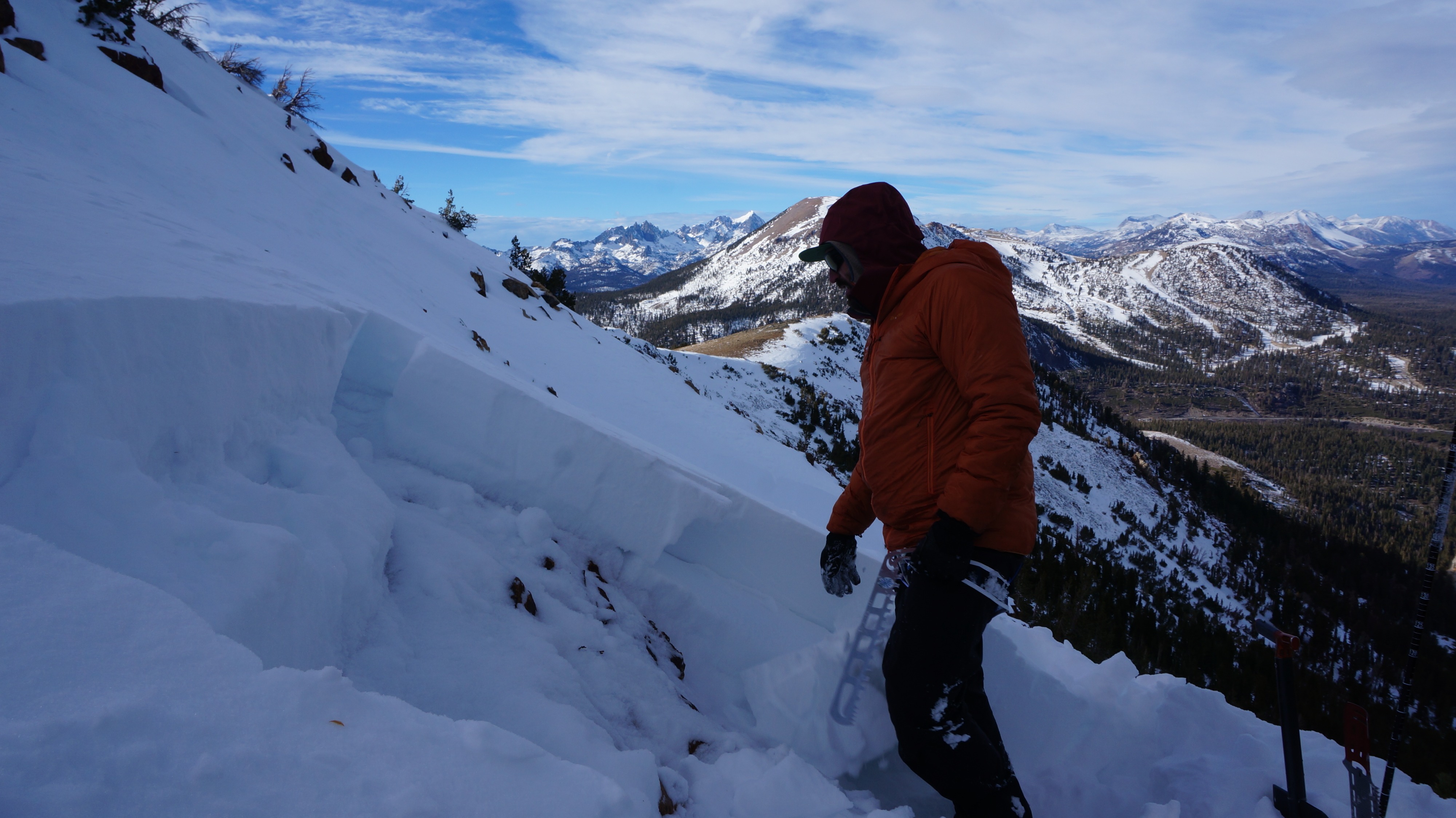
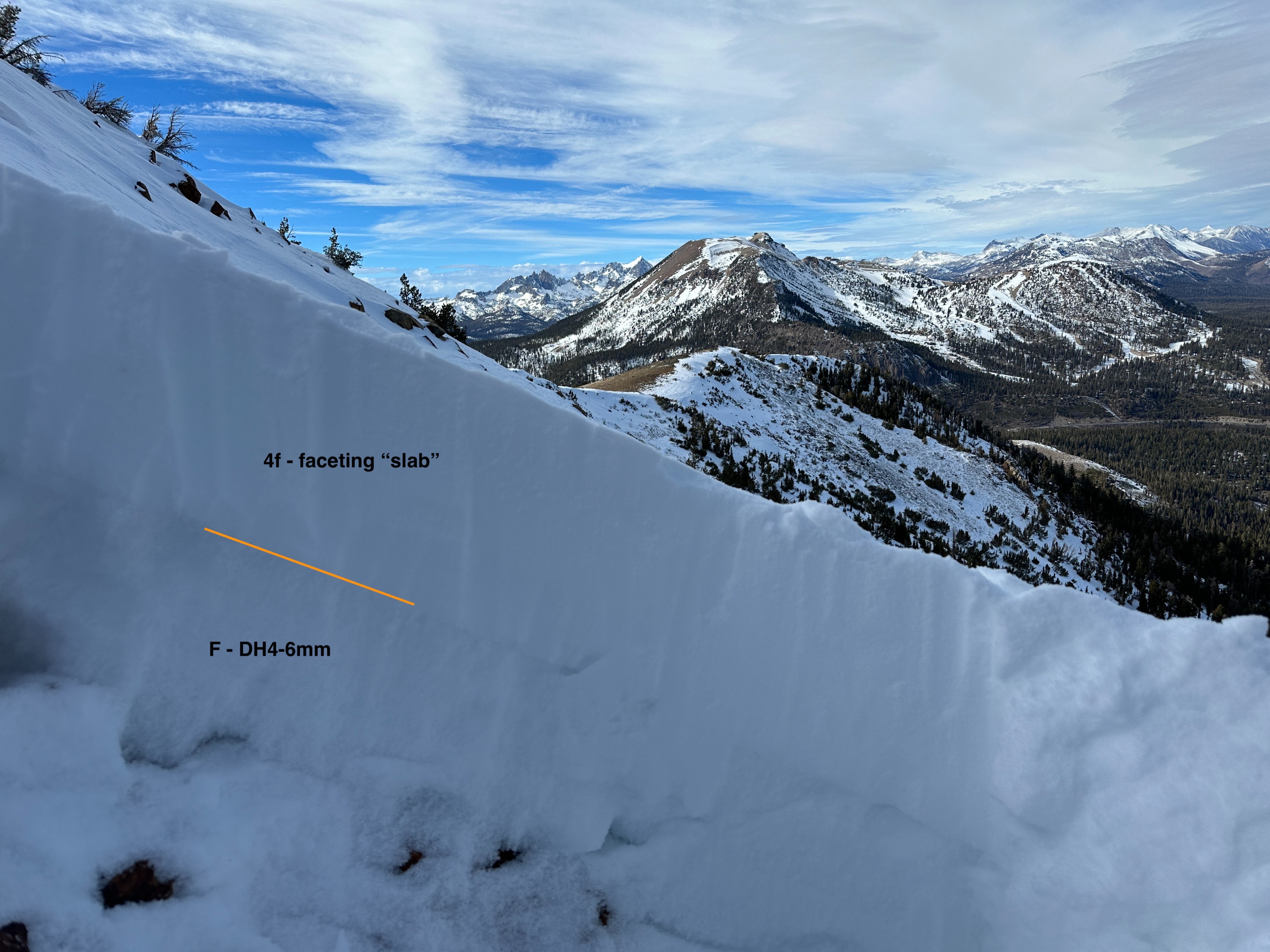
- We dug in two different NE start zones near 10,000' (near treeline) and found a strong over weak structure with depth hoar at the bottom of the snowpack.
- For the moment the persistent slab structure is only concerning in isolated pockets where deeper and stronger wind drifts overly the weak layer.
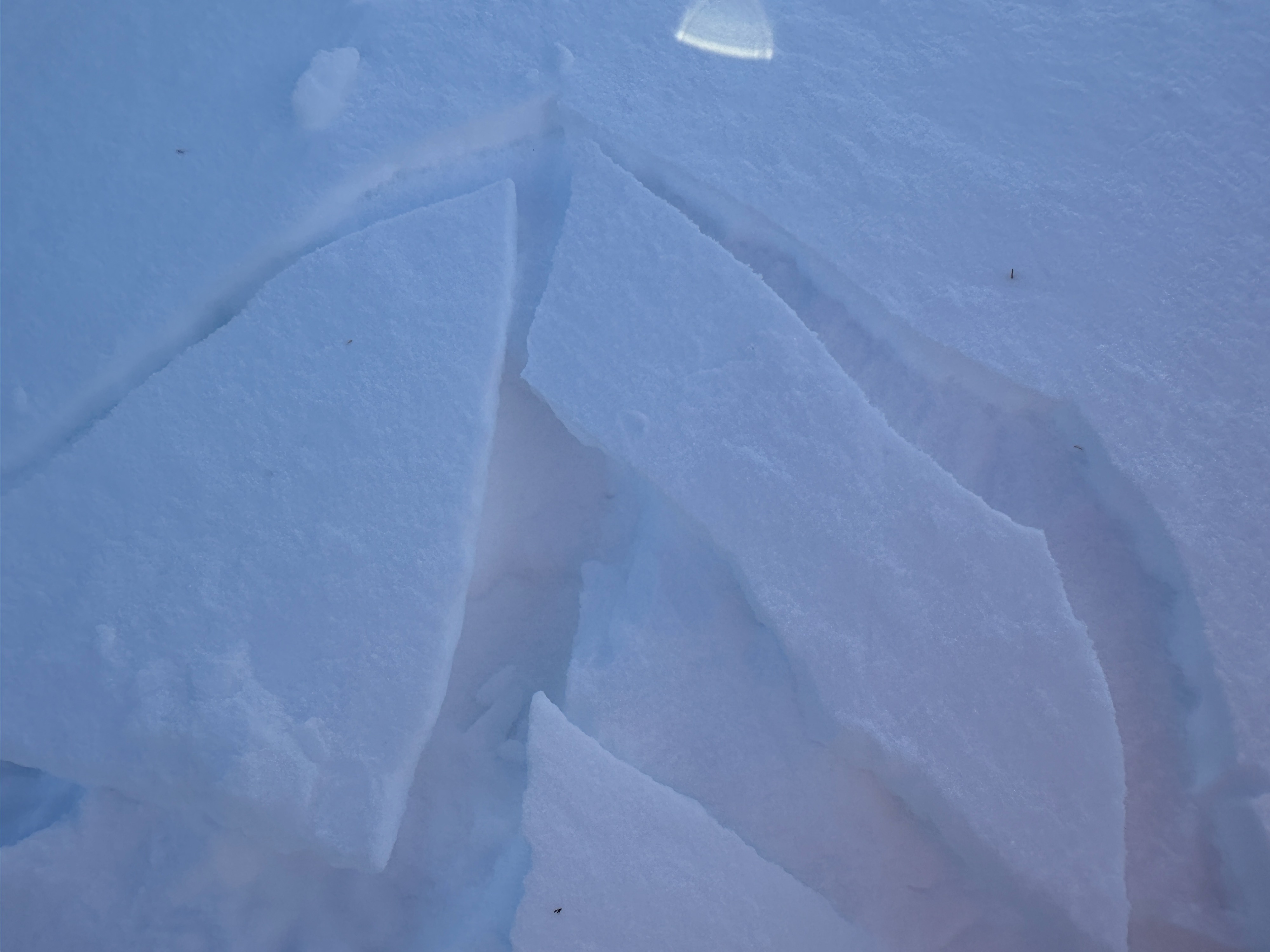
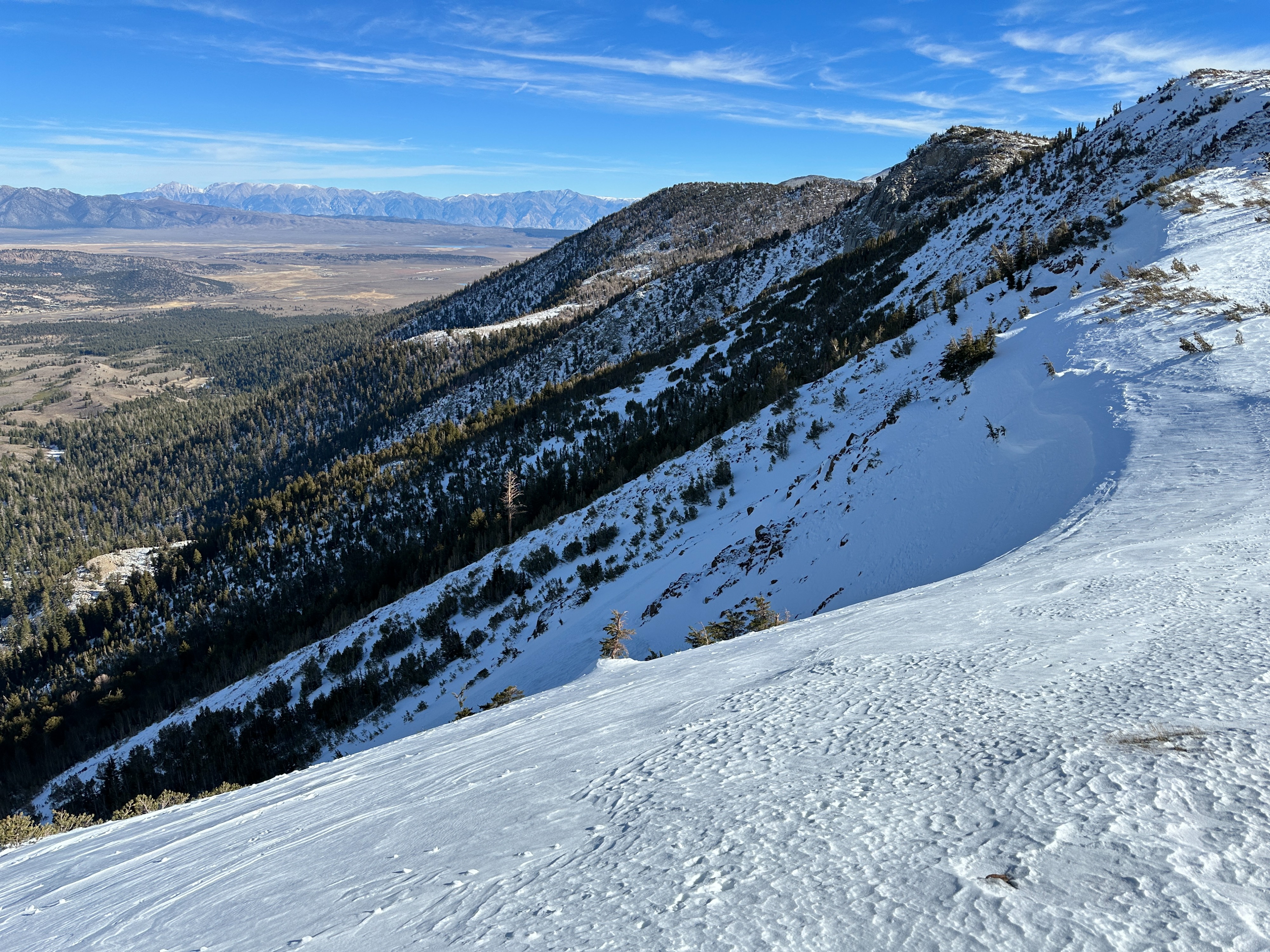
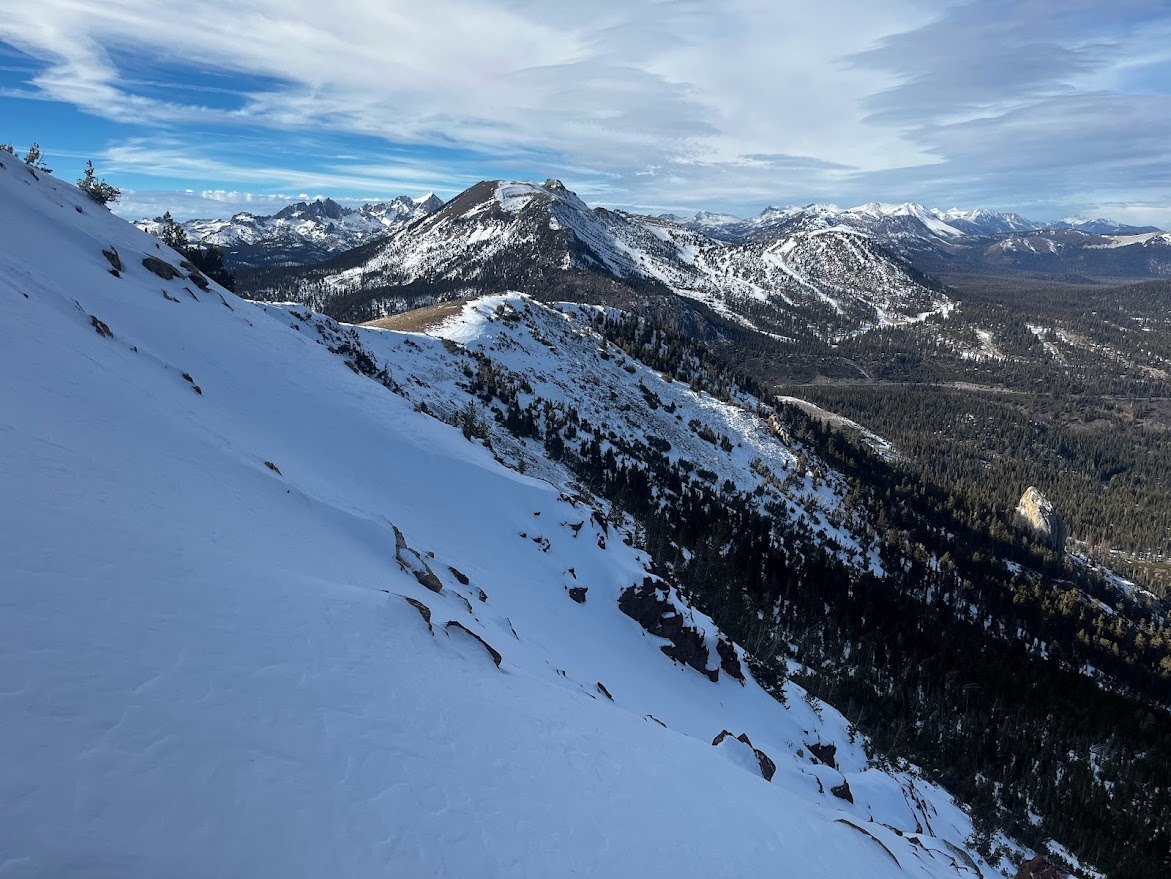
- We did find patches of thin hard wind slabs (see photos) just off the ridge in leeward terrain, but we did not observe any signs of instability associated with them.
We hiked in and out (no riding). We also chose to use a belay rope when entering start zones to evaluate the persistent slab problem.
Weather
- Air Temp
- 35
- Cloud Cover
- scattered
- Wind Loading
- previous
- Recent Snowfall
- 0
- Snow Avail For Transport
- none
Pleasant weather up on the Sherwin Ridge today. Temperatures were above freezing at 10,000', with light SW winds, under partly cloudy skies.
Snowpack
The south and southwest terrain on the back side of the ridge was scoured to bare ground. Northwest and West facing terrain on the snowy side of the ridge showed evidence of wind scouring.
We made snowpack observations in N and NE start zones along the Sherwin Ridge between 9800' and 10,000'.
- HS was 25cm to 90 cm
- Boot penetration (no skis today) was between hip and ankle deep.
- In each start zone we did a variety of stability tests, repeating tests multiple times, and found mixed results. In areas where the snow above the depth hoar was stronger and thicker, we saw propagation. In other areas that had a thinner weaker upper snowpack, we only observed propagation in a small proportion of the tests.
- Boot penetration was a good indicator of where the upper snowpack might be strong enough for propagation. In most places, our boots were stepping through to the ground. In a few places, we were able to walk on the upper snowpack.
- Overall the snowpack is thin in this area and therefore is in an advanced stage of faceting.
The takeaway is that the most concerning persistent slab structure is isolated even within small slopes.