
Quick report
- Cracking
- specific
- Collapsing
- isolated
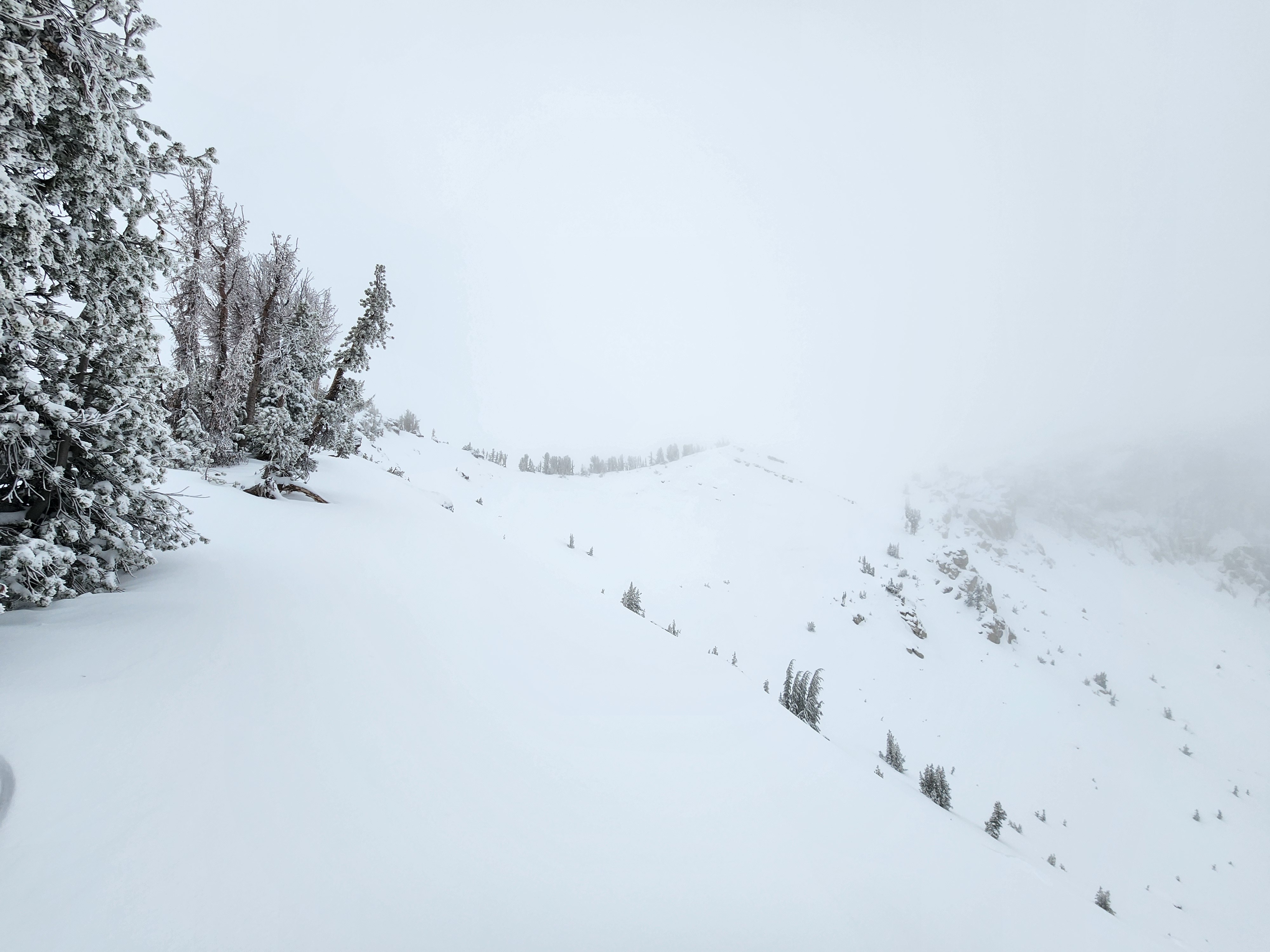
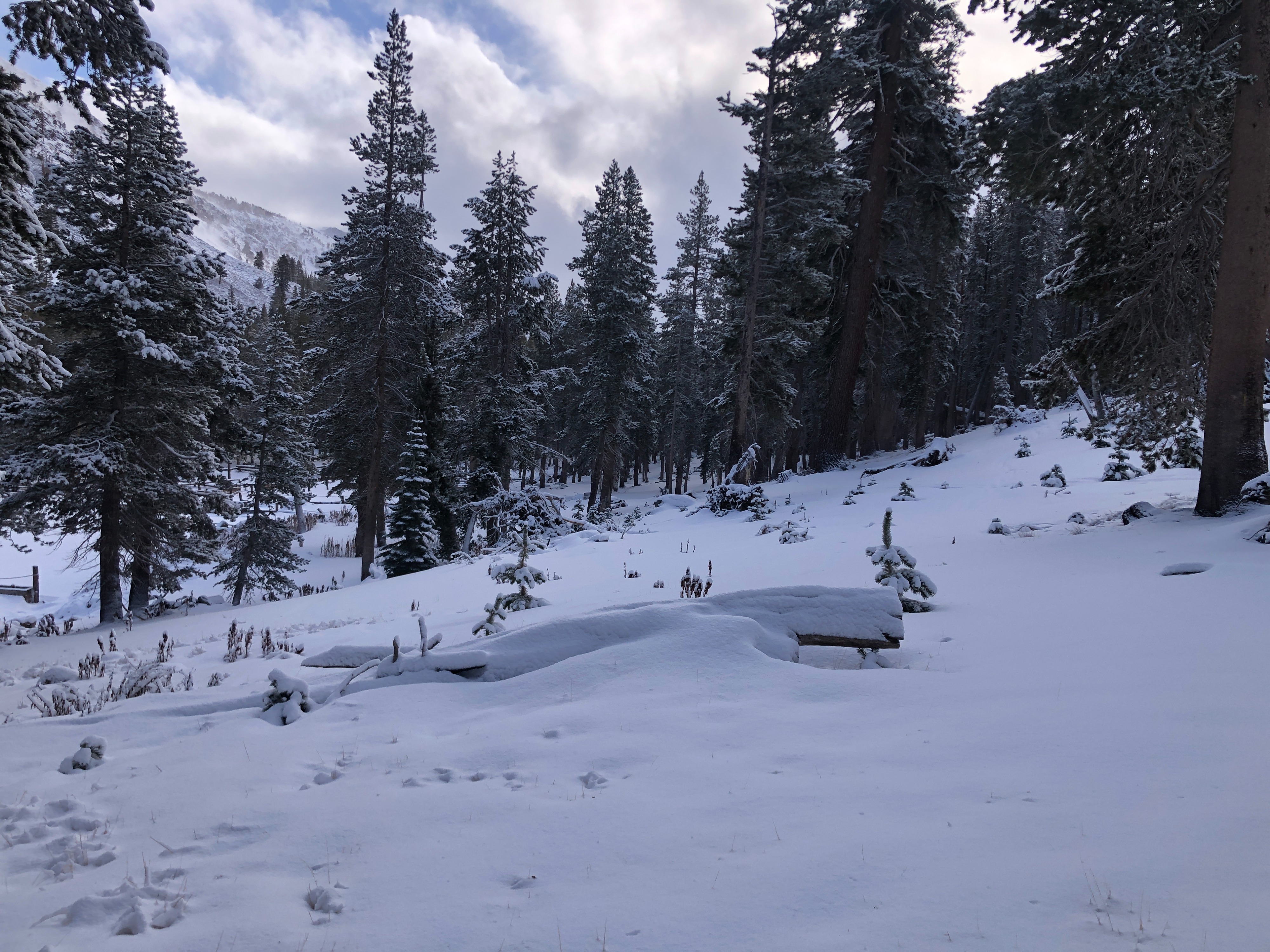
Today we set out to observe coverage in the lakes basin area and note how the various types of precipitation and fluctuating rain/snow line have affected our snowpack structure.
We mostly observed west-north-east-northeast aspects near and below treeline. There was more coverage than expected, however areas are still thin and sharky. And where there is consistent coverage, we fought a crust layer or sank to rocks and branches beneath our skis.
Instabilities were found at various elevations and aspects today.
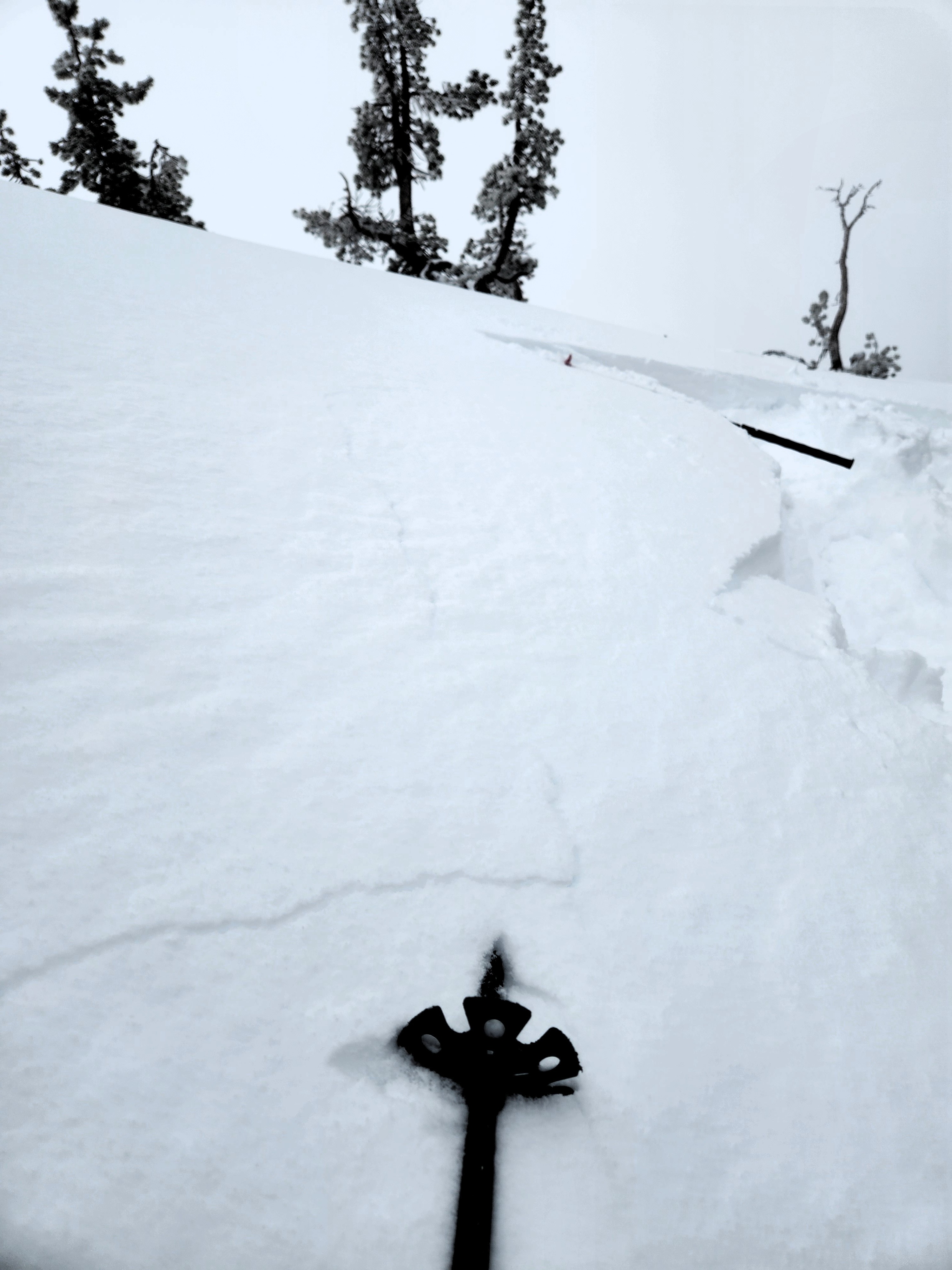
Below 9000' - Localized collapsing if we broke through the 4 cm thick rain crust that exists under new snowfall 9000 - 9500' - Localized collapsing if we broke through the thinning rain crust 10,000' - 10,300' - Long, shooting cracks and collapsing in areas with wind-drifted snow directly on top of weak facets
Weather
- Air Temp
- 30
- Cloud Cover
- obscured
- Wind Loading
- moderate
- Recent Snowfall
- 5 cm - 25 cm
- Snow Avail For Transport
- moderate amounts
We experienced obscured skies, light to moderate winds with moderate to strong gusts, on and off snow showers, and dropping temperatures throughout the day.
Snowpack
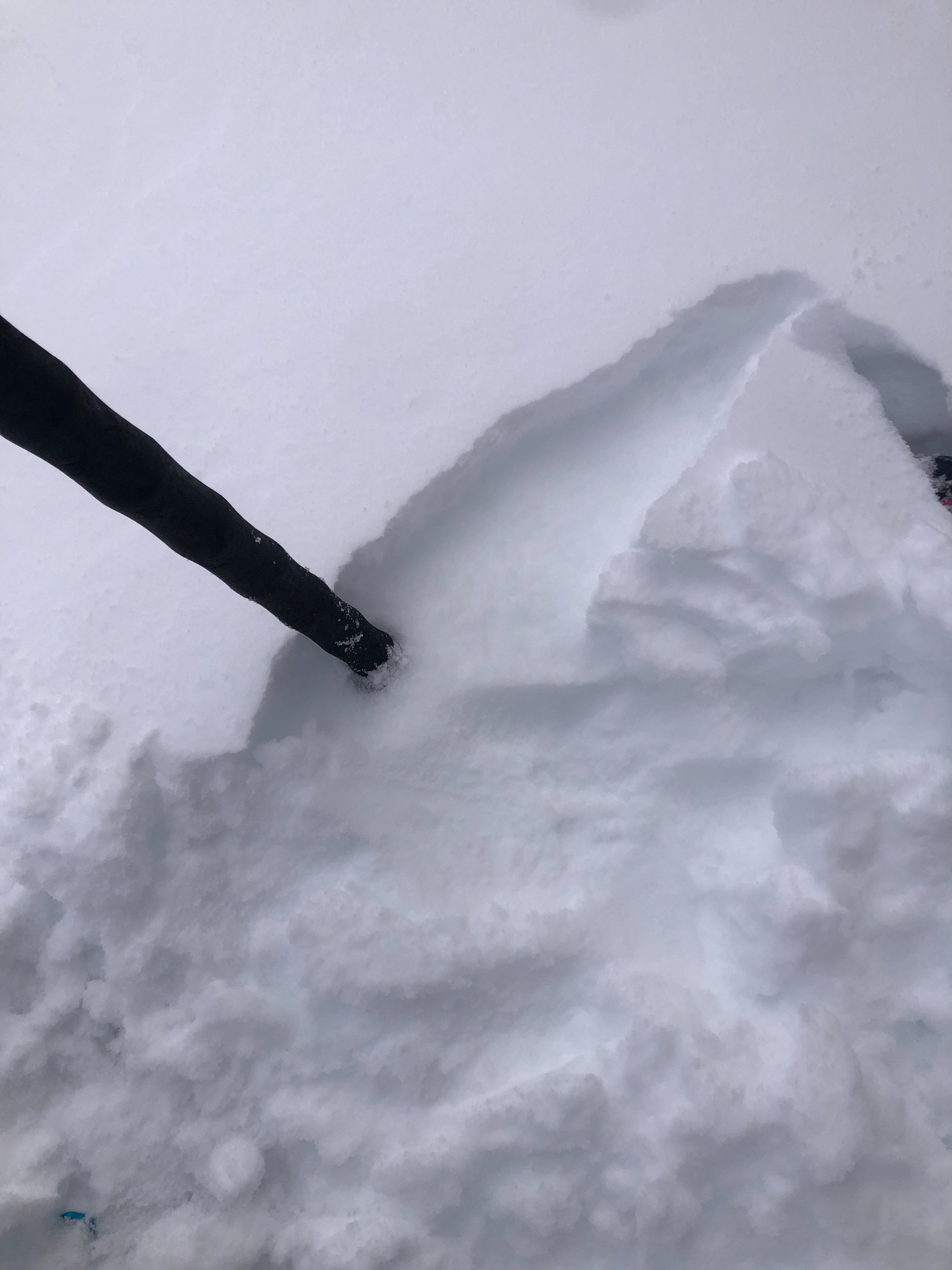
Below 9000' - 4 cm of new snow on top of a rain crust on top of wet facets, including a deteriorating melt-freeze crust. We experienced failure of an undercut test slope and the column of our snowpack test failed as we cut it (ECTPV) on the deteriorating MF crust layer amongst the wet facets.
9000-9500' - as you gain elevation, the rain crust thins and the facets go from moist to dry.
> 9500' in sheltered terrain near treeline - 25 cm of dry new snow sits on top of dry facets. Our tests highlighted multiple failure planes in the snowpack (ECTNs and several sudden planar small column test results). While there was instability present, there was not a slab. The snow atop the facets was too soft.
> 9500' in wind-drifted terrain near treeline - long shooting cracks broke down to 2 - 6 mm depth hoar grains near rocky areas. We achieved a propagating result (ECTP 14) at this interface.