
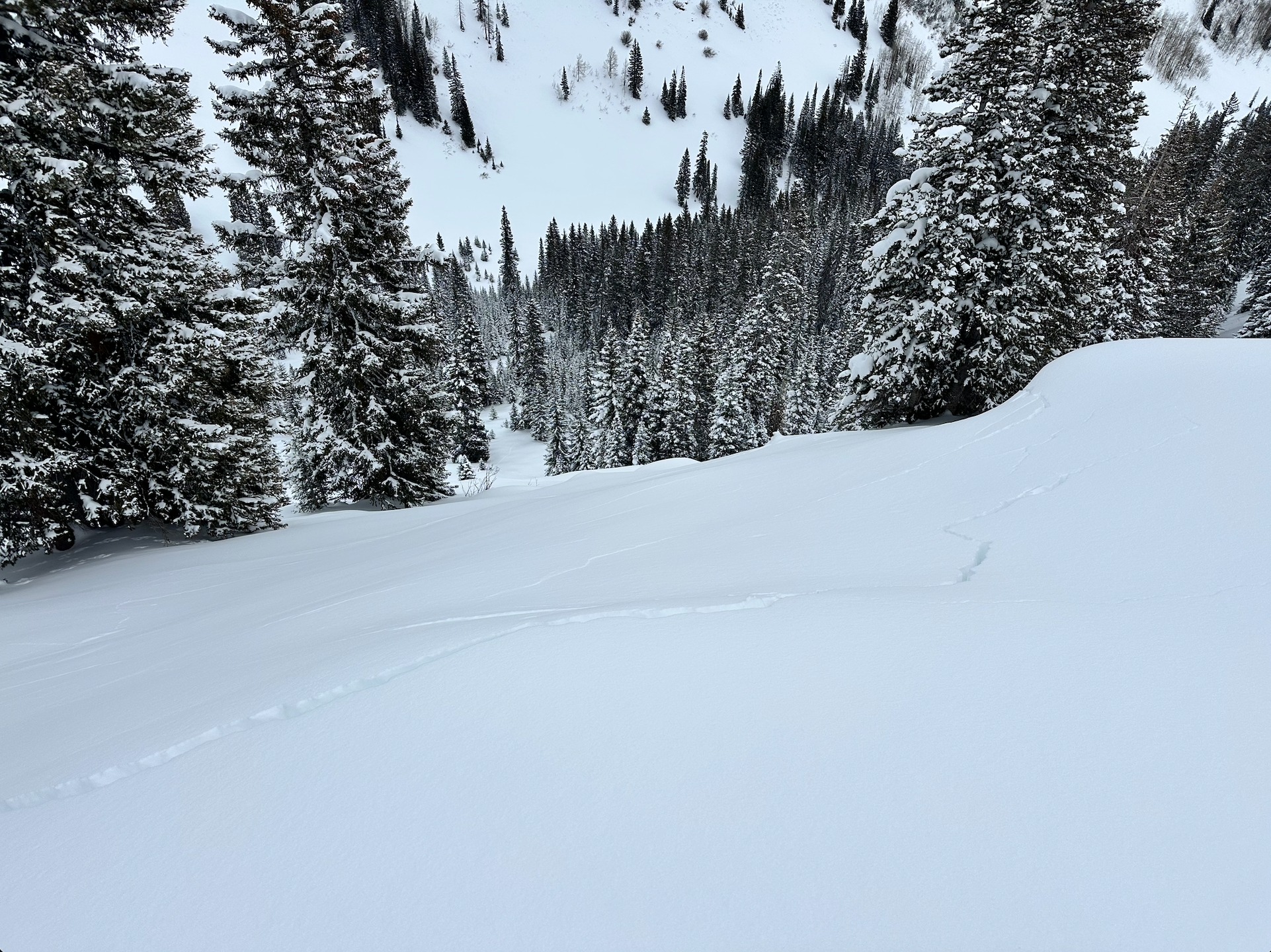
Quick report
- Cracking
- specific
- Collapsing
- specific
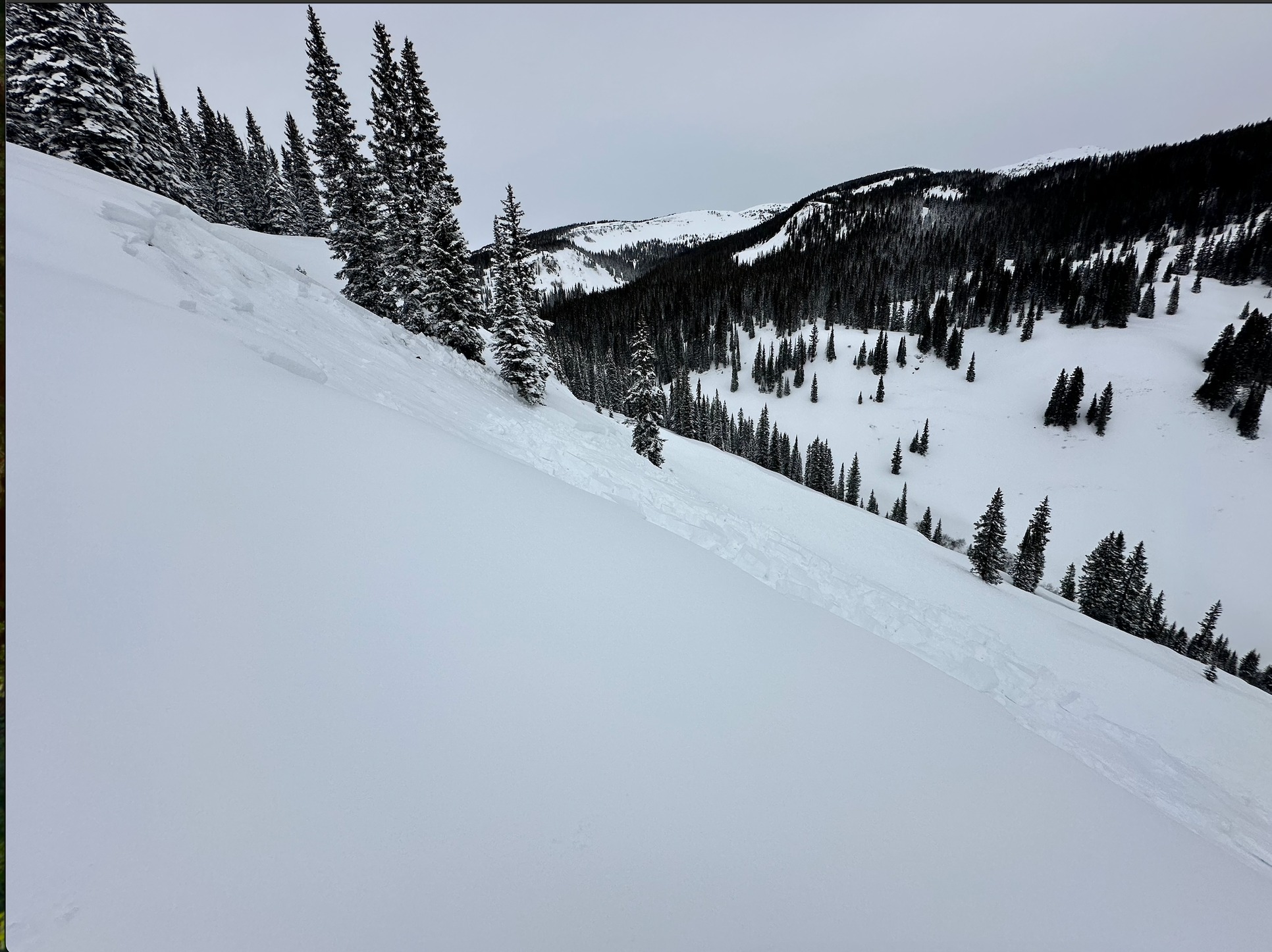
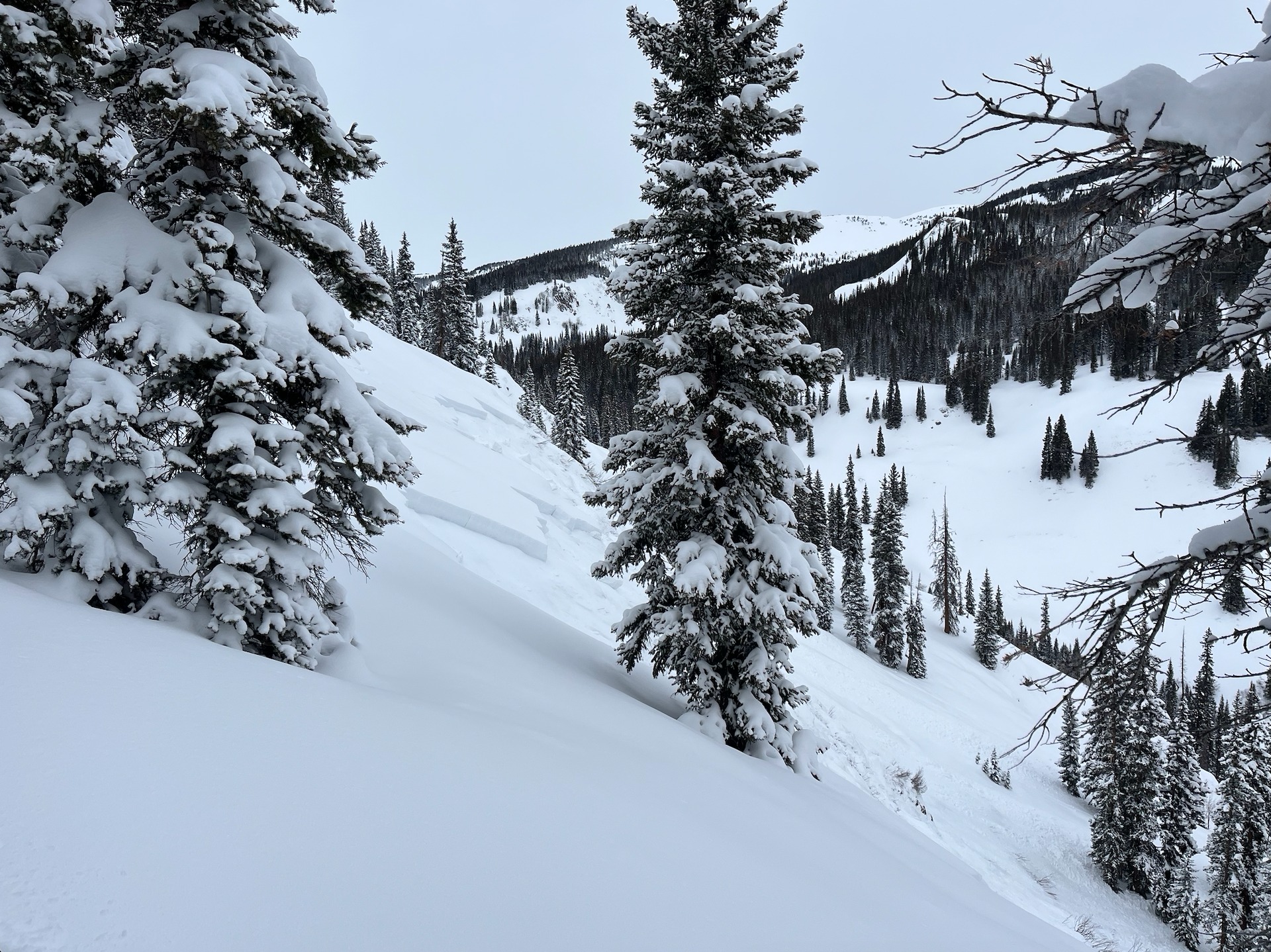
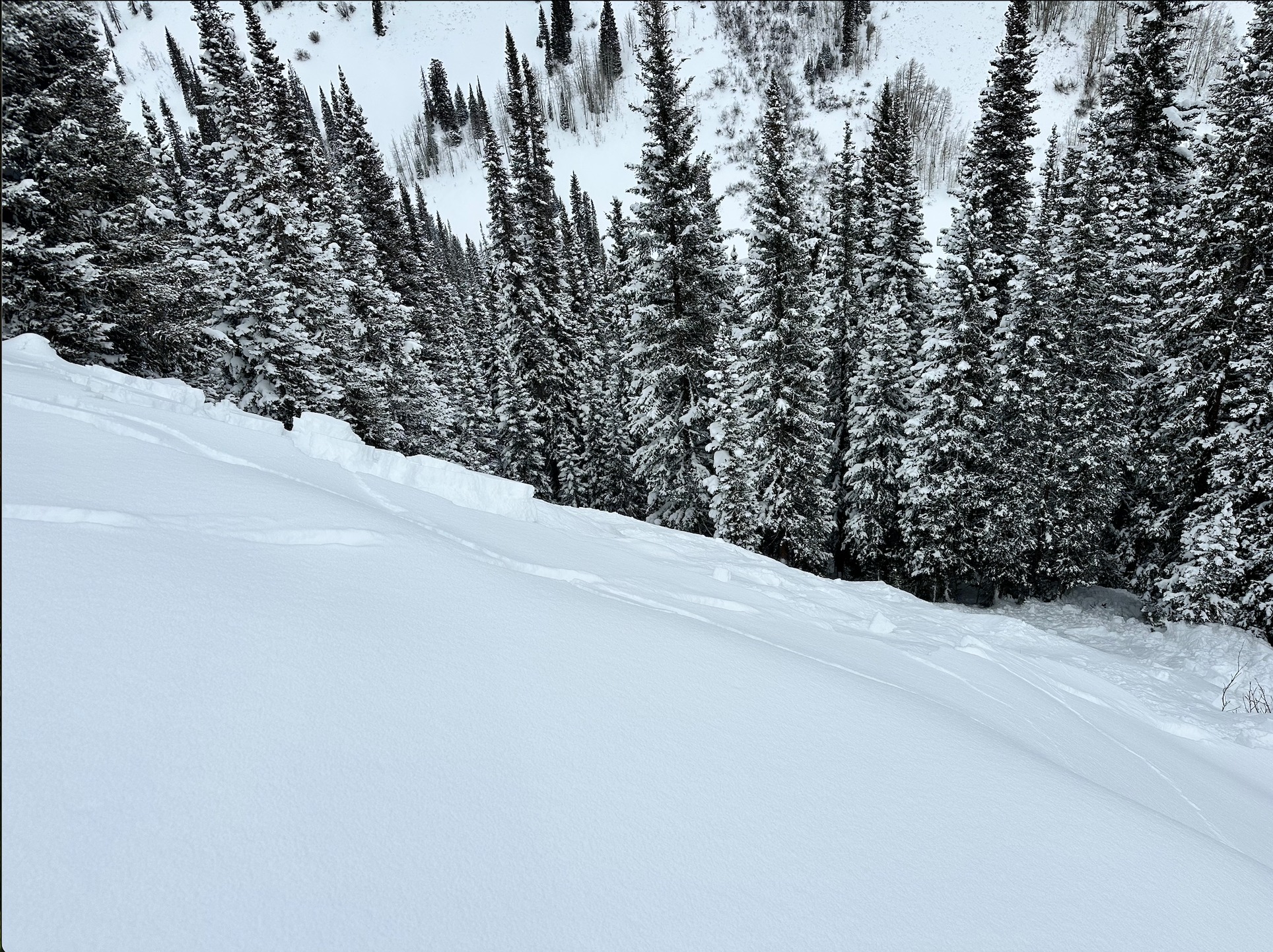
We found continued evidence of dangerous avalanche conditions on northeast and east slopes below treeline. Avalanches were easy to trigger in this area. Collapsing ran long distances (up to 700 feet in one instance) before releasing an avalanche. There is NO evidence that the snowpack is adjusting or settling down; avoiding avalanche terrain on aspects highlighted by the Persistent Slab seems like the only safe way to manage the problem.
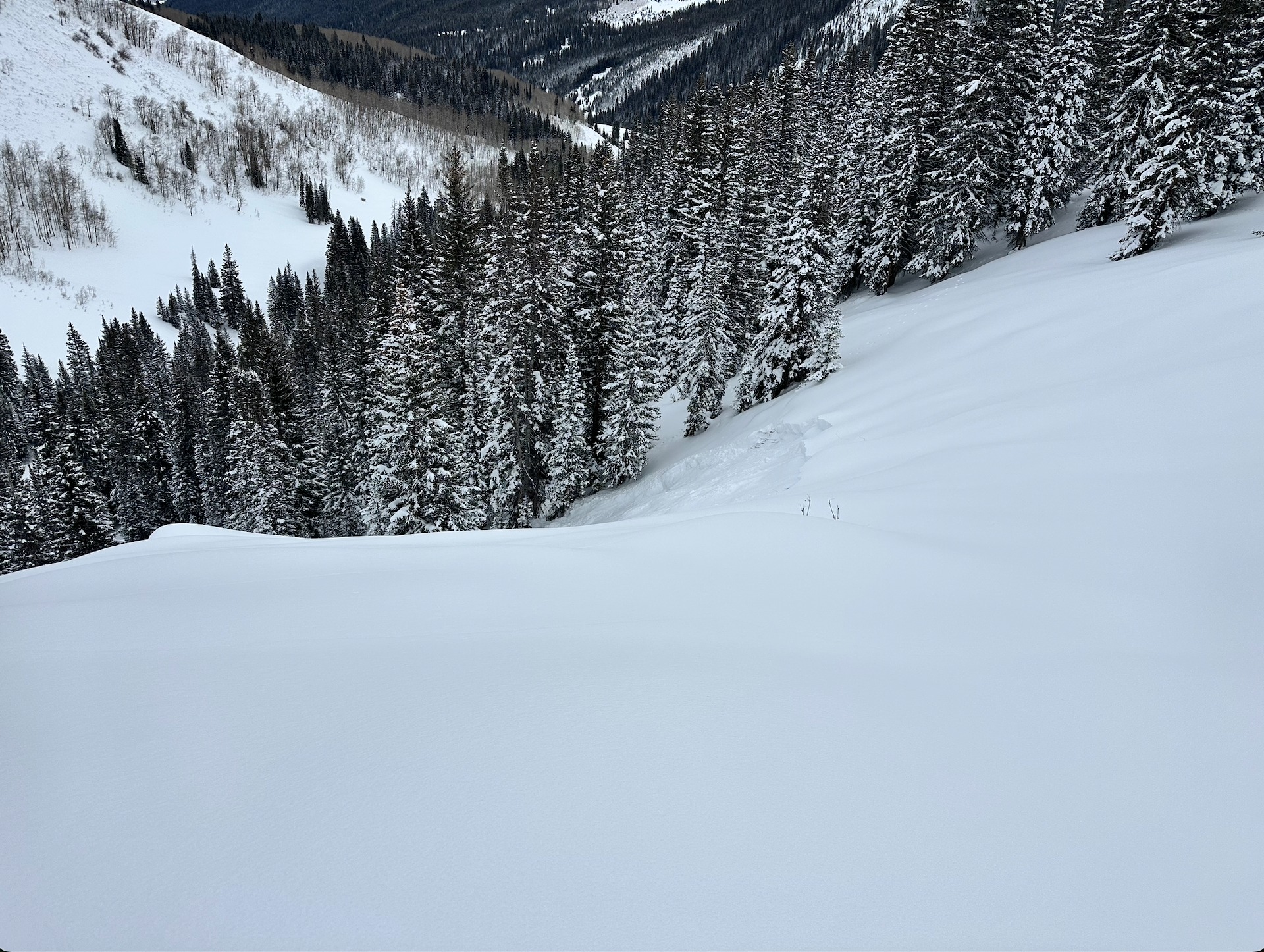
We experienced numerous collapses...some extending out hundreds of feet and remotely releasing steep slopes nearby. We remotely triggered 5 avalanches on east and northeast slopes..Weather
- Cloud Cover
- overcast
- Wind Loading
- previous
- Recent Snowfall
- 1
- Snow Avail For Transport
- small smounts
A short burst of snow in the morning stacked up to less than an inch. Light winds at our below treeline location. Cold temps.
Snowpack
We traveled on east and northeast slopes below treeline in the Elk Creek drainage. The Holiday slab is generally 2 feet thick in sheltered areas. The rime crust from this weekend is down about 3-5 inches. We dug a single test profile on an east slope at 10,500 feet and found propagating test results on basal facets from the December dry spell (two thin crusts above the facets seemed to help drive long-running collapses). Another significant finding is that this site had a skiff of recent drifting (6 dense inches) and produced an ECTP 11 below the rime/melt-freeze crust.
Avalanche
- Size
- D2
- Type
- SS
- Count
- 5
- Aspect
- E
- Trigger
- AS
- Elevation
- 10400 ft
We remotely triggered all avalanches from the ridge above. We didn't stomp on the snowpack or try to get near the steep breakovers. Collapsing was continuous throughout the tour and often connected to the steep terrain below. Even in this short vertical terrain, generally only 400 feet, avalanches gain enough volume to hurt or bury a person.