
Quick report
- Cracking
- isolated
Two to three inches of new snow was found in the Gray Butte area. Regarding avalanche instability, two issues were present on Gray Butte today:
Warming: Its March, and here in northern California, the extra degree of sun angle make a difference. At 10 am, southerly slopes below and near treeline were already holding heavy warm snow. In the distance, Powder Bowl appeared to have a fresh wet loose avalanche near the top. With Spring nearing closer, these warming problems will happen quick. Today, it only took a couple hours of sunlight to affect the fresh snow. However, on north facing terrain, a completely different snow climate existed. Cold dry snow was found with a thin crust layer (mostly unnoticeable) below.
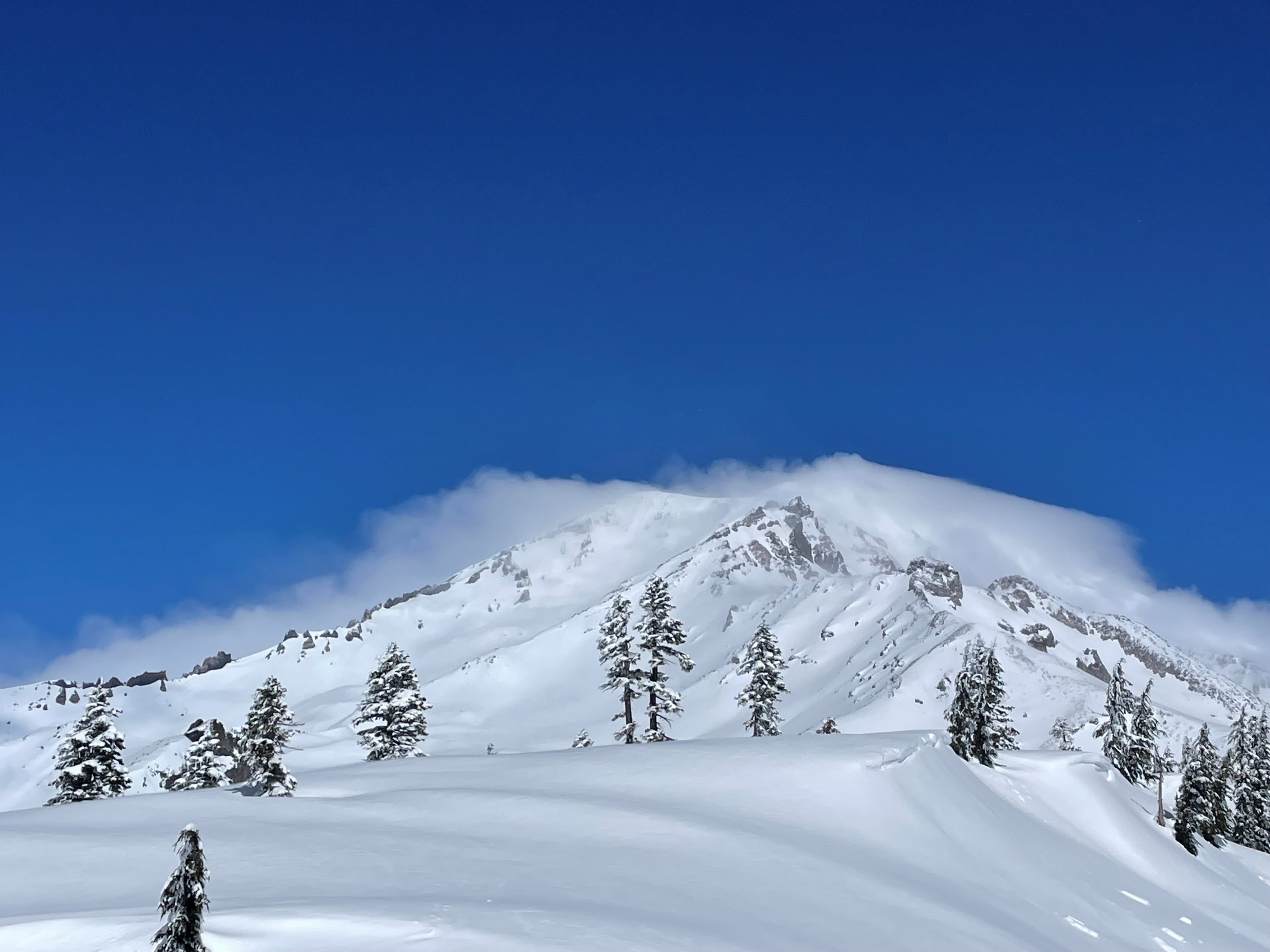
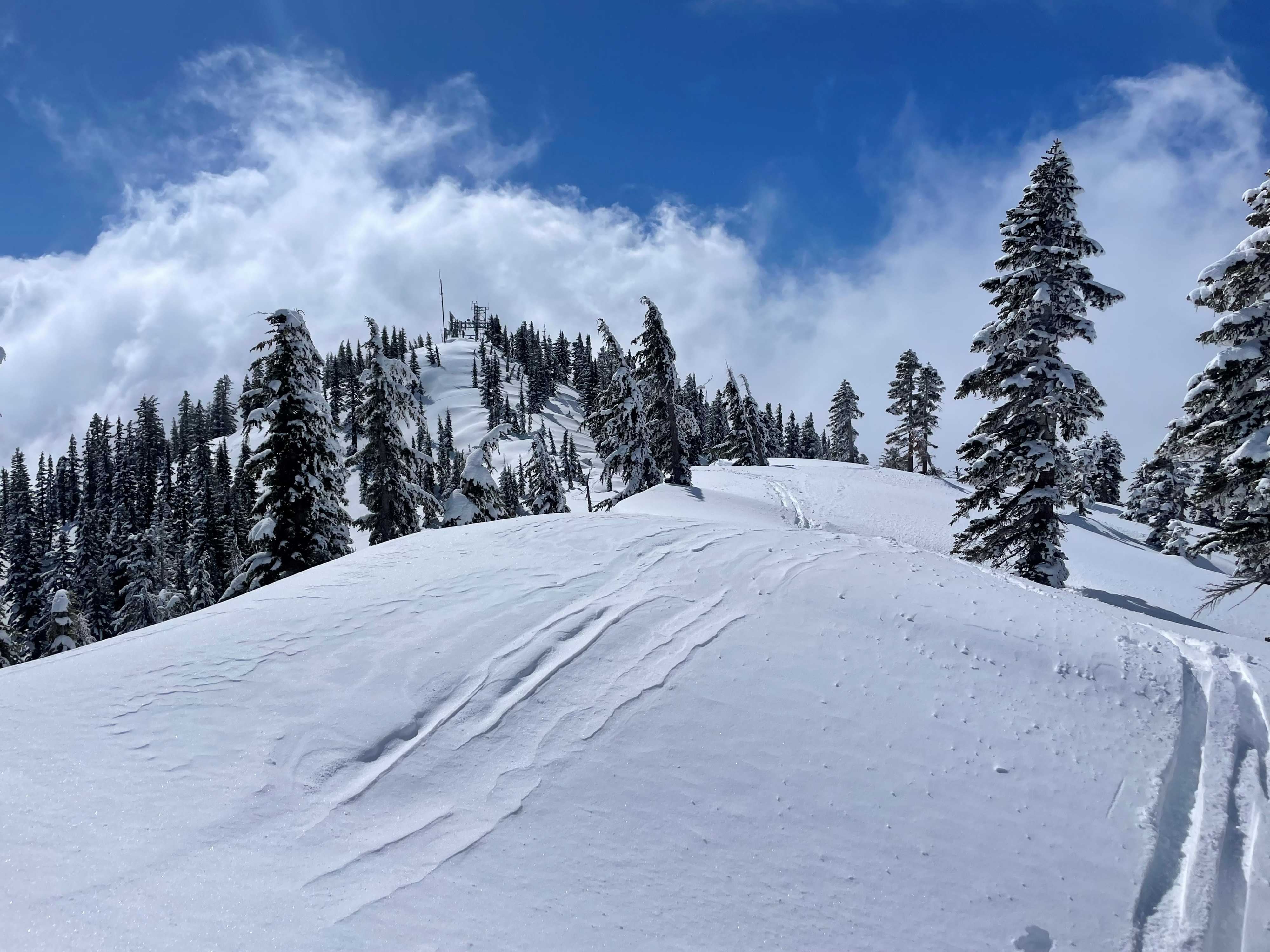
Northerly Wind: Wind direction has shifted northerly, changing the distribution of wind blown snow. At the top of Gray Butte, wind was light and pleasant. On upper Mount Shasta, stronger wind could be seen transporting snow southerly, down-slope into Avalanche Gulch. A small wind slab was intentionally triggered on a west facing terrain feature on the northwest face of Gray Butte. Though small, this slide increases the odds of larger pockets lingering.
Weather
- Air Temp
- 25
- Cloud Cover
- broken
- Wind Loading
- light
- Recent Snowfall
- 5-8
- Snow Avail For Transport
- small smounts
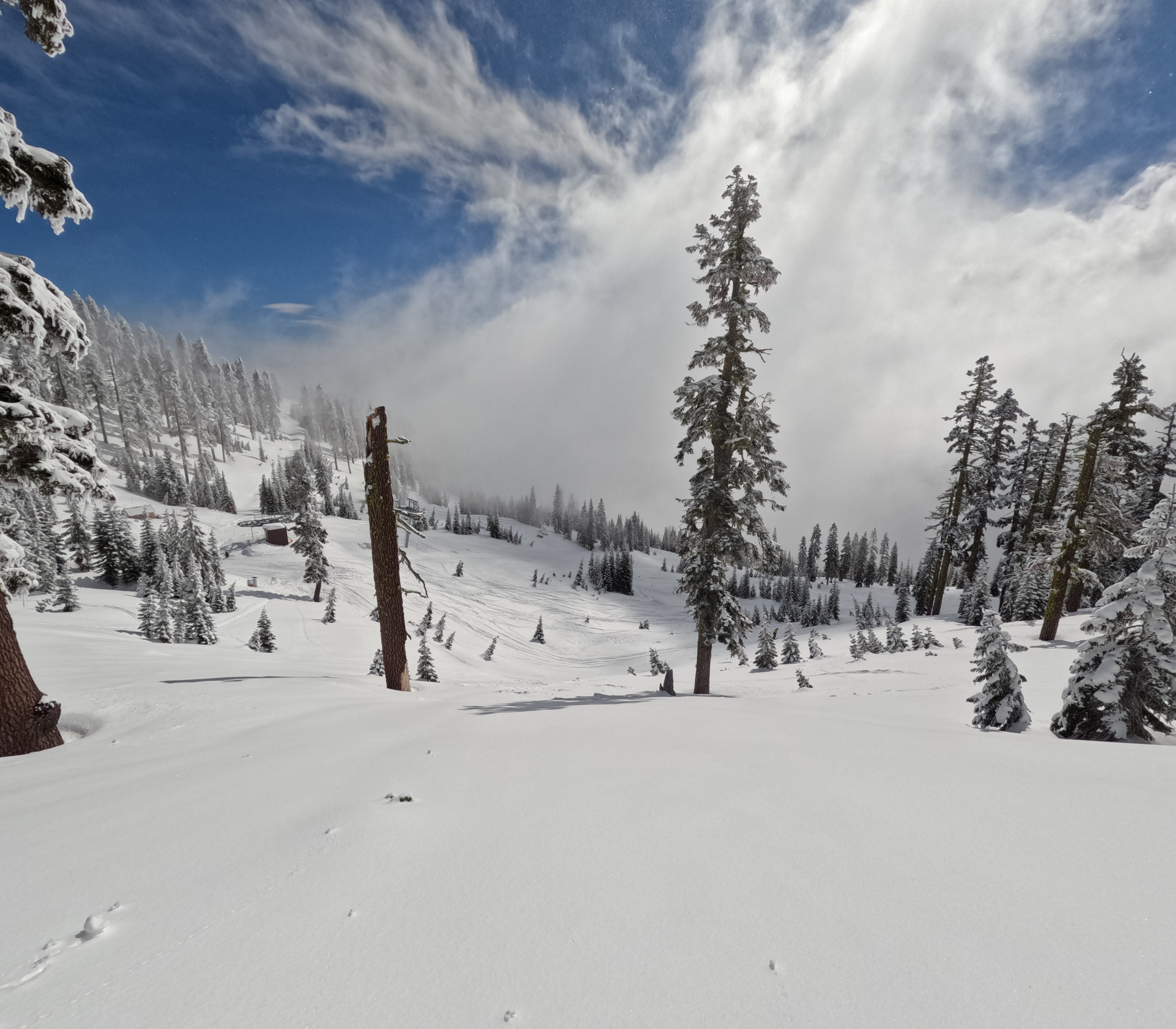
In the parking lot, skies were relatively clear and temperatures were nearing t-shirt weather. On the mountain, cloud cover was inconsistent, ranging from blue skies to white-out. When the sun came out, the temperature climbed rapidly. At the summit of Gray Butte, ambient air temperature did not climb above 25 degrees F. Wind was light out of the north. Down slope wind could be seen on the upper mountain of Mount Shasta.
Snowpack
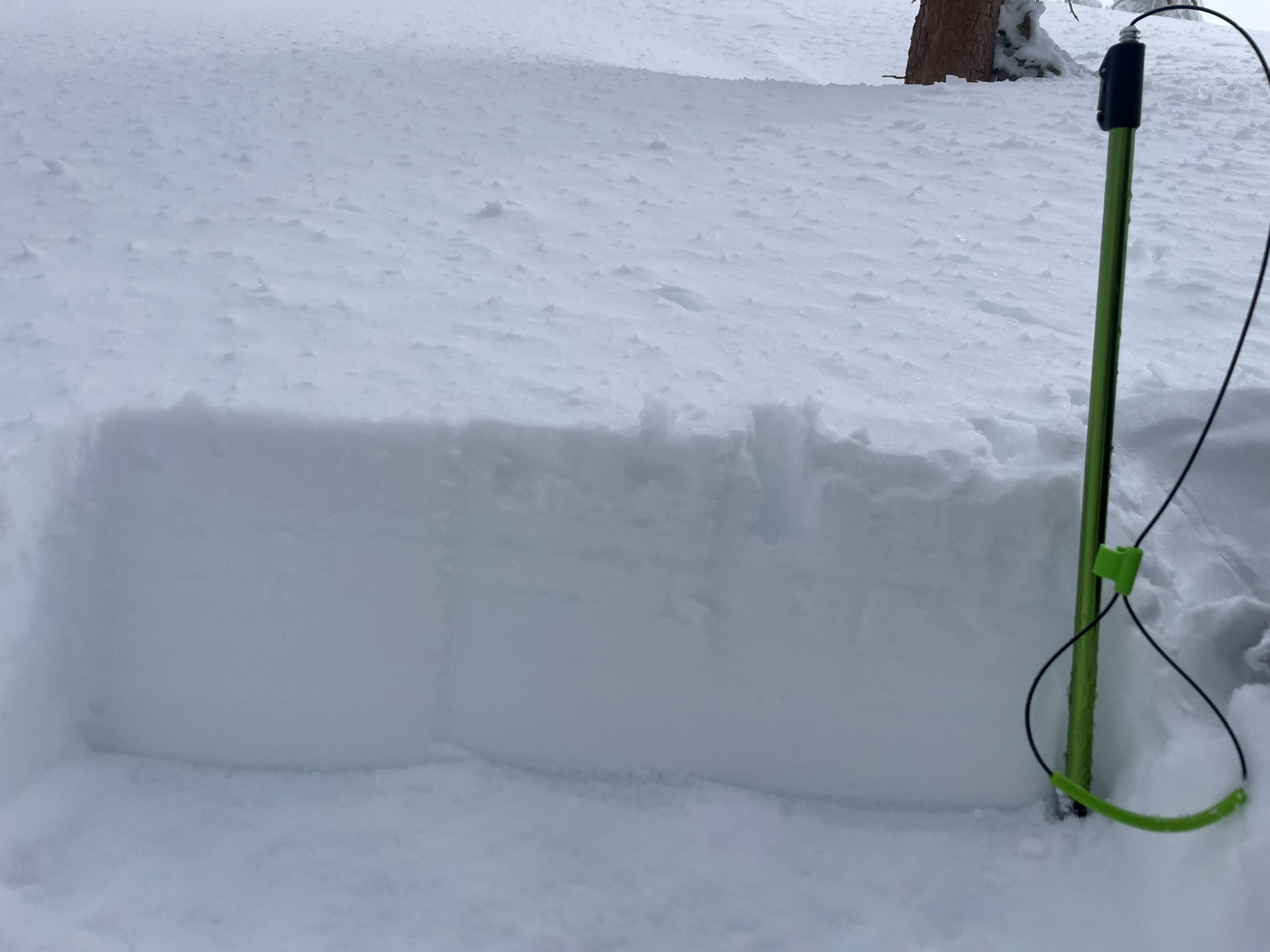
Two to three inches of new snow has fallen in the Gray Butte area over the last 18 hours. On south facing terrain (below and near treeline), surface snow has already become hot and heavy. Sticky spots could be felt below 6,500 feet.
On north facing terrain, cold, dry snow was found. In this area, the surface crust 2-3 inches down was hard to find or nonexistent. Six to seven inches of soft dense snow sits on top of a very firm crust below. At 8,000 feet, the snowpack was 320 cm deep, 20 cm of which were the soft surface snow.