
Quick report
- Cracking
- isolated
- Collapsing
- isolated
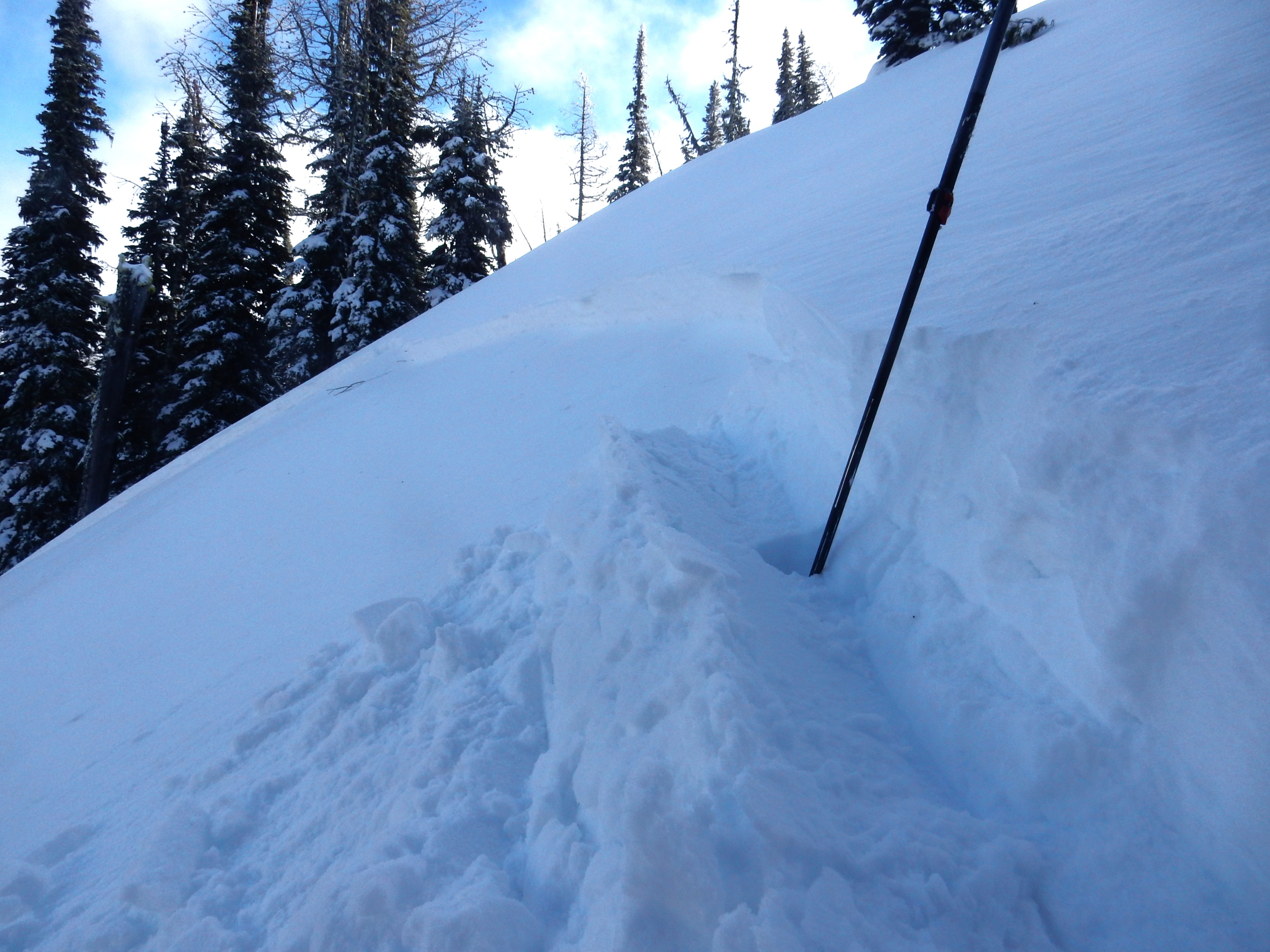
A soft slab with modest cohesiveness resting on a firm layer, and not well bonded to it, makes a recipe for a soft slab avalanche. This problem was easily observable with a minimum of effort, and was clear evidence to reassess our travel plans. Minor cracking around skis indicated some cohesiveness in a fairly soft slab resting on a hard supportable layer.
Weather
- Air Temp
- 30
- Cloud Cover
- few
- Wind Loading
- unknown
- Snow Avail For Transport
- small smounts
Mild overnight temperatures were barely refreezing snow at 4,600 ft, and snow was soft and slushy by afternoon up to about 5,800 ft. Skies were clear to partly cloudy with moderate wind.
Snowpack
Approximately 6 inch soft slab on a stout supportable crust. We did not assess the snowpack below this crust. The soft slab was easily isolated by a few quick strokes of a ski pole, and then shown to slide rather easily. This structure only became obvious well up a relatively short slope, but was clear evidence that we should have reassessed our route and chosen a lower angle ascent.
Avalanche
- Size
- D1.5
- Type
- SS
- Aspect
- N
- Trigger
- AS
- Elevation
- 6900 ft
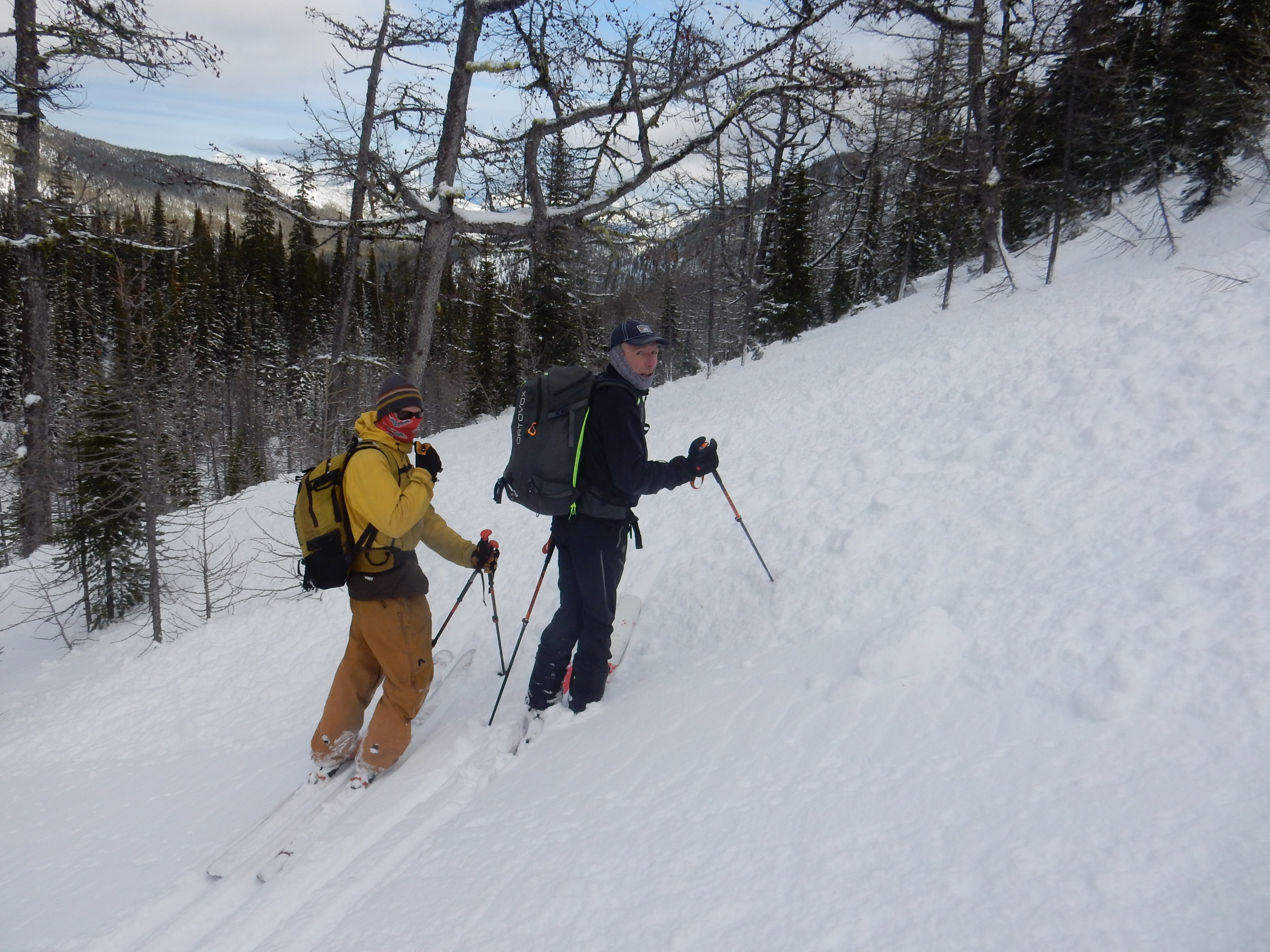
We decided to ascend approximately 300 feet from the basin floor to the crest of a north facing ridge. Slope angles were difficult to assess from below but with the clear potential for steepening pitch near the ridge crest. We were sufficiently wary to travel one at a time and from safe point to safe point. Nearing the ridge crest in slope angles of roughly 30 degrees the first member of the party triggered an avalanche in front of his skis, with an estimated crown width at the point of initiation of 50 feet. Later observations of the deposition zone indicate that the avalanche propagated to 250-300 foot width, with soft debris in the deposition zone to maximum depths of about 2 feet. Since we were very near the ridge top we elected to boot pack straight up the remaining 50 feet. We skied lower angle slopes facing east and south which did not have evidence of this soft slab problem.