
Quick report
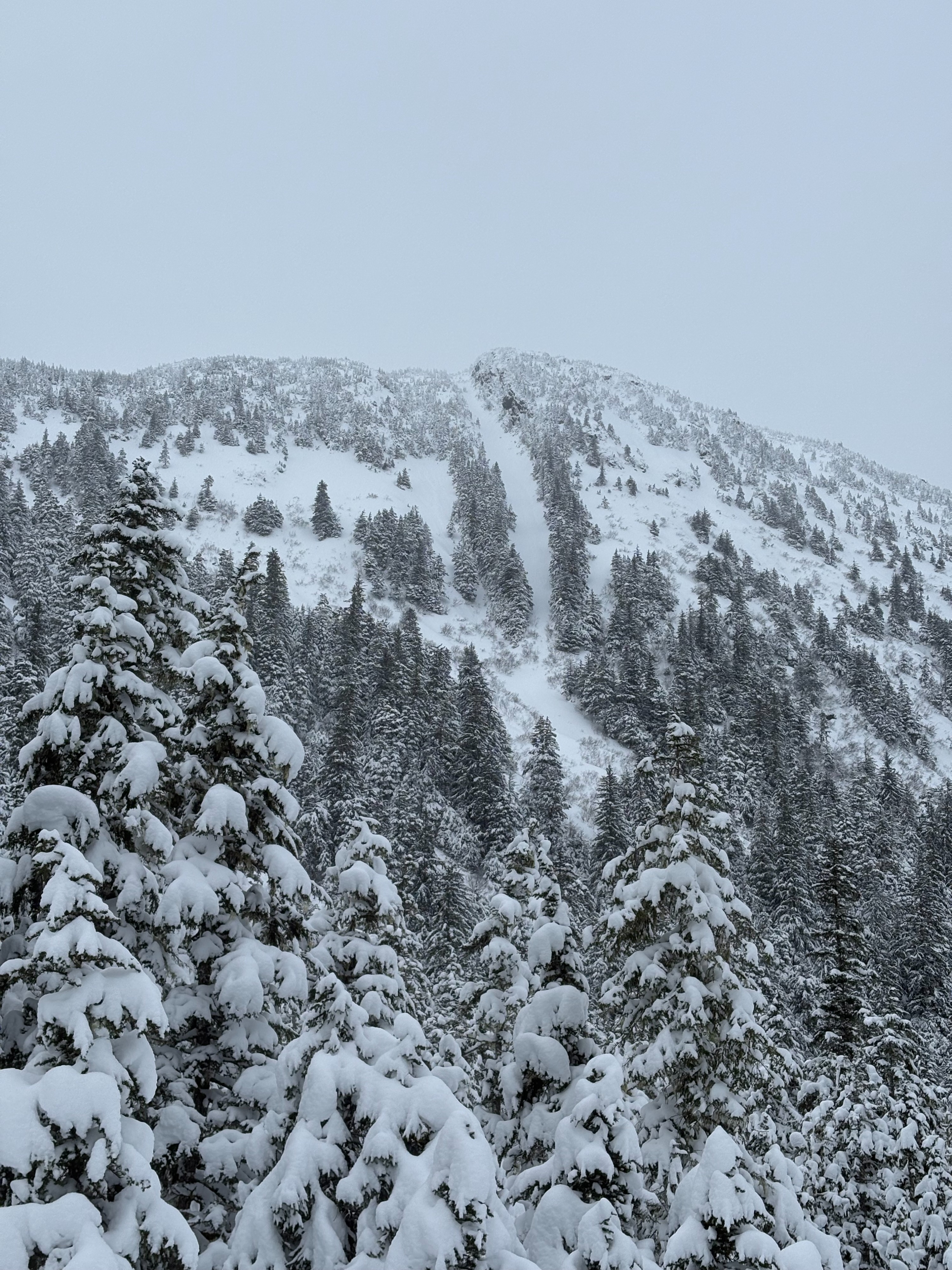
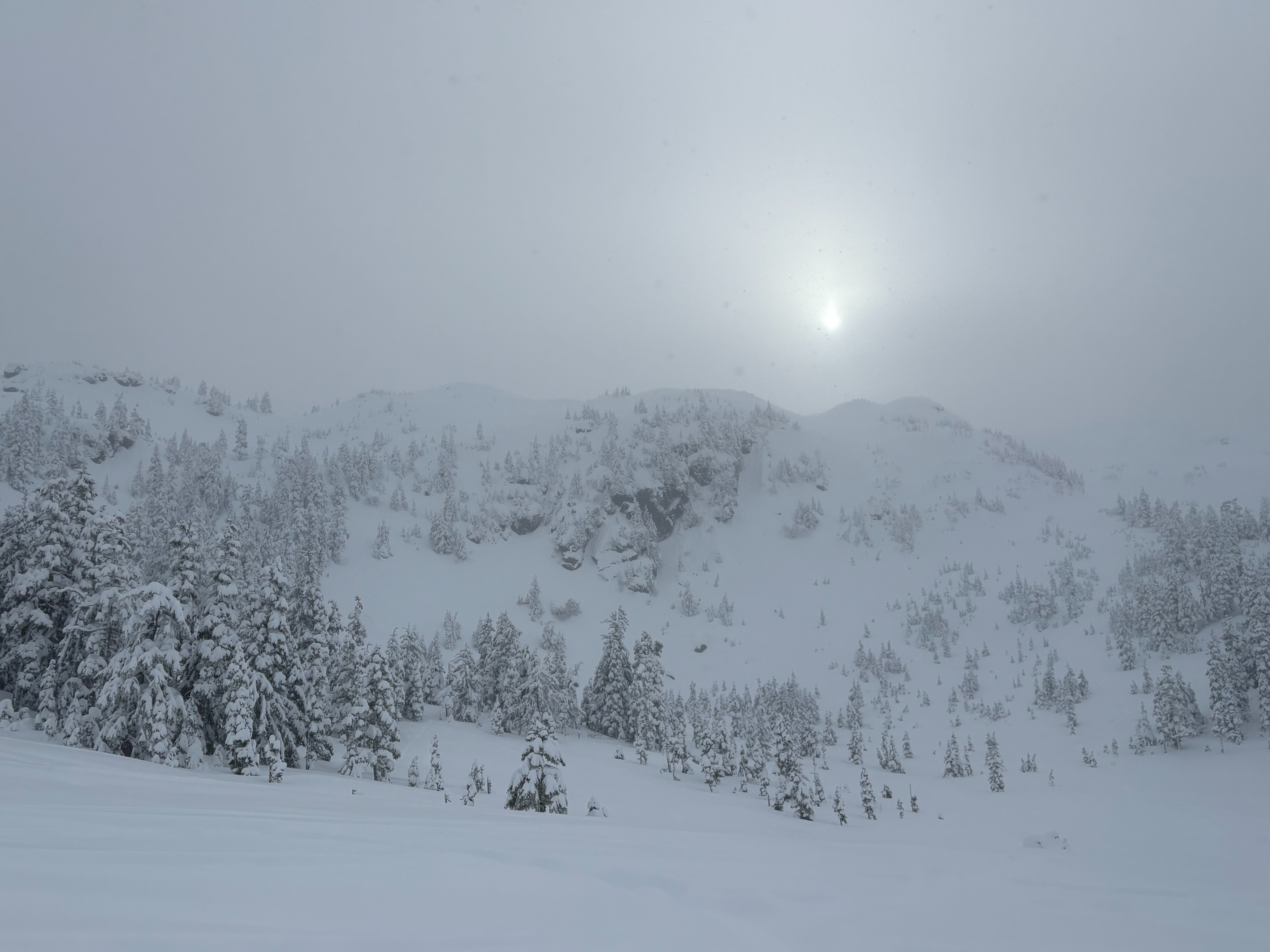
On 3/2/26 we observed a reactive, but somewhat insignificant, storm slab ~10cm down from surface, failing just under the 2/28/26 freezing rain crust. The slab was capable of propagating; however, the debris tended to break apart and behave more like dry loose snow, making it manageable with proper sluff management in appropriate terrain. The 2/28 freezing rain crust is something to keep an eye on as we get more snow atop of it. Observed some natural dry loose activity. Lots of snowmachiners in the bowl. We primarily rode steep, north-facing tree lines. Snow was deep. Not sure the riding could have been better!
Weather
- Air Temp
- 8
- Cloud Cover
- overcast
- Wind Loading
- none
- Recent Snowfall
- 10cm
- Snow Avail For Transport
- moderate amounts
3/1/26: Light snow began in the afternoon and tapered off in the evening. A stronger pulse of the storm arrived overnight, delivering approximately 10 cm of new snow by 1200 on 3/2/26. Temperatures were around 10°F. Winds were light, and visibility was generally good.
Snowpack
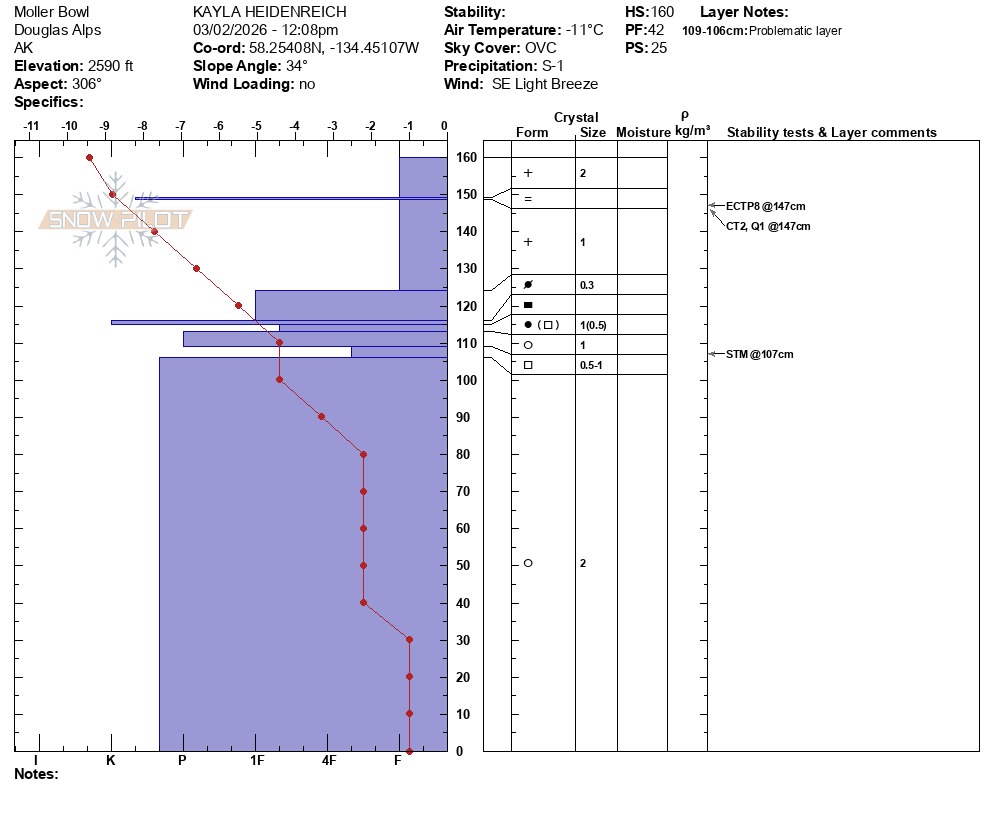
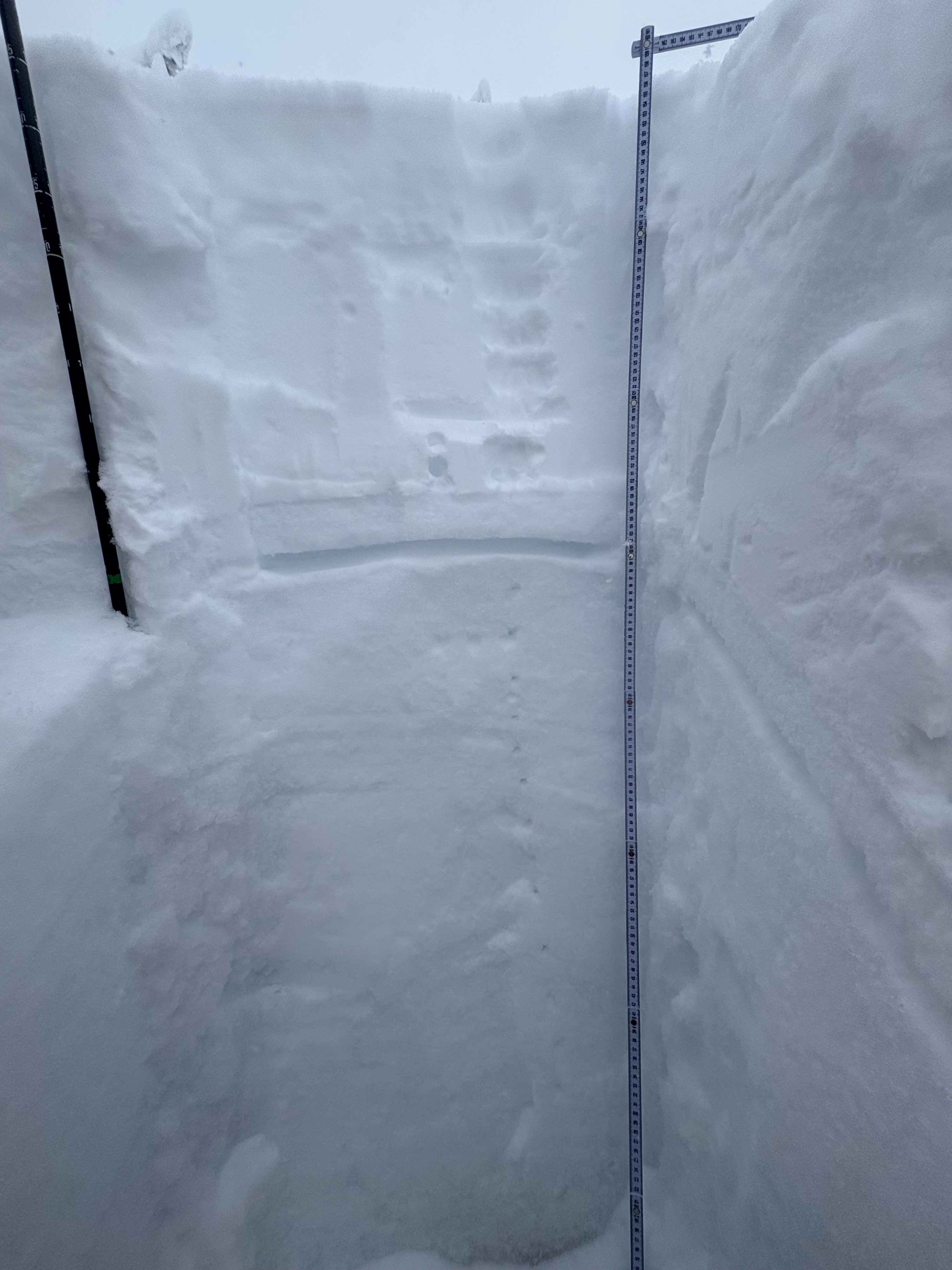
Dug a pit on a NW aspect in a wind-scoured area with rocks beneath. Total snow depth was 160 cm. We observed approximately 40 cm of new snow from the current storm cycle that began on 2/23/26. The 2/28 freezing rain crust was burried under 10cm of new snow which made it not noticable (for riding). In the pit, we found evidence of ~10cm of wind-deposited snow beneath the new snow. Below this sits a melt-freeze crust, with ~3 cm of facets sandwiched between that crust and another melt-freeze layer going to the ground. Test results: ECTP8 10cm down. CT2 Q1 @10cm down. Hand pits on more easterly faces also had Q1 sheers with relatively easy force just under the freezing rain crust (10cm down). Shovel shear test went with medium force on the facet layer ~55cm down (STM @107). The faceted layer ~55cm down was my layer of concern for the day, but was stubborn / unreactive. The 2/28 freezing rain crust is a good one to keep an eye on and watch its reactivity as we get more snow.