
Quick report
- Cracking
- isolated
We visited the southern Whitefish Range to examine the developing wind and storm slab problems and the Persistent Slab structure.
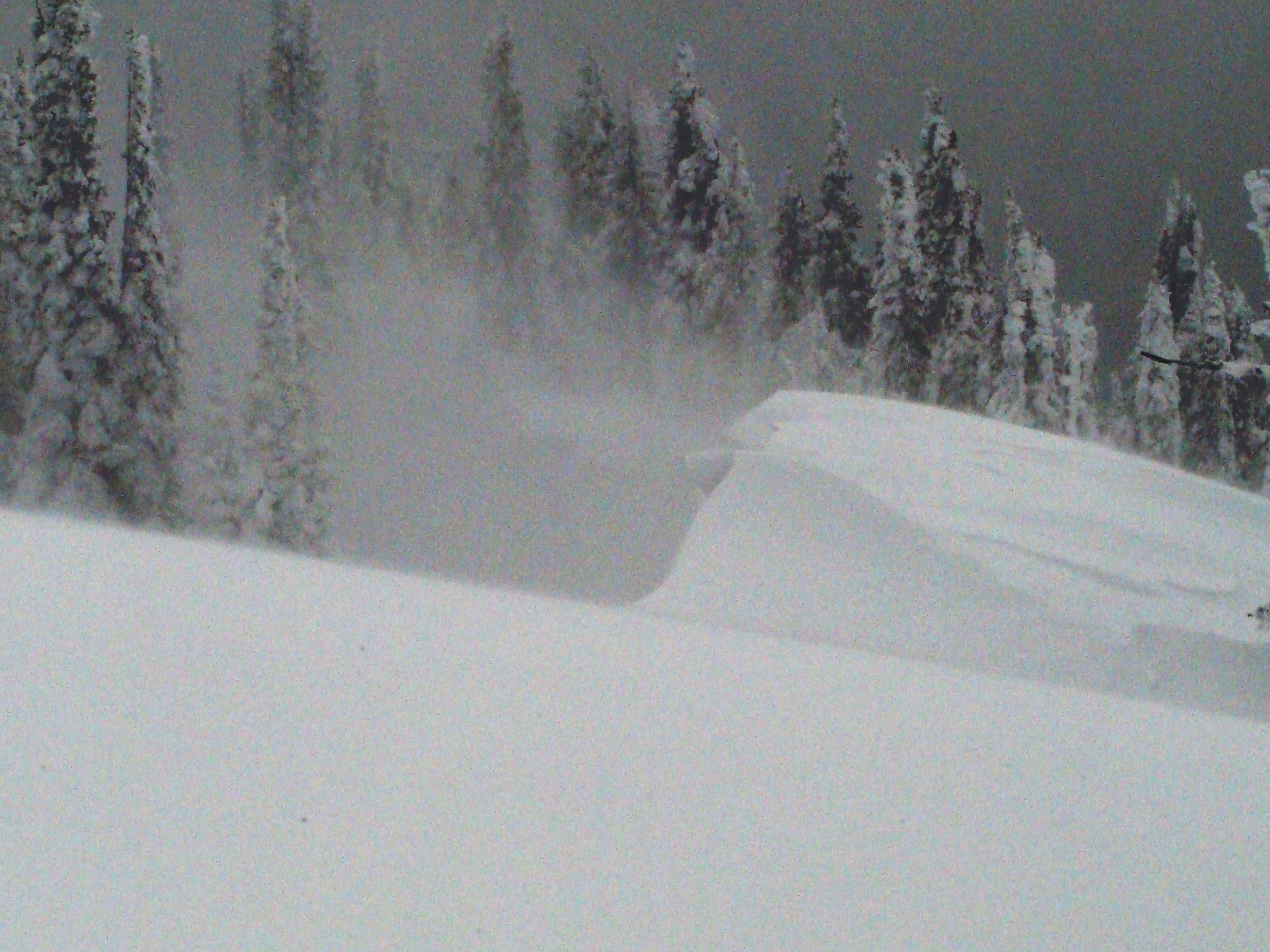
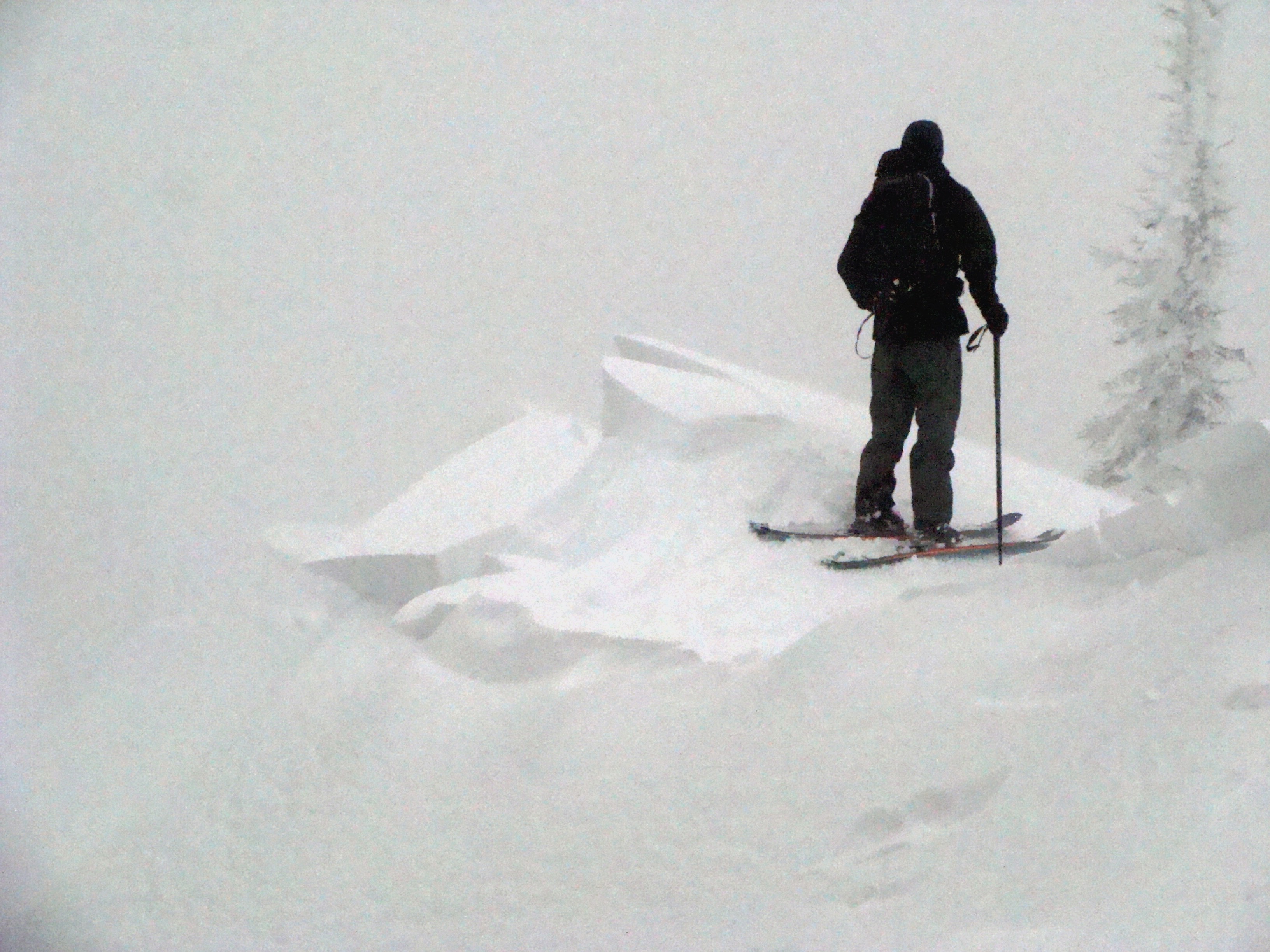
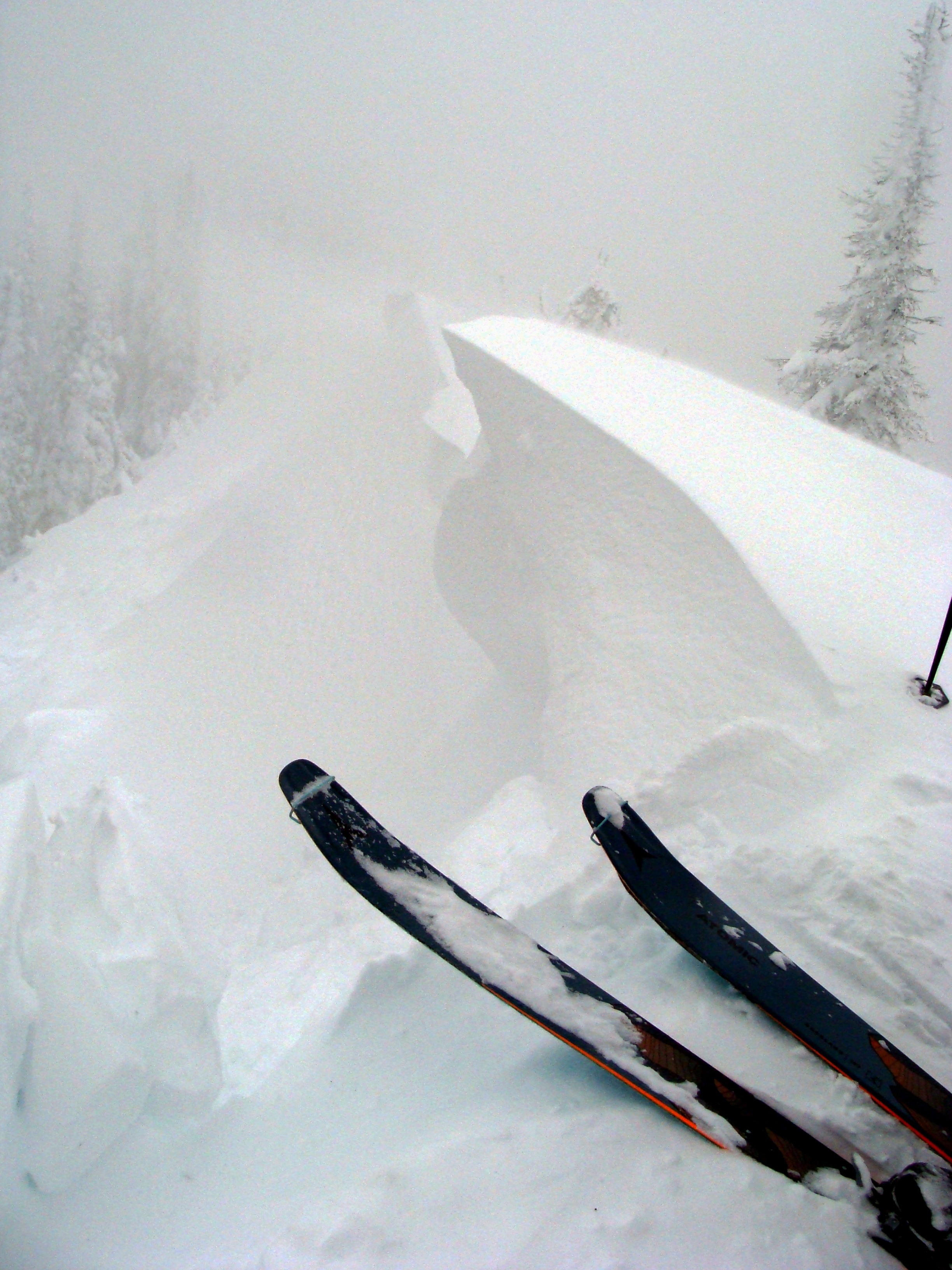
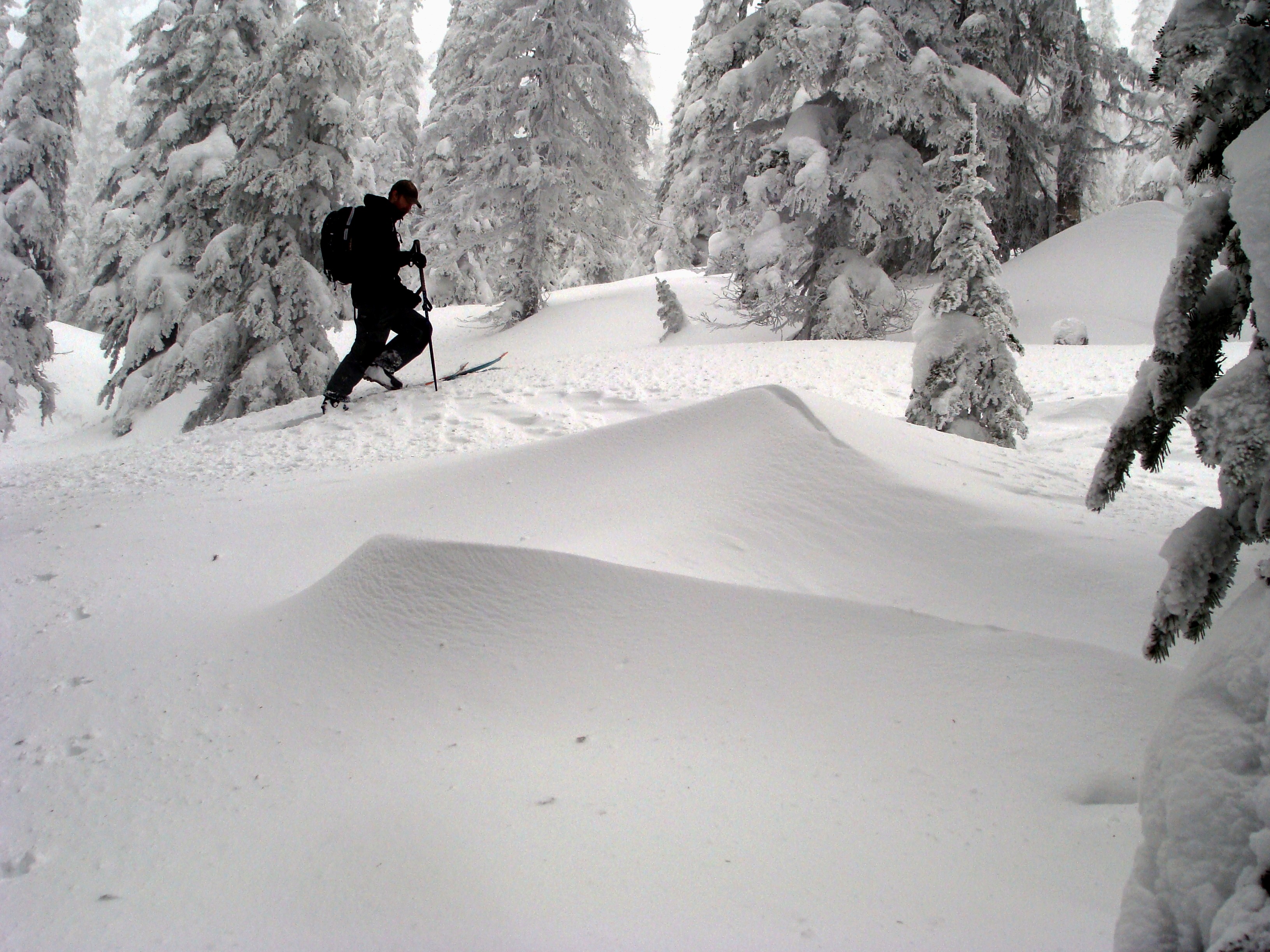
- There was intense wind drifting in open areas, particularly along an upper-elevation ridgeline where fresh cornice formation occurred. Wind transport occurred in timbered terrain to a lesser extent.
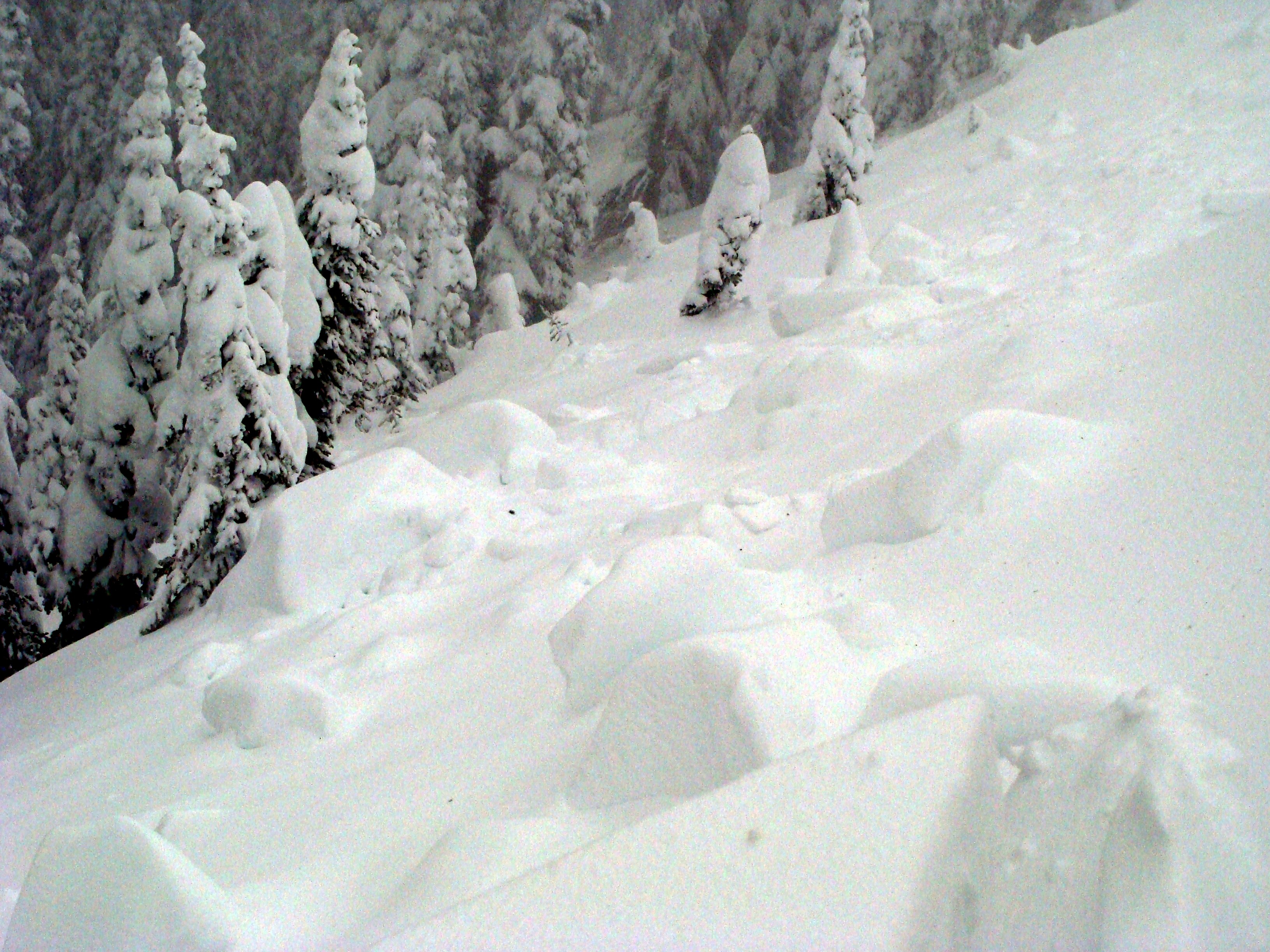
- We noted large debris piles from a recent cornice failure and witnessed a natural failure. These whales were reactive to the weight of a skier, although we gave many of them a wide berth due to their size and precarious perch.
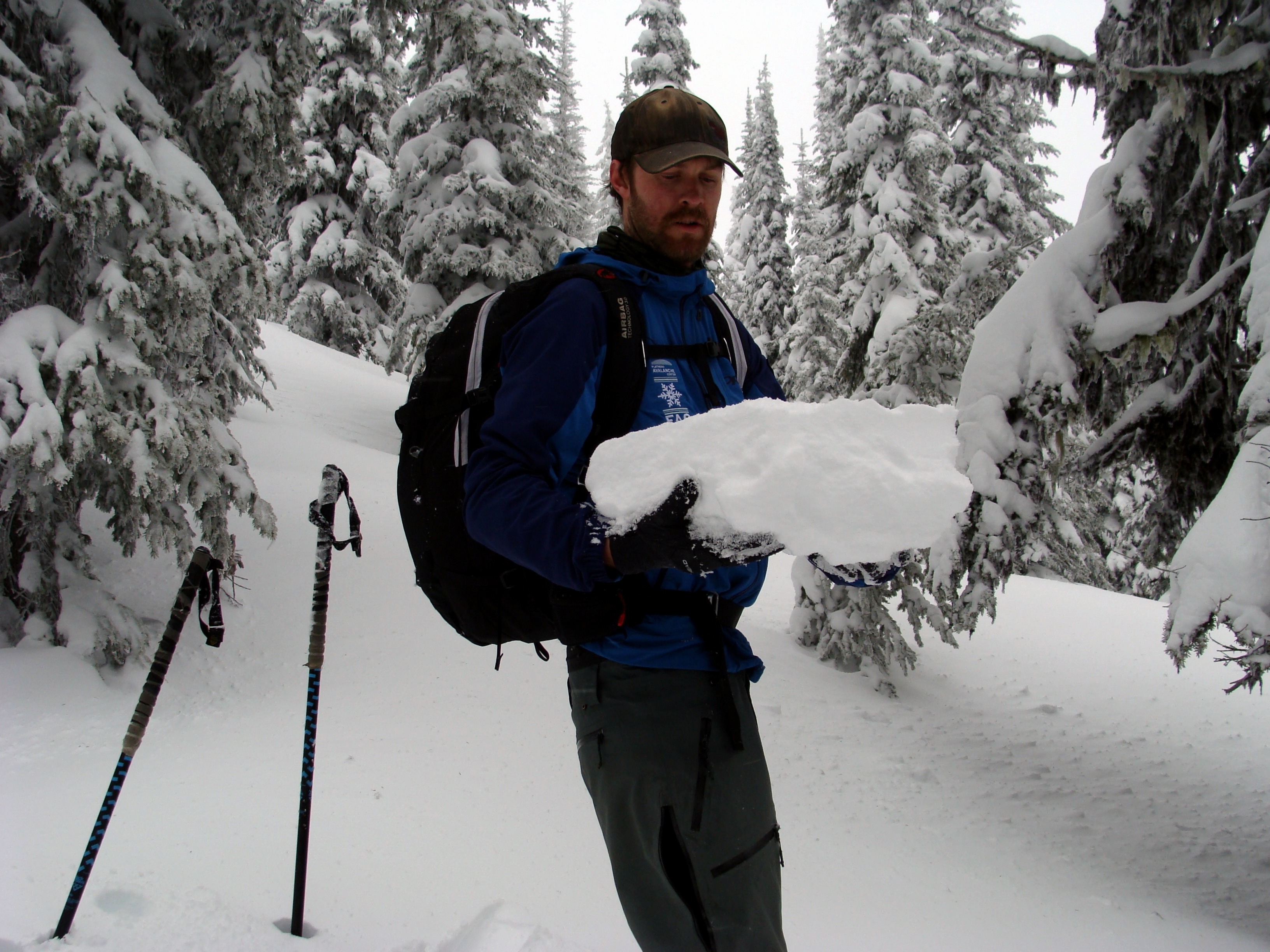
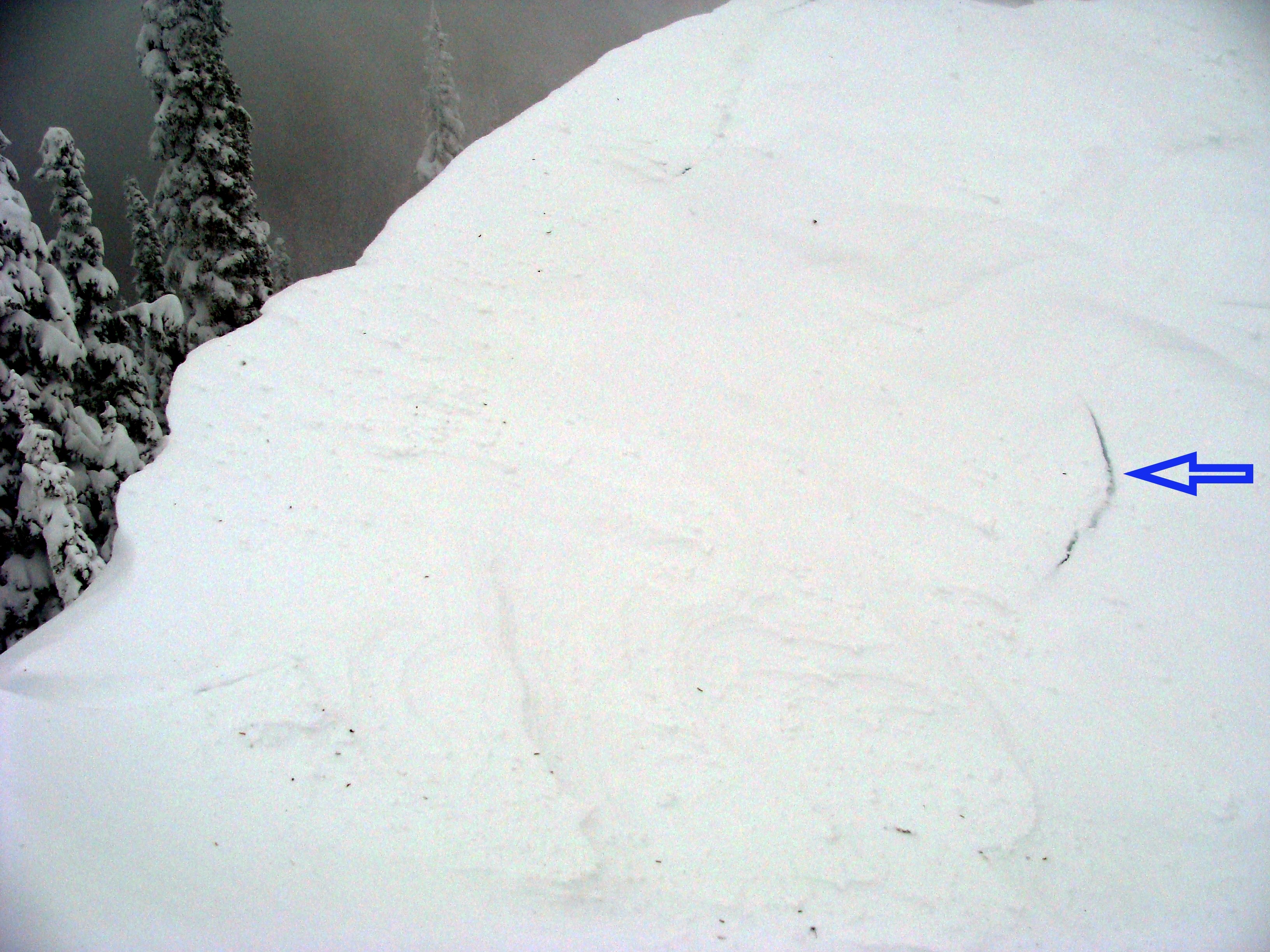
- 6-8" thick, soft slabs formed in sheltered terrain. These occasionally cracked underfoot, but no shooting cracks or collapsing was observed. The overnight snow was dense and rested on Wednesday's low-density powder.
- We had propagation in a snowpit at 6650' in both the storm snow and on a buried weak layer. See the snowpack section for more details.
Weather
- Air Temp
- 30
- Cloud Cover
- obscured
- Wind Loading
- intense
- Rain Elevation
- 4500
- Recent Snowfall
- 20
- Snow Avail For Transport
- moderate amounts
Drastically warming conditions with moderate to strong winds above 6000 feet.
Snowpack
We dug one snowpit on a north aspect at 6650'.
- The height of the snow was 200 cm.
- We had an ECTP 10 x2 in a density change in the storm snow 30 cm from the surface.
- We had an ECTP 22 on a thin layer of small faceted grains 70 cm from the surface.
- The early February crust is 85cm from the surface in this location.