
Quick report
- Collapsing
- specific
New snow is sitting on weak old snow on the northern half of the compass that produced multiple natural avalanches. We observed collapsing and unstable (propagating) test results on previously wind loaded slopes.
Despite the new snow, early season conditions still exist. Sub-surface hazards such as shallowly buried rocks, and trees still pose a real threat.
We observed 5 recent avalanches today. Please see avalanche tab for photos and more details. We experienced multiple collapses. Collapses were specific to areas with wind stiffened snow at the surface.Weather
- Air Temp
- N/O
- Cloud Cover
- overcast
- Wind Loading
- previous
- Recent Snowfall
- 3
- Snow Avail For Transport
- moderate amounts
Today was overcast with light snowfall (S-1) starting around 10am. Winds were light out of the west. We did not directly observe snow being transported today, but saw evidence of wind drifting occuring over the last couple of days. We did not measure temperatures, but they felt mild.
Snowpack
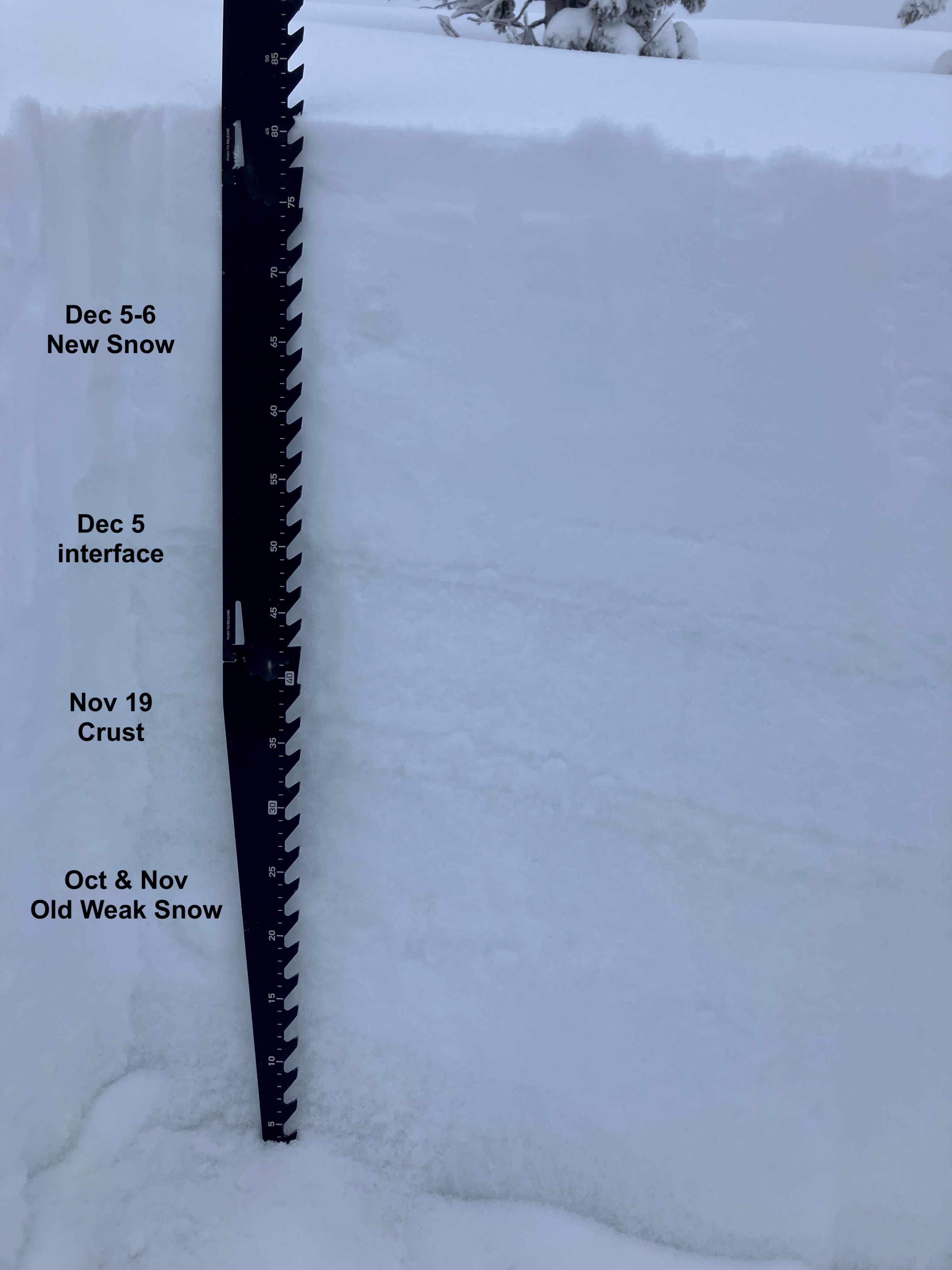
We observed 1' of new snow since 12/5. Underneath the new snow, there is about 4" of weak facets sitting atop a melt crust on NW-N-NE-E facing slopes. Wind loading was observed near ridgelines on N-NE-E aspects at mid/upper elevations.
On slopes that face the sun, new snow fell on dirt or very firm old crusts.
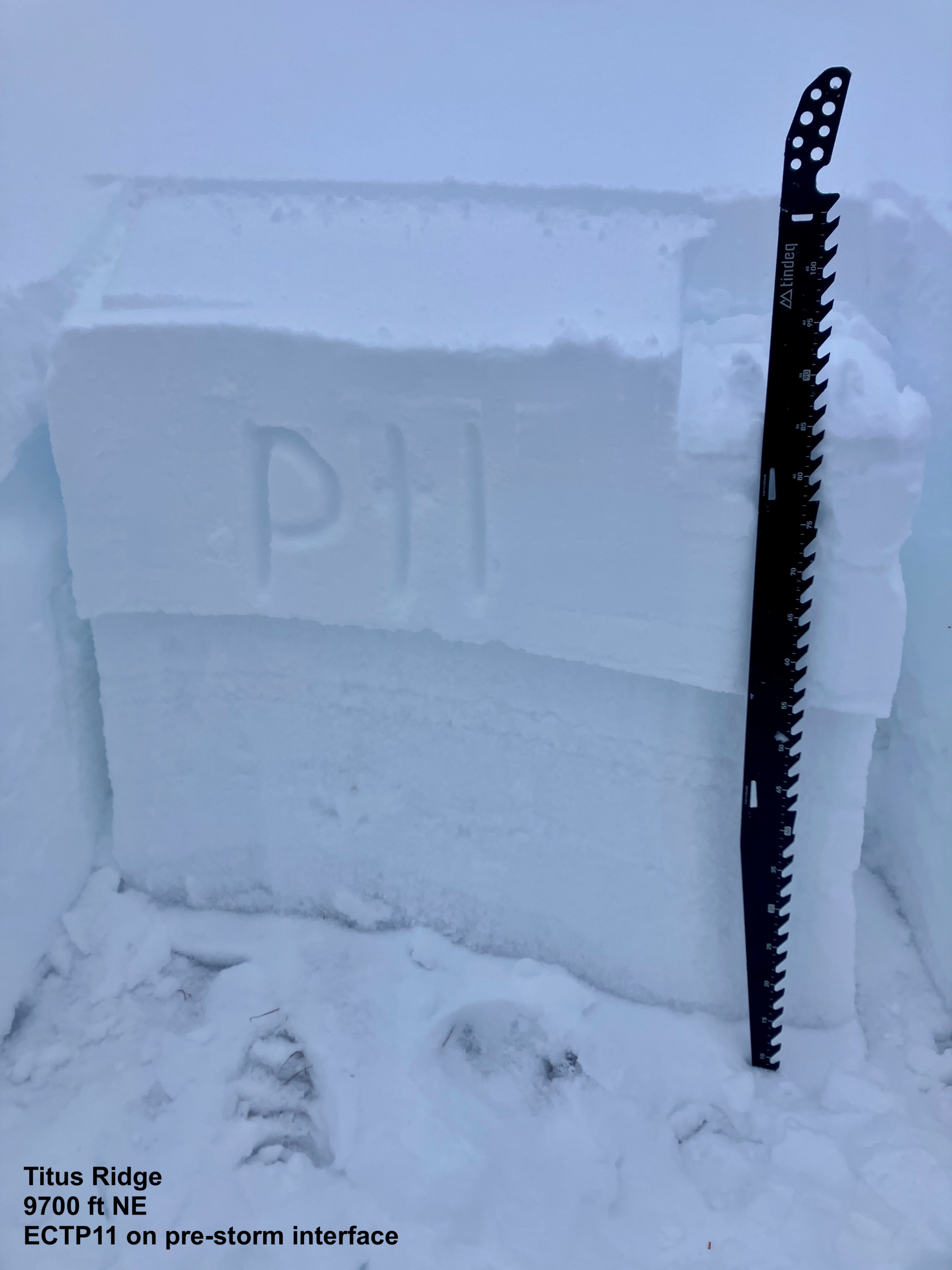
We dug adjacent to a remotely triggered avalanche. The height of snow was 100cm (previously wind loaded). Test results scored an ECTP 11 on the 12/5 interface.
Avalanche
- Size
- D1.5 R2
- Type
- SS
- Aspect
- N
- Trigger
- N
- Elevation
- 9375 ft
Avalanches observed failed on the 12/5 (new/old) interface. The 12/5 interface is generally 1' down in non-wind loaded terrain. 12/5 is made up of facets and rounding facets, which are sitting above a melt-freeze crust that formed in mid-November (11/19). All observed avalanches were failing in response to wind loading. In non-wind loaded terrain, the upper slab was too thin and soft to produce any cracking/collapsing.