
Quick report
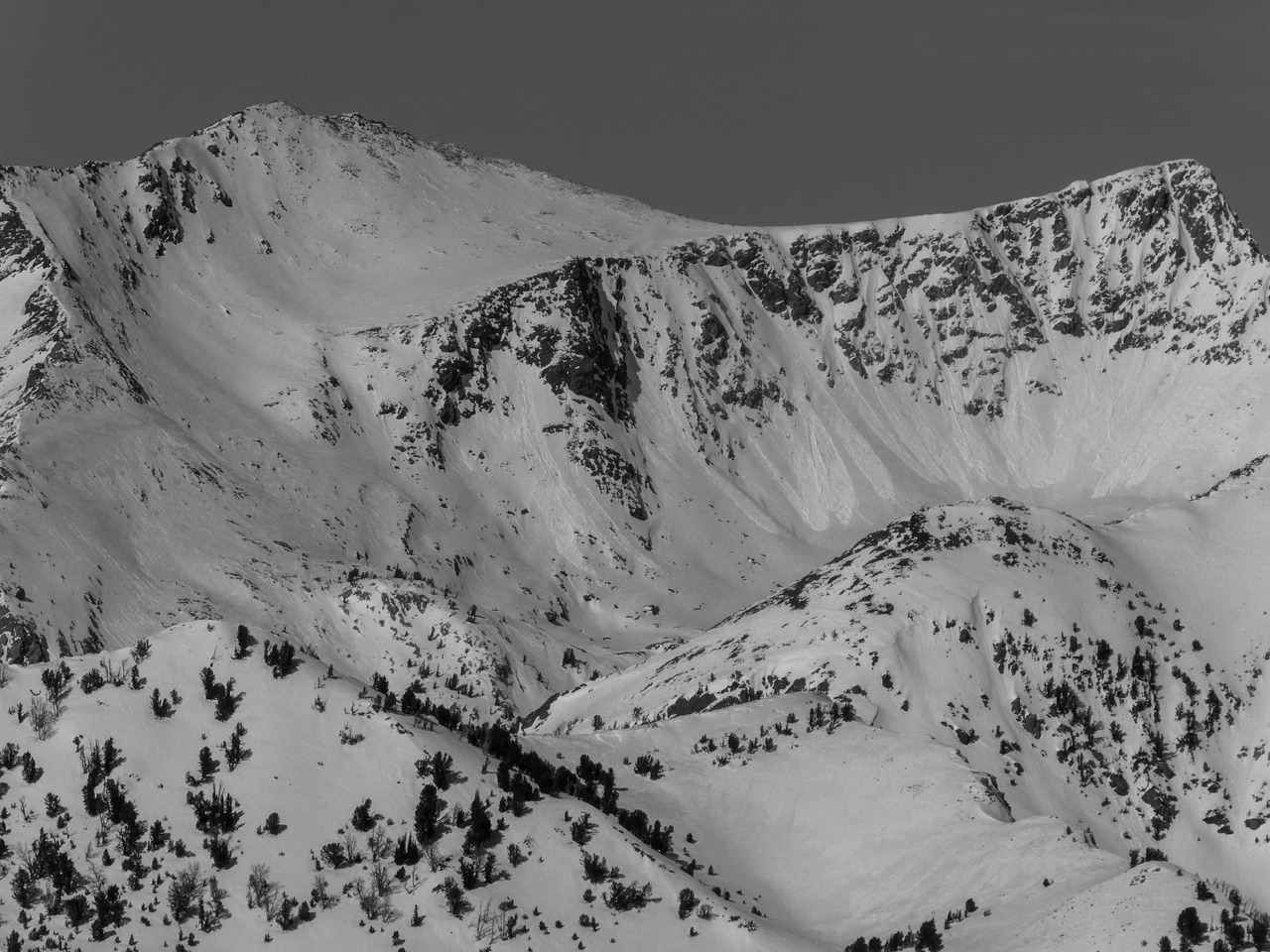
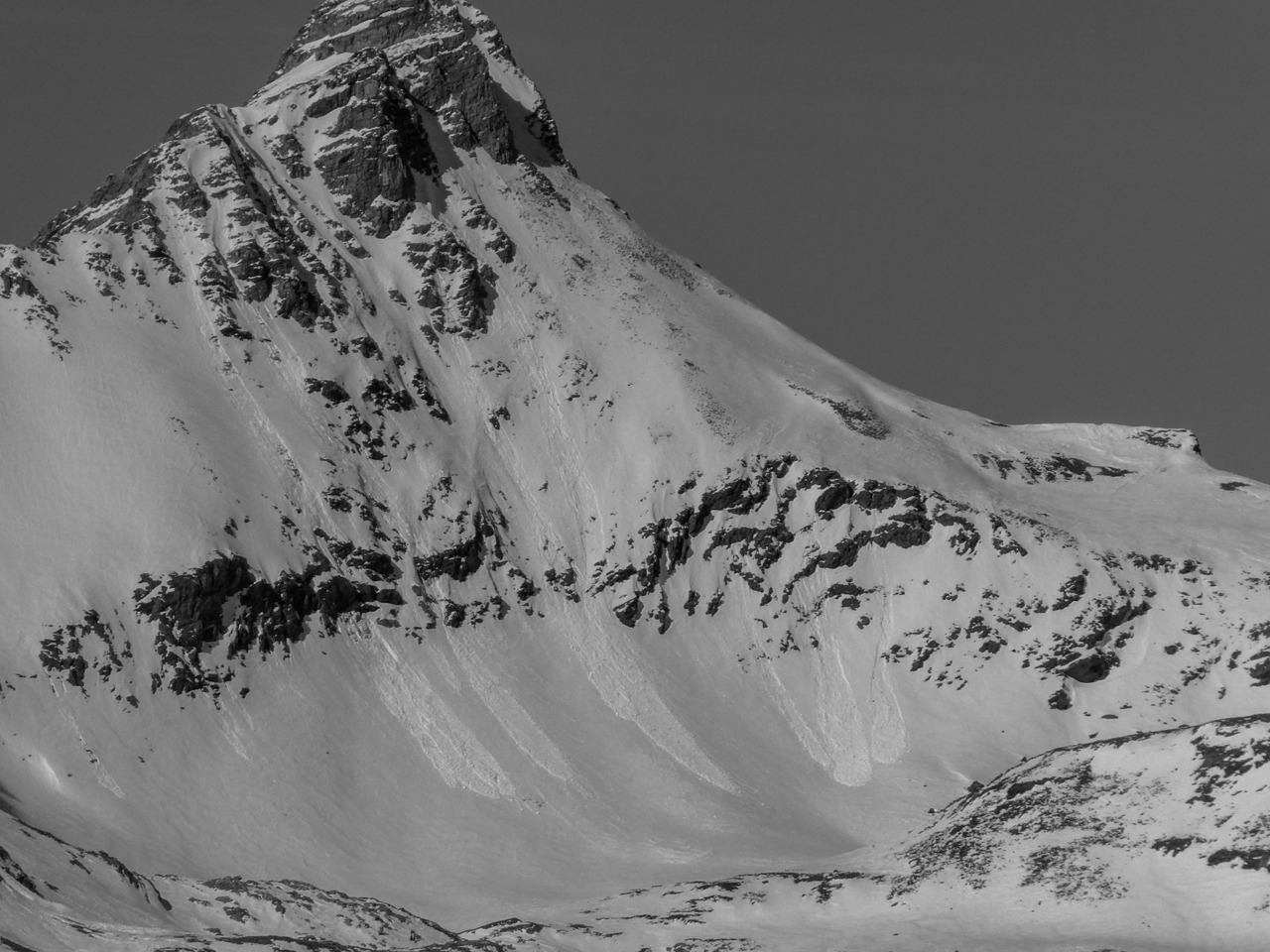
In the Pioneers, we observed loose wet avalanches in upper elevation, steep, rocky terrain on SW-S-SE aspects. There was very little other natural avalanche activity. Avoiding mushy snow or thin crusts that would quickly turn mushy as the sun moved W, significantly reduced our chances of triggering a slide.
Recent wet loose avalanches, some of which may have started as narrow wet slabs.Weather
- Cloud Cover
- clear
- Wind Loading
- none
- Snow Avail For Transport
- none
It was a bluebird day with hazy, thin, high clouds building over the W. Smokys and Soldiers. It was quite warm, but a cool NW wind kept it comfortable at middle and upper elevations.
Snowpack
Steep W-S-SE slopes directly facing the sun had seen meltwater through the entire snowpack. E and WNW had shallower meltwater layers at the surface. A WNW @ 8,000' had about 25 cm of wetted snow at the surface and then perc columns through facets to the ground (HS~ 80 cm). There was cold, dry faceted snow in true shaded, cold sinks near the Federal Gulch TH (6,800'). Ridgetops ~9,000-9,500' and NW-N-NE at most of middle and upper were cold and dry or had a very thin crust.
Avalanche
- Size
- D3
- Count
- 4
- Aspect
- NE
- Trigger
- N
- Elevation
- 9100 ft
We observed some wet avalanche activity in the Pioneers, focused on rocky SW-S-SE aspects between 10,000-11,000'. These appeared to be wet loose, or occasionally a narrow wet slab. We did not observe any widely breaking wet slabs. We observed 2 very large Persistent Slab avalanches on N and NE faces above Triumph and Timber Gulch. These likely released in early March. There were some small low elevation wet loose above the E Fork of the Big Wood. Aside from the abovementioned slides, we observed no other obvious/notable avalanche activity in the Little Wood or surrounding mountains.