
Quick report
Active winds continue to build drifts and slabs as more snow falls. In wind-affected areas, this will contribute to a strong over weak snowpack structure — the recipe for avalanches — regardless of what the existing snowpack looked like. If there was a slab over weak snow prior, it will make this problem worse. If there was just weak, faceted snow, then now there is a slab on top to trigger.
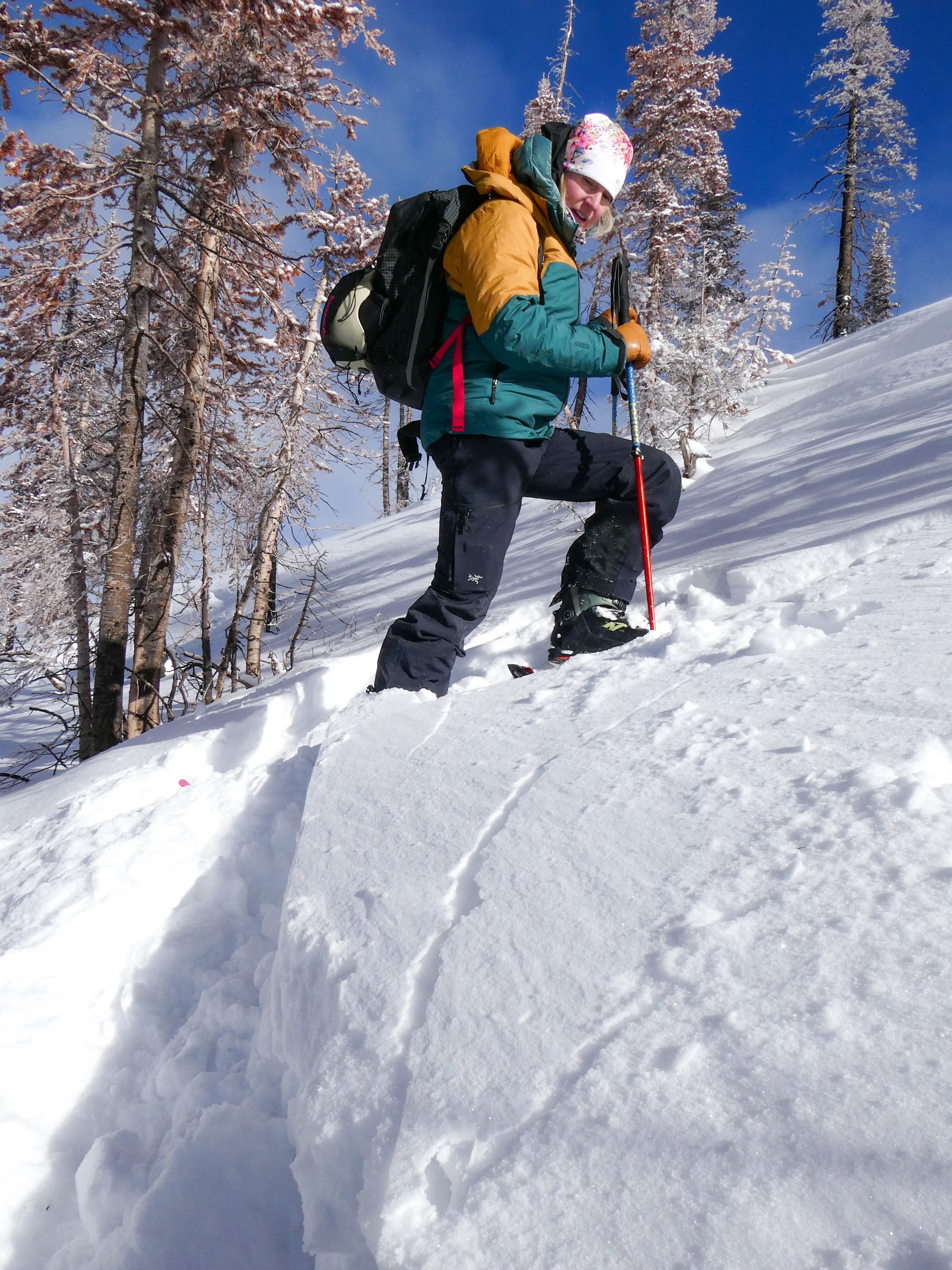
We observed no obvious signs of instability other than wind-stiffened surfaces cracking locally around our skis.Weather
- Air Temp
- Single Digits to Low Teens
- Cloud Cover
- scattered
- Wind Loading
- light
- Rain Elevation
- Precip fell as snow in all terrain we traveled
- Recent Snowfall
- 10-12
- Snow Avail For Transport
- moderate amounts
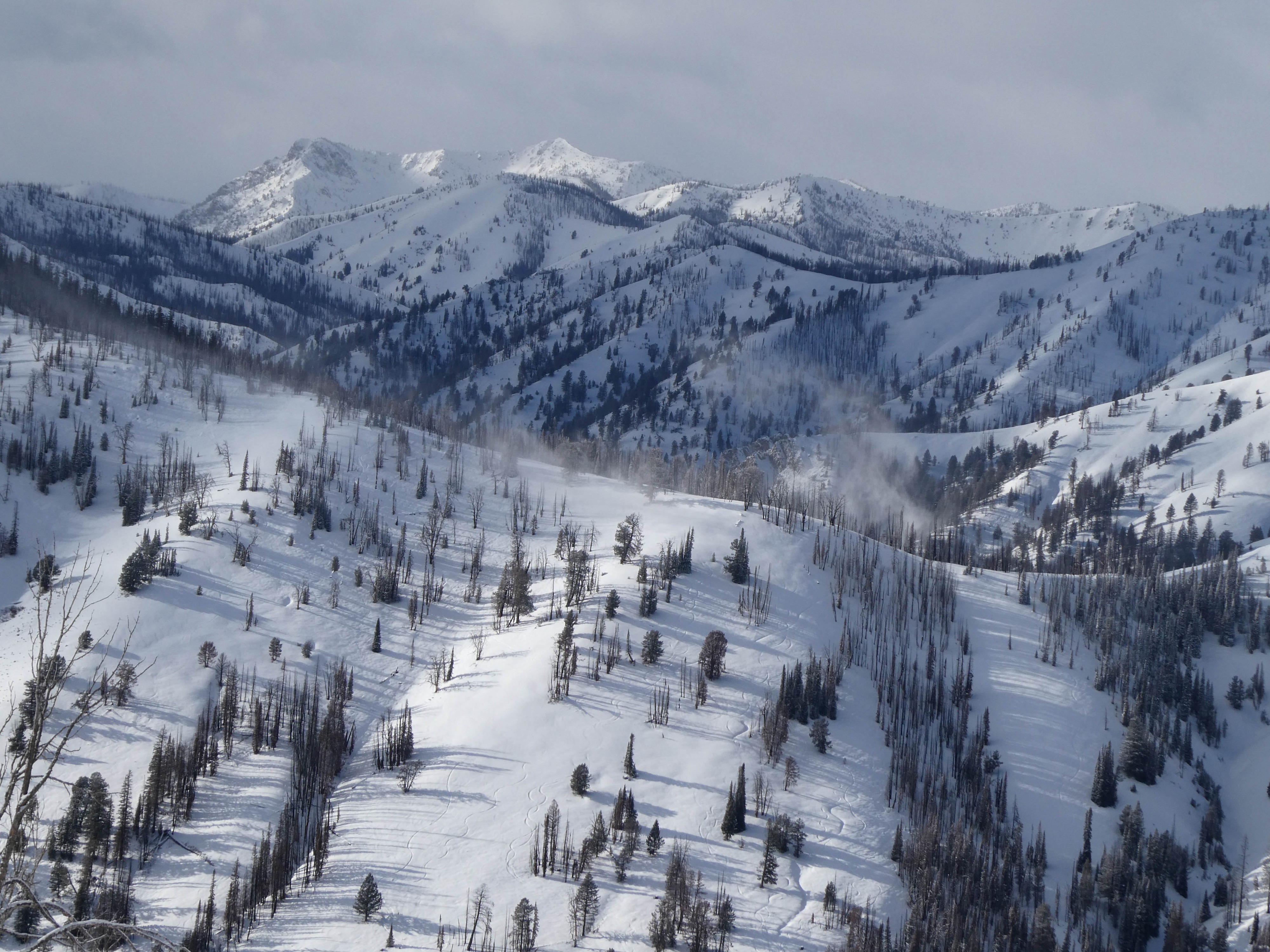
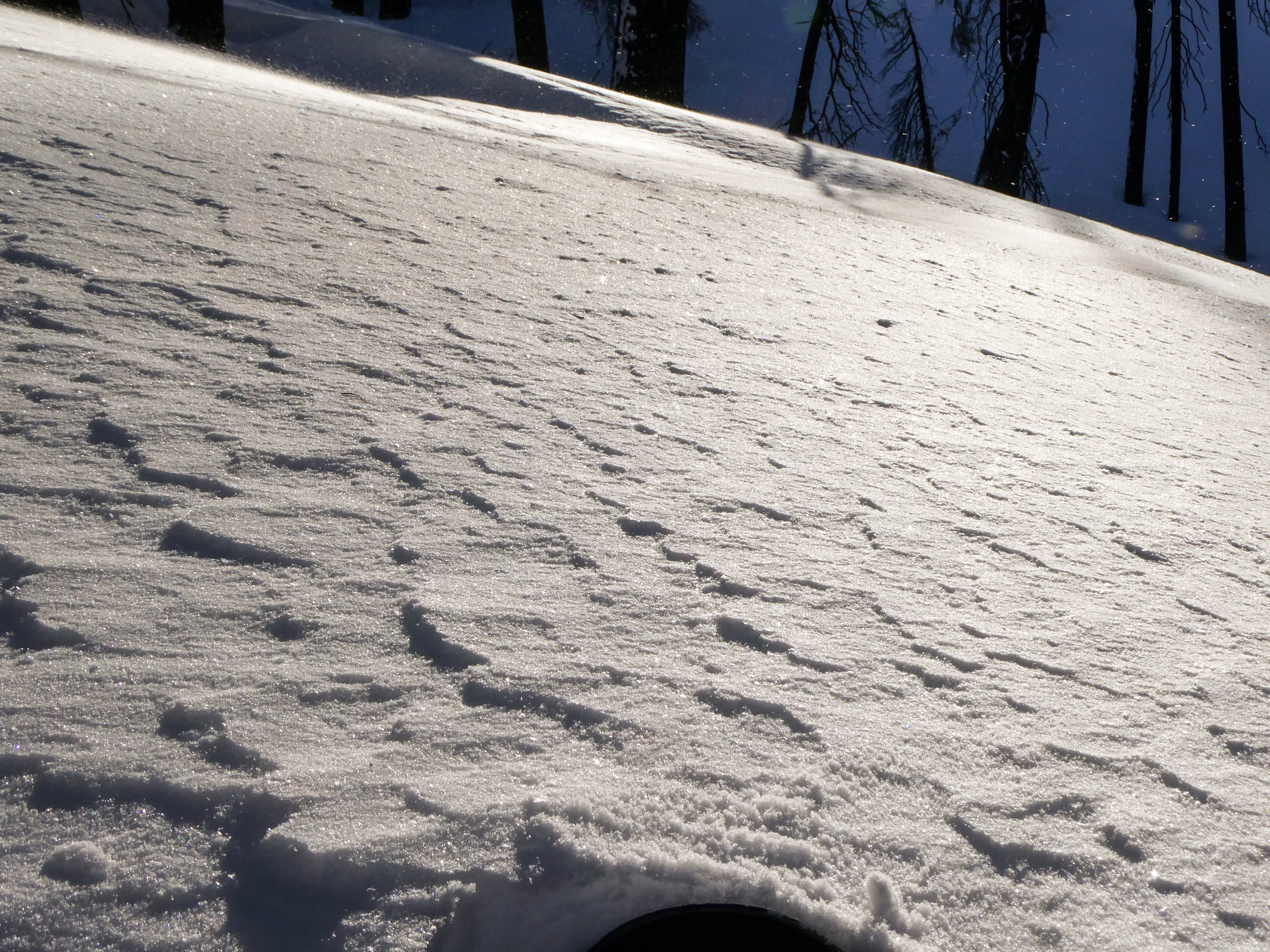
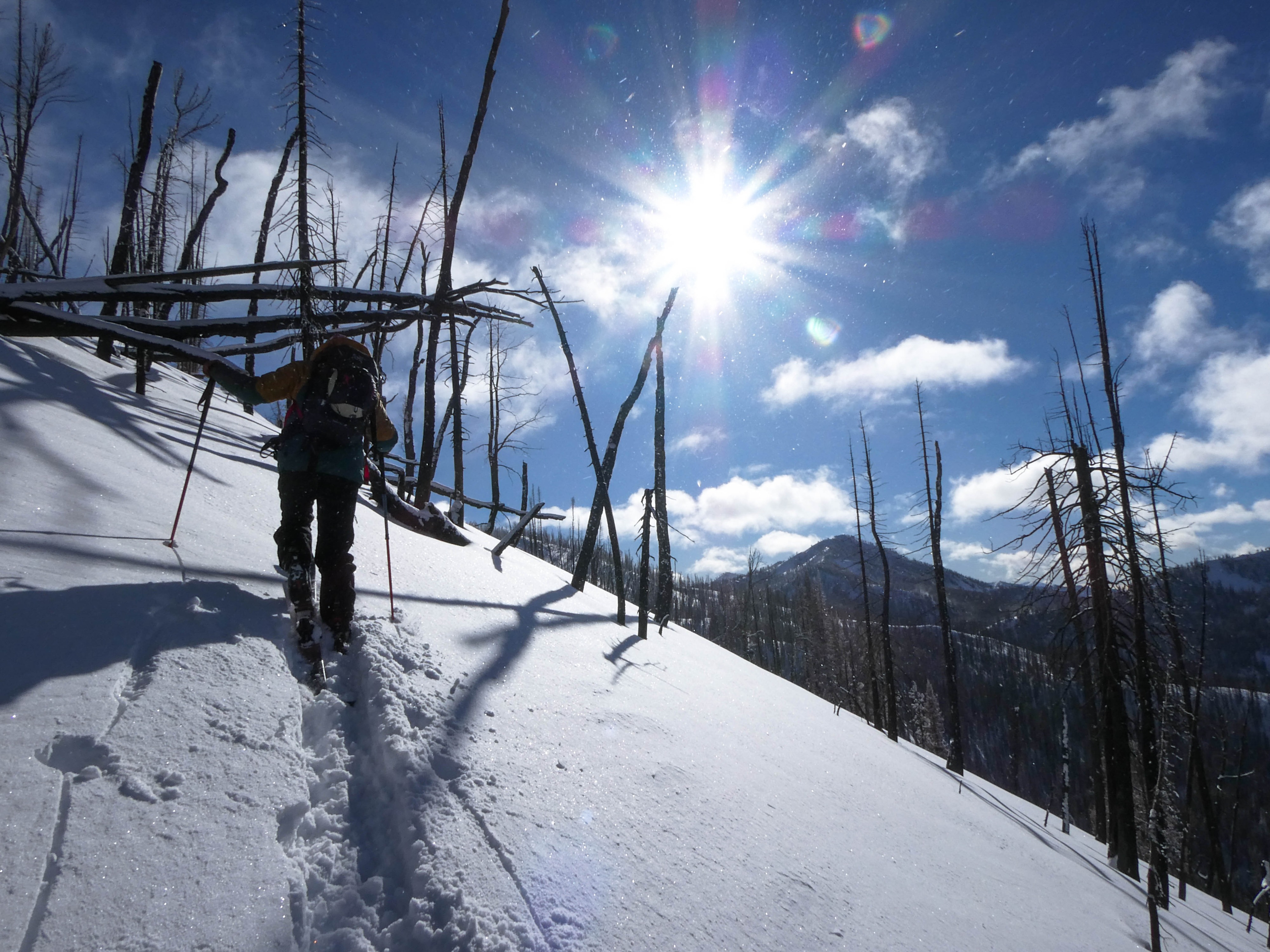
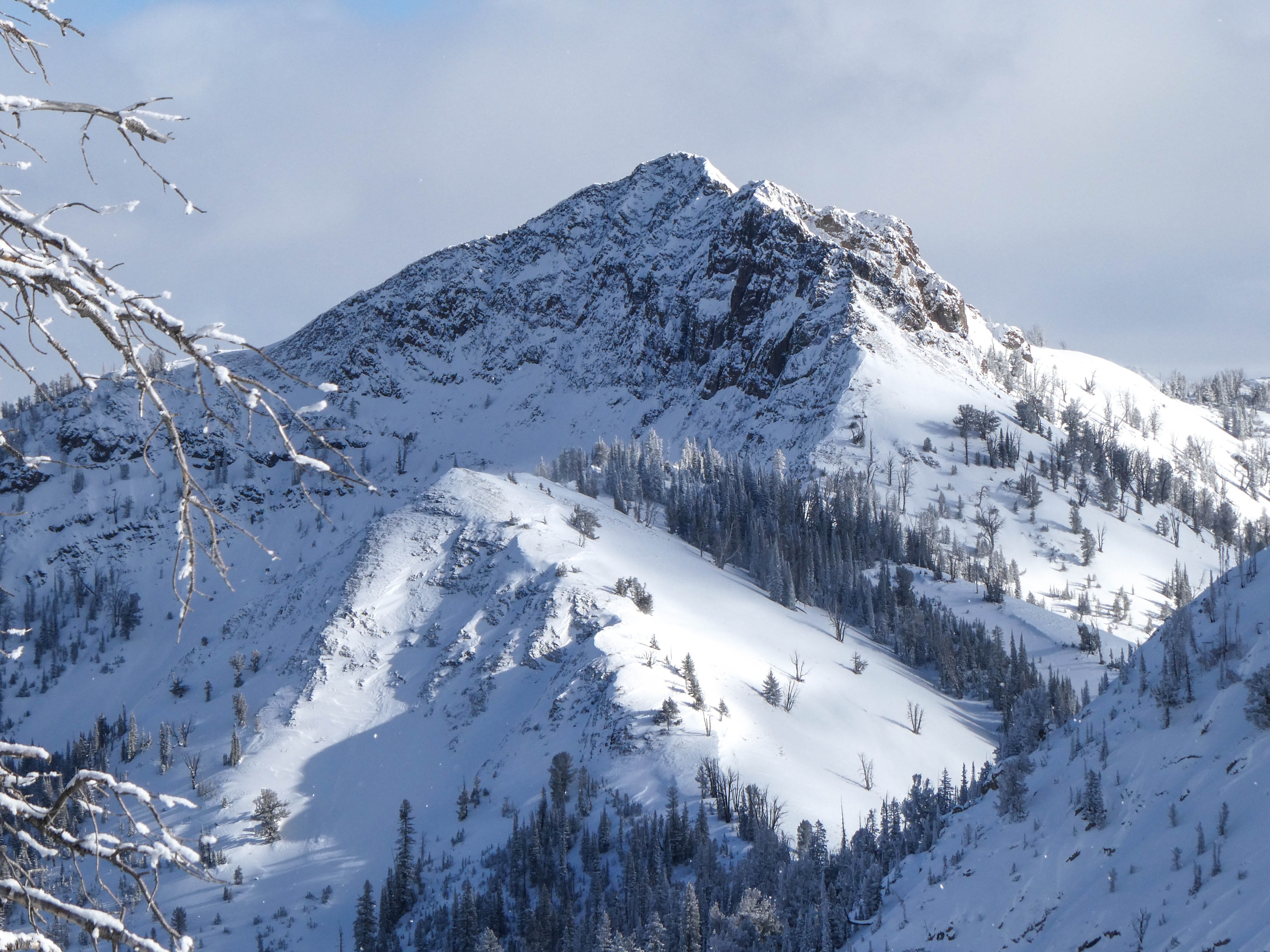
Partly cloudy skies with blue-skied sun breaks and good visibility into the farther peaks of the region remained throughout the day. Riding out Smiley Ck, temps were in the single digits F and only climbed into the estimated low teens F throughout the day. Winds were moderate out of the NW. Snow was visibly being moved on all aspects even on middle-elevations slopes (see photo).
Snowpack
Riding up the drainage yesterday, we found 6-10cm of new, dry, cold snow on the valley floor. Climbing higher in terrain, there was roughly 10-12cm of snow in sheltered locations. On all aspects of middle elevation terrain that we could observe with great visibility, we observed plumes of snow moving around with the sustained moderate NW winds. Wind drifting near ridgeline / on more exposed terrain was present, however since we only traveled into the very bottom of upper elevations (9300'), we only observed pockets of wind-affected snow, finding only small wind slab presence. However, given the dry cold nature, and the amount of fresh snowfall, wind slabs were certainly being built in higher alpine terrain at a faster rate.
Digging a snowpit on a NW-facing slope near 9000' where the snow depth (HS) was 90cm, we found 11cm of new snow on top of a well-preserved layer of buried surface hoar. Stability tests indicated a lack of bonding between the new and old snow, but a lack of cohesion in the new snow due to the cold temperatures (ECTN7 ↓ 11). We also found there to be no cohesive slab below, with facets ranging from F- to F+ in the rest of the snowpack (ECTN29 ↓ 78, with a vertical break).
Avalanche
We observed no new significant avalanches. Old (>1 week) facet-lanches were visible on far off N-facing terrain.