
Quick report
- Cracking
- isolated
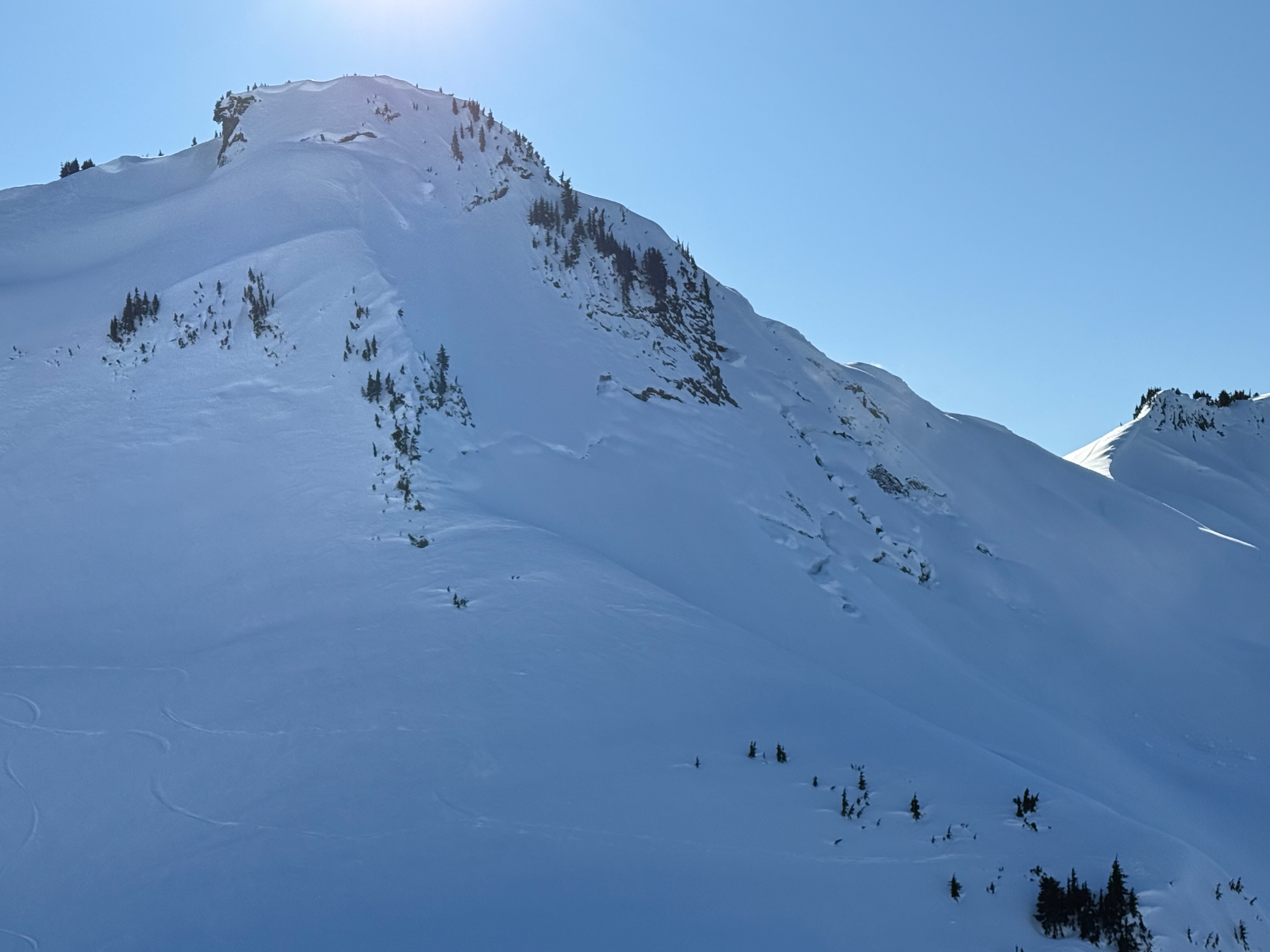
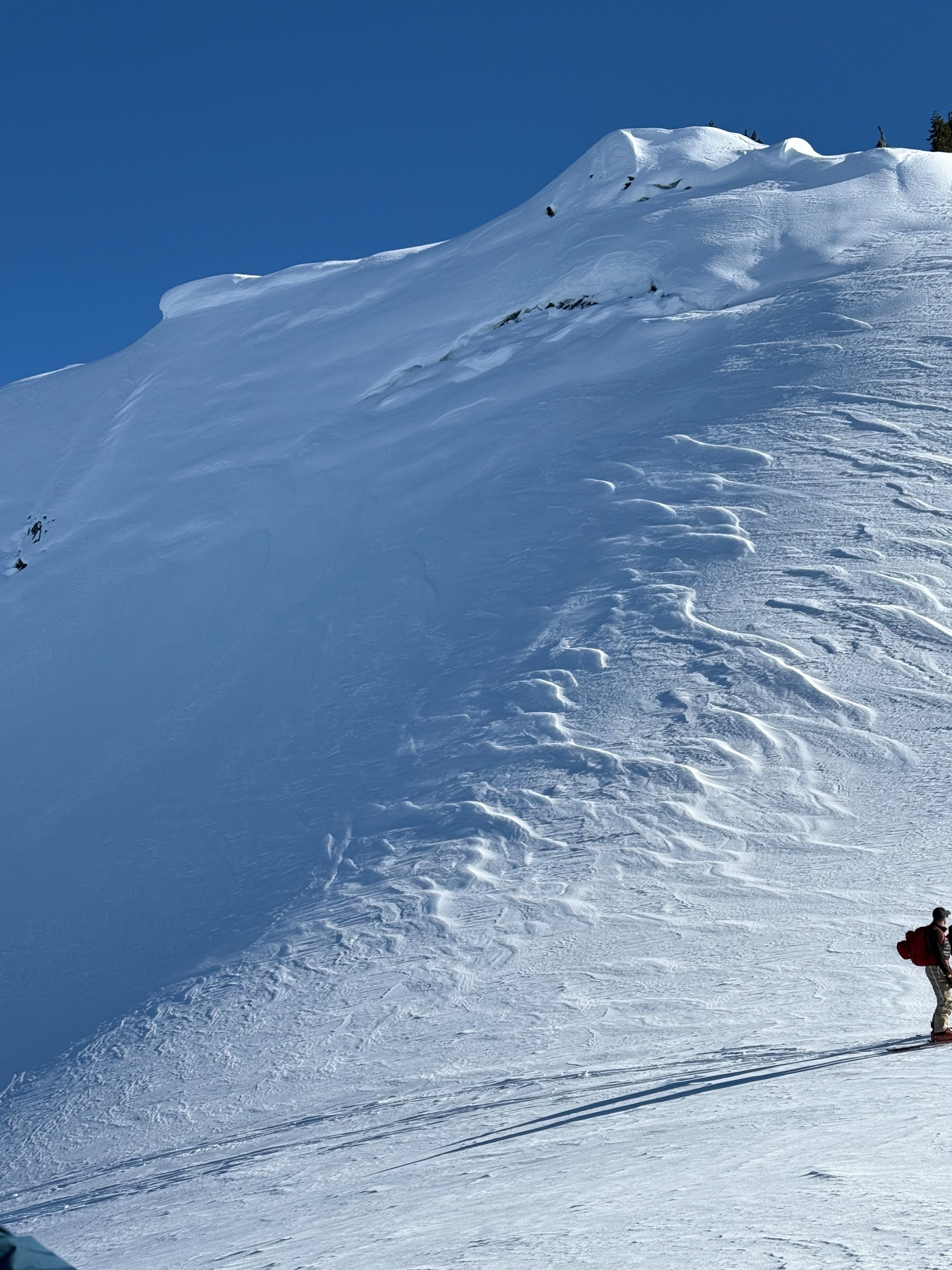
Wind loading from ridge lines was noticeable throughout the majority of our tour, primarily driven by NNE winds depositing snow onto S-W features. Despite the evident wind patterns, we observed no recent or past wind slab activity. Classic wind-affected snow with a hollow feel was absent, even in areas prone to loading. We did encounter isolated cracking on smooth wind-loaded features, but this was inconsistent and limited to specific slopes. Our tour focused on north-facing slopes, where I was particularly curious about faceting within the snowpack, especially beneath wind-loaded areas. The 1/10 crust was highly variable in depth, ranging from as little as 2–4 inches on wind-scoured features to nearly 2 feet beneath the snow surface in more protected areas. Facets appeared to be forming throughout the snowpack, extending down to the 1/10 interface. I noticed signs of faceting through a softer, more "sugary" texture in the snow, which showed some rebound. Easy hand shears were observed near the top of Heli Line, where I used a loop to inspect the crust interface, noting angular edges on the 1/10 crust interface. The previous day (1/18), appeared to have widespread wet loose avalanche activity on sun-exposed slopes. However, during our tour, we noted only minor warming on steep, south-facing aspects. Despite the consistent sun exposure, slopes remained cool enough to prevent active wet loose avalanches or roller-ball formation. By the end of the day, surface snow temperatures remained surprisingly cold, preserving ski quality.