
Quick report
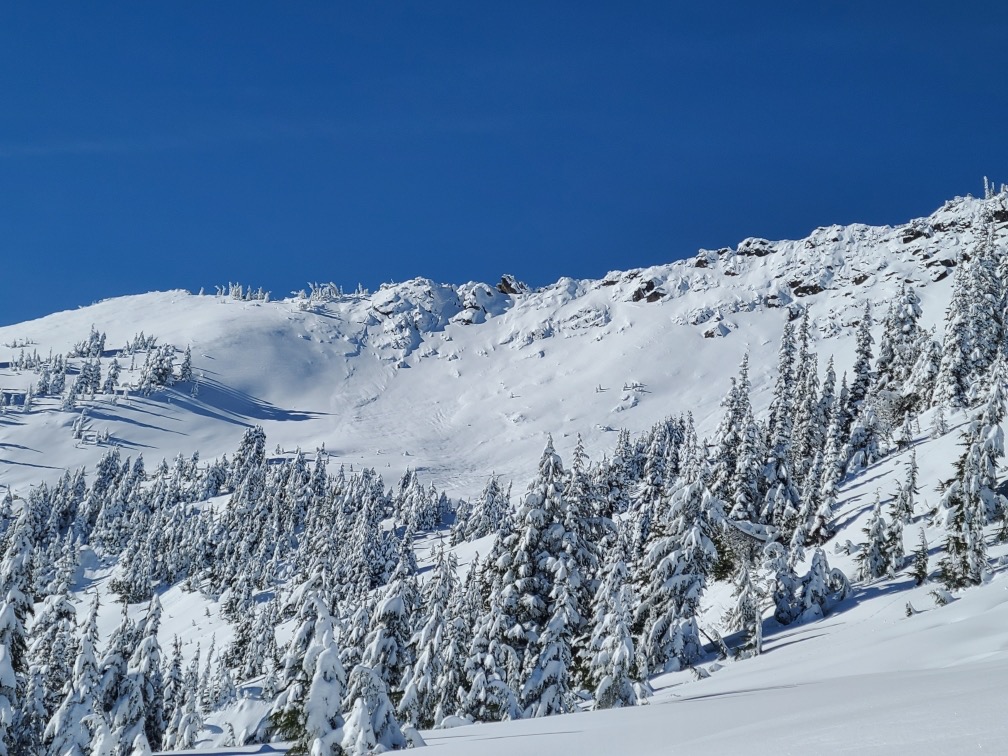
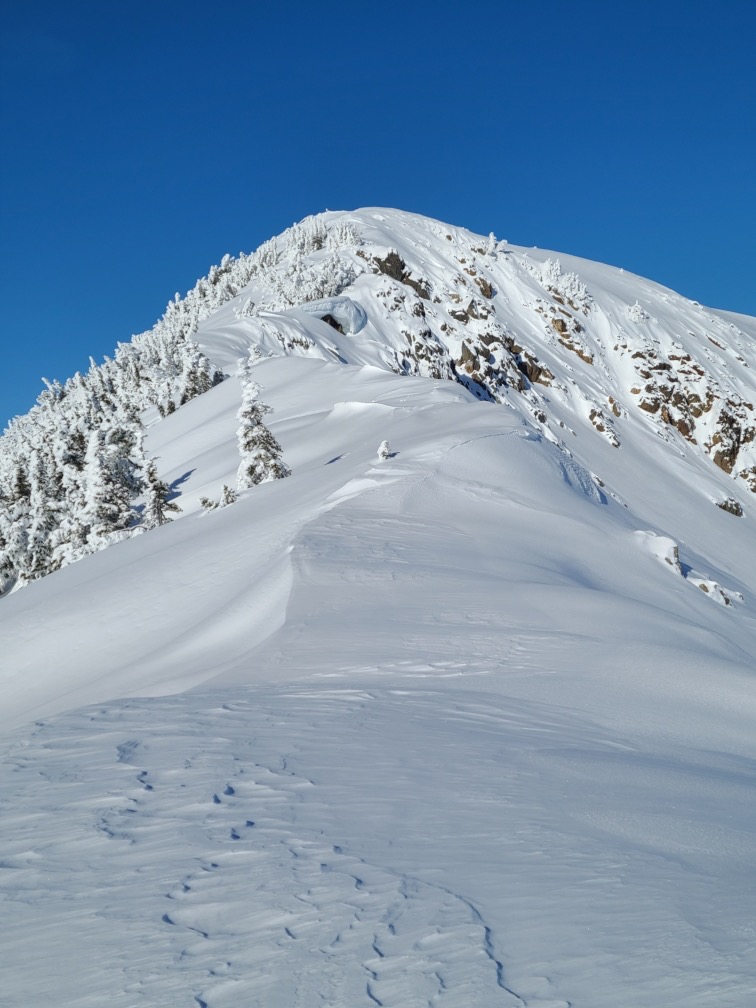
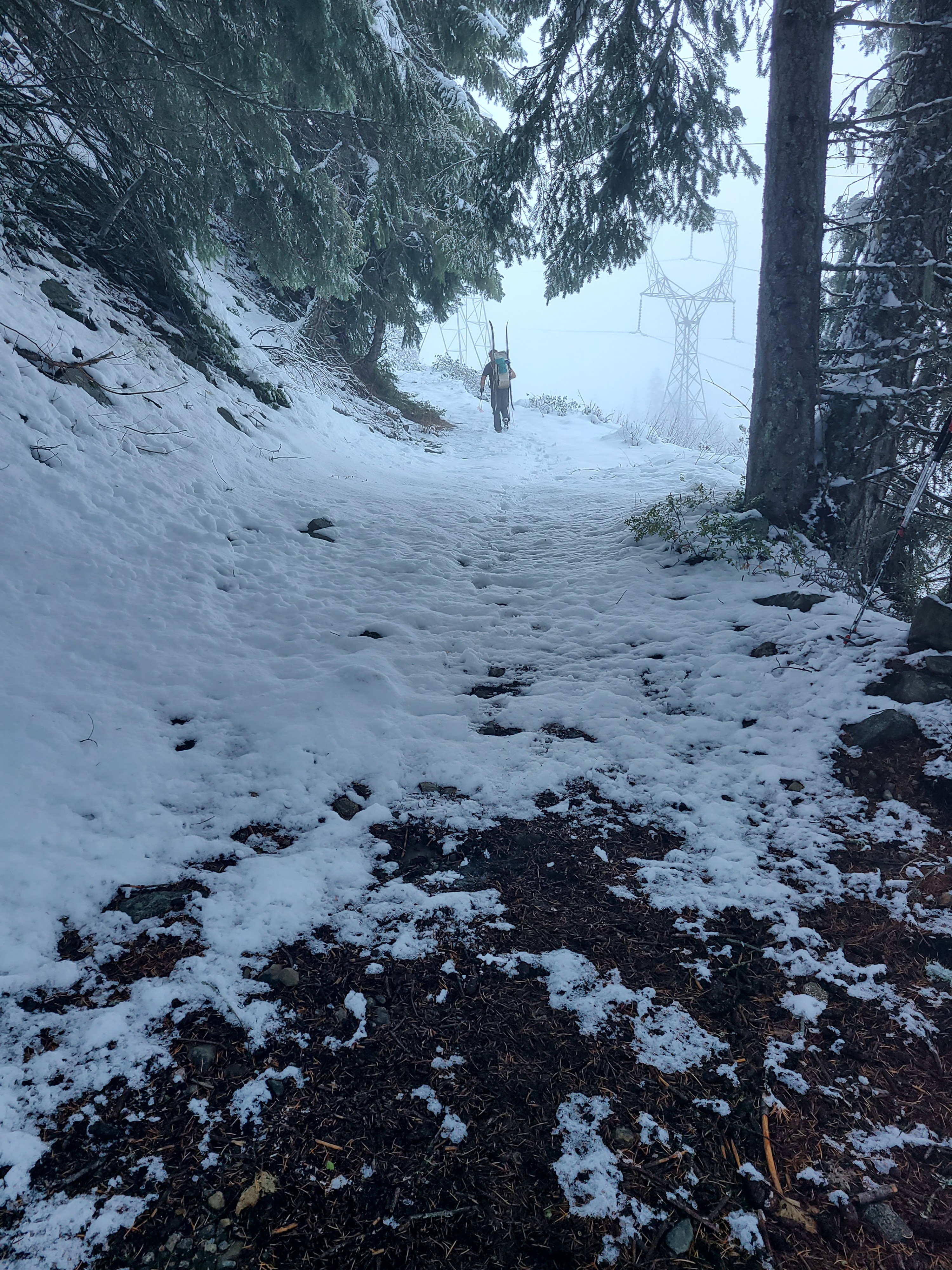
Knowing that upper elevations harbored snow depths suitable for recreation, we took advantage of the break in the weather to investigate the snowpack and look for any recent avalanche activity. It was certainly a glorious day to be in alpine terrain. That said, the price of admission to get through the lower elevations is still steep. Despite what looked like enough snow to skin right at the trailhead, we knew that the steep, southerly, forested slopes of Rock Mountain would be treacherous at best with skis on our feet. So we strapped skis on our packs and started up the summer trail to Rock Mountain. While the snow in open areas was deeper, it only served to hide the rocks and roots below the shallow cover. And there was a significant amount of bare ground beneath the forest canopy. We reached 4800ft before switching to our skis as our mode of travel. From there until about 5000, it was mostly easy going, with some navigating around exposed obstacles. Above 5000ft, things looked a lot more like winter, and we found easy travel and trail breaking to the summit of Rock Mountain. There was a thin, breakable crust just below the surface, which slightly reduced skiing quality, but not enough to hurt anyone's feelings on this beautiful day.
Below 5000ft, there wasn't sufficient snow depth for avalanches. Above that, wet loose avalanches were the most obvious hazard. But we observed active wind transport from moderate, easterly ridgeline winds and saw signs of isolated, small wind slab development on westerly aspects.
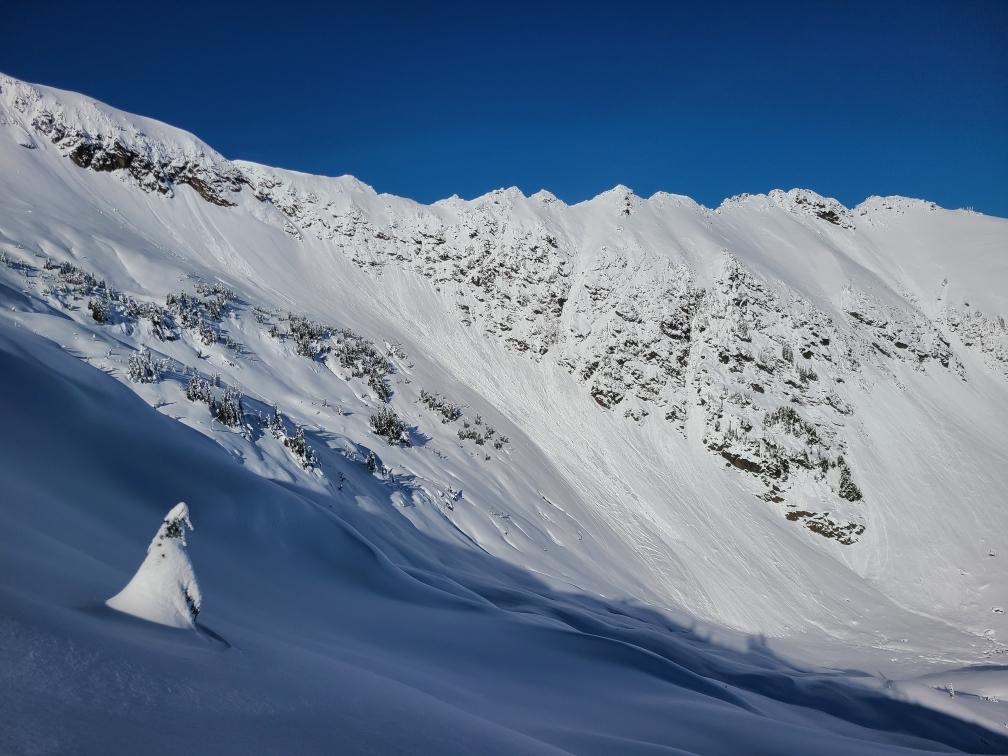
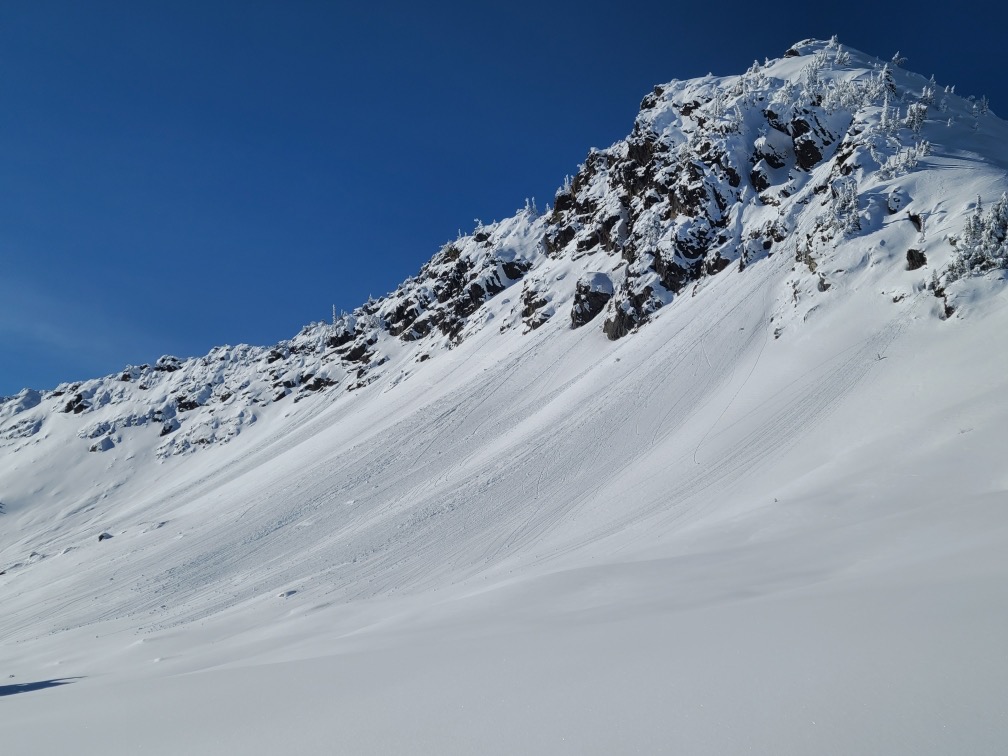
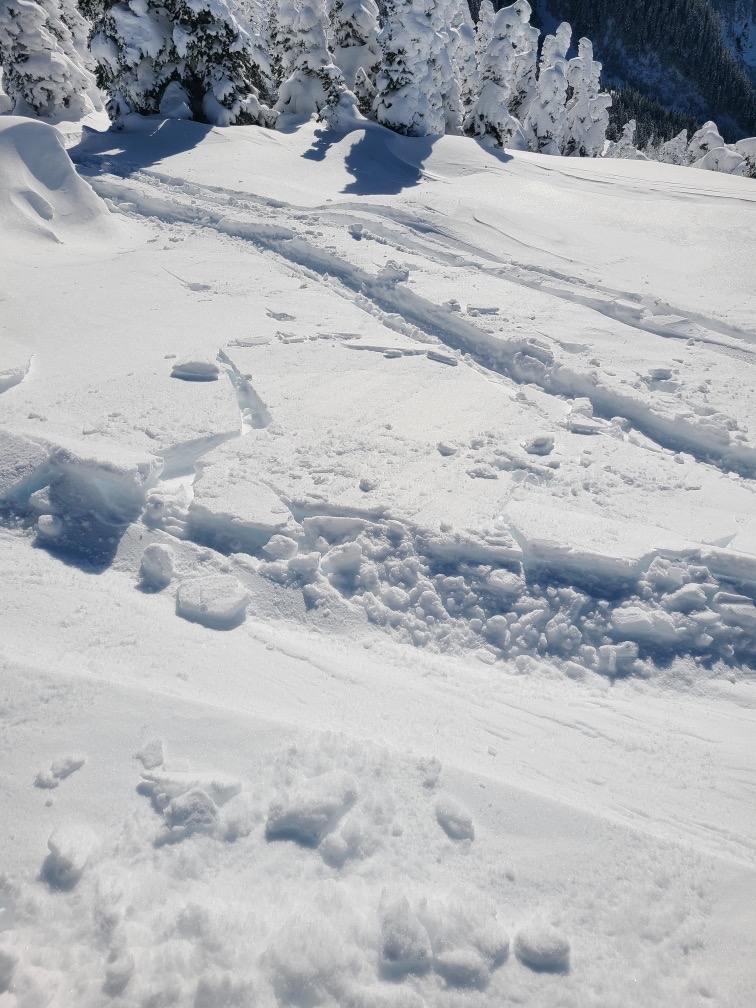
Lots of rollerballs and small, wet loose avalanches and obvious warming of snow surfaces on sunny slopes. Minor, isolated cracking in shallow wind-loaded slopes near ridgelines.Weather
- Wind Loading
- moderate
- Recent Snowfall
- 5-10cm
- Snow Avail For Transport
- small smounts
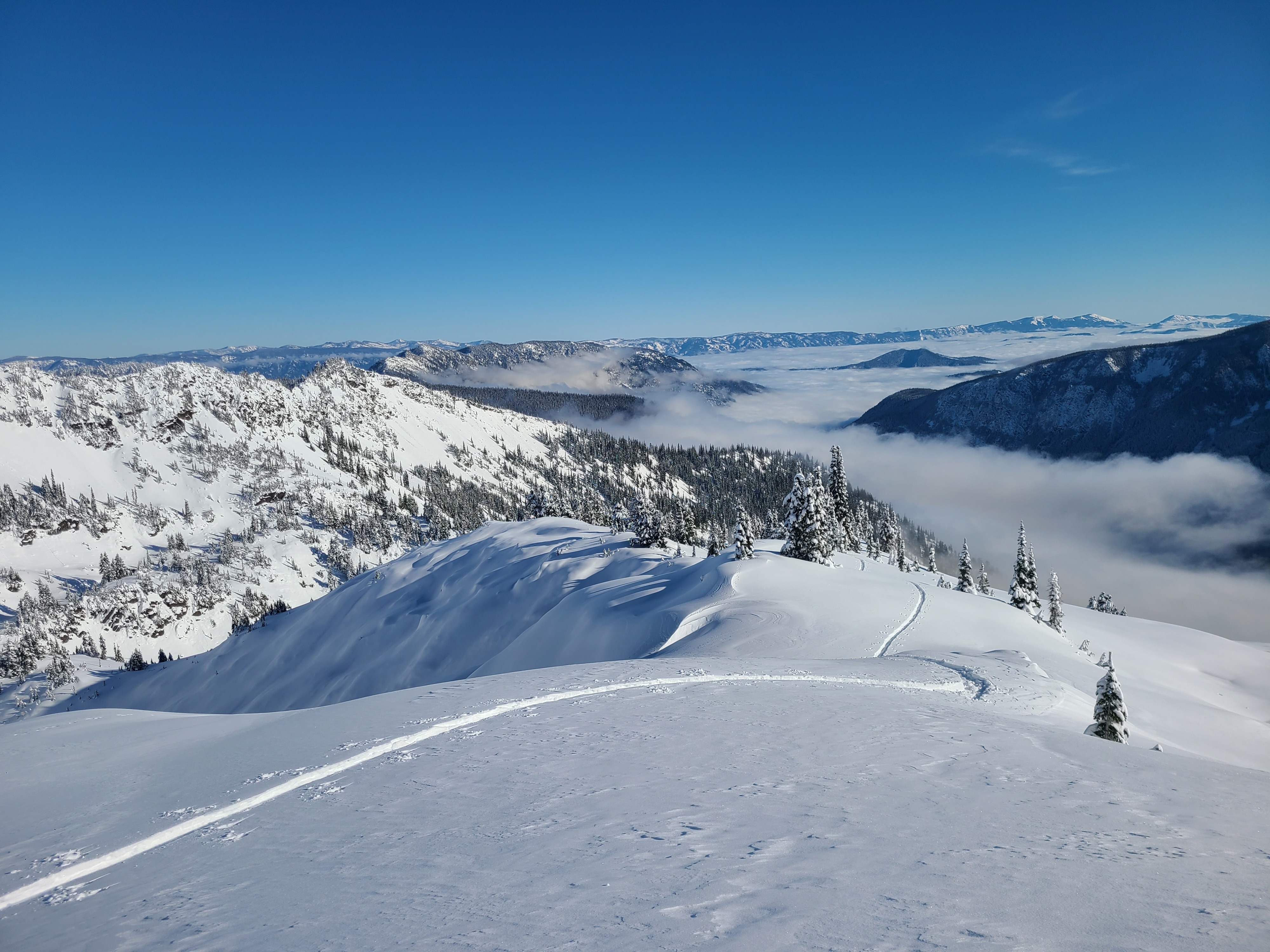
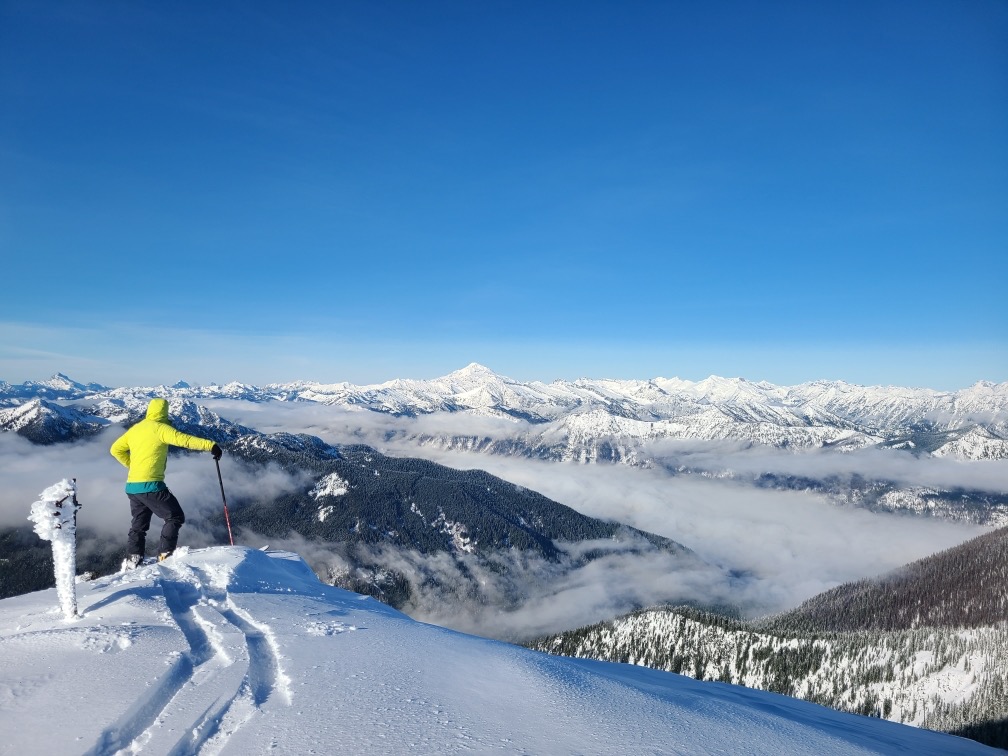
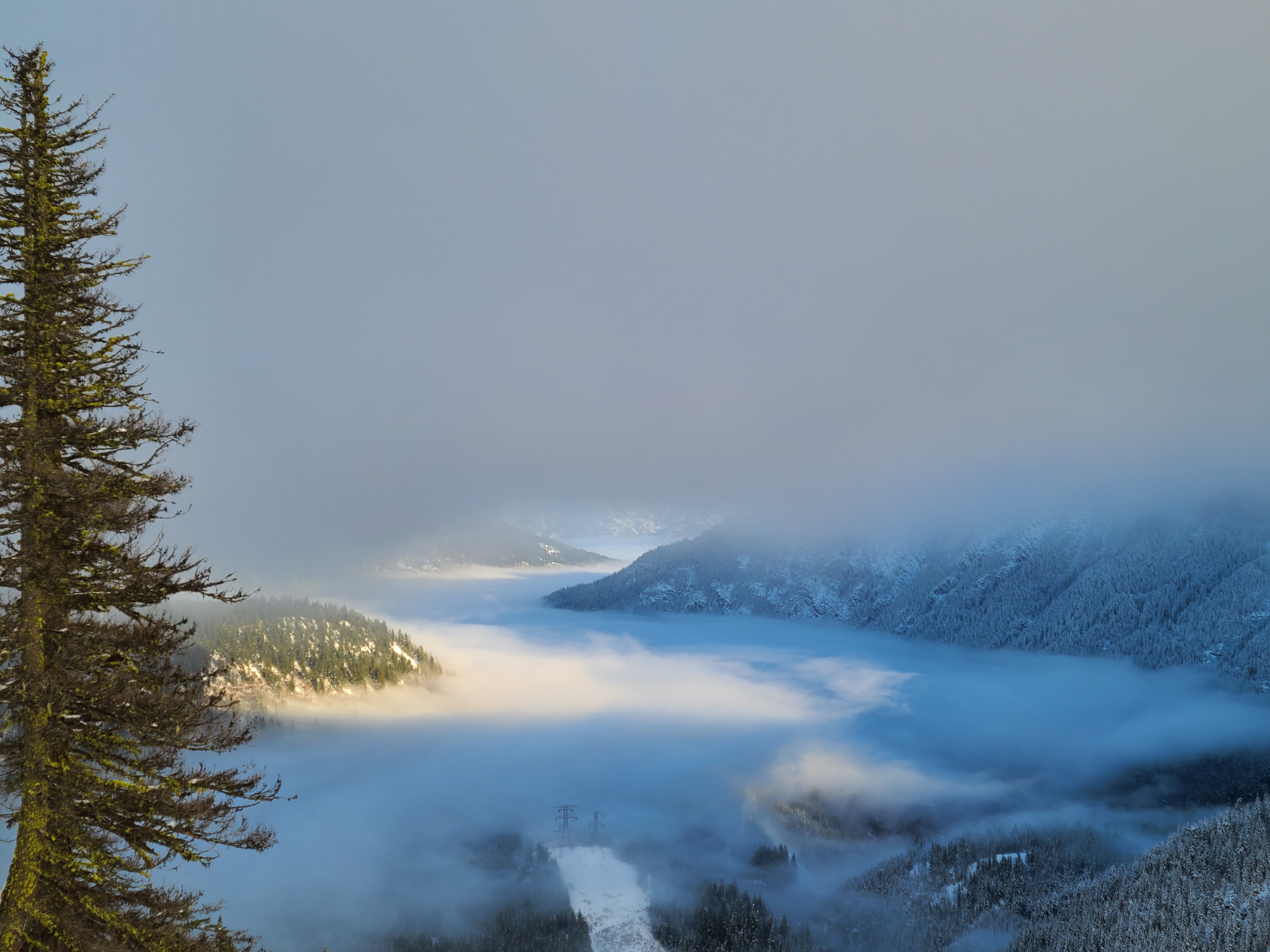
Low clouds hung in the valley due to moderate easterly flow moving through the Stevens Pass corridor. Once you climbed out of the cloud deck at around 3400ft, there were clear skies with occasional high clouds. Winds were mostly light. However, the upper elevation ridgelines experienced moderate easterly winds, and we observed drifting snow in the Chiwakum Mountain Range to the South.
Snowpack
Snow Surface Conditions and Depths
2800ft-4000ft: Height of snow (HS), 15-25cm. Surfaces were soft throughout the day, but mid-elevations that received direct sun showed a noticeable decrease in depth by the end of the day. All surfaces were moist to wet, but the lower elevations below the inversion did not experience as drastic a change in snow depth throughout the day.
4000-5000ft: HS 50-60cm. Surfaces were a mixed bag depending on slope angle and shade. Sunny, steep slopes had wet surface snow. Lower-angle sunny slopes were moist. Shady slopes were dry and cold.
5000-6800ft: HS 80-130cm. Slopes in the sun were becoming slightly moist by the afternoon, but shady terrain was cold and dry. Wind-affected surfaces were present along ridgelines and occasionally lower down in the terrain. Easterly slopes just below the ridgeline were scoured down to a thin, breakable crust.
Snowpack Details
6000ft, SE aspect: HS 89cm. There are 5-10cm of new snow over a sandwich of thin, breakable, melt-freeze crusts. Below those crusts, there is 30cm of recent snow from earlier in the week (11/24 - 11/26) with a favorable hardness profile. The lower pack consists of hard, refrozen melt forms. Snow stability tests did not produce notable results.
6400ft, NE aspect: HS 130cm. 5-10cm of new snow rests over a sandwich of thin, breakable, melt-freeze crusts (the same as on southerly aspects). Below that, there is 50cm of recent snow with a favorable hardness profile. The lower pack consists of hard, refrozen melt forms. Quick handpit tests produced clean shears on top of the shallowly buried crusts.
Avalanche
- Size
- D2 R2
- Aspect
- E
- Trigger
- N
- Elevation
- 6400 ft
We saw active, small, loose wet avalanches throughout the day. These initiated from rocks warming in the sun at upper elevations. We also observed an older slab avalanche that likely ran during the 11/25 storm. While shallow, this avalanche propagated widely, failing in shallow, rocky terrain near the ridgeline.