
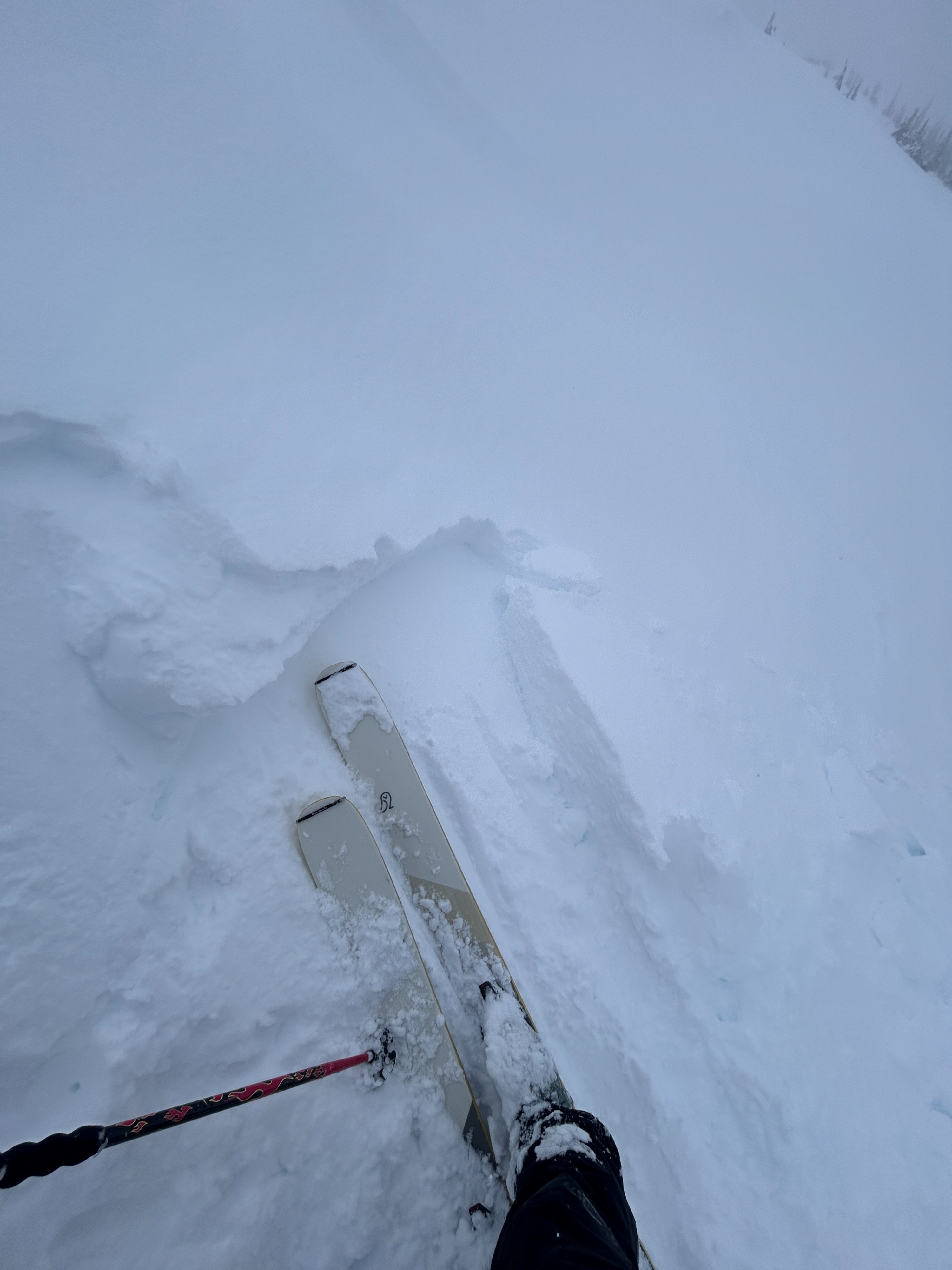
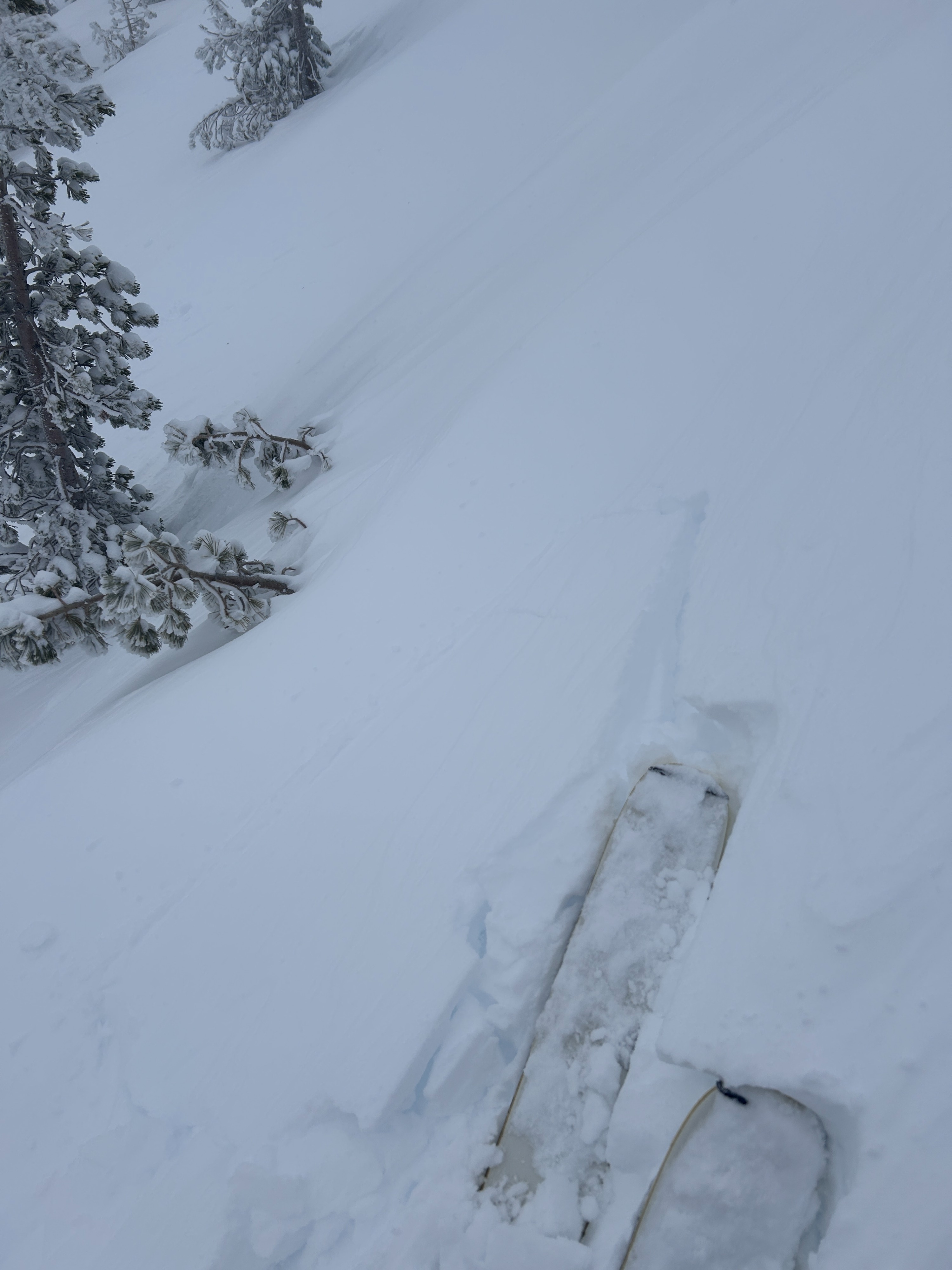
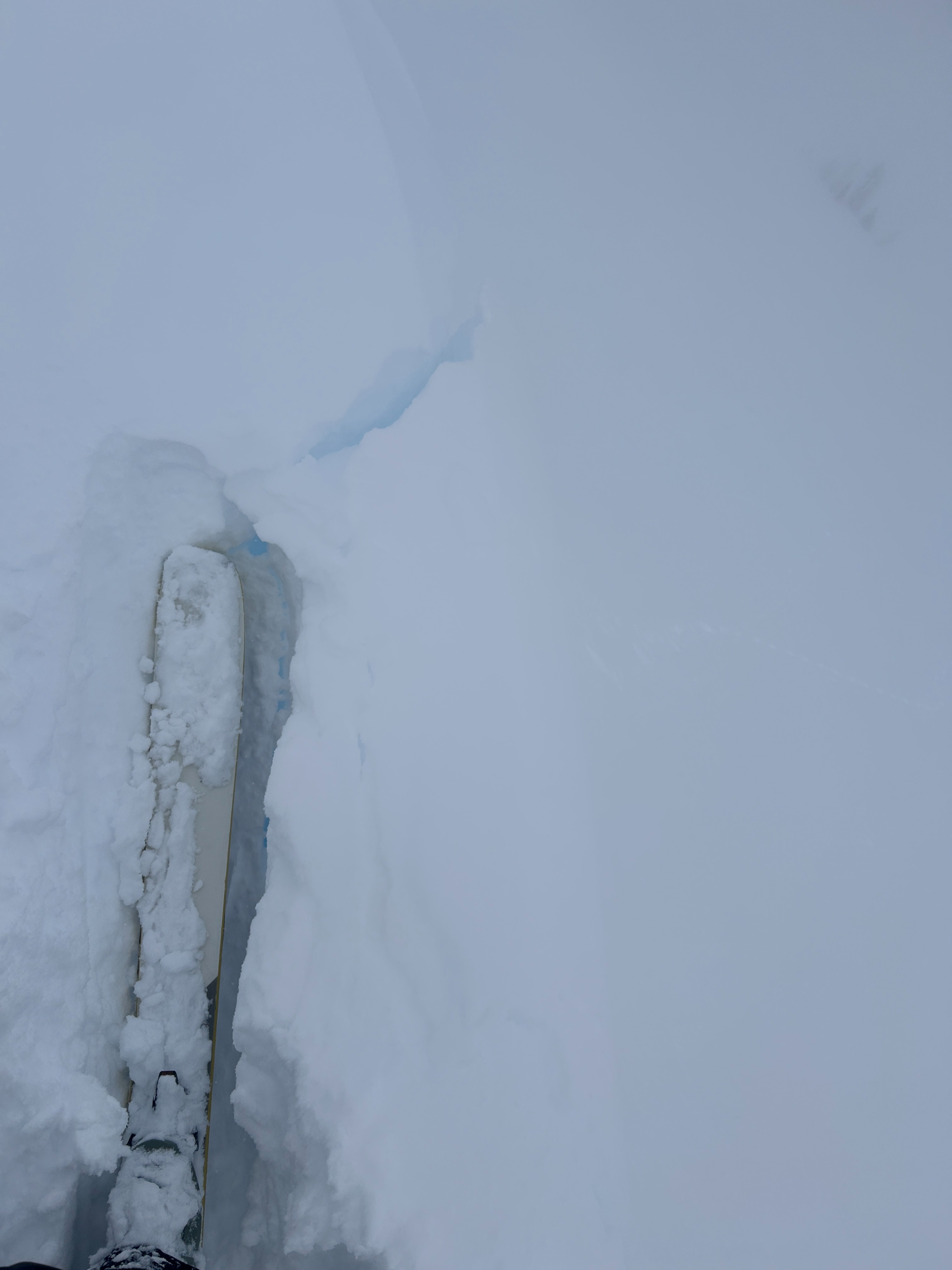
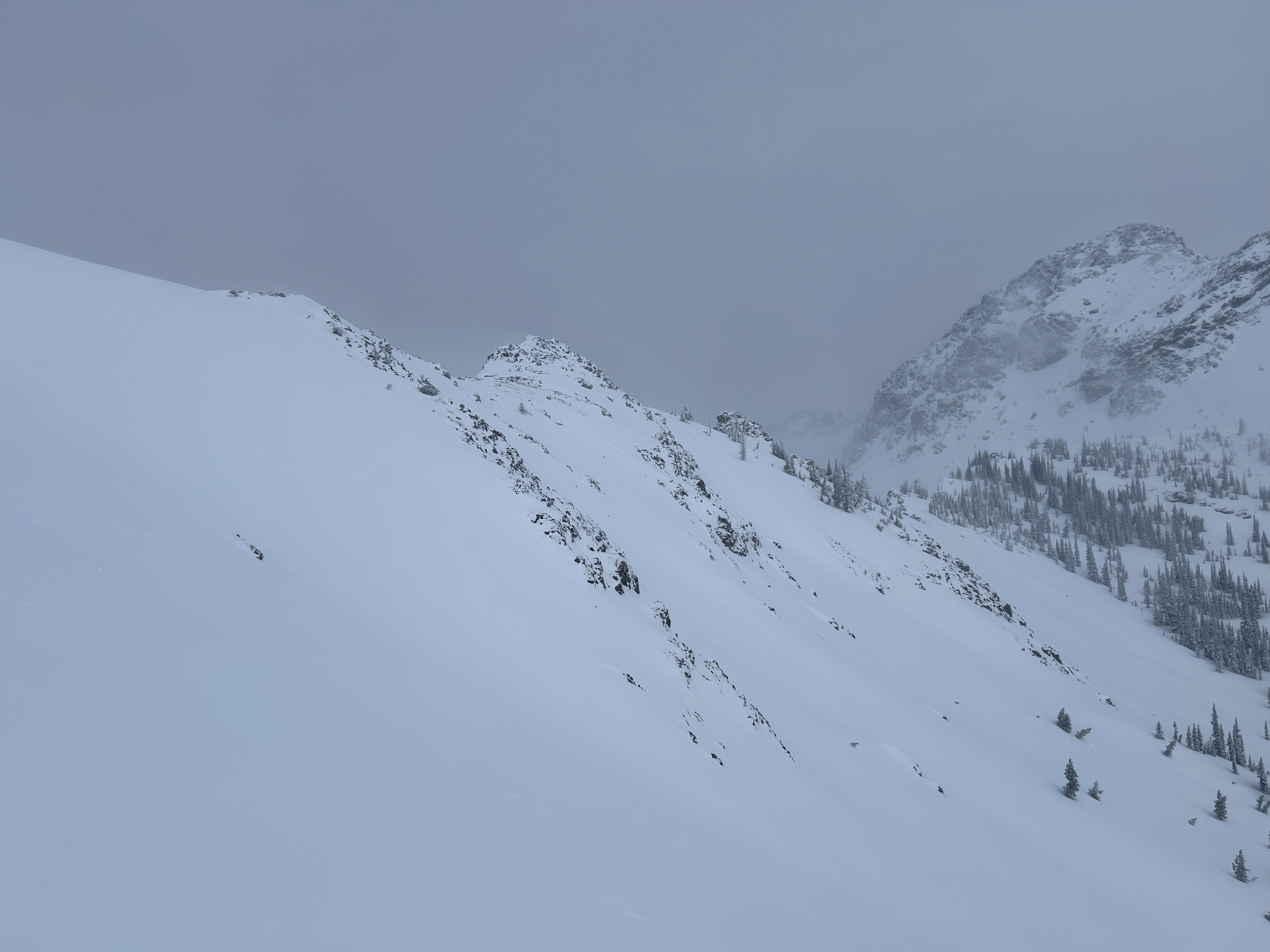
Quick report
- Cracking
- specific
- Collapsing
- specific
The goal of the day was to assess buried weak layers within the snowpack. At this location, it seemed that instability was still generally relegated to wind affected terrain. Interestingly, I did not find any buried surface hoar at any point. It was hard to find last week when traveling in another area close by too. Nonetheless, there is widespread facet development within the snowpack, and an increasingly large and dense slab building on top.
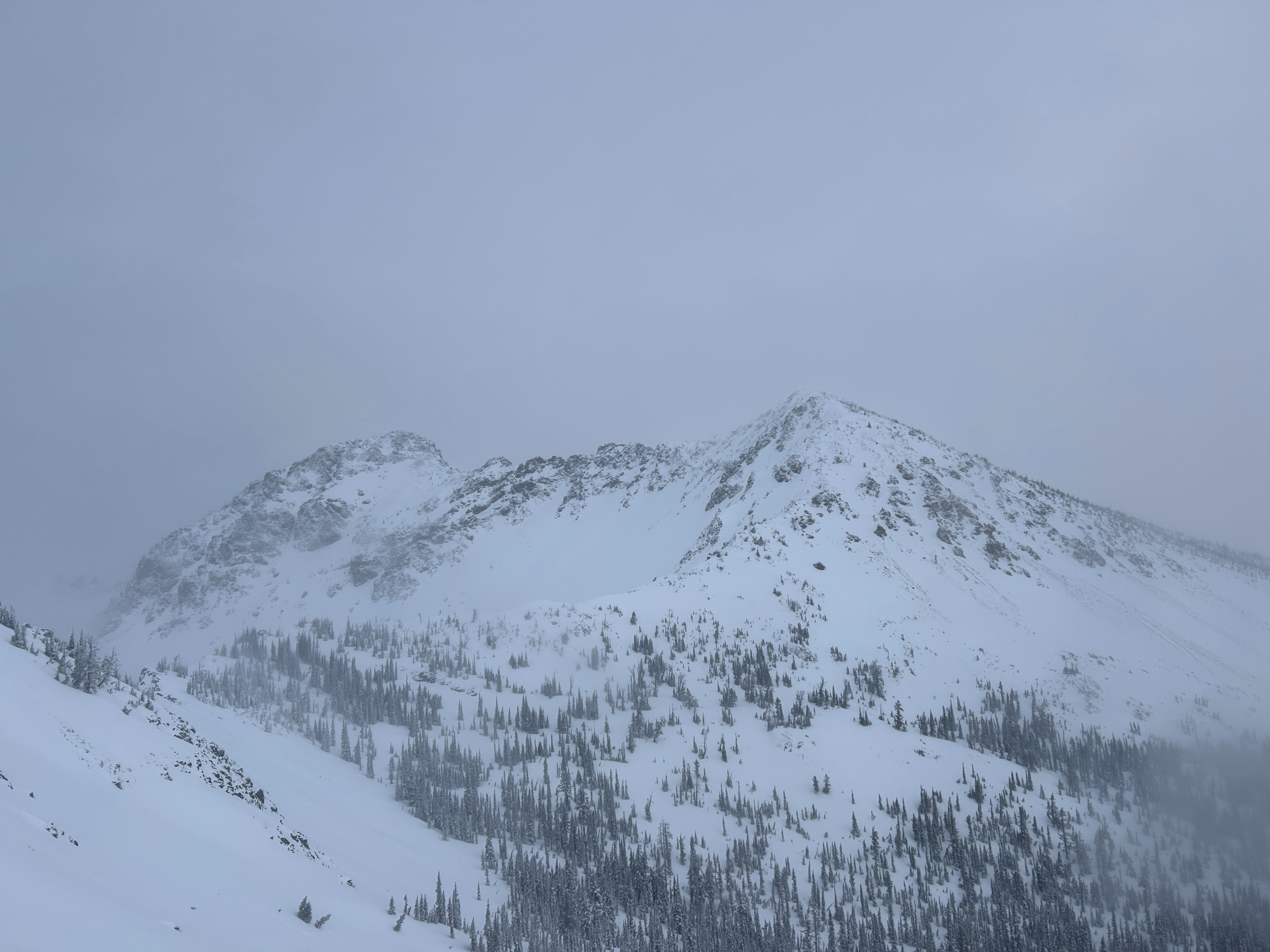
It was easy to get cracking in unsupported, wind loaded snow, but the cracks usually only went a few feet. The one exception is a small wind slab pocket that cracked and slid a short distance. This chunk cracked approx 6 feet. We got a lot of localized collapsing as we ascended thin trees on the south and west aspects of Small Fortune. Every once in a while, we'd get a much larger whumpf that resounded around us.Weather
- Air Temp
- 28
- Cloud Cover
- overcast
- Wind Loading
- previous
- Rain Elevation
- 3200
- Recent Snowfall
- 25
- Snow Avail For Transport
- small smounts
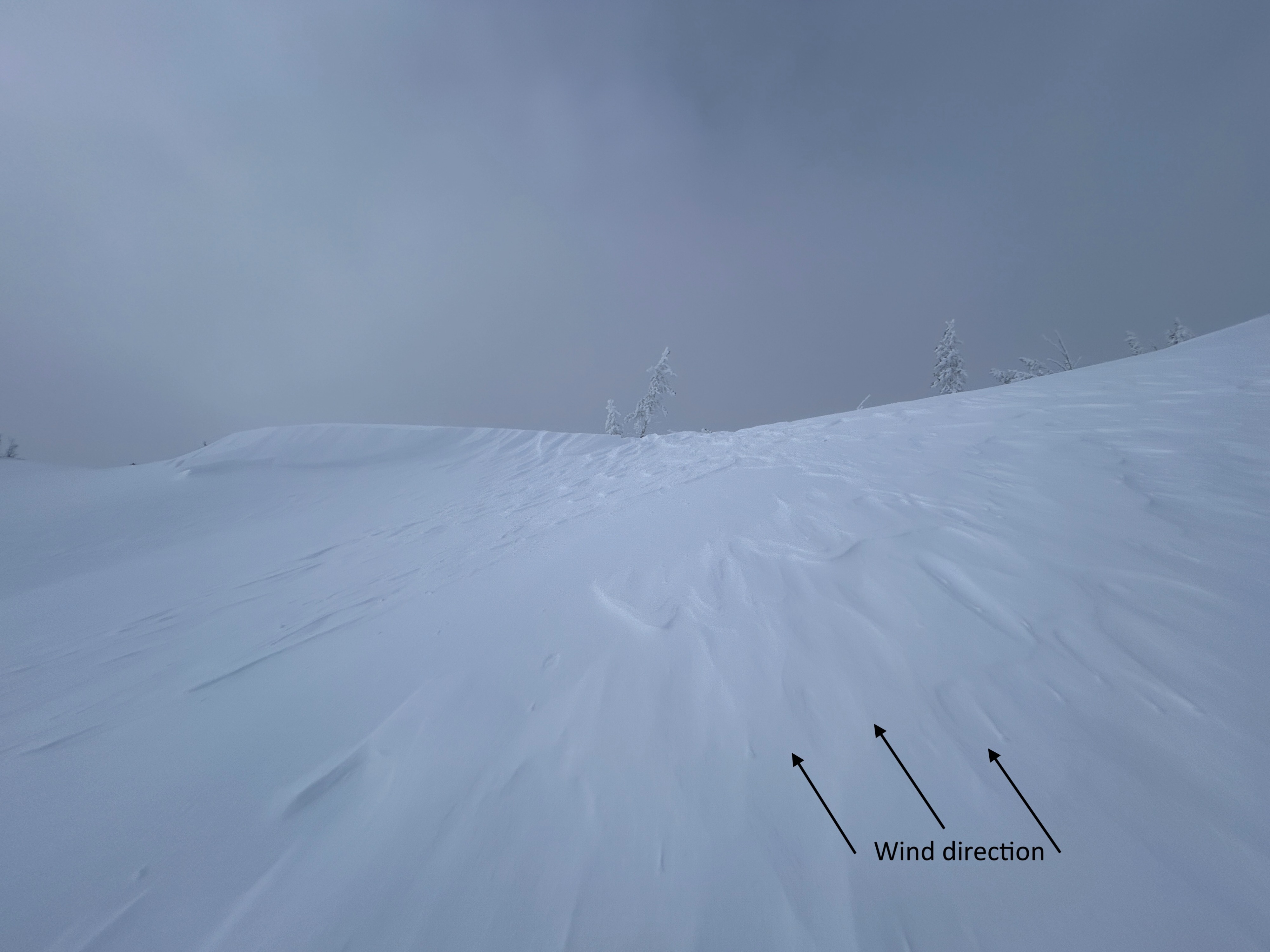
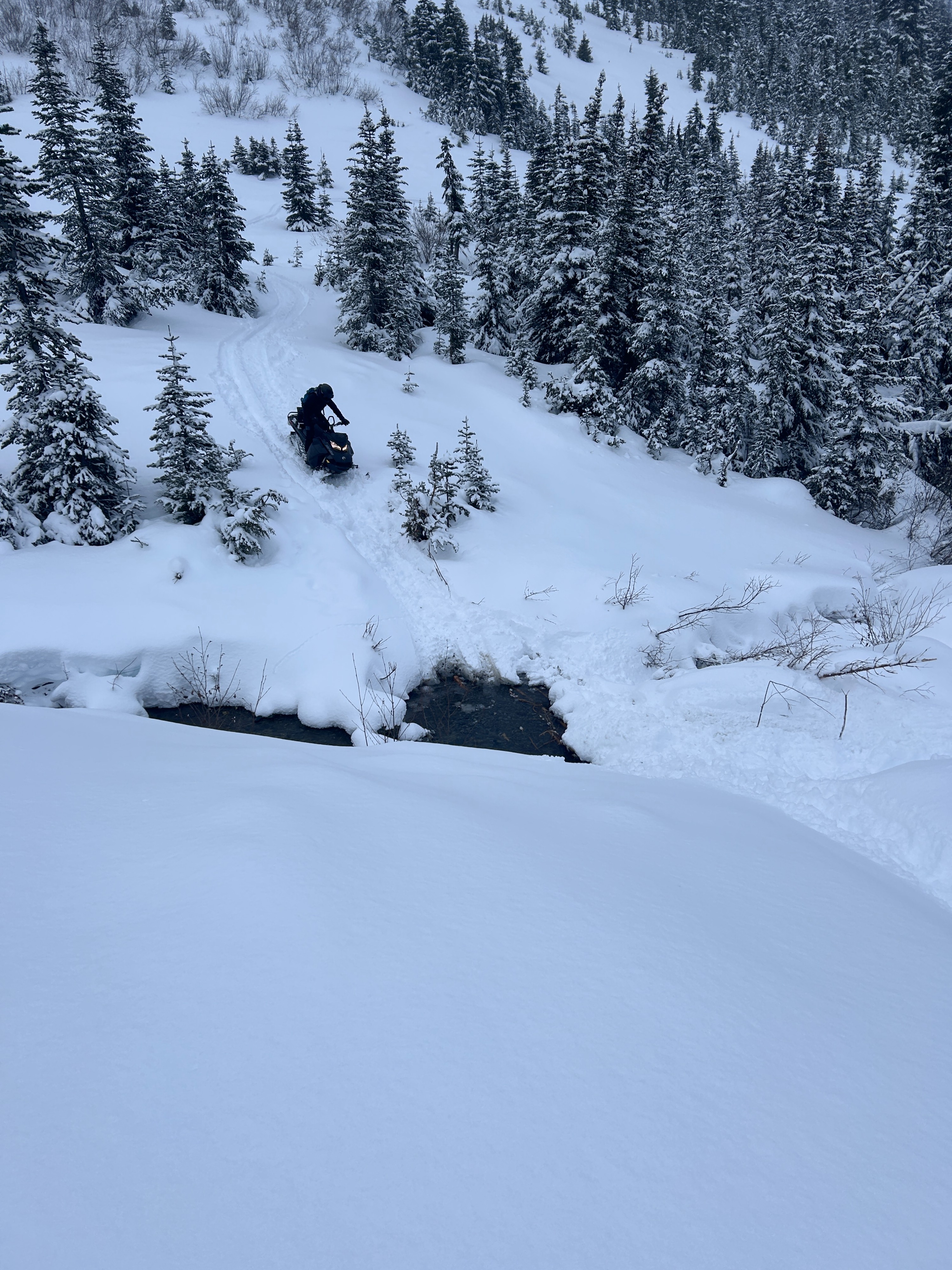
Light snowfall fell throughout the day with very little wind. We noticed that the wind had previously blown extensively from the east. Temperatures were right around freezing in the morning and dropped a bit throughout the day. Although there was a dusting of snow at the trailhead in the morning, rain had fallen below 3200 ft at some point.
Snowpack
Both large snow profile pits and small hand pits did not reveal buried surface hoar anywhere.
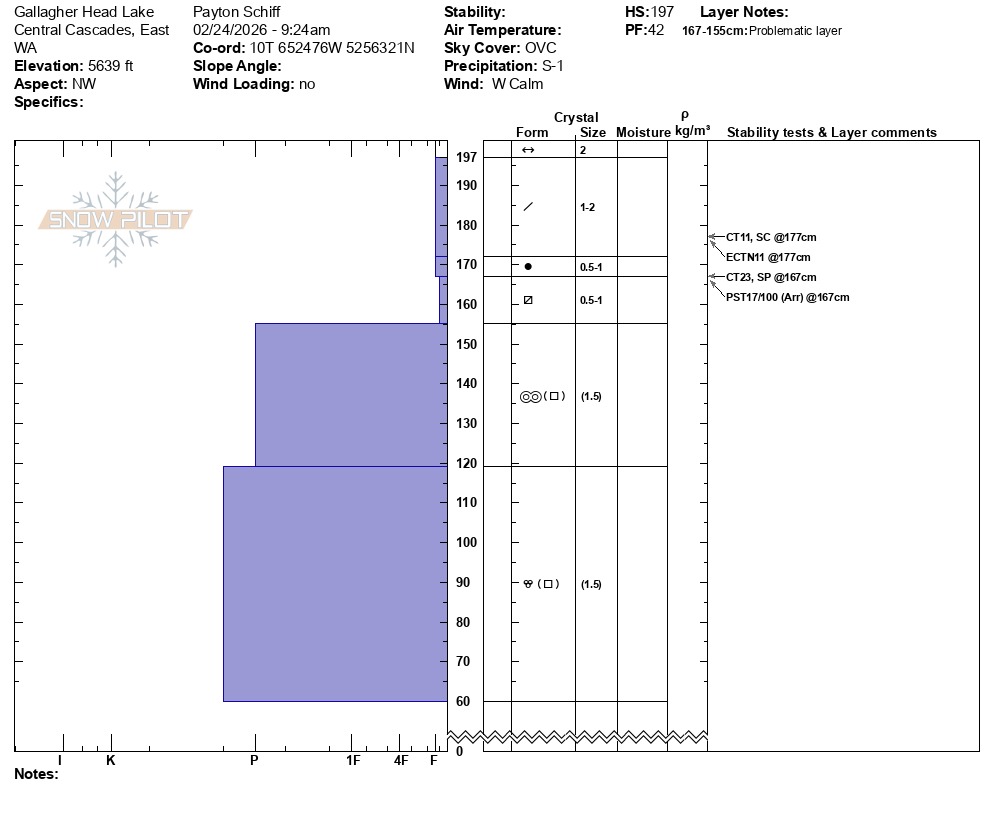
Middle Elevation (5639 ft), NW aspect: the depth of this pit was 197cm (78in). I found 25cm (10in) of new/recent snow overlaying a small layer of rounded grains, and a layer of buried near surface facets. The facets sit above layers of melt freeze crust that have facets within. Compression tests yielded moderate and hard sudden results at the new/recent - rounded grains interface and the rounded grains - near surface facets interface (CT11SC, CT23SP). An extended column test yielded a moderate non-propagating result at the new/recent -rounded grains interface (ECTN11). I performed a propogation saw test at the top of the near surface facet layer and got a short cut that self-arrested (PST17/100Arr).
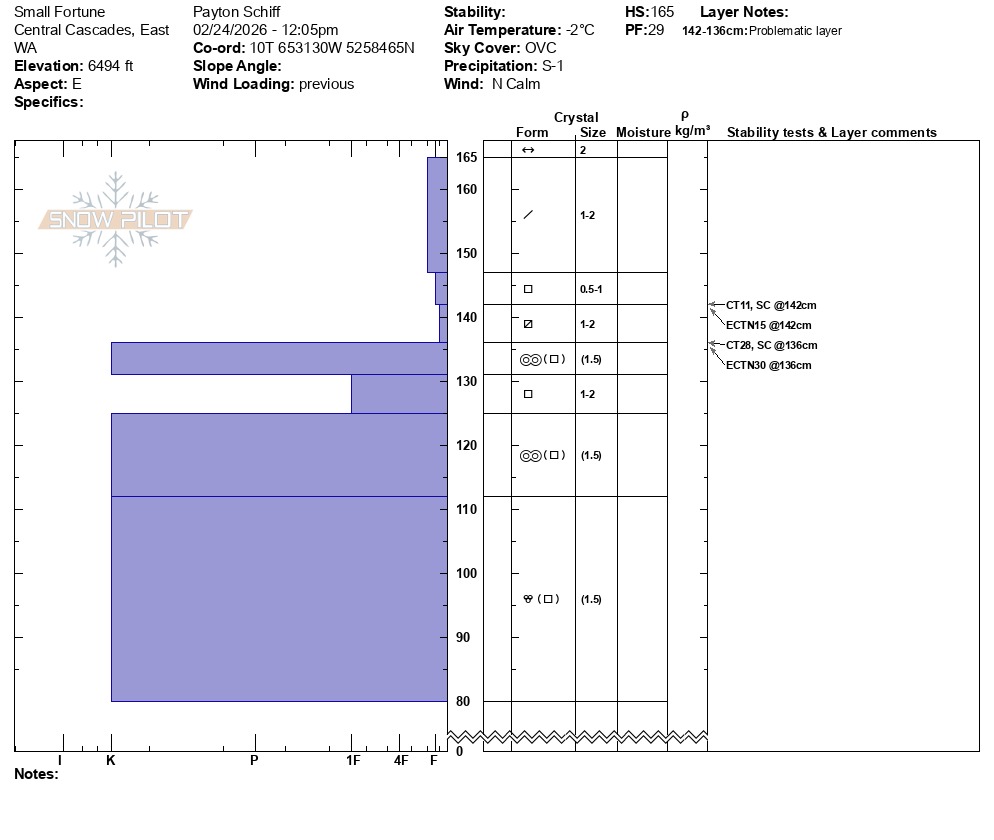
Upper Elevation (6494 ft), E aspect: the depth of this pit was 165cm (65in). Recent E wind had scoured snow from this aspect. I found a fairly similar snowpack set up, however what was the layer of rounded grains in the NW pit was faceted snow. Below faceted snow, I found a more pronounced crust/facet sandwich. Compression tests yielded moderate and hard sudden results at the new/recent - facet interface and the facet - near surface facet interface (CT11SC, CT23SP). Extended column tests yielded moderate and hard non-propagating results at the same interfaces (ECTN15, ECTN30).
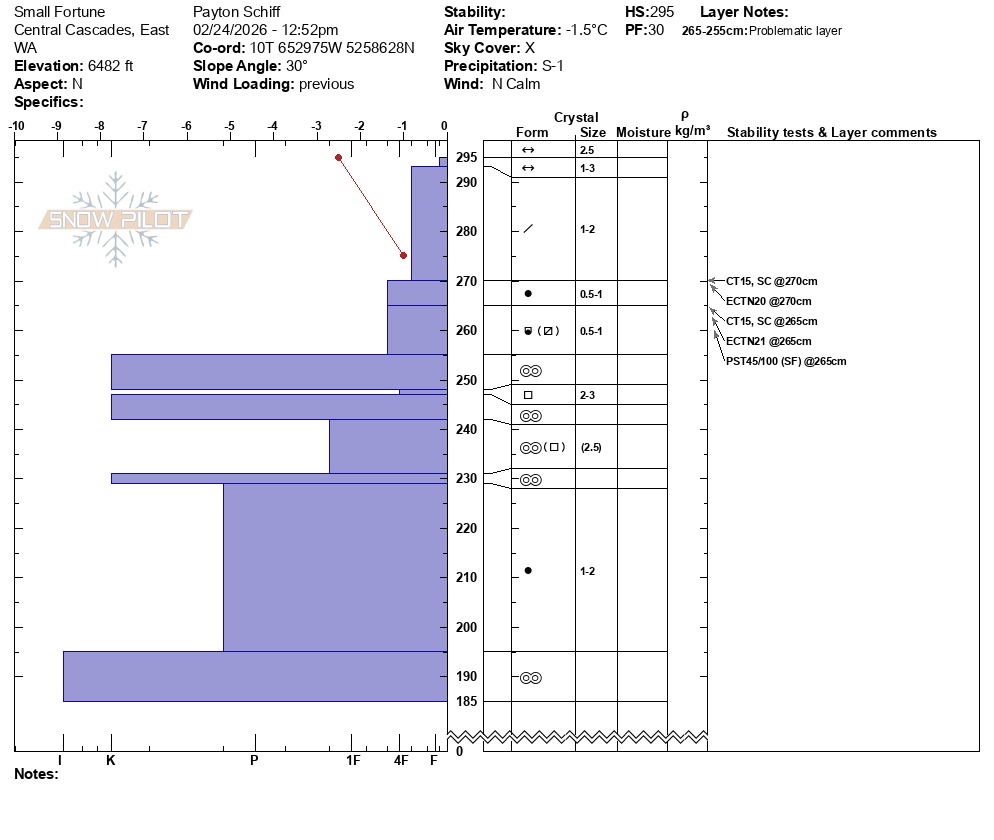
Upper Elevation (6482), N aspect: the depth of this pit was 295cm (116in). This location has likely seen a lot of wind loading in the past which is why it was significantly deeper. I once again found a fairly similar snowpack set up, however surprisingly, the snow was less faceted overall in this pit. A compression test yielded a simultaneous result at the interface between new/recent - rounded grains and grounded grains - faceting rounded grains/near surface facets (CTSC15). Extended column tests yielded hard non-propagating results at the same interfaces (ECTN20, ECTN21). I performed a propagation saw test in the layer of faceting rounded grains/near surface facets and got a cut almost halfway through that fractured directly up the slab (PST45/100SF).