
Quick report
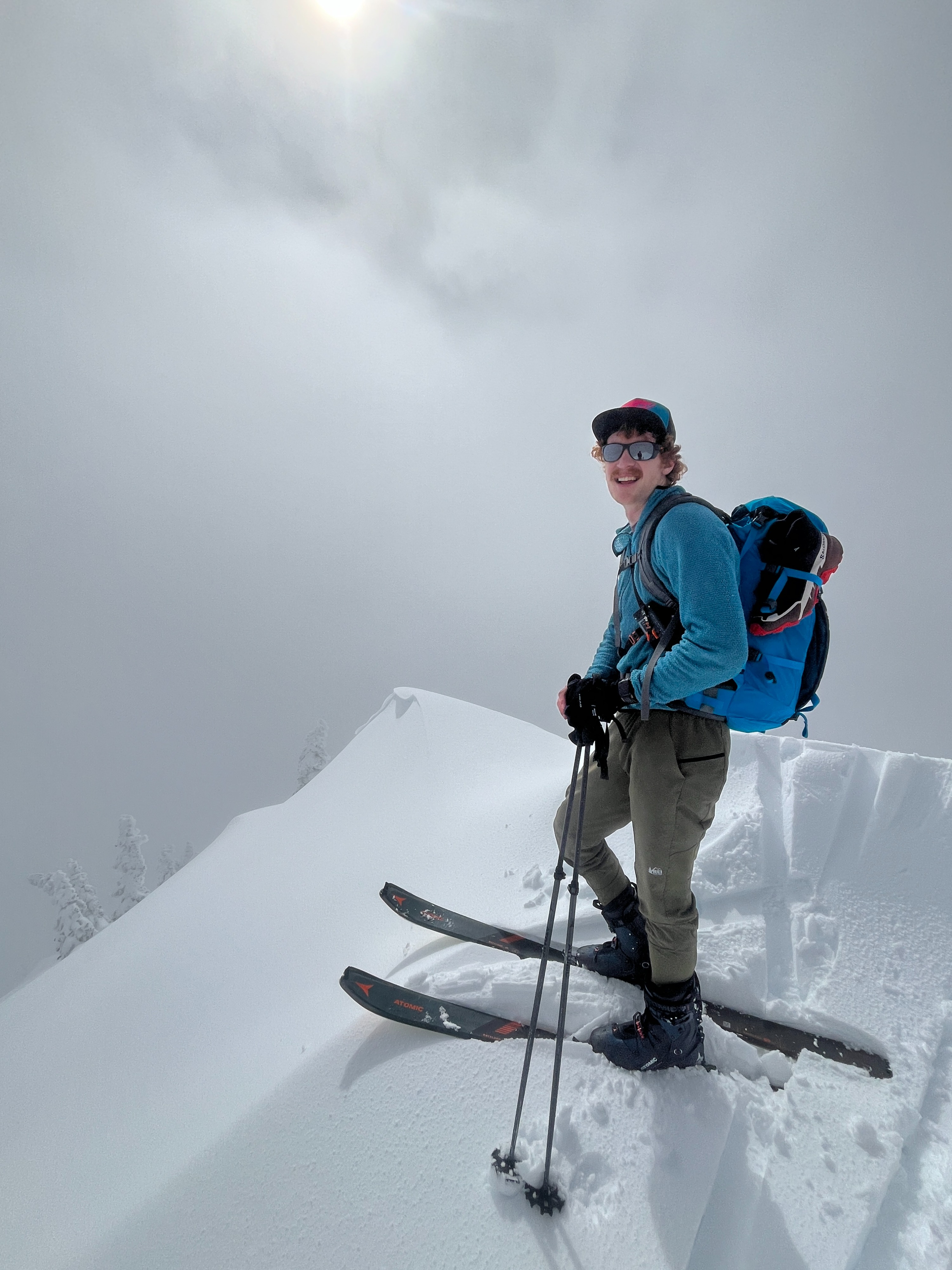
Upper 40cm of the snowpack seemed uniformly heavy and wet at around 4500'. The snow structure didn't really change until about 500 feet below the summit, at which point it became much lighter. We performed hand pit and column tests to check for instability but had no positive results. New snow up top depended on wind aspect but up to a foot in some areas vs. nil in wind scoured spots. We also noticed several large cornices that had yet to drop at the summit. We noticed poor bondage of new snow on old crust above 5200'. The consequences given the terrain are more likely a loss of footing than an avalanche, but we noticed the new snow slid off the crust as a 2" thick chunk from our skin track. However, the instability showed no signs of propagation, and only occurred at the crest of the chute. The biggest concern of the day was sun exposure. Anytime the sun burned through the cloud layer, roller balls almost immediately started to form, some coming to rest with a 4-5ft diameter. There are two sections in the chute to the summit that are particularly risky when active because the roller balls come flying off of the rocky cliffs above with unknown size and speed. For the most part the weather stayed cool, cloudy, and misty, so the snowpack stayed relatively dormant unless the sun made an appearance. We made aggressive decisions given the variable weather but we did not see evidence that roller balls or even wet slides would propagate through the Ellinor chute. We would not have proceeded, however, had the day been uniformly warm and sunny, or had we noticed glide cracks, heard active water movement in the snowpack, or seen any evidence of instability in our tests.
Avalanche
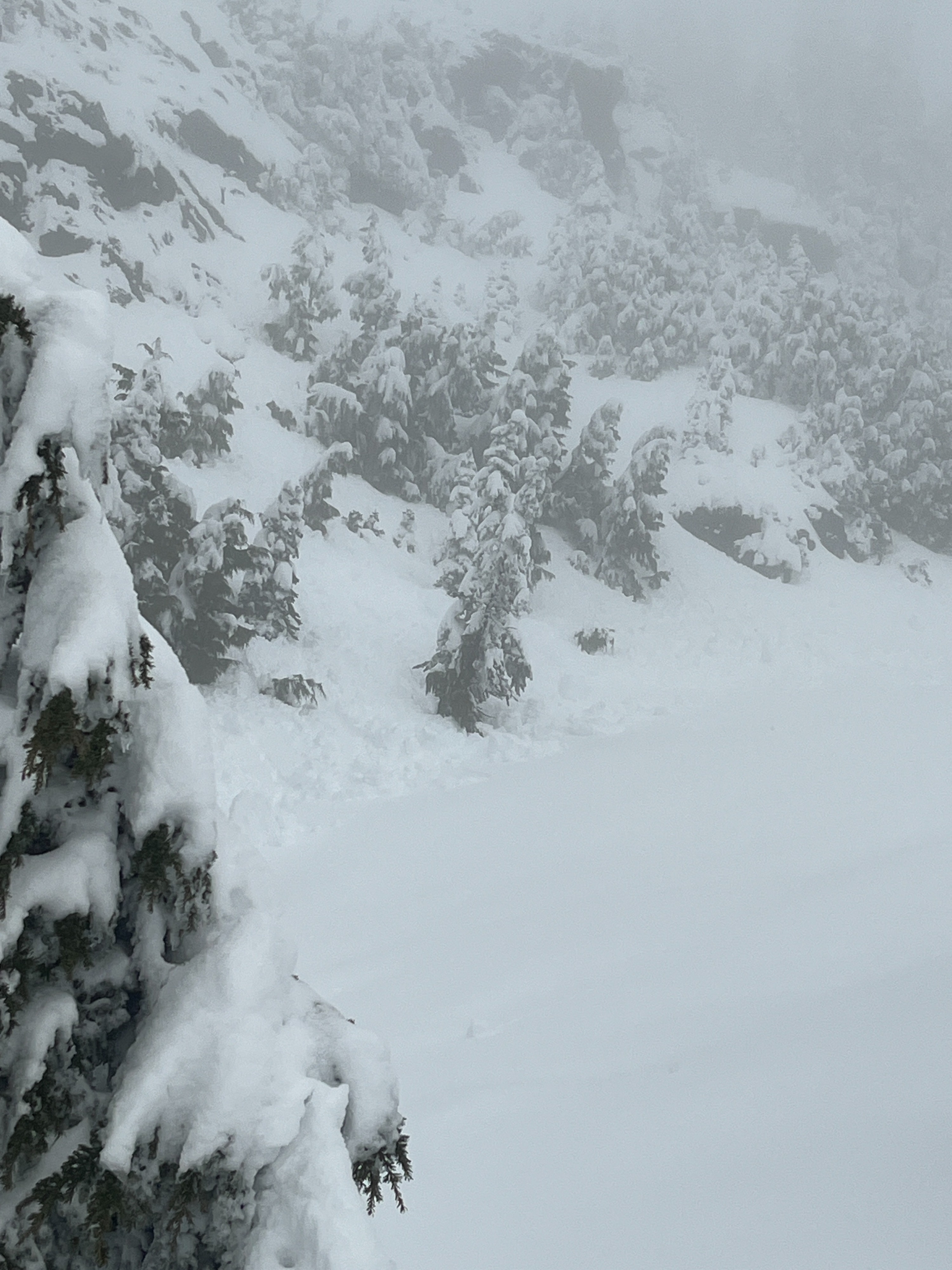
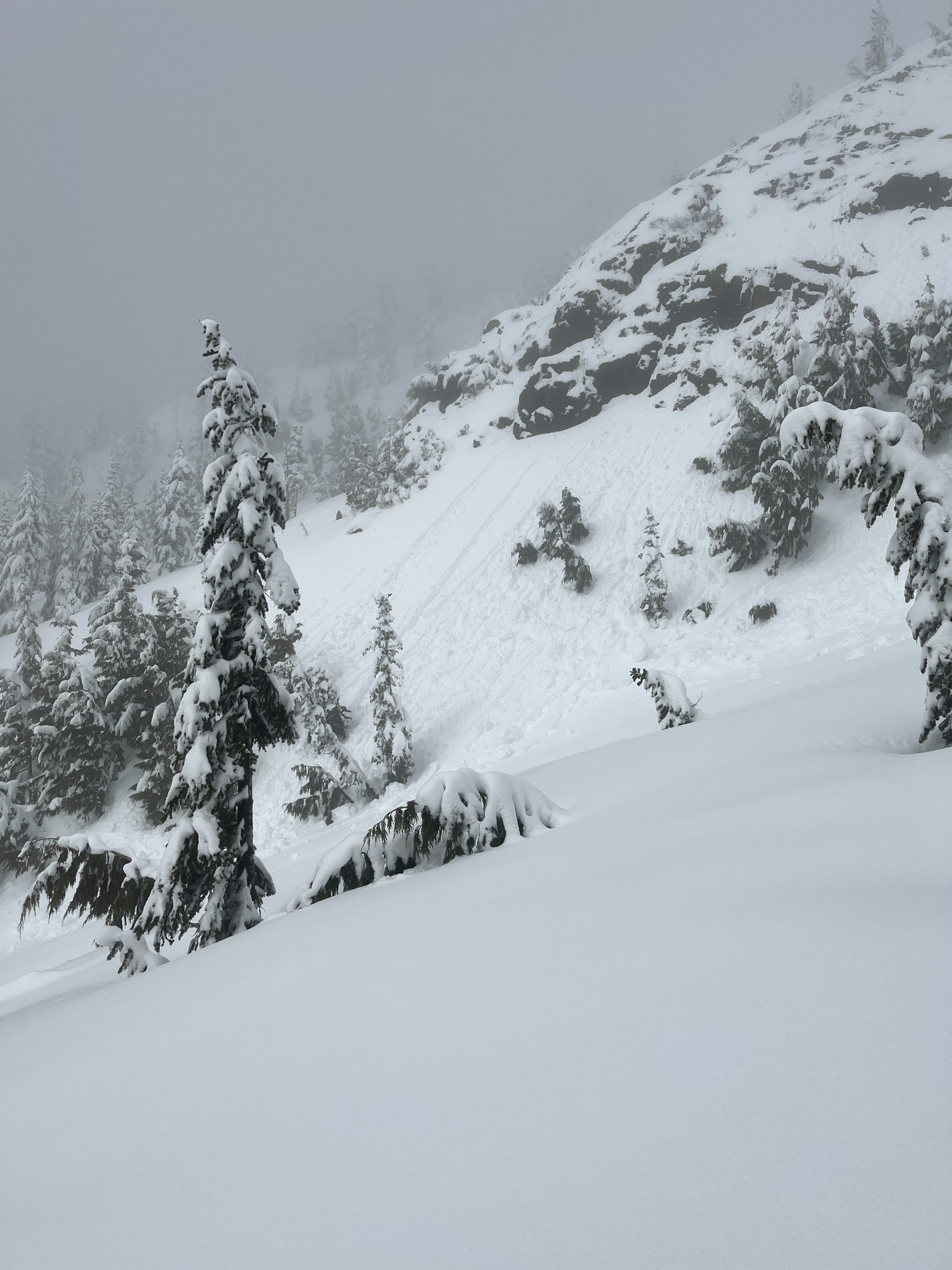
Evidence of D1-D2 wet slides throughout the hike up, particularly in the Mt. Ellinor winter route chute. There were clumps of debris that had dustings of new snow on top.