
Quick report
- Cracking
- isolated
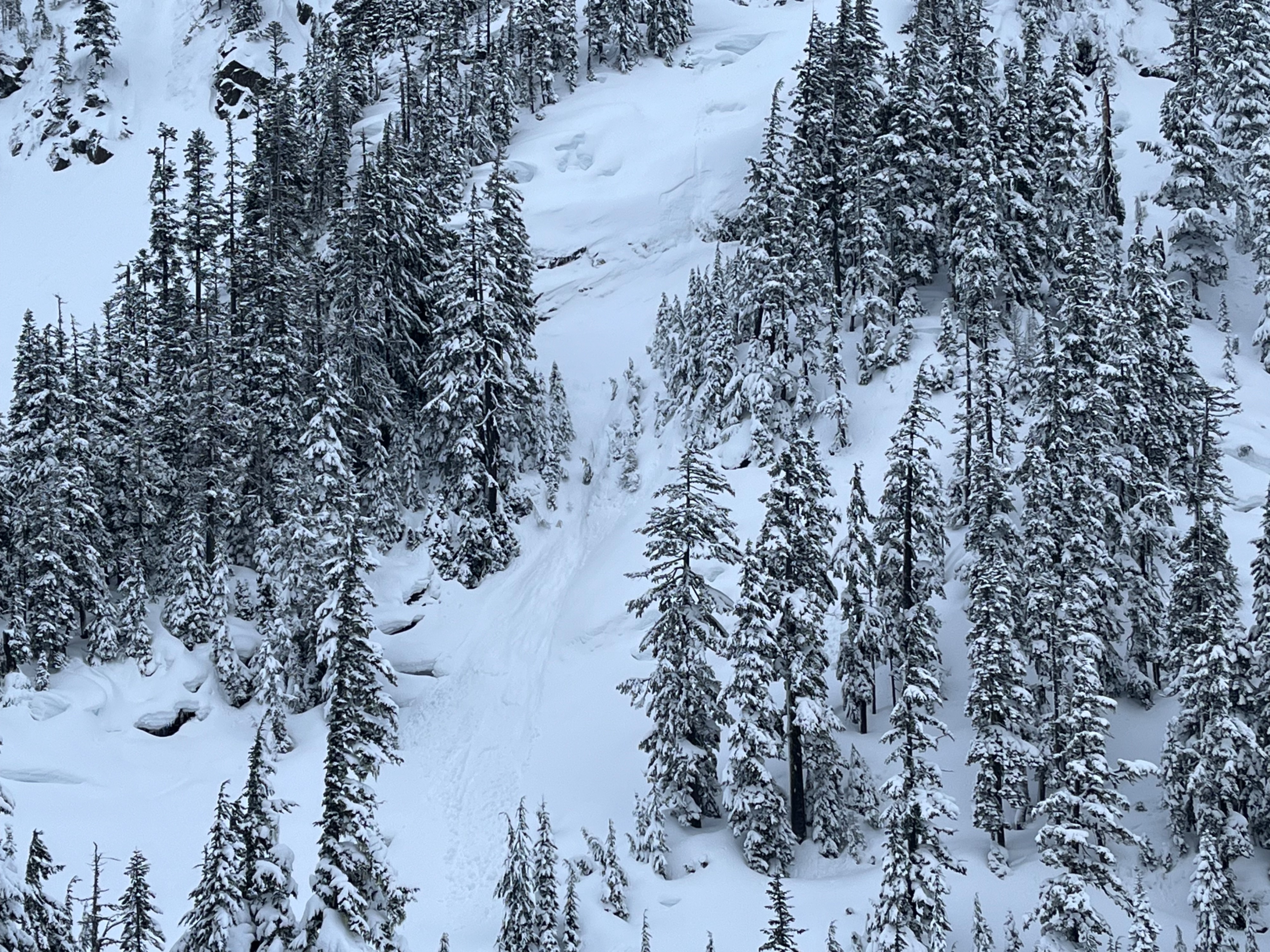
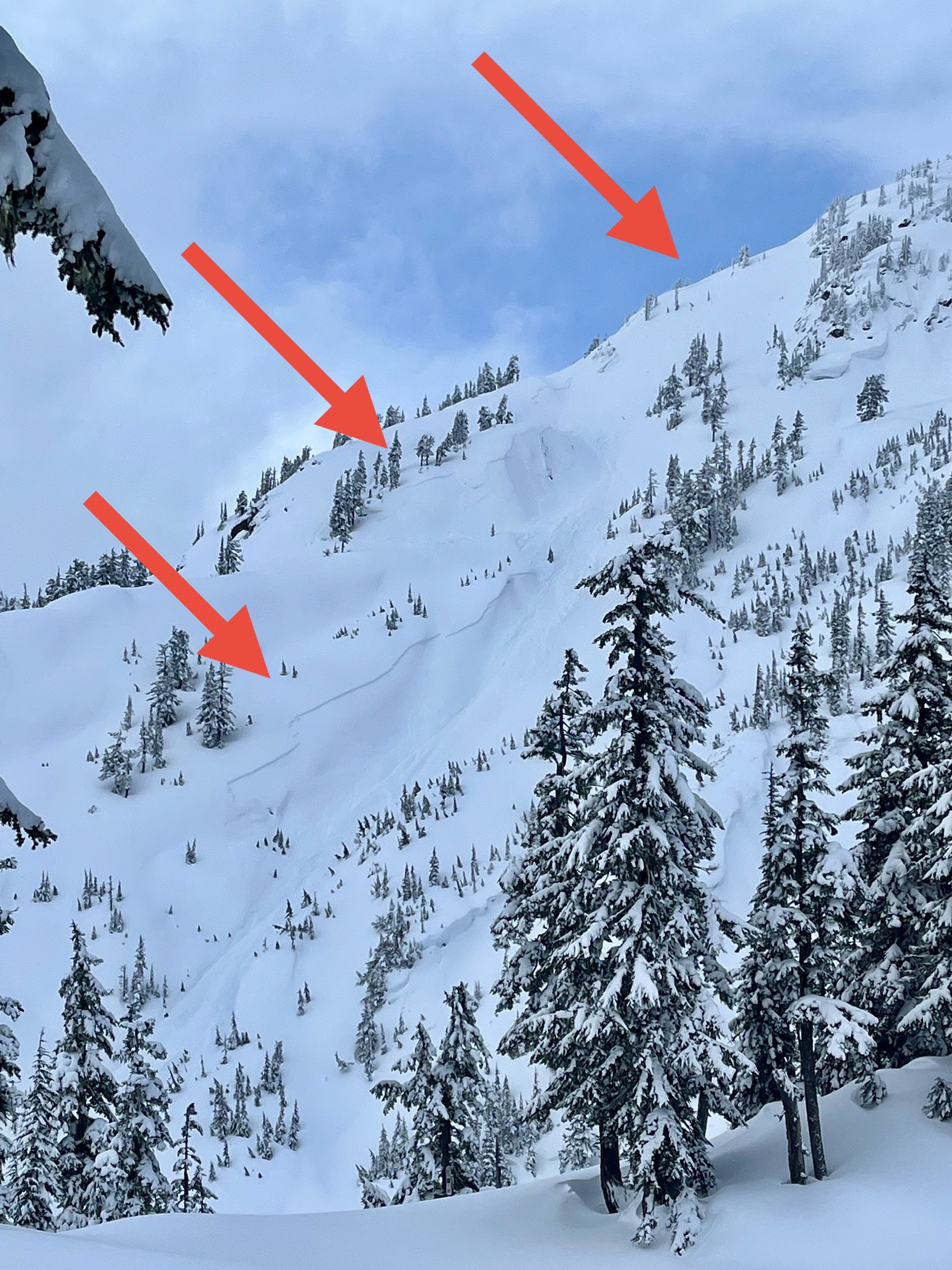
The day was surprisingly stormy, with snow and wind falling for a good chunk of the morning during our outing, making uphill travel rather unpleasant. Occasional breaks in the weather accompanied by patches of blue were welcome. The stormy weather and new layers of snow kept us on lower-angle terrain, despite hand, pole, and test pits not finding any particularly alarming layers. Another obvious clue to avoid steep slopes was the remotely triggered D2 avalanche on the east face of lower Herman, propagating far and traveling to the valley bottom before we even began our day.
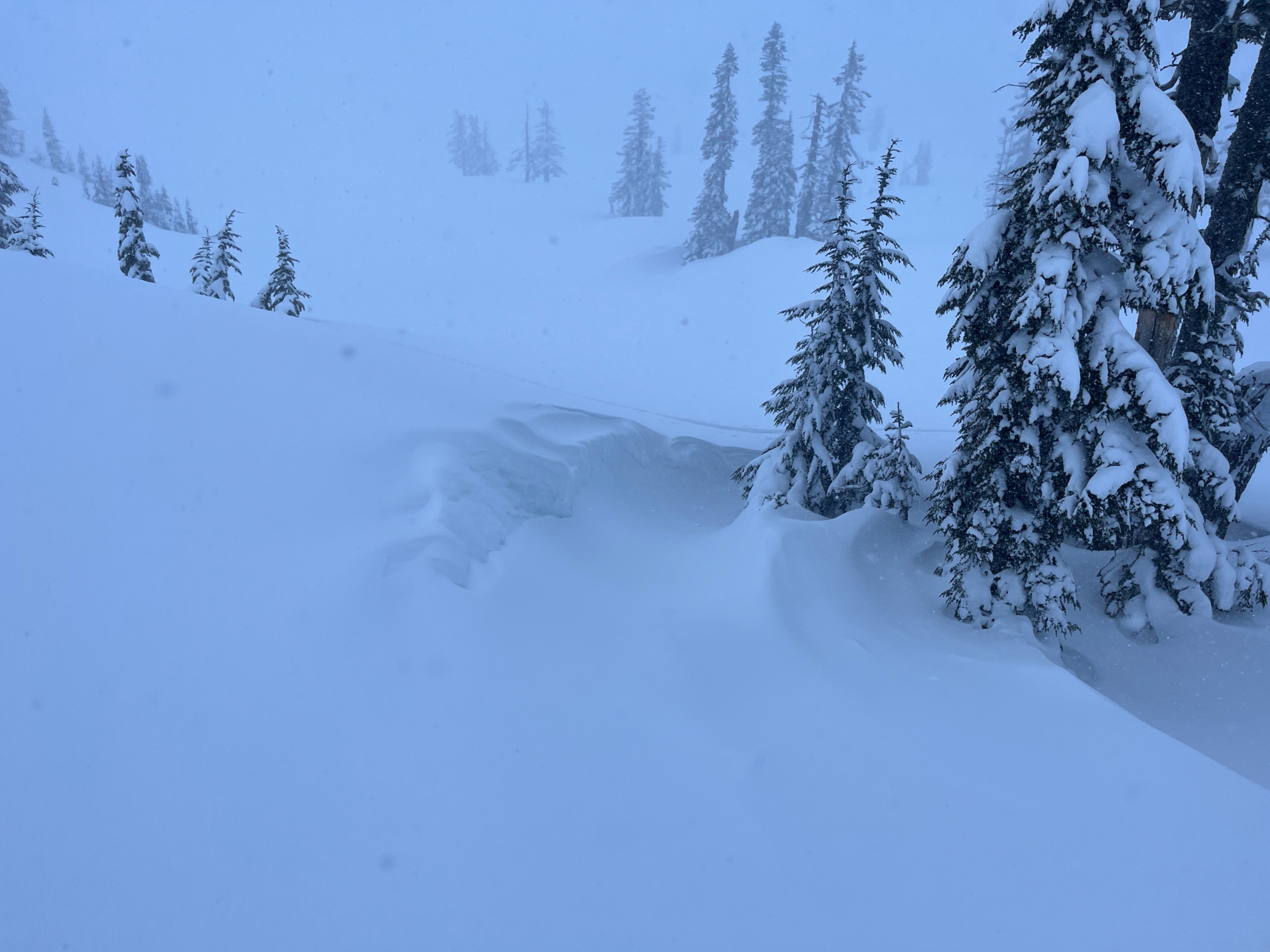
A remotely triggered D2 avalanche on the east face of lower Herman occurred this morning. No closer avalanches were observed. Small, isolated cracking was observed on the skintrack and at the top of steep features.Weather
- Air Temp
- 26
- Cloud Cover
- obscured
- Wind Loading
- moderate
- Rain Elevation
- 3000
- Recent Snowfall
- 20
- Snow Avail For Transport
- moderate amounts
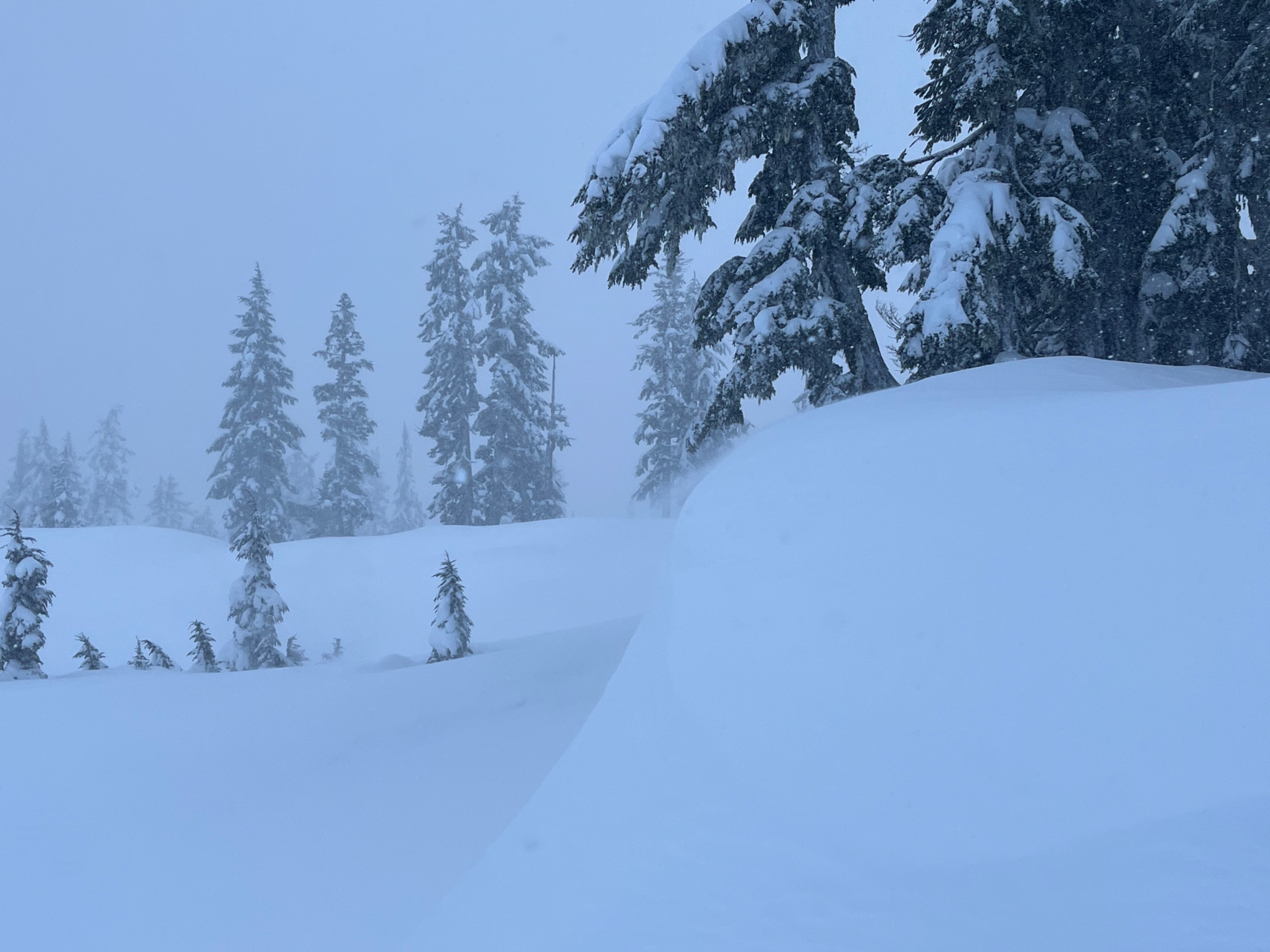
Windy and snowy, with an occasional sun patch and brief calm period. Overall the visibility was poor except for occasional short periods with better visibility. New snow amounts varied extensively due to wind.
Snowpack
30-70cm of wind-affected snow was above the 3/4 crust. Hand and pole pits found instabilities in the top foot of snow, which were unreactive and produced only cracks on test slopes. Subtle different layers were identified in these pits and a test pit, yet none produced failures that were alarming.
The surface hoar layer was found a couple of inches above the 3/4 crust in a test pit by 5 Minute Trees on a north-facing slope, although it was very broken down and unreactive in tests.
On west-facing slopes, the 3/4 crust was softer and 3-5 inches of snow above the crust was moist and well bonded to the underlying crust.
Avalanche
The remotely triggered D2 avalanche on the east face of lower Herman was the only avalanche observed, noted in another observation.