
Quick report
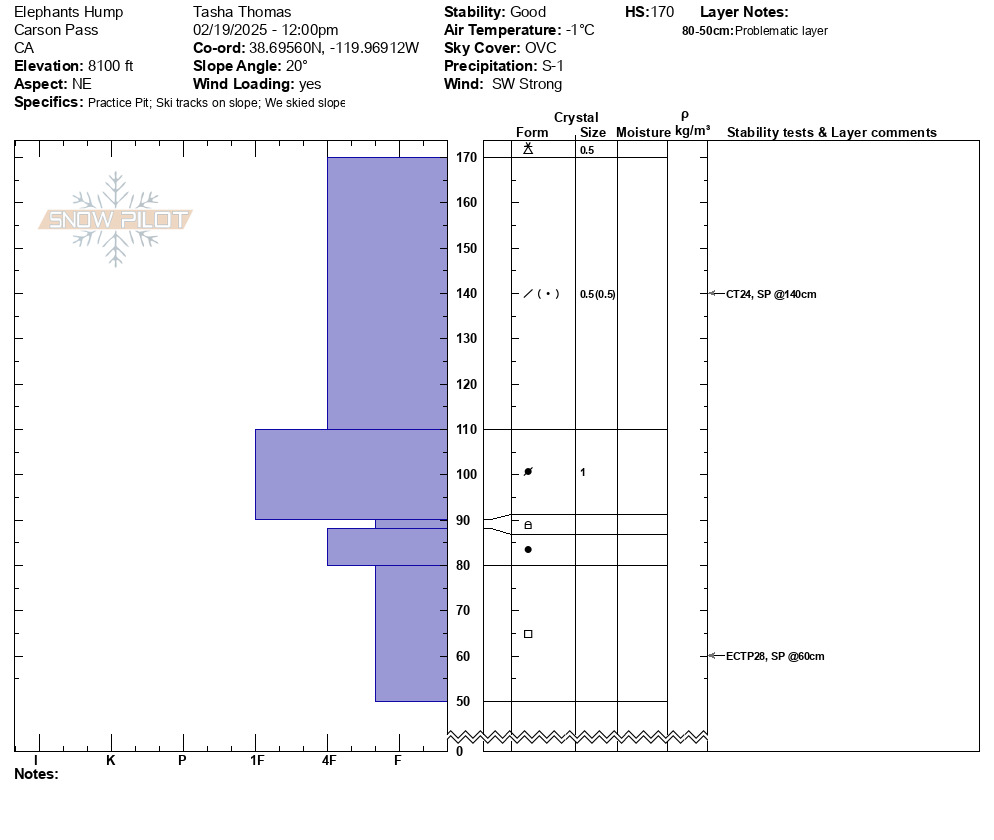
No current or immediate avalanches were observed. Remnants of the prior day's warm temps were evident on smaller steep slopes (those exposed to early day radiation) that we passed by on our tour. We were looking for instabilities from the recent storm cycles to demonstrate how interfaces and layers within the snowpack react to both informal and formal snowpack tests when stress is added. Shovel tilt, mit-pit and both CT and ECT tests yielded planar results at similar depths down from the surface. This indicated that the snowpack was indeed gaining strength however the concern was that there were larger cohesive slabs above these weaker interfaces.
Weather
- Air Temp
- 29
- Cloud Cover
- overcast
- Wind Loading
- moderate
- Rain Elevation
- 6500
- Recent Snowfall
- Trace
- Snow Avail For Transport
- small smounts
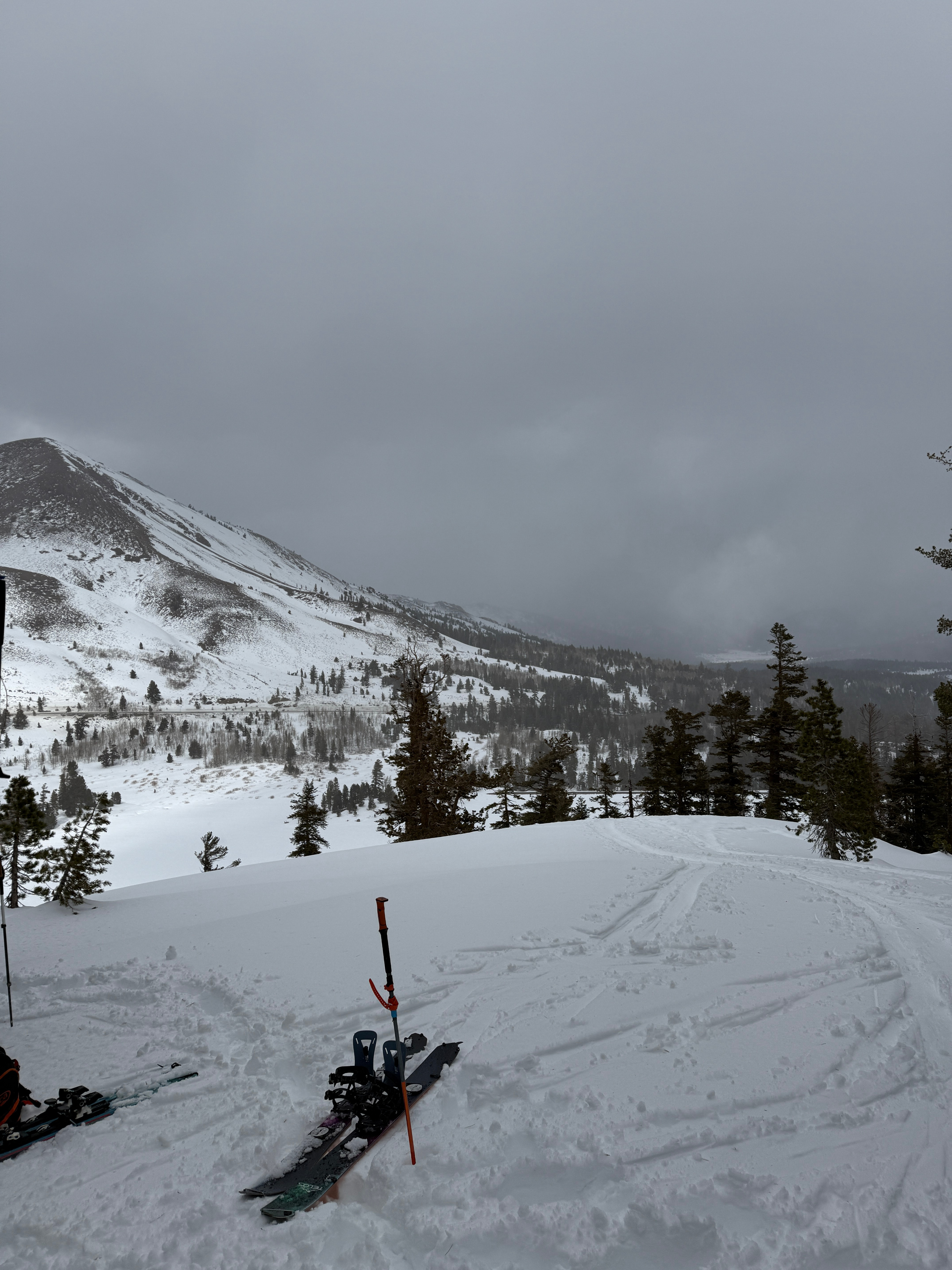
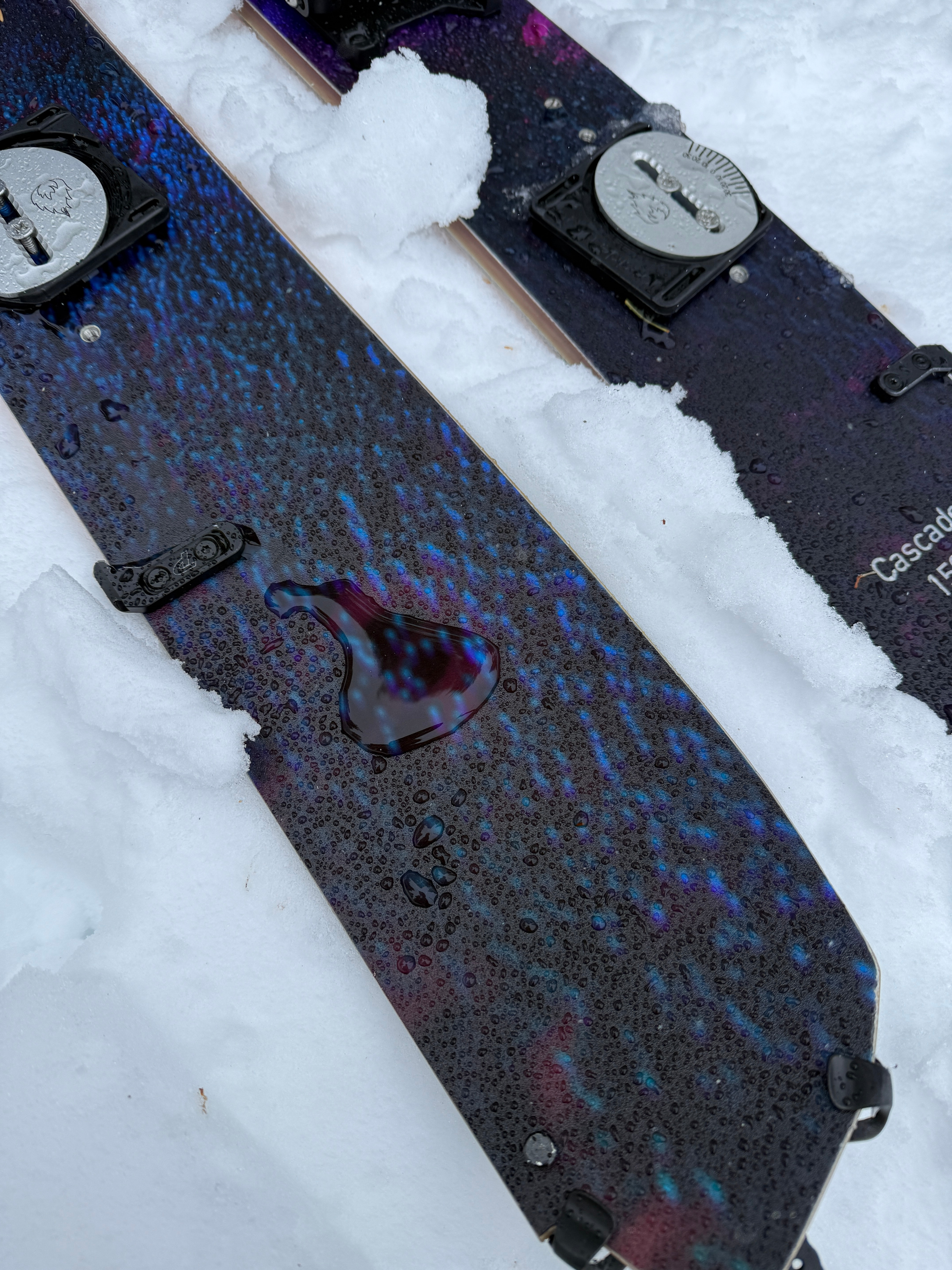
When we left the Red Lakes P lot around 11am, the weather was fair and the temperature was around 38 degrees. By the time we gained the ridge @8100' around noon to dig a snow pit, the SW winds picked up with more sustained gusts and soon there after it began to snow. The temperature began to drop as the mixed precip that initially fell turned to graupel.
Snowpack
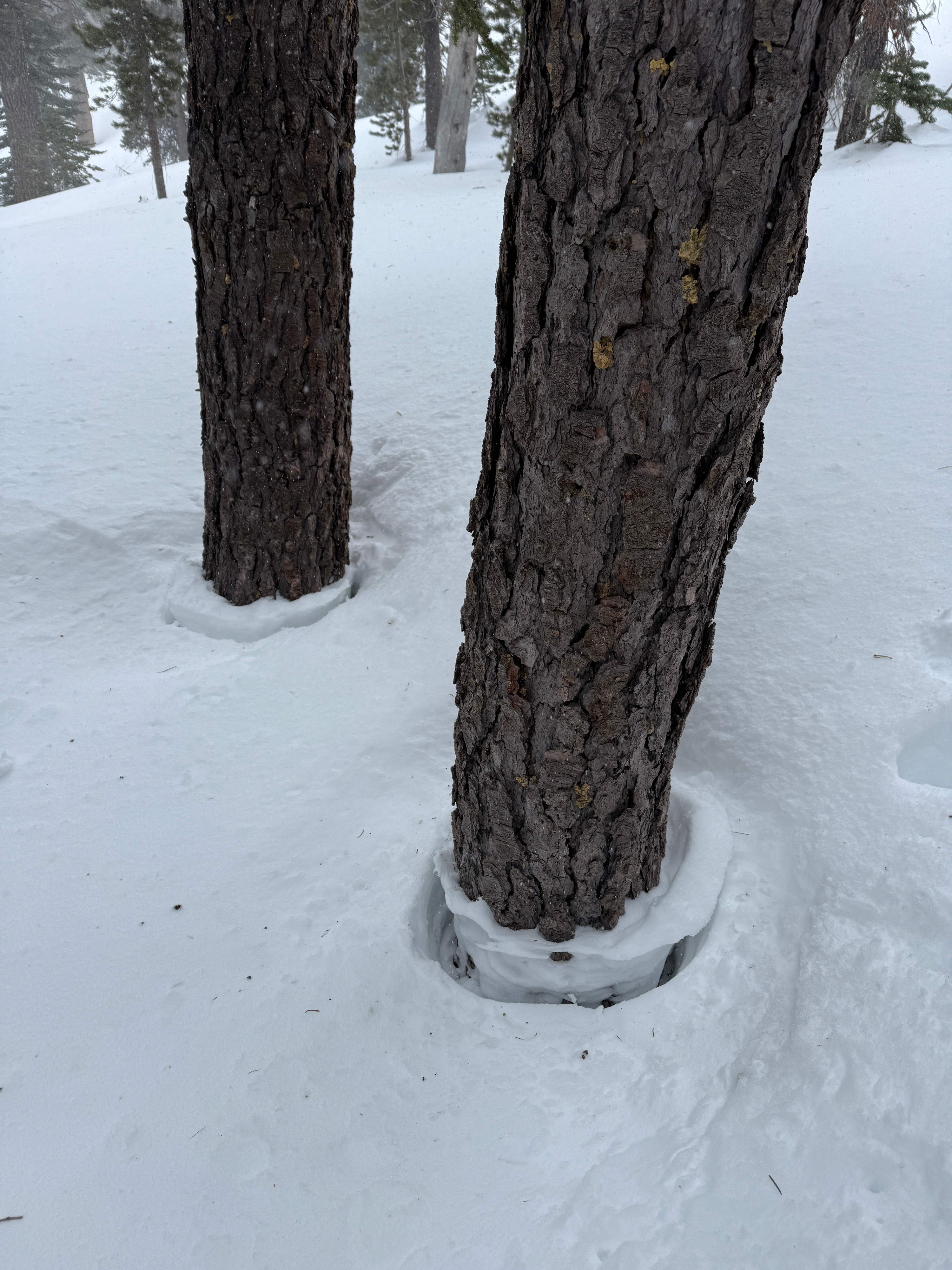
We dug a sizable snow pit that was just below the multiple crusts from early January. The NE facing slope we dug in was decently sheltered in the trees and low enough elevation that we did not witness any signs of scouring from the prevailing southwest and west winds that this area is accustomed to. We remained on slopes that were sub 30 degrees and consensus was that stability was good where we rode.