
Quick report
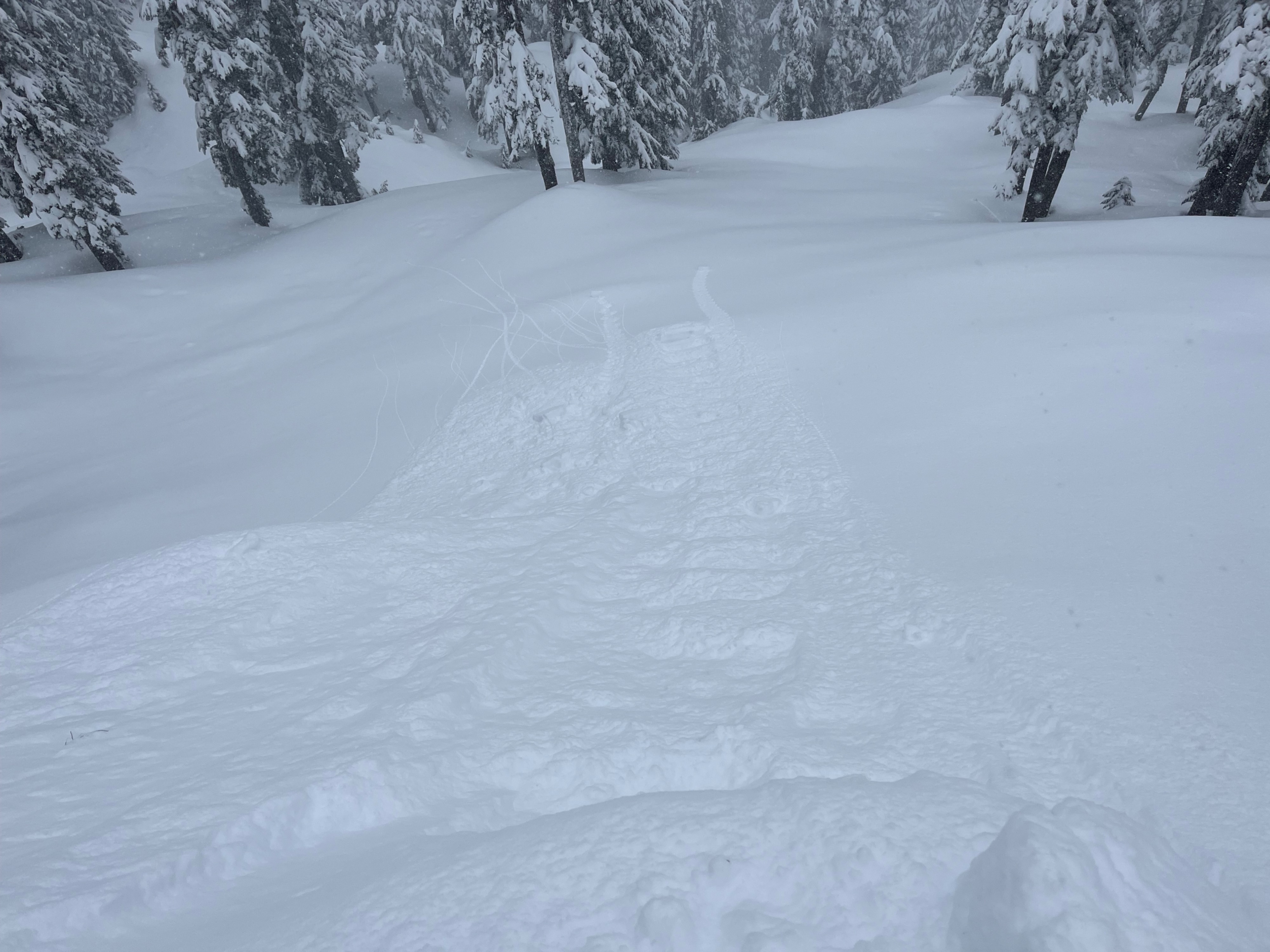
I stayed very conservative and only made it up to 4700ft so wasn't able to see the full picture of conditions out there. I stomped at the top of a few steep slopes and didn't get any results but sluffing. That being said, the bottom half of the new storm snow felt upside down. I was expecting to get whumphs but didn't. However, pit test results confirmed my doubts about traveling in steep terrain right now.
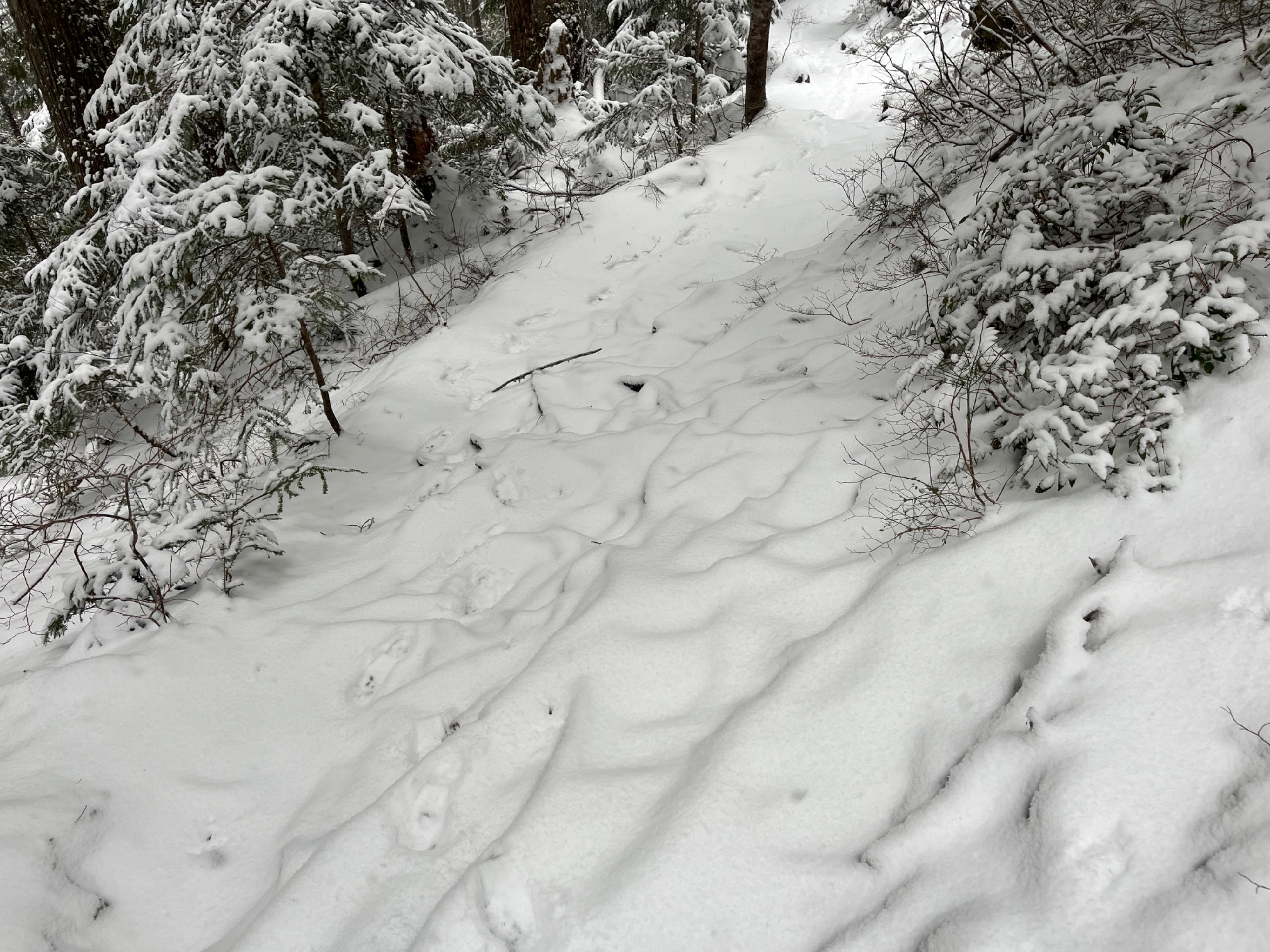
I wasn't concerned about avalanches below 4000ft, as there was only a few inches of snow over the old hard crust.
No Whumphs.Weather
- Air Temp
- 18
- Cloud Cover
- overcast
- Wind Loading
- previous
- Rain Elevation
- 4000ft
- Recent Snowfall
- 60
- Snow Avail For Transport
- large amounts
New snow during the day - 3" down to at least 500ft. The rainline for the majority of the storm was about 4000ft. (Thurs night - Fri). Calm. Cold up high! Blue patches early morning, but 11am onwards ovc and light snow.
Snowpack
Below the lowest elevation band there was 2-3" of new overnight snow. Patchy old crust under the fluff was noticed from about 2700ft, and by 3000ft the old crusty layer was more consistent. Just above 4000ft the new snow layer was 6" deep, and then by 4500ft there was 2ft of new snow all of a sudden.
From about 4000ft and up I felt an "upside down" layer near the bottom of the new snow layer, most noticeable when it was closer to the surface. As I traveled I expected to experience whumphing, but that never happened.
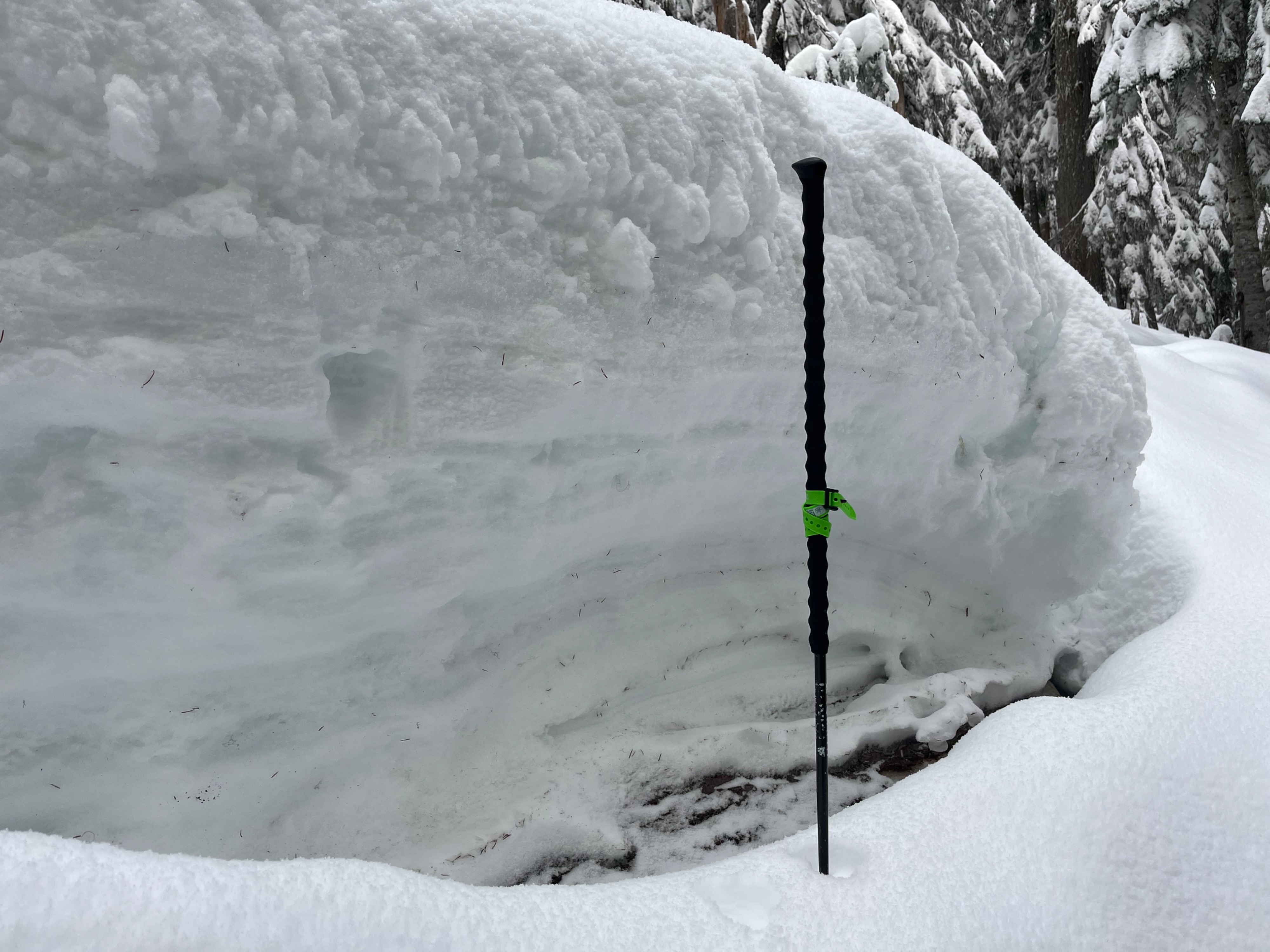
I dug three pits on different aspects at 4700ft. Stepping off my skis I sunk to my waist, 80cm! The pits were all nearly identical. The new storm layer was 60cm (2ft) deep, with a notable crust. In all pits, there was softer, weaker (faceted) snow at the top of the old snow surface (January Drought Layer). There was also softer, faceted layers on both side of the 1/10 crust.
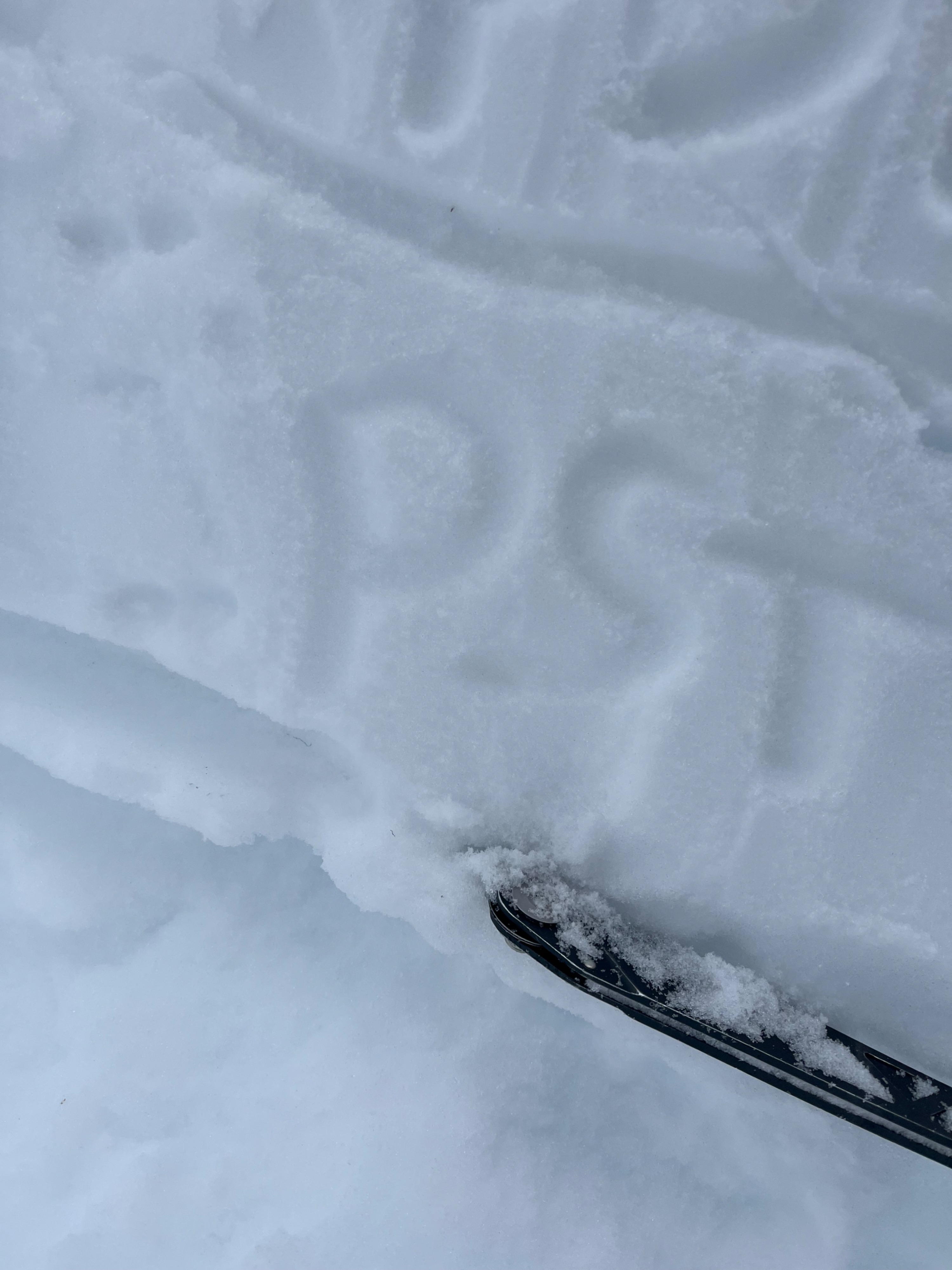
Compression tests only yielded moderate to hard mid storm failures, with no propagation in the Extended Column Test. I chose to test the older faceted layers with a Propagation Saw Test in 2 pits. They had the same result in both pits: PST 20/100 End at the top of the January Drought Layer, and PST 40/100 End above and below the 1/10 crust. All indicating unstable results.
Avalanche
Stomping at the top of smaller slopes only produced shallow sluffs. Visibility was poor. I saw one small old slab avalanche on a south-facing lower elevation meadow.