
Quick report
- Cracking
- specific
Classic storm day in the mountains - new snow, lots of wind, and limited visibility. Signs of instability increased during the day at all elevations and buried surface hoar continues to produce in tests. In the coming days, avalanches won't have to break deeper than the storm snow to produce a large, dangerous avalanche. Those that do break deeper have the potential to break wider than expected as more and more natural obstacles get buried connected adjacent slopes.
Cracking at the new/ old storm interface.Weather
- Cloud Cover
- obscured
- Wind Loading
- intense
- Recent Snowfall
- 10 to 25
- Snow Avail For Transport
- large amounts
Obscured skies and moderate to heavy snowfall throughout (S2 to S5). Winds got after it transporting significant amounts of snow onto leeward slopes. The drifts along the road below the pass grew 2 feet in height and 2 feet into the road from morning to afternoon. Overall effects from the wind to the snow surface was more noticable above 6,000 feet but light surface texturing observed in large opening lower in elevation.
Snowpack
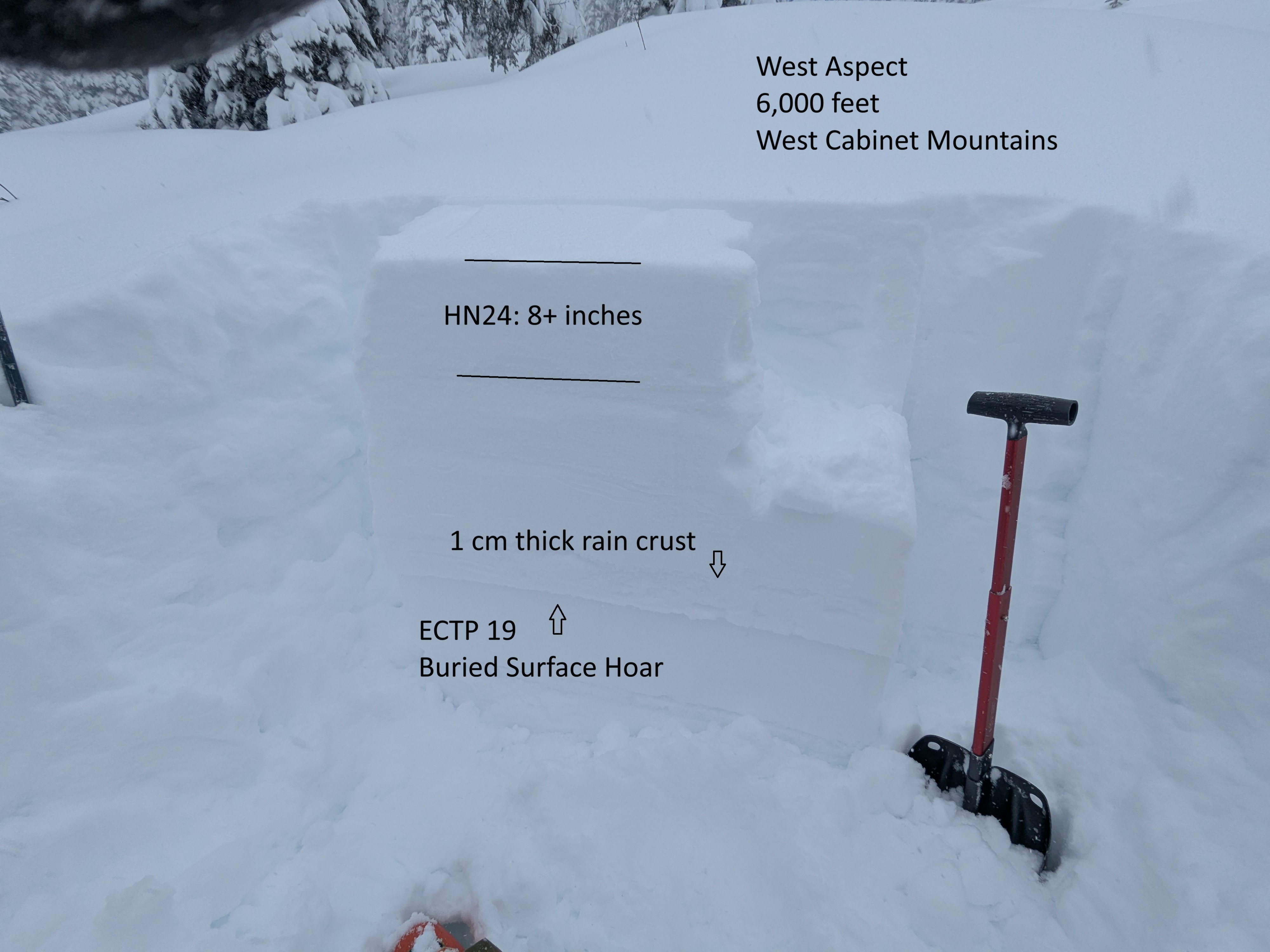
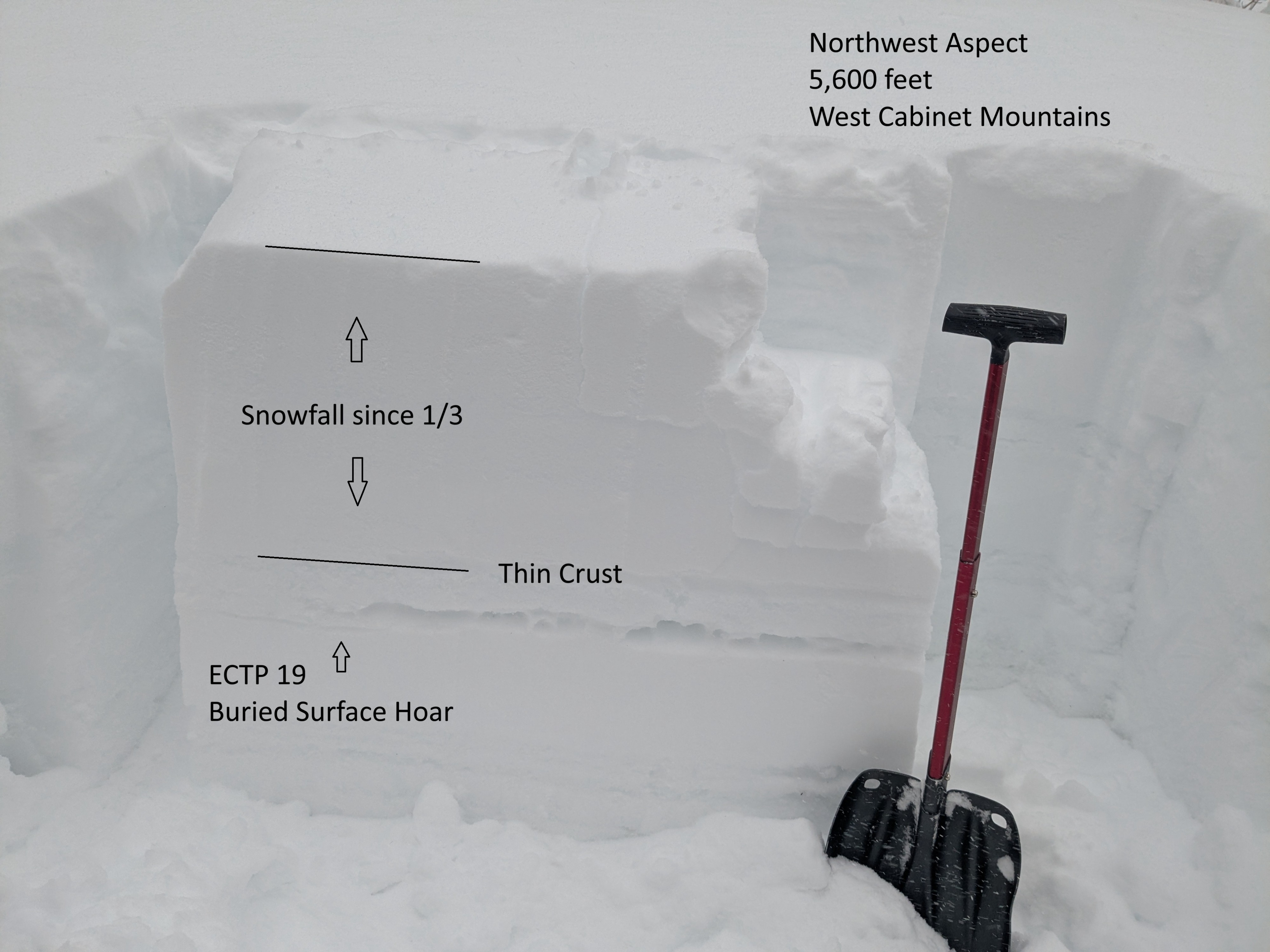
We found around 4 inches of new snow between 4,000 and 4,500 since snowfall started this morning. New snow amounts increased to around 10 inches at 6,000 feet and above. By the time we returned to the snowmobile at the trailhead, an additional 4 inches fell between 11 am and 3 pm (inch per hour). While snowfall amounts over a short period were impressive, the amount of wind-drifting was exceptional. Cornices broke while walking above them with no stomping needed and many places below ridges looked phat and pillowy. Windward slopes had a pressed inverted storm slab with lots of cracking noted along the skin track. The 1/2 surface hoar layer performed in both snowpits dug at 5,600 feet and at 6,000 feet. Pits were on a northwest and west-facing slopes respectively. The surface hoar layer propagating between 19 and 21 taps and had a moist layer above in both spots. This moist layer was breakable and got thinner the higher we climbed. Poking around near 6,300 feet, surface hoar remained but the moist layer above had diminished. The next layer of concern is the Christmas-Grinch crust. While weak facets remain both above and below this crust, it appears to have become less reluctant to fail with time. We observed non-propagating results at this interface but wouldn't rule out a failure here in a cascading event. We did not observe propagating failures at the new/ old interface or within the storm snow proper, but easy progressive collapse and non-propagating ECTs. With additional snowfall overnight and in the coming days, the storm slab will likely become more sensitive to added weight. The storm snow will likely be more reactive where winds drifted the snow into a stiffer, deeper slab.
Avalanche
Small, shallow natural crowns on steep convex rolls near ridgelines and above cliffs.