
Quick report
- Cracking
- specific
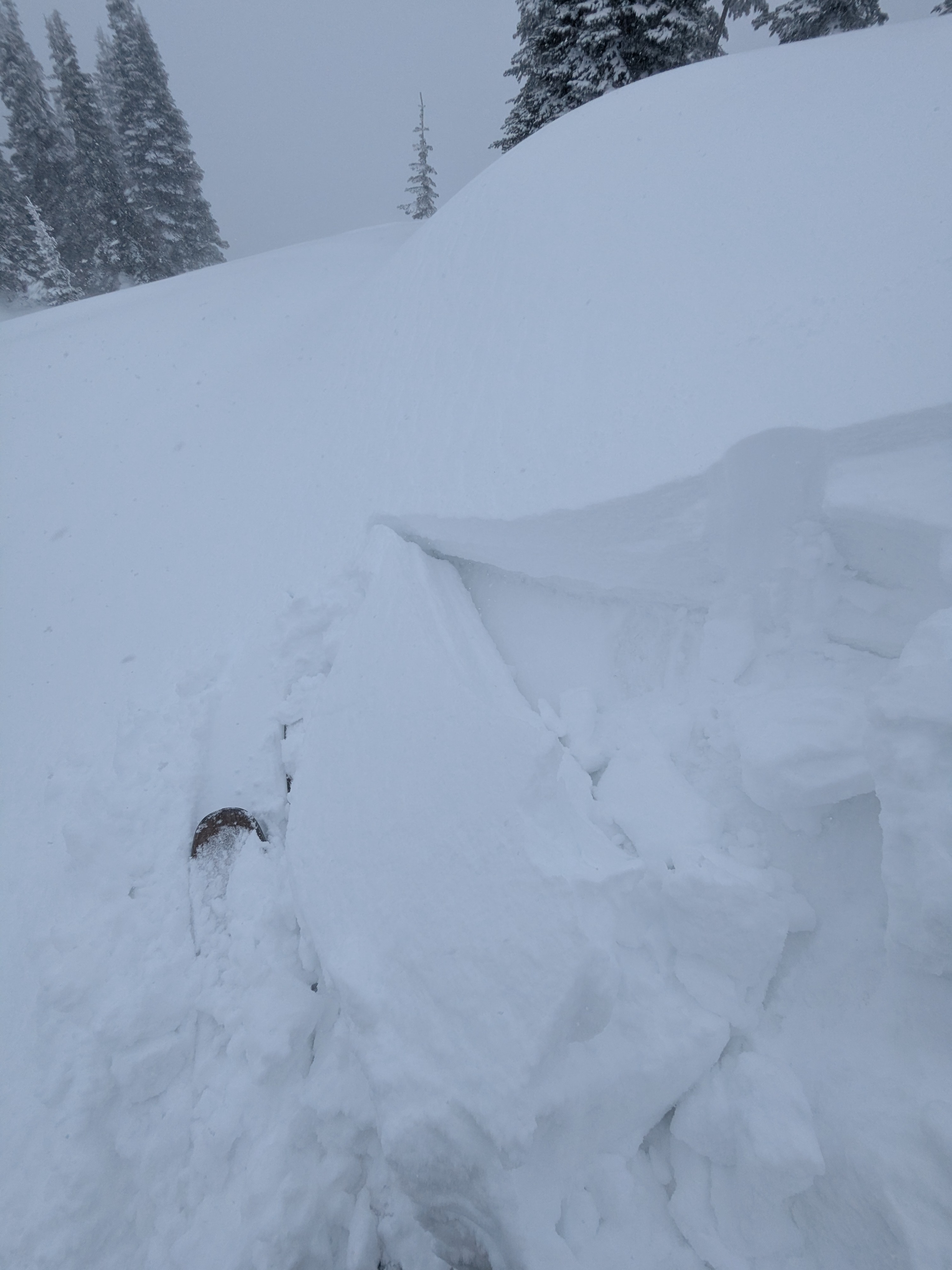
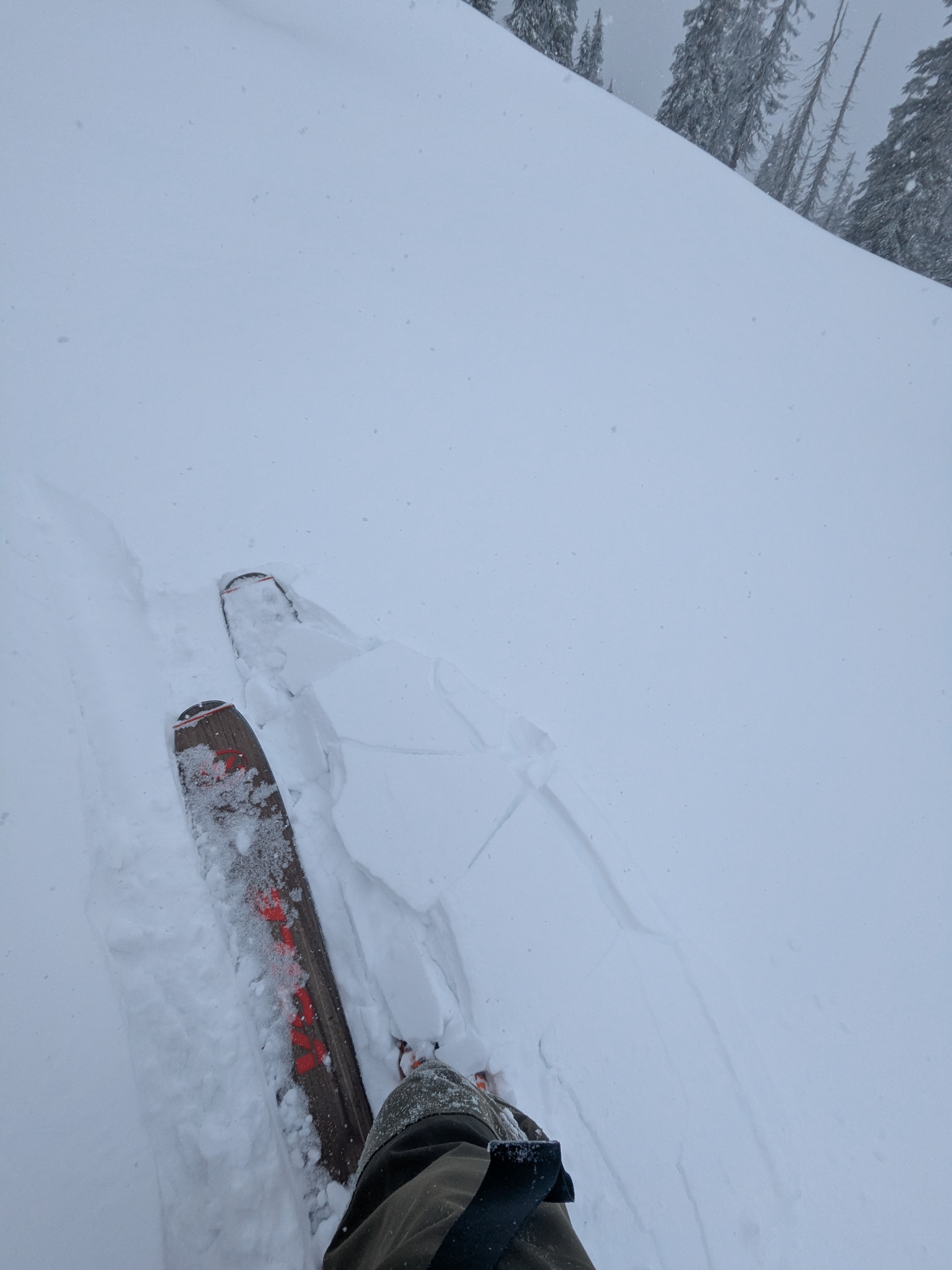
Today's uptick in winds along with moderate to heavy snowfall quickly formed reactive slabs on the lee-sides of terrain. Despite shallower drifts and new snow depths in wind-sheltered areas and lower elevations, the new snow was quite slabby given it's upside-down layering (harder over softer). As these slabs get deeper, this could spell trouble and increase their sensitivity. All of which is being enhanced by the firm, slippery crust directly below the new snow to make triggering easier.
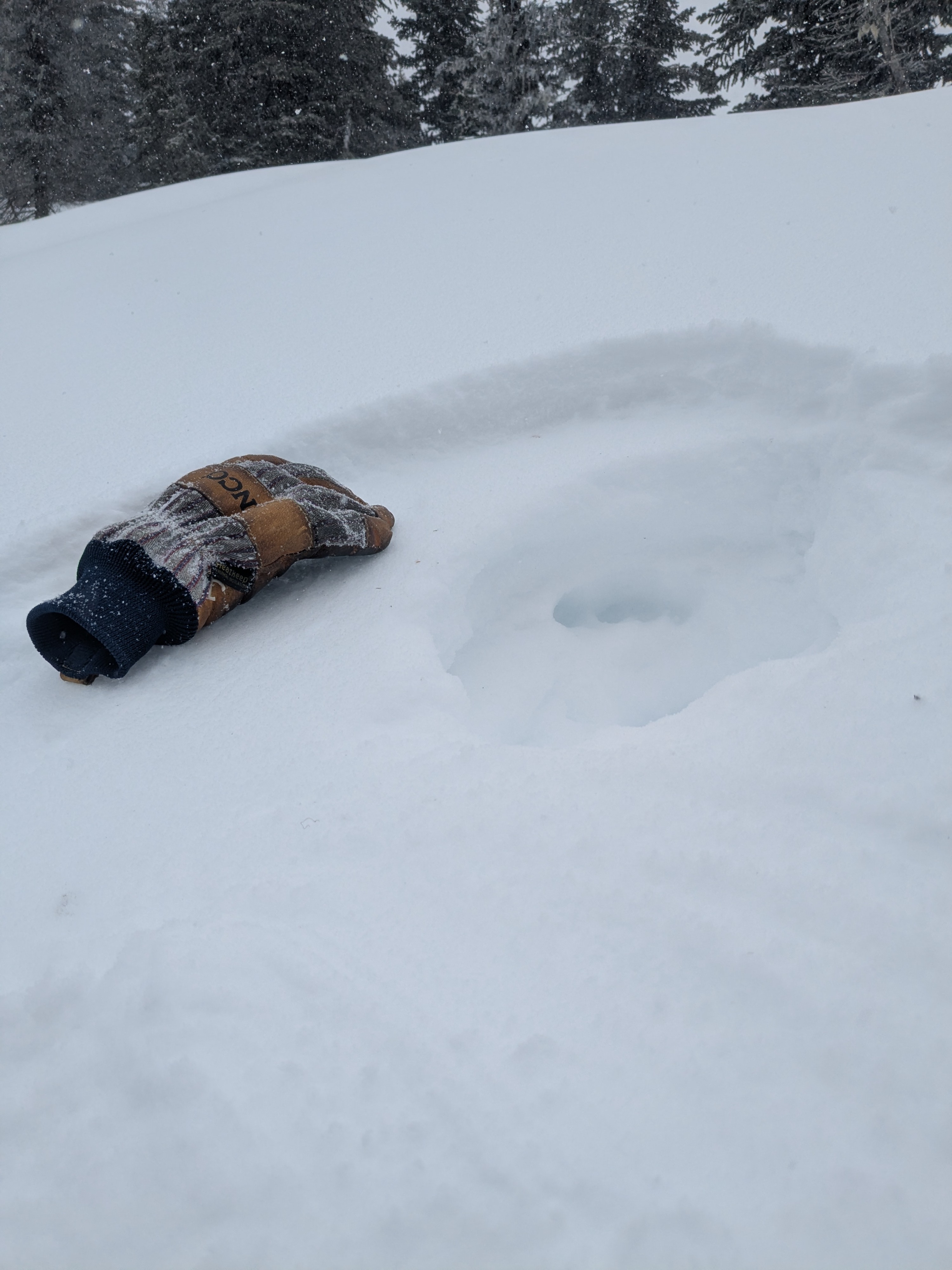
Lots of slab formation and cracking in any small, drifted terrain feature we used as test slopes.Weather
- Cloud Cover
- obscured
- Wind Loading
- moderate
- Rain Elevation
- 2500
- Recent Snowfall
- 10 to 15
- Snow Avail For Transport
- moderate amounts
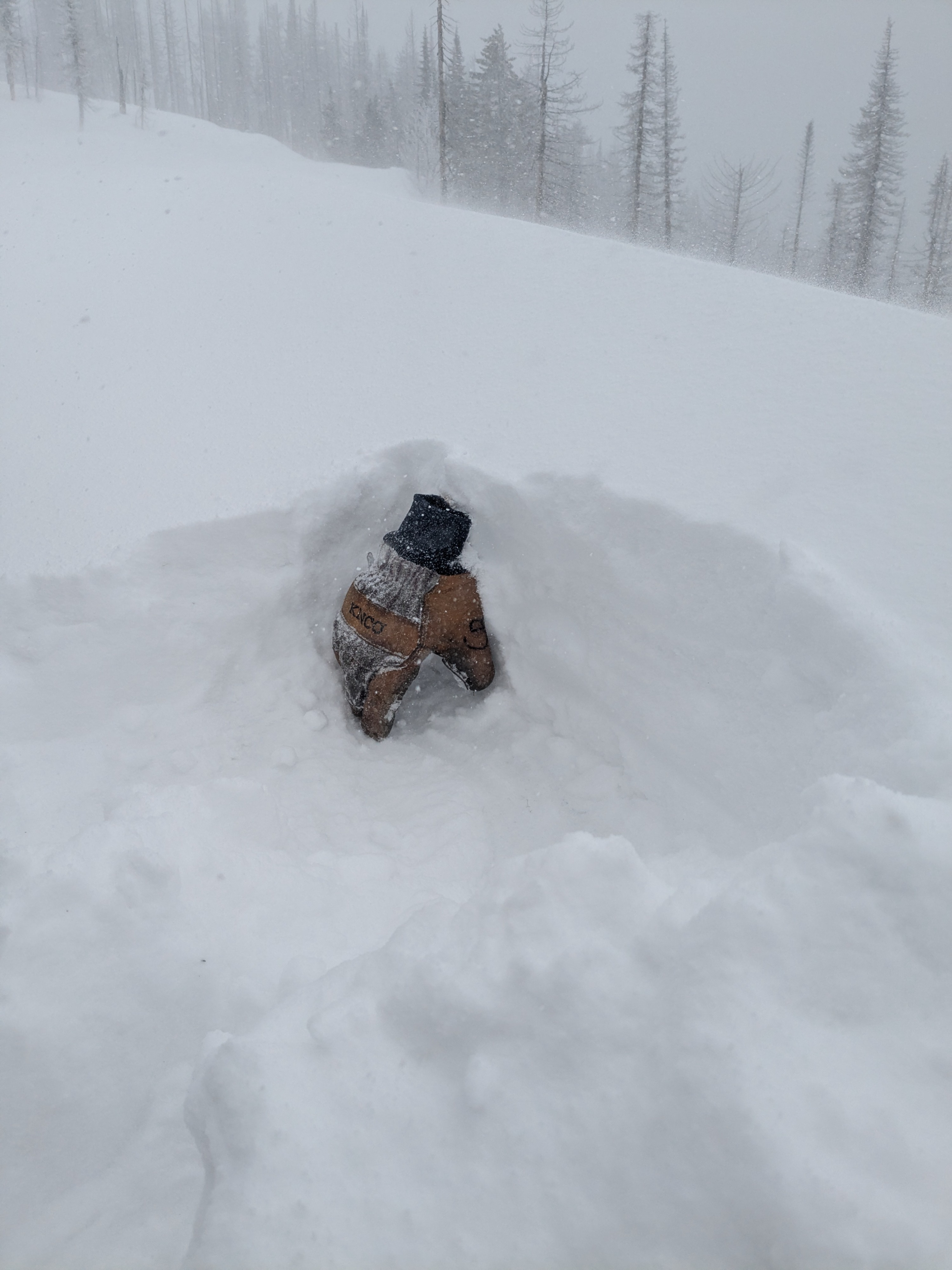
Snowing and blowing all day - S1 at the trailhead quickly transitioned to S2+ for the remainder of the day. Winds were much less than we expected, but increased during the day.
Snowpack
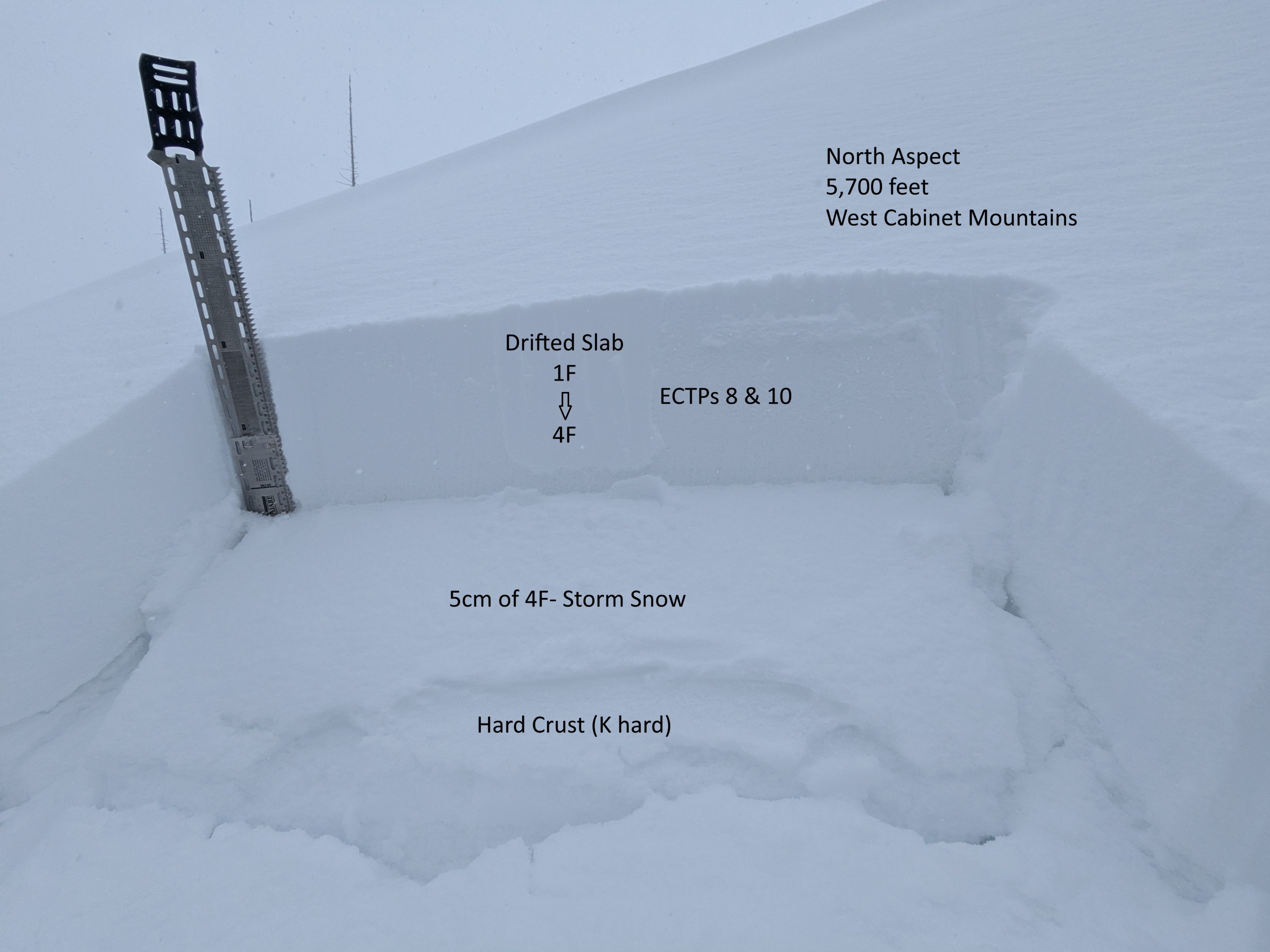
Sheltered areas had around 2 to 4 inches of new to start, then 5 to 7 inches had accumulated by 3 pm. Drifted areas were around 12 inches deep to start, then increased to around 18 inches by 3 pm. Snowpit digging today targeted drifted areas to get a sense for reactivity of the storm snow. Our first pit was around 5,700 feet on a due north-facing slope. HS was 185 cm with 30 cm of new snow, and the slab was inverted 1F to 4F. There was a thin (2 cm) layer of 4F- snow sitting directly on a stout and very slippery crust. We observed ECTPs with 8 to 10 hits (cash drawer style block action). Our second pit was around 6,400 feet on a due east-facing slope. There, the crust below was thinner and more breakable. We only observed ECTNs here with similar force as the ECTPs in our first pit. However, a subtle shovel pry behind the column and it slid off with excitement. The whoopties on the road were mostly filled in on our ride out and there was around 4 to 5 inches of snow at the Huckleberry campground and main parking lot by the afternoon.
Avalanche
None observed.