
Quick report
The persistent slab problem appears to be more isolated and stubborn now. Several pits on north aspects NTL investigating the March 23rd interface suggest that the layer has gained significant strength in the past week of dry weather. The avalanche crowns that we investigated in Baxter failed on unusually shallow and rocky slopes on deeper weak layers that look weaker than the March 23rd layer. That's the type of terrain that appears to be most worrisome now: shallow and rocky on northerly aspects.
No signs of instability underfoot; most steep terrain that we traveled on was on bedsurfaces or along the flanks of previous avalanches. Recent wet avalanche activity from yesterday, and we triggered rollerballs on steep east facing cut banks below treeline this afternoon.Weather
- Cloud Cover
- few
- Wind Loading
- light
- Snow Avail For Transport
- small smounts
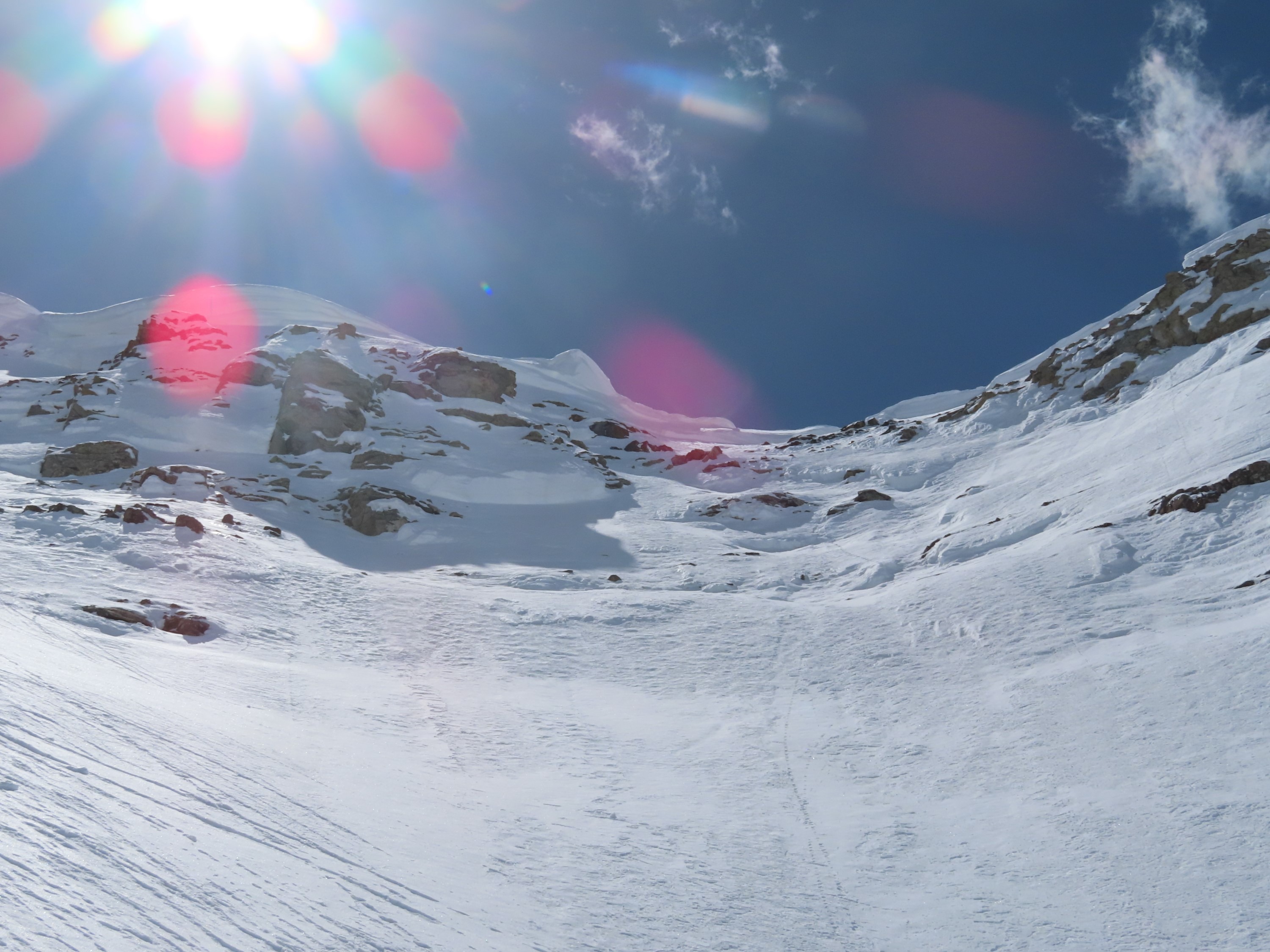
Warm, sunny, and windy. The winds were drifting the dry snow around on high north aspects, mostly just turning the snow surface over and not really loading.
Snowpack
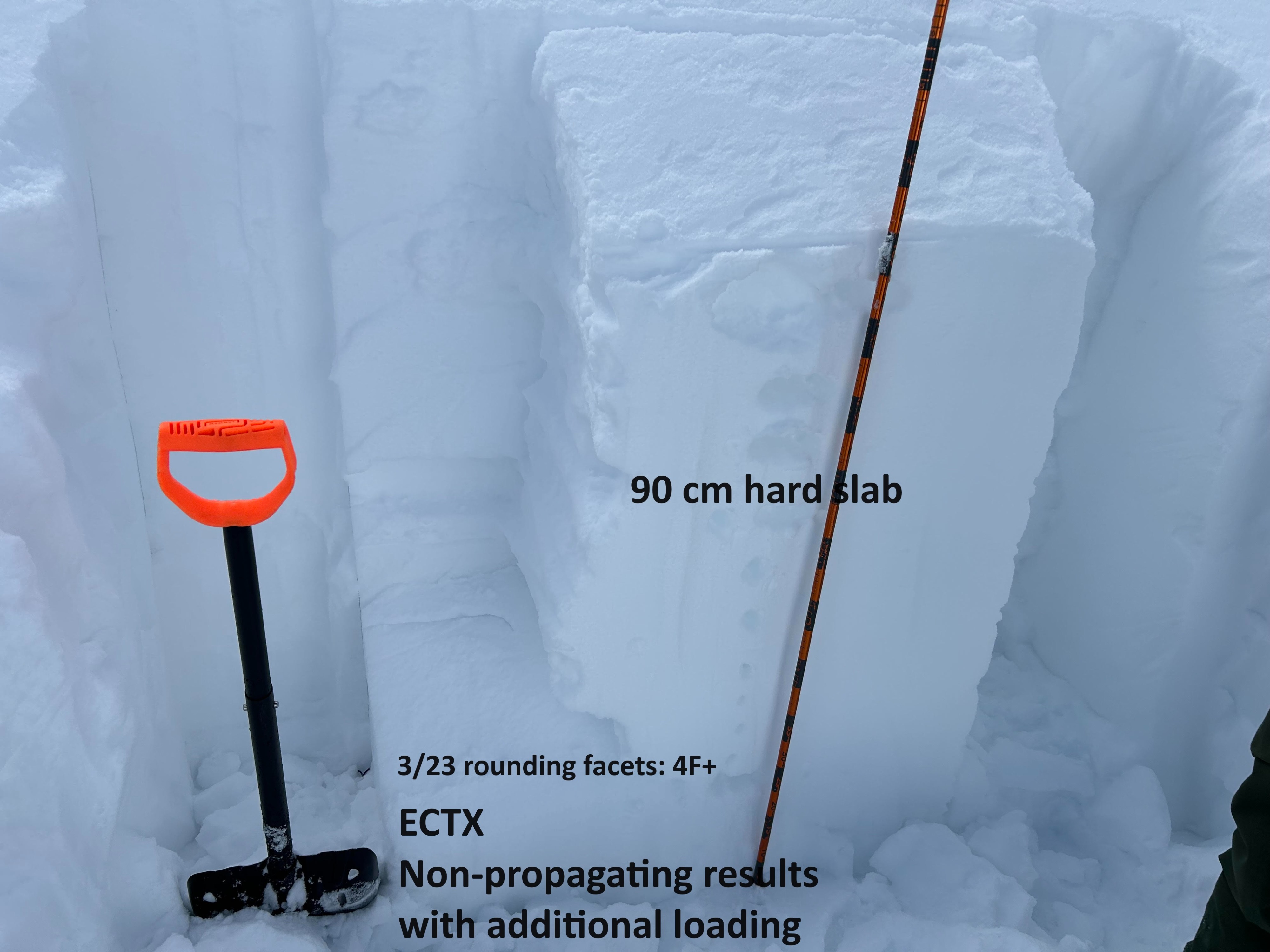
On a moderately drifted NNE facing slope at 11,100': Dry snowpack with no crusts. 90 cm slab up to pencil hard over a 4F+ or 1F- weak layer (3/23 interface, <1mm rounding facets). ECTX. Non-propagating results with a deep tap ECT.
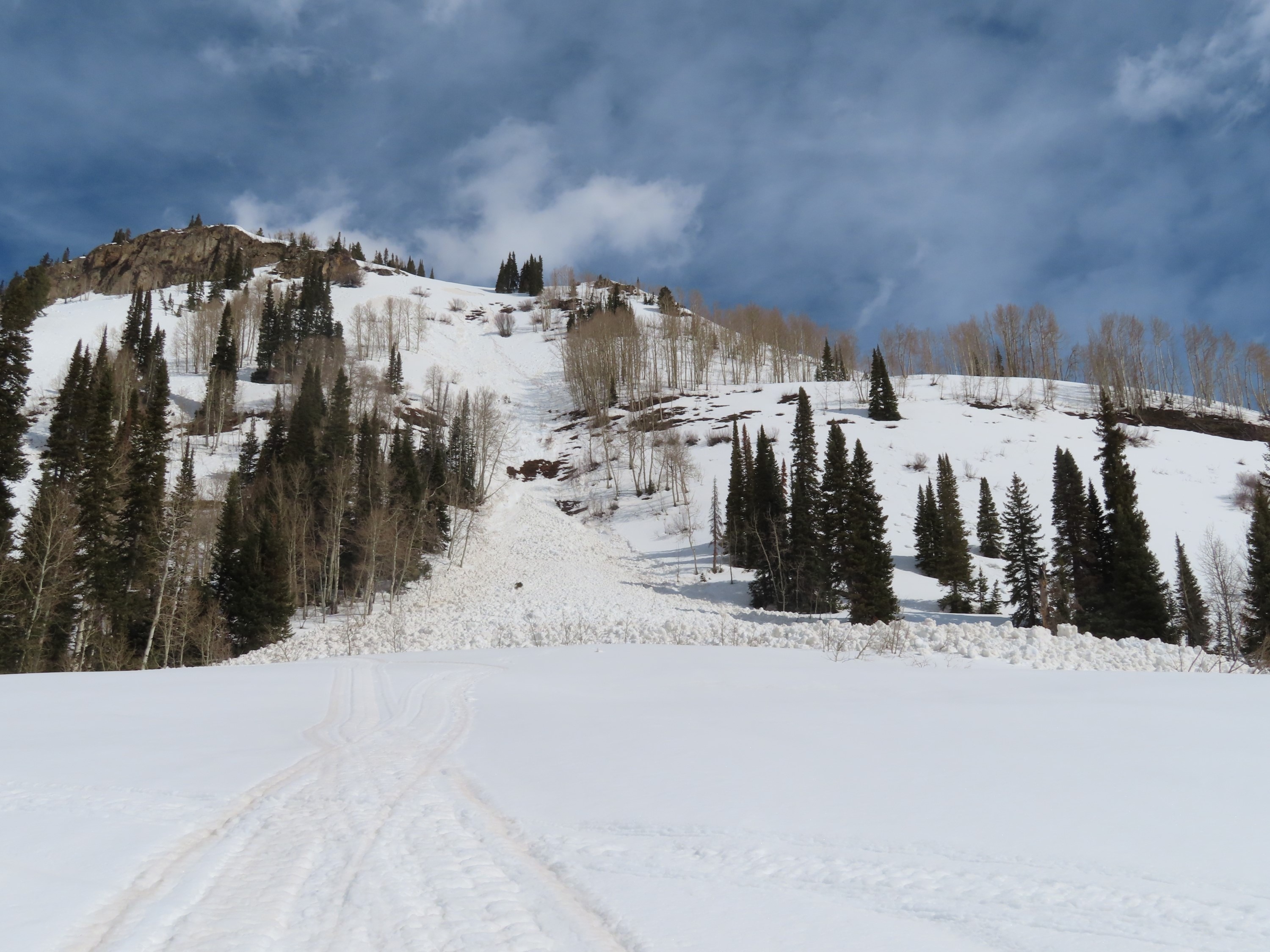
The avalanche crowns that we looked at ranged from ~40 cm to over ~120 cm. They failed about twice as deep as the early March dust layer on older facet layers (Jan 5?) closer to the ground than to the snow surface. The layer was probably variable across the thin and rocky slopes because snow depth was highly variable; where we looked it was 4F hard and 1mm in size.
Avalanche
- Size
- D2
- Type
- WS
- Count
- 9
- Aspect
- SE
- Trigger
- N
- Elevation
- 10100 ft
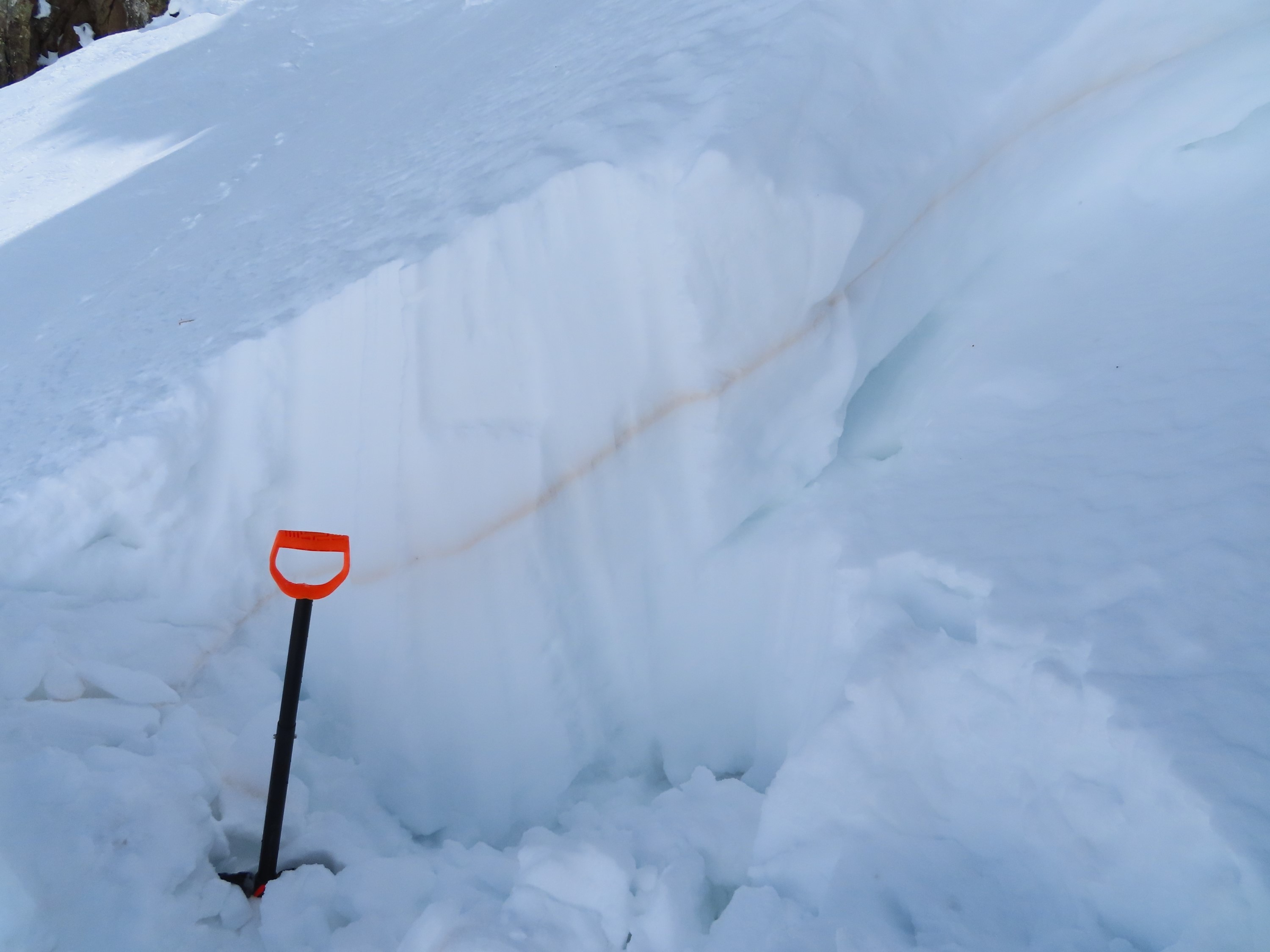
Wet loose avalanches on many slopes, mostly D1 to D1.5 from the last couple of days on east, south, and west. There was also some shallow wet loose activity wrapping around to NE and NW N/BTL. There were 4 large wet slabs on south and southeast aspects below treeline that probably ran yesterday. They failed on the old dust layer about a foot deep.