
Quick report
- Cracking
- isolated
- Collapsing
- specific
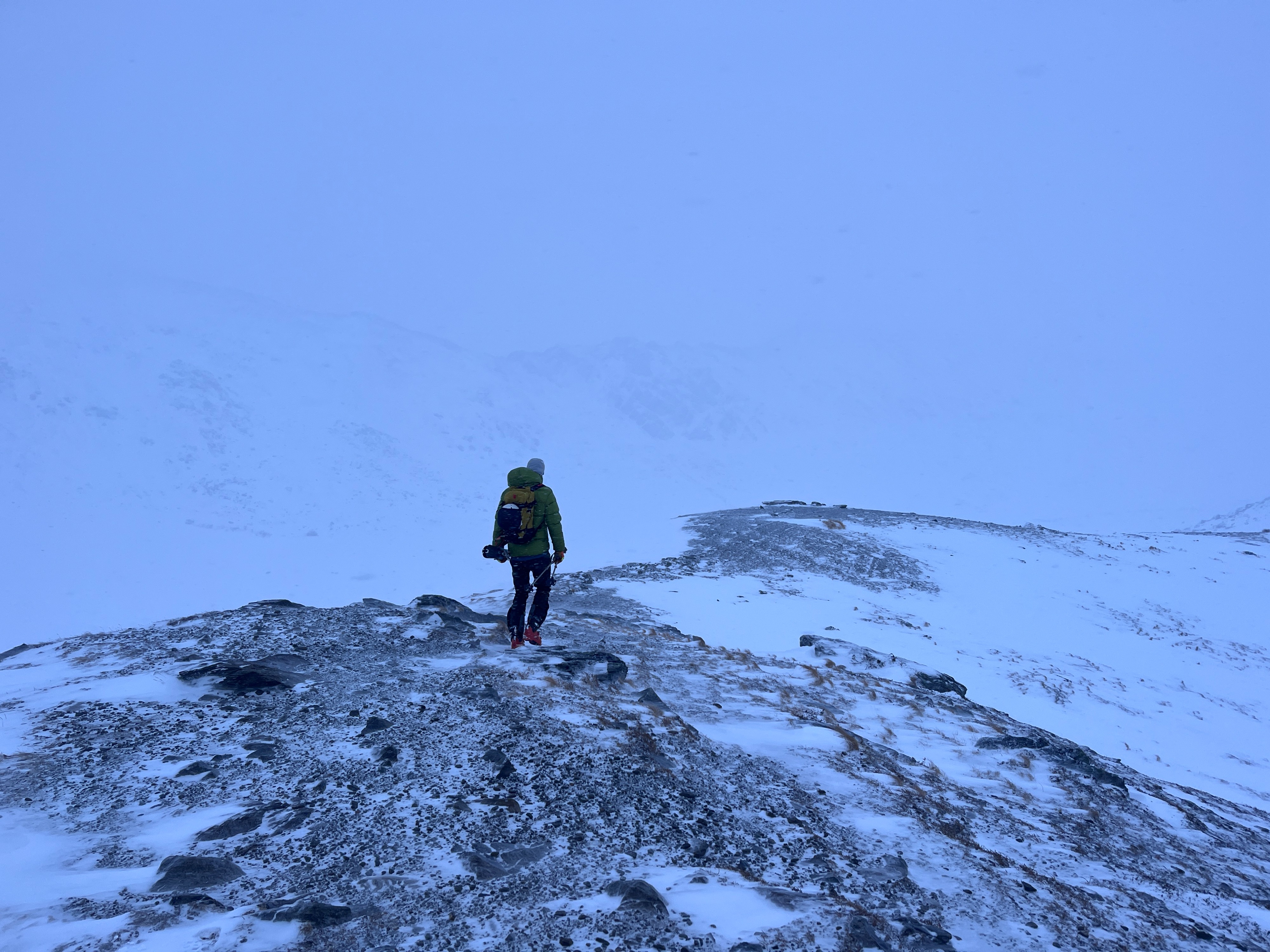
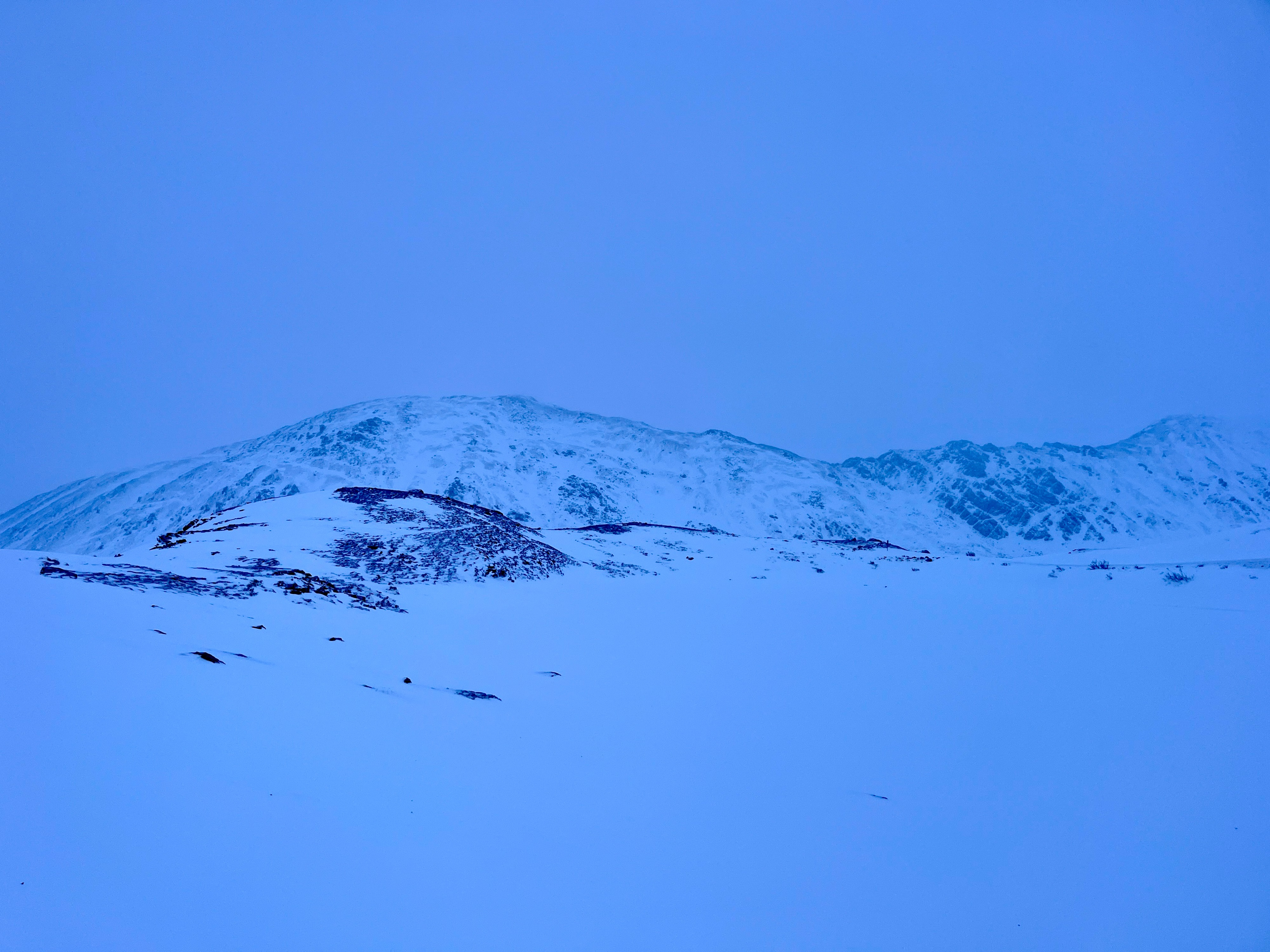
Upside-down snow in the upper snowpack made for challenging off-road travel; the easiest travel we found was booting along scoured ridges near the top of Hatcher Pass. Today wind definitely moved snow around, scouring the easterly sides of the slopes near the pass, and loading or cross-loading others. On recently wind-loaded test slopes, we found unreactive wind slabs. The stiffened snow surface was easy to break through, and was scarcely supportable. We observed one large collapse near Summit Lake, likely due to weak snow near the ground below recent snow and old December wind slabs/crusts. Of note, the frequency of collapses increased in the flats near the summer road, where time and winds have stiffened the snow, and weak sugary snow existed near the bottom of the snowpack.
Within the new and wind-drifted snow, we experienced isolated collapses, which were muffled and short. Just above the south side of Summit Lake, we felt and heard a fairly large rumbling collapse—likely on the weak snow near the ground. On our exit, we felt numerous collapses in the flats below the summer road, and some isolated cracking. Again, these collapses were likely on weak snow near the ground, or driven by new snow being supported by vegitation (in hand pits following the collapses these were the two setups we found).Weather
- Cloud Cover
- overcast
- Wind Loading
- moderate
- Recent Snowfall
- 5-10
- Snow Avail For Transport
- moderate amounts
Overcast skies, moderate temps, and blustery winds. Wind speeds and direction were variable, mostly blowing light to moderate from the SE. Light snowfall increased by 2:00 PM. Total 24-hour snowfall was difficult to measure accurately due this the ongoing wind, our best estimate is between 2-4".
Snowpack
New snow: Last weekend's snowfall has settled and become upside down, making for challenging travel and ski conditions. With the influence of wind, the stiffness of the surface snow was much more pronounced. While we didn't find any reactive wind slabs on test slopes, we found stiffer wind-packed snow over softer snow below.
Weak Layers: Following each collapse, we dug small hand pits or used a pole to assess the structure of the snow below. A large collapse above Summit Lake was likely on weak snow near the ground; here, recent snowfall overlayed a stiff old wind crust with faceted snow near the ground. Collapsing was much more frequent in middle elevations, where wind and time have helped settle recent snow, creating a stiffer slab over weak snow at or near the ground.