
Quick report
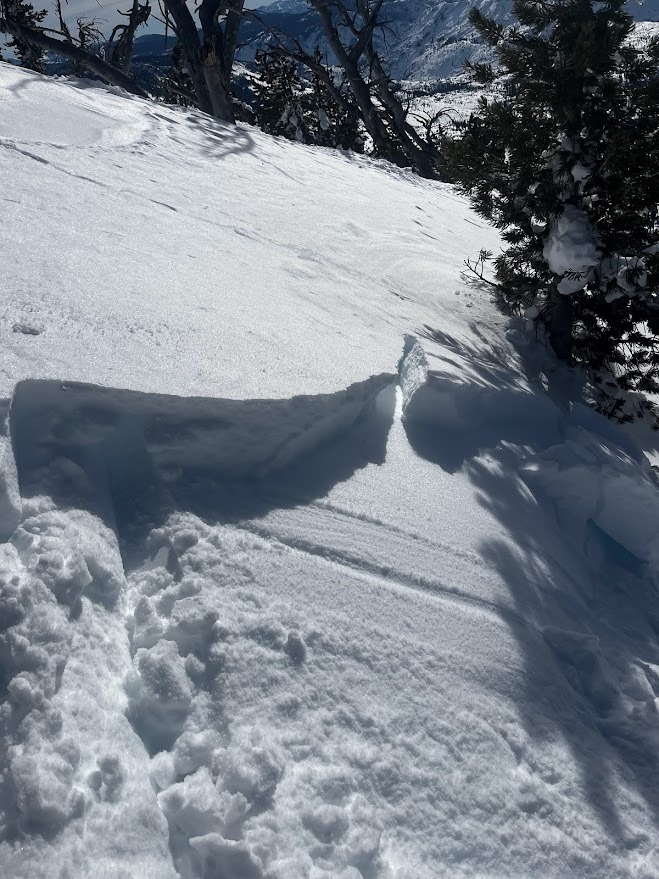
Ski cuts on test slopes indicate that wind slabs are still reactive in isolated areas near treeline.
We have had two reports that there may be a facet - crust layer at the interface from 2/2/2024 (snow surface during the warm-up before last week's storm). The first report was a small skier triggered wind slab that failed on a facet crust layer on a SE aspect below treeline on 2/3/24. The second was found in snowpit tests on a west aspect, also below treeline. Both reports were from the Mammoth Mountain area. I decided to take a day off from tracking basal weak layers to look at the structure and distribution of the 2/2/24 melt-freeze crust.
I was unable to find test results or a concerning structure around the 2/2/24 interface. We have had no reports of any avalanches involving this layer since it was re-buried deeply on 2/5/24. This does not mean there are not isolated ares where the layer is concerning. More observations are needed before any conclusions can be drawn about whether or not this layer is a concern.
Weather
- Air Temp
- 32
- Cloud Cover
- scattered
- Wind Loading
- previous
- Recent Snowfall
- 20 to 40
- Snow Avail For Transport
- moderate amounts
Light north winds were cooling northerly aspects near and above treeline. E SE S SW W slopes were soaking up the sun and mid-day warmth. Thin clouds limited cooling from outgoing long wave radiation. The surface snow became wet on steep solars NTL and BTL. Trees were dripping water and wet snow onto the snow surface in forests.
Snowpack
HS 180 to 240cm. Ski pen 20 to 40cm. Wind Slab: Cracking on steep W test slopes NTL. Failure plane is down 20 to 30cm - stellar precip. particles at the interface. Persistent Slab: no signs of instability, plenty of tracks in steep forested terrain including snow machines. Depth hoar layer is down 175cm in 200cm snowpack BTL. More variation in height of snow NTL, but min depth of PWL is greater than 150cm.
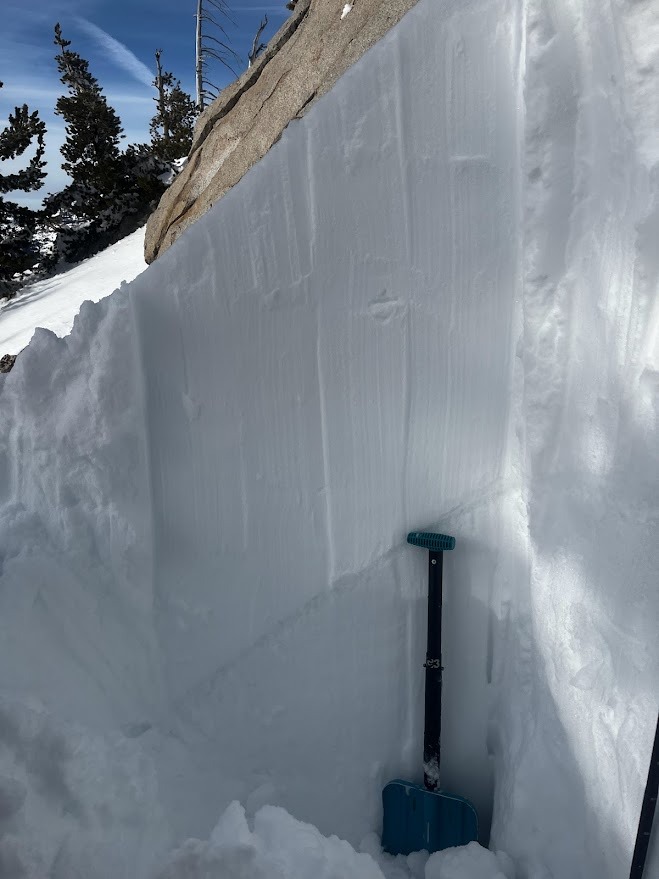
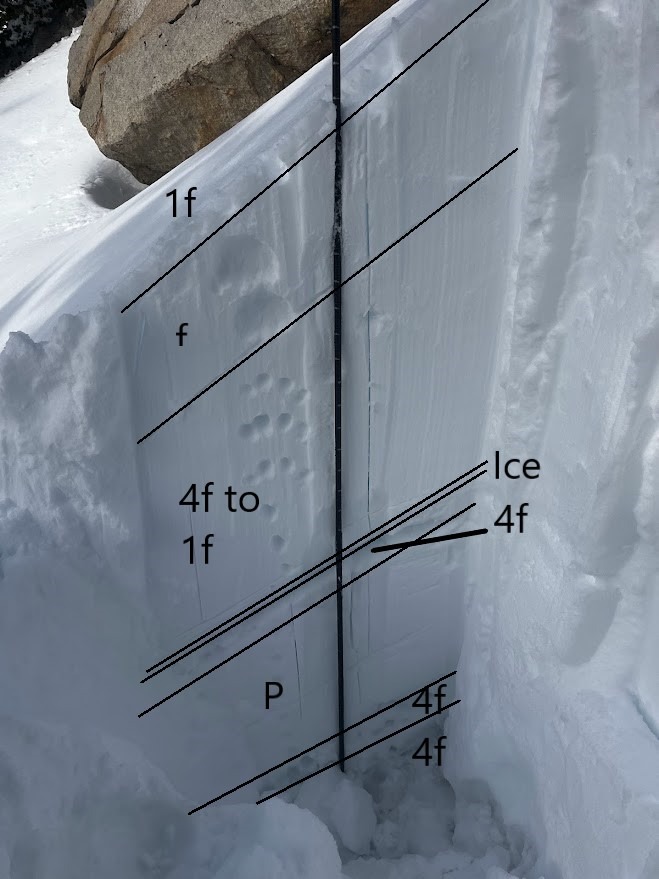
I dug pits on a SE aspect at 9400' and on a W aspect at 9500'. I did not find the 2/2/24 layer in the SE pit, and there were no concerning test results at the depth of the layer. In the W pit the layer was obvious down 95cm from the surface - 1cm melt-freeze crust with 5cm of 4f rounds (and rounding facets) below it. Test results did not identify the layer as a potential failure plane.