
Quick report
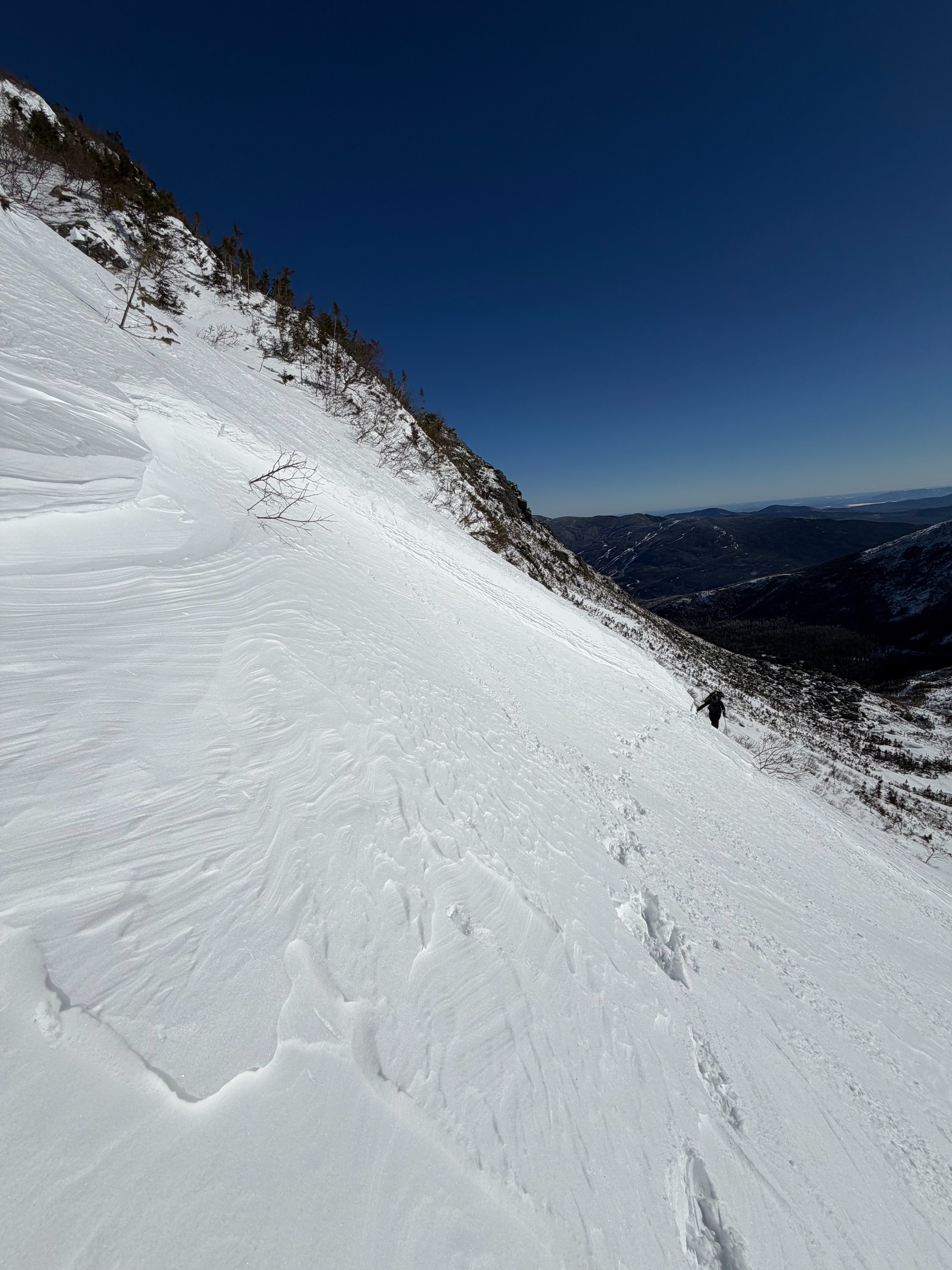
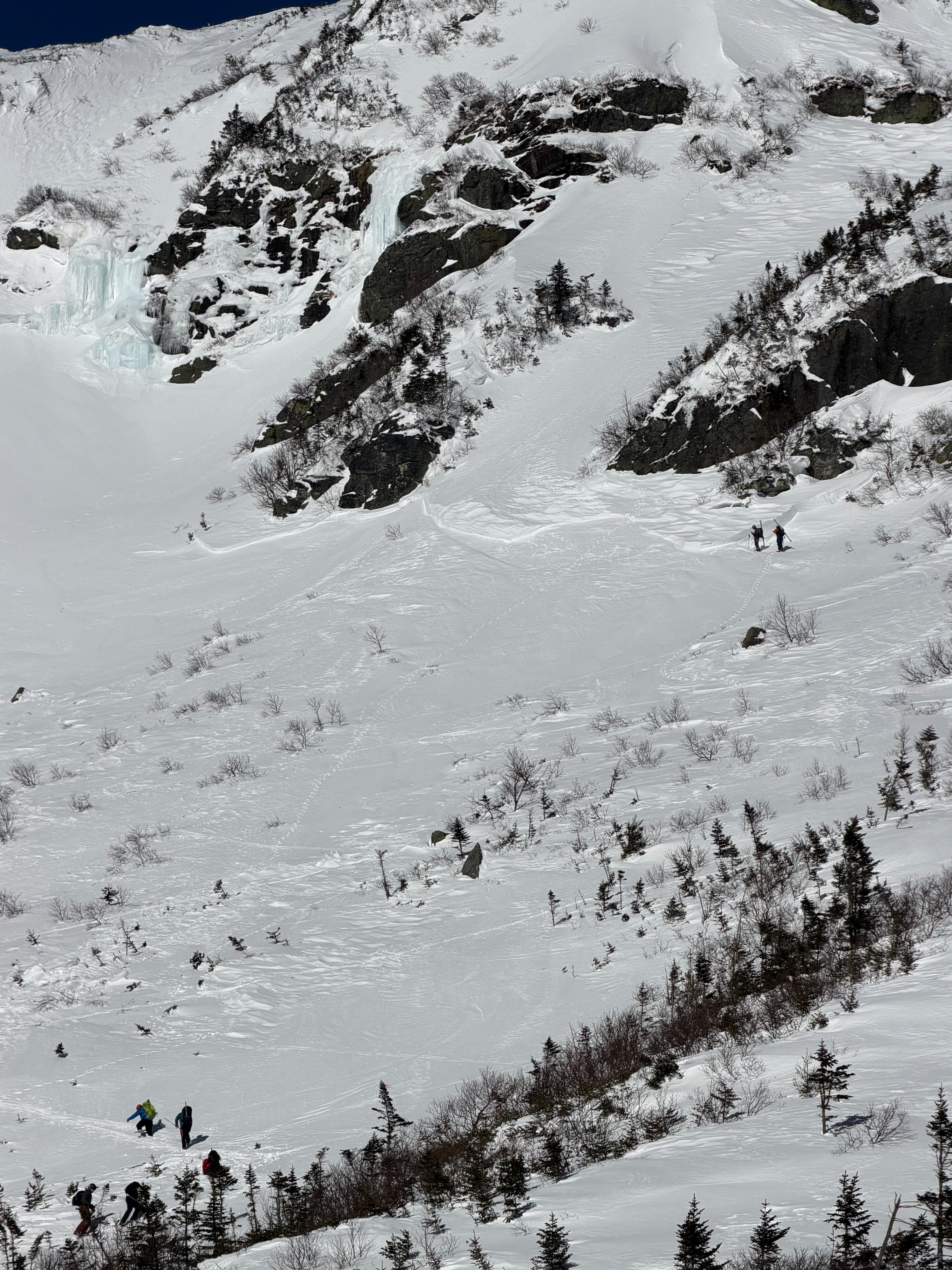
After the significant snow storm on Monday, January 26 (~20 inches) and several days of wind, without significant additional snow totals, the mountains have taken a breath and settled down. It's easy to find a firm, wind sculped snowpack across almost all of the terrain in the Tuckerman Ravine area. Terrain at the upper elevations and in the tops of gullies in Tuckerman Ravine were scoured and heavily wind-sculpted in most areas. At middle elevations, it was much more likely to find a smoother snow surface that had less exposure to the wind but was still stiff and supportable.
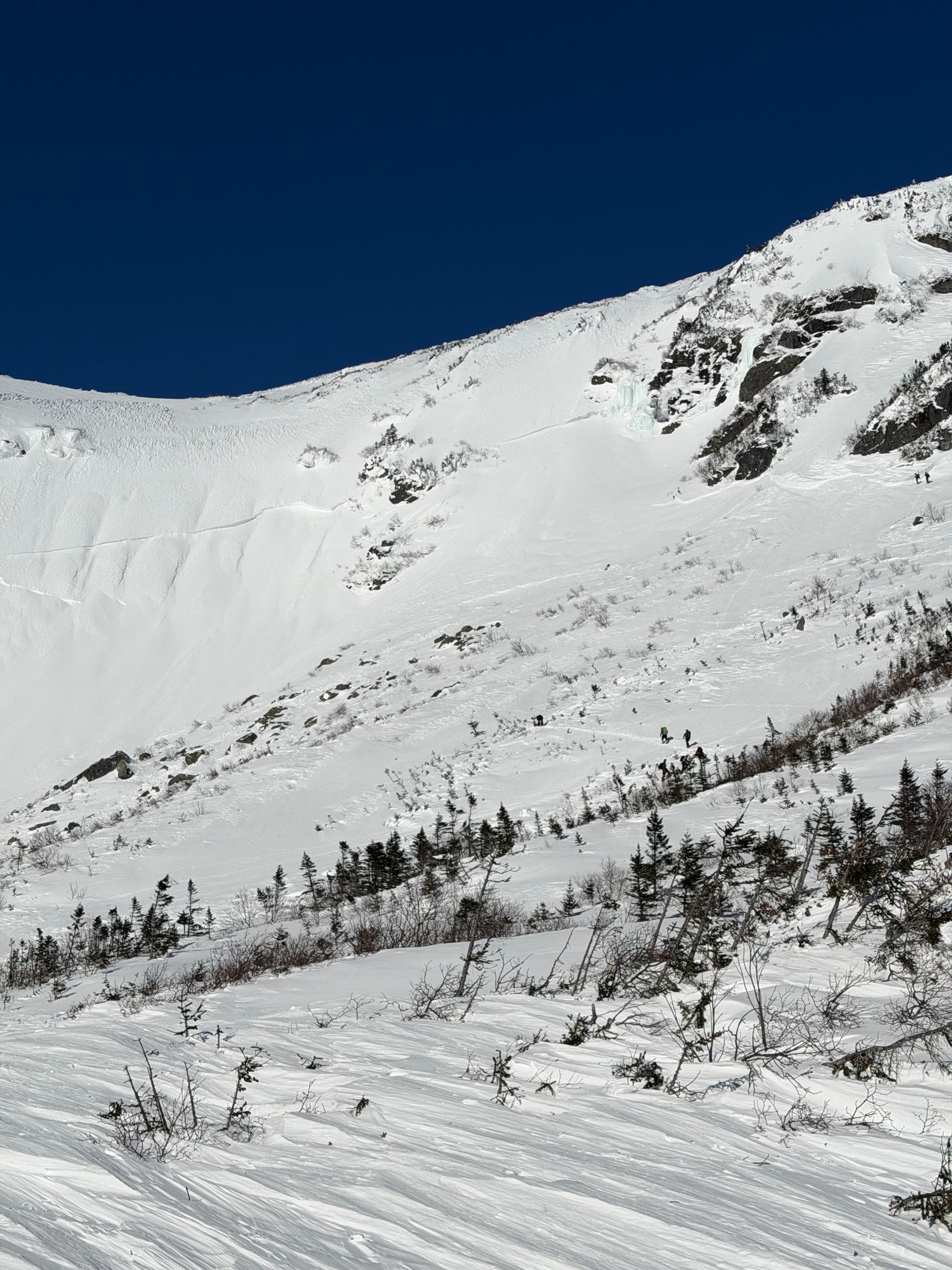
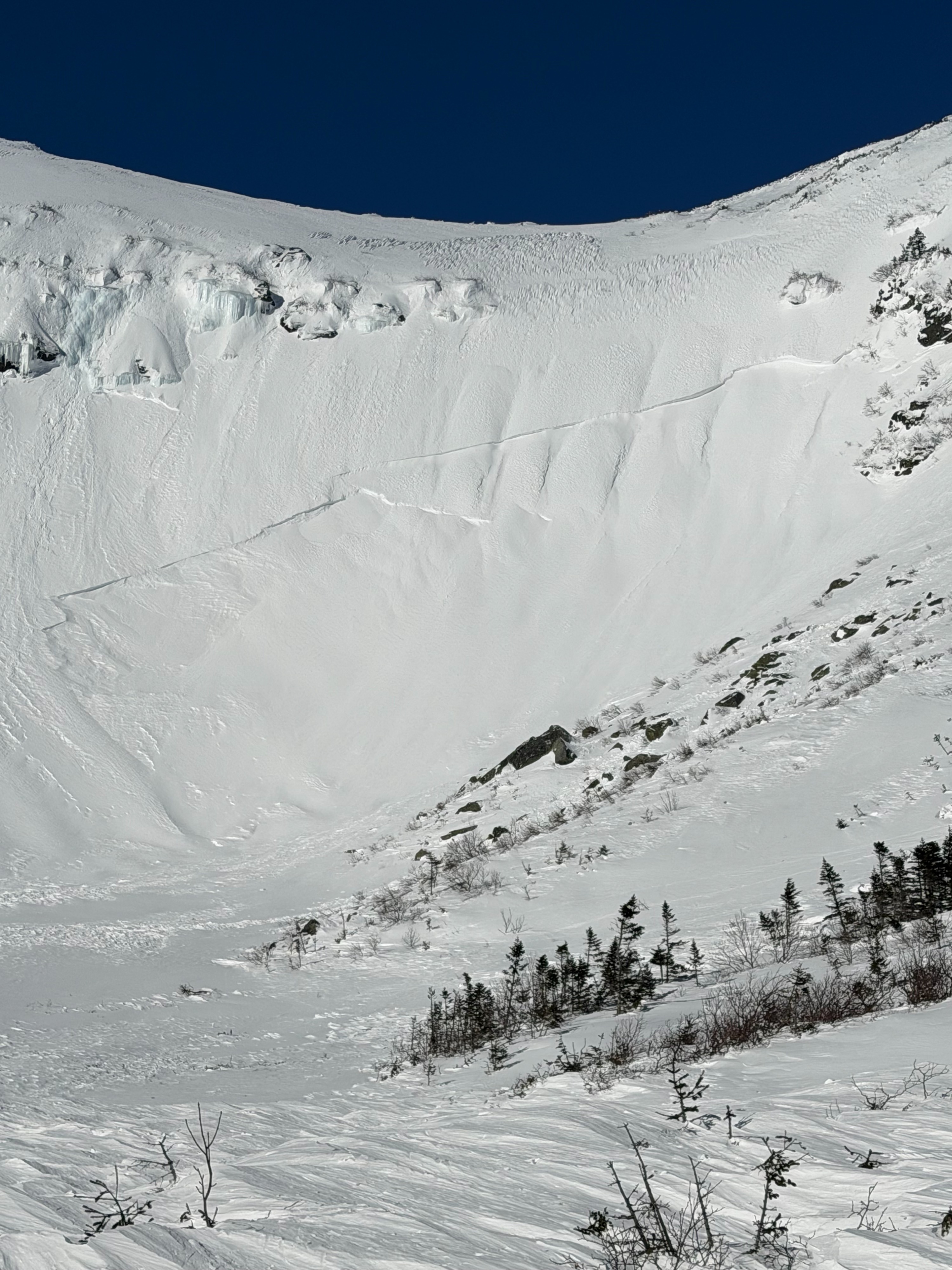
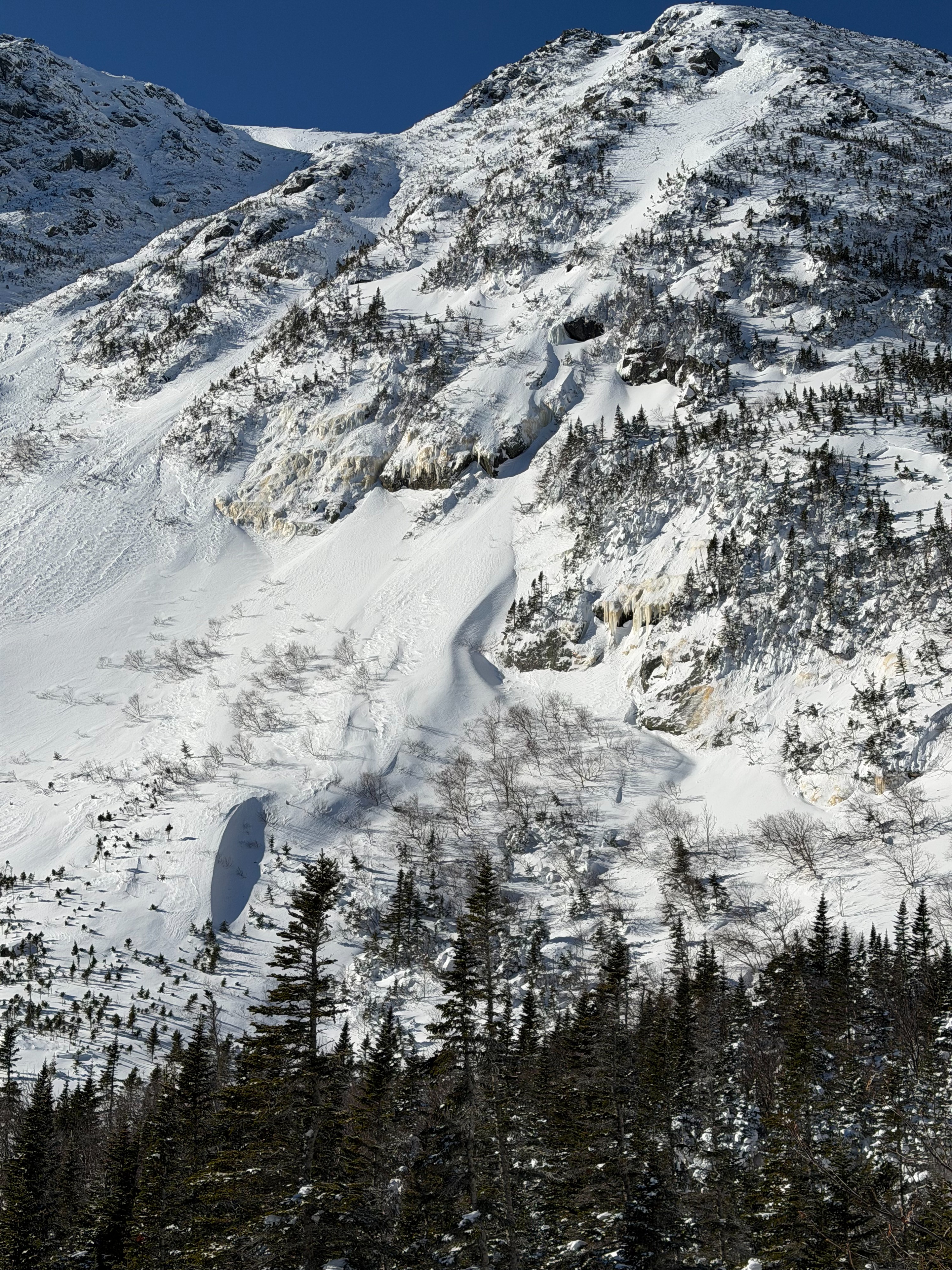
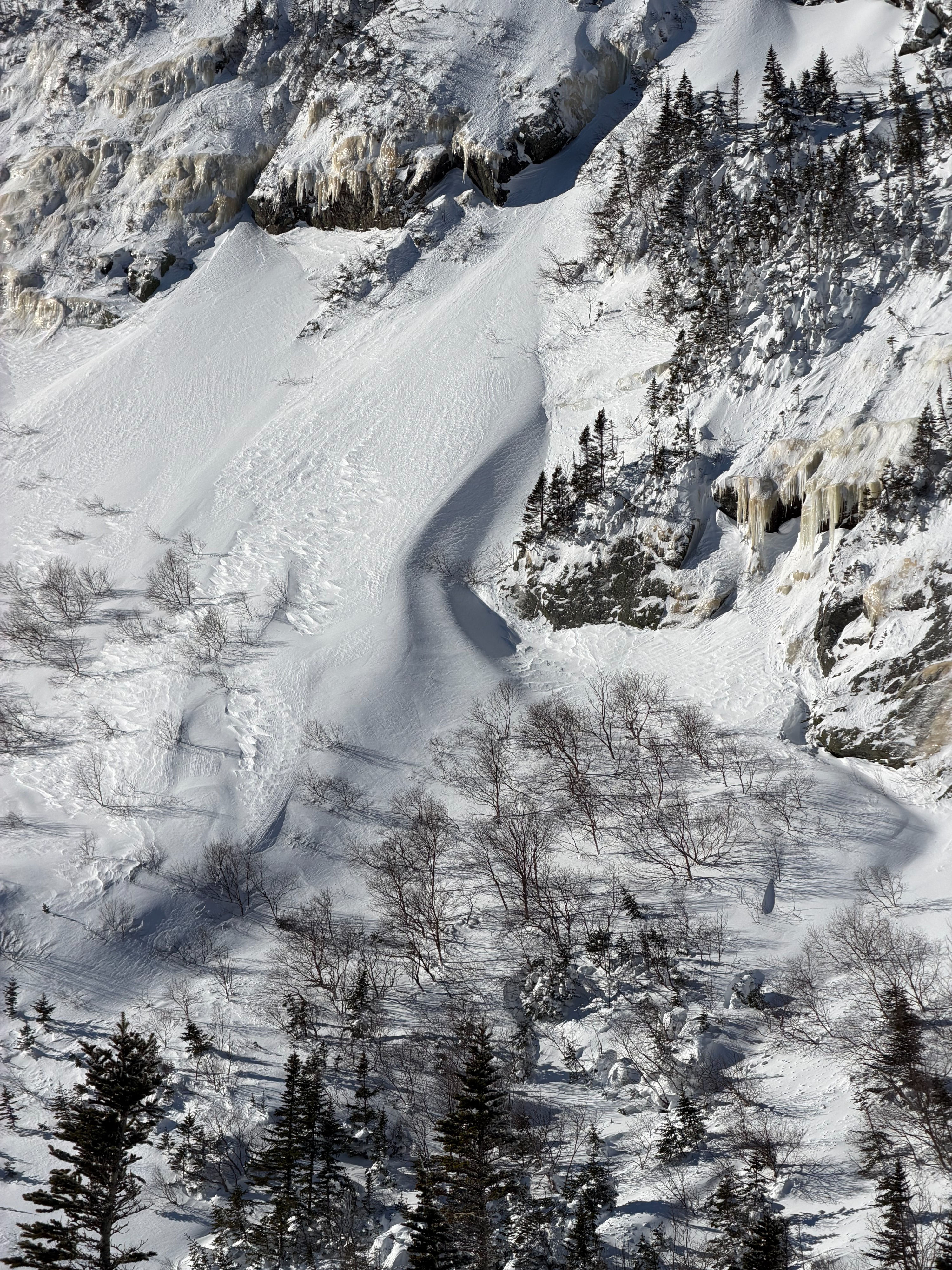
Several recent natural avalanches were observed, with an estimated date of Thursday, January 29. Notably, avalanches were observed in Lip, Sluice, Right Gully, Summer Lion Head Trail, and Little Headwall / Lower Snowfields. These avalanches likely occured within recent wind slab formation after strong transport on 1/28 and 1/29.
Today - after additional winds, time, and settlement - these same slabs were found to be stubborn and unreactive while traveling and in snowpit instability testing. While the snowpack structure in many areas is still poor, the bridging effect of the stiff, wind affected slab on the surface significantly limits energy transfer deeper into the snowpack. While traveling in the terrain, new avalanches felt unlikely, however we noted the high-consequence potential of triggering a very hard slab if we found a thin or unluckly spot in the snowpack.
Weather
- Air Temp
- 10
- Cloud Cover
- clear
- Wind Loading
- none
- Recent Snowfall
- 0
- Snow Avail For Transport
- none
Clear skies with very light winds and mild temperatures in the sun.
Snowpack
The snowpack structure was variable, but generally made up of multiple layers of wind slab from significant wind transport on Tuesday, January 27 and Thursday, January 29.
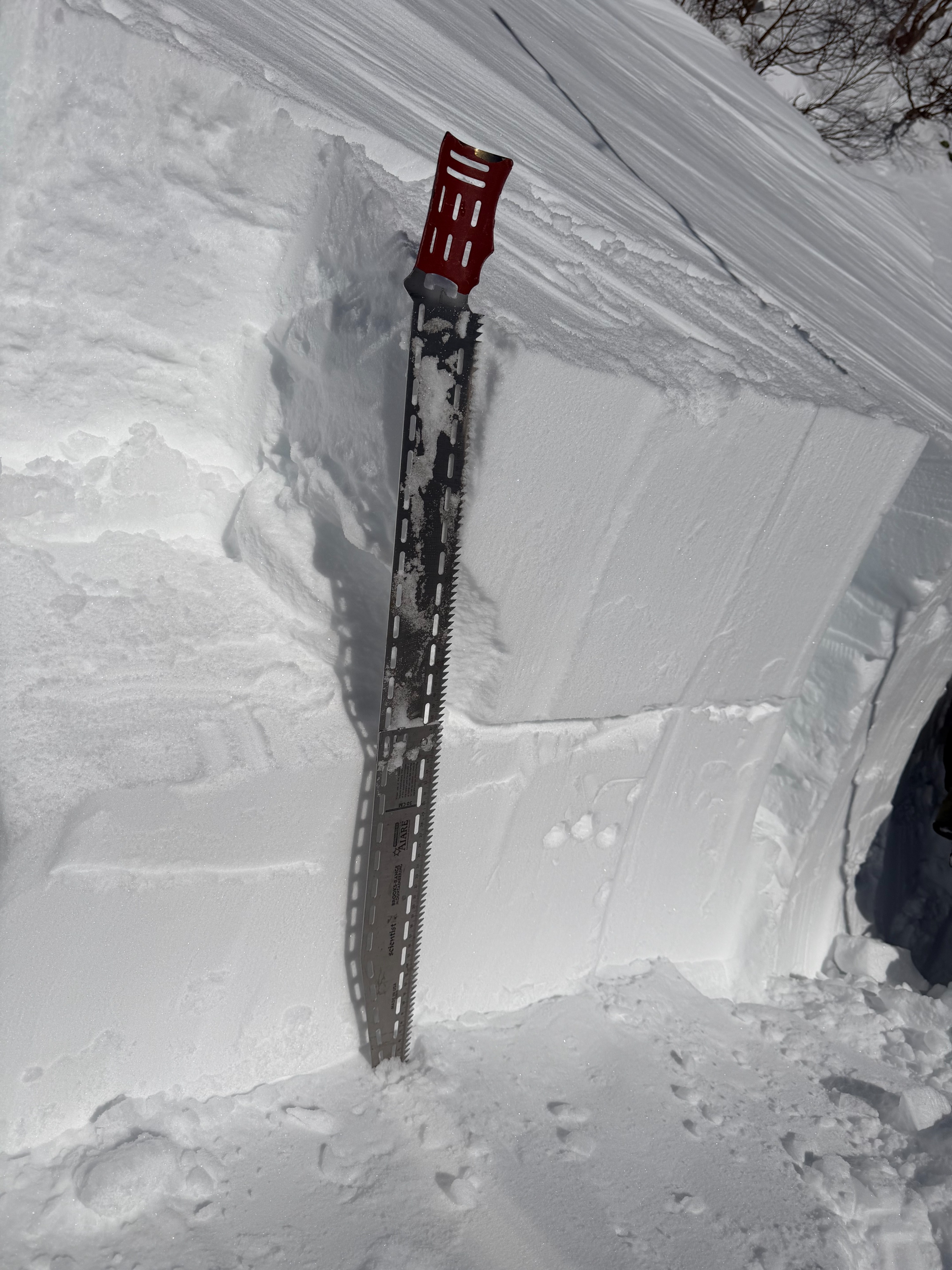
The most recent wind slabs from Thursday-Friday were generally observed to be 1F-Hard and sitting on top of Tuesday's windslabs, which were generally Pencil-Hard. Beneath this, at variable depths, was the 1/10 melt freeze crust on top of a 'crust sandwich' from older crusts that formed earlier this season. There were no signs of instability found on the 1/10 MFr crust or deeper layers.
Snowpack instability testing yielded stubborn and unreactive results across south and southeast-facing terrain at middle elevations. ECT results were generally stubborn and non-propagating with scores of ECTN14, ECTN22, and ECTN 21. In Sluice, we performed a PST on a thin weak layer under old wind slab with a score of PST55/100END.
While there is poor snowpack structure in many areas, the bridging effect of new wind slabs is preventing almost all of a person's energy from reaching these stubborn weak layers.
Avalanche
- Size
- D1.5
- Count
- 3
- Aspect
- E
- Trigger
- N
- Elevation
- 4300 ft
This avalanche occurred on the steep traverse on the Summer Lion Head Trail and crossed over the hiking trail into very consequential terrain below. 2/1/2026 (Fongemie, Bois): We approached the Summer Lion Head Traverse from above via the Winter Lion Head Trail, which now weaves closer to the Summer Traverse than it has in the past due to recent travel through the trees. It was notable how much snow has drifted into the east-facing shoulder of Lion Head overall. The Summer Lion Head Traverse slope has evolved from a concave shape early in the season, to a more planar form, and is now slightly convex, with the most pronounced convexity occurring immediately above a cliff band. Although triggering an avalanche felt unlikely given current stability, the consequences of any release here are severe. We did not step onto the slope. We remained in a safe position off the slope, but adjacent to where the crown wraps to the north, and conducted our assessment from there. The crown height at the portion we assessed was approximately 16–18 inches. The failure appeared to have occurred within new wind-drifted snow, likely associated with the wind transport/loading cycle around January 28–29, rather than a clean failure on a distinct bed surface related to the January 27 wind slabs. The crown down to the bed was consistent 1F hardness, and the surface it slid on also felt approximately 1F hardness. We could not detect any distinct hardness change at the failure interface. The crown is weathered and there has been continued wind since the event, so this interpretation carries some uncertainty. We also noted that small amounts of snow appear to have continued drifting in over the past couple of days, partially refilling the feature. Looking ahead, the Summer Lion Head Traverse is now well developed, by size, connectivity, and its convex shape above a cliff band in a way that could produce a more consequential avalanche at this location than in recent history. Any future period of instability, such as new snow/rapid loading or a rapid warm-up, could make this a very dangerous place to cross. Even a small avalanche would have serious consequences in this terrain, and there is also the potential for a larger avalanche that would compound those consequences.