
Quick report
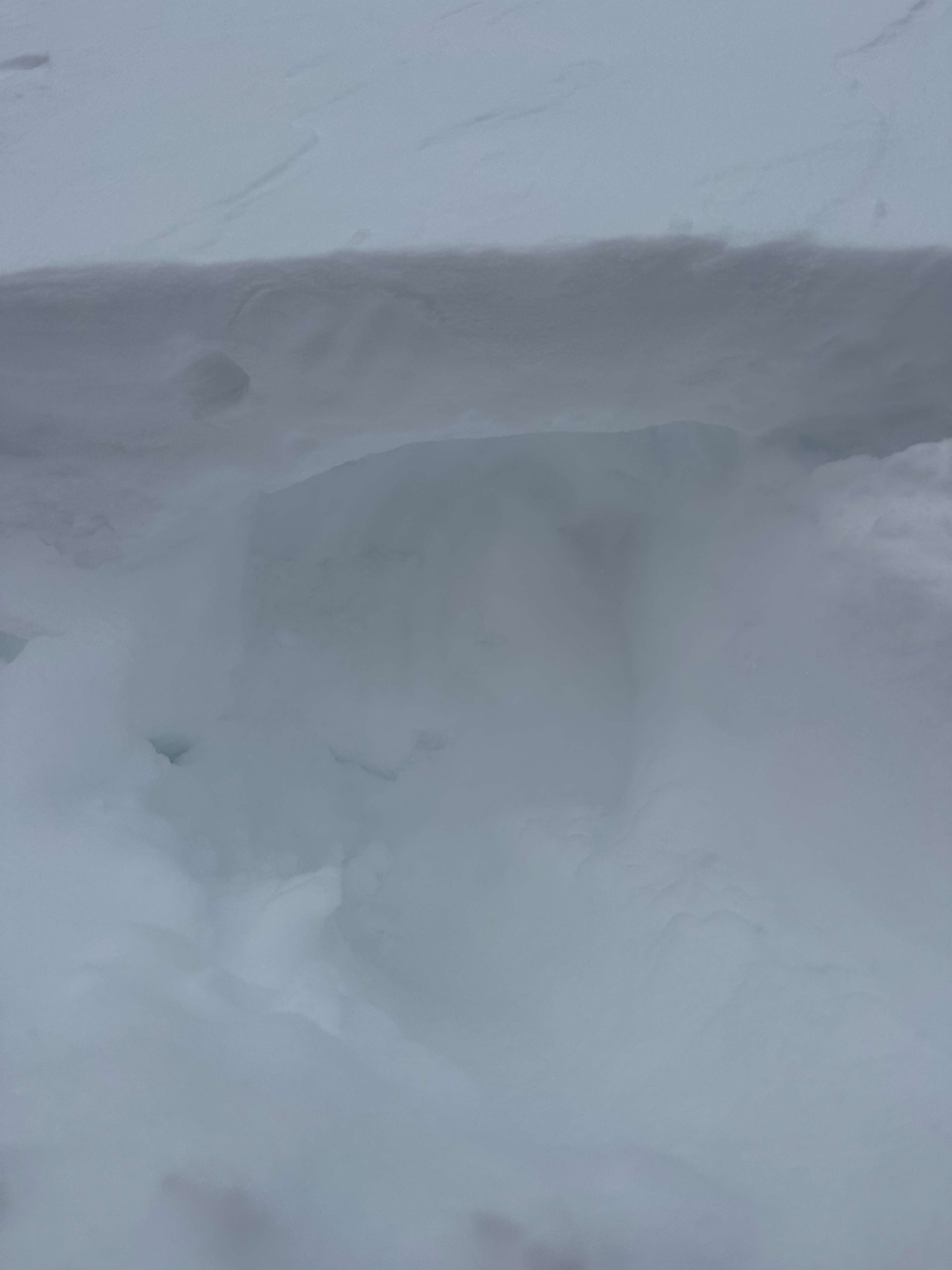
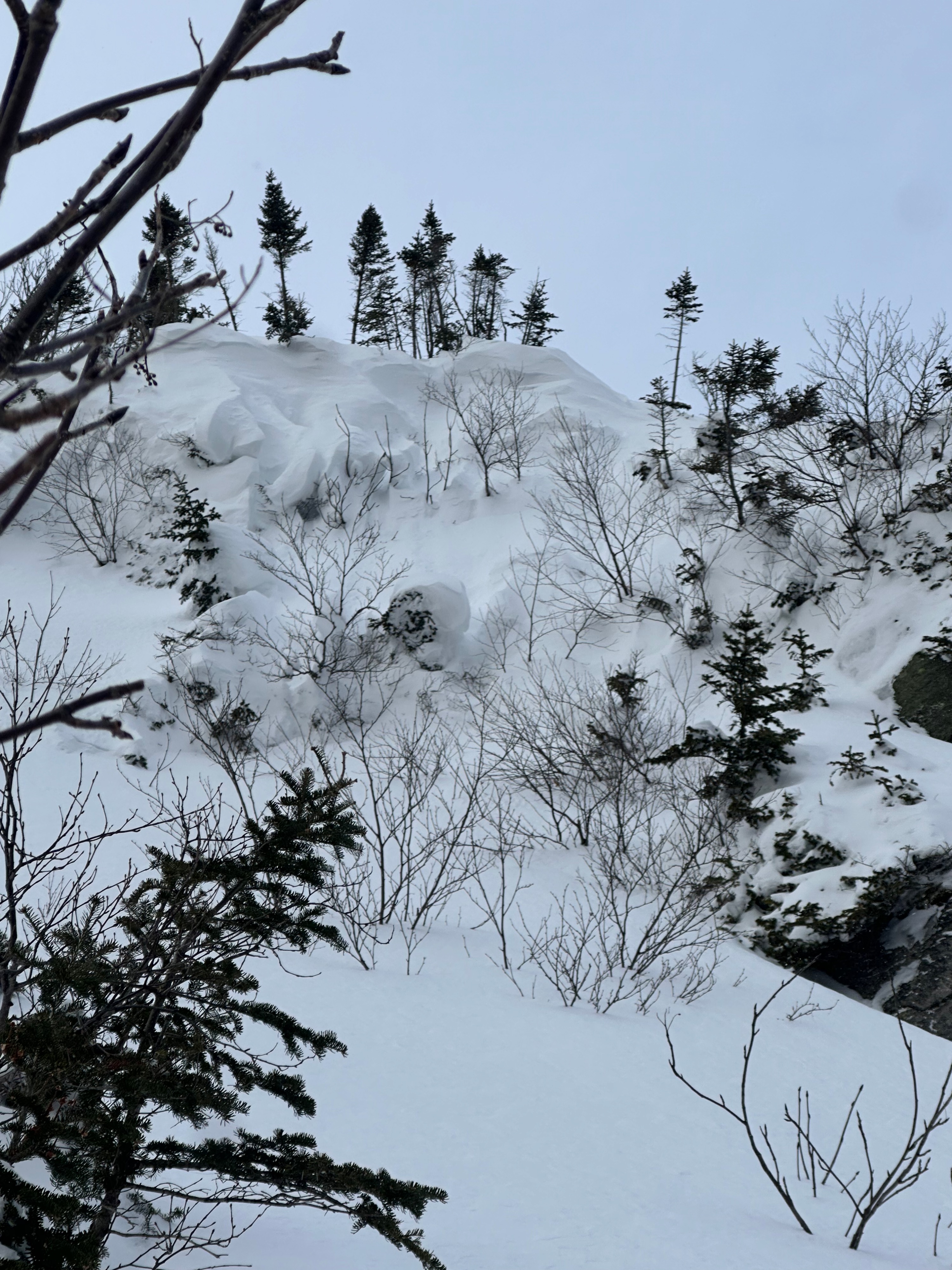
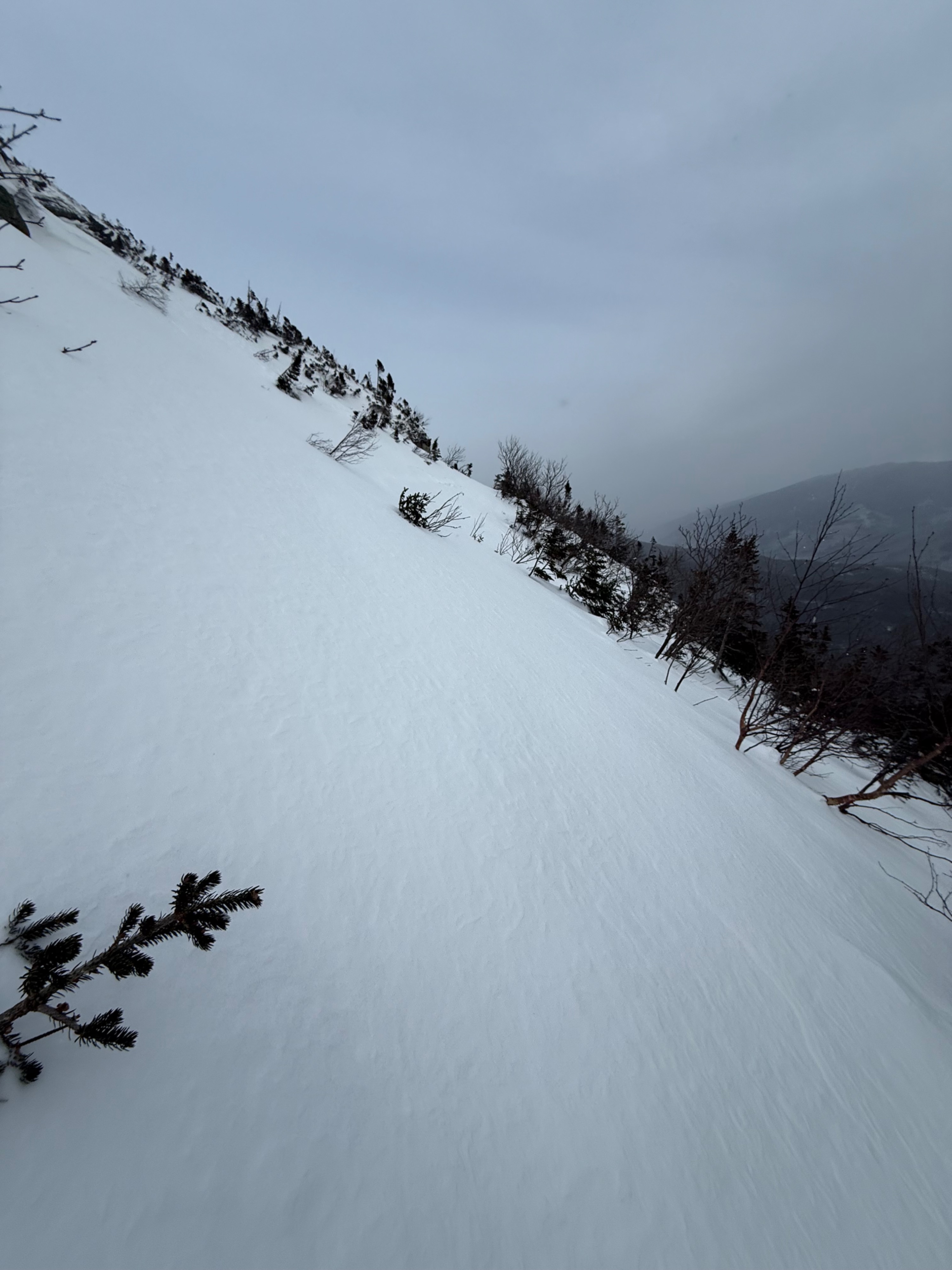
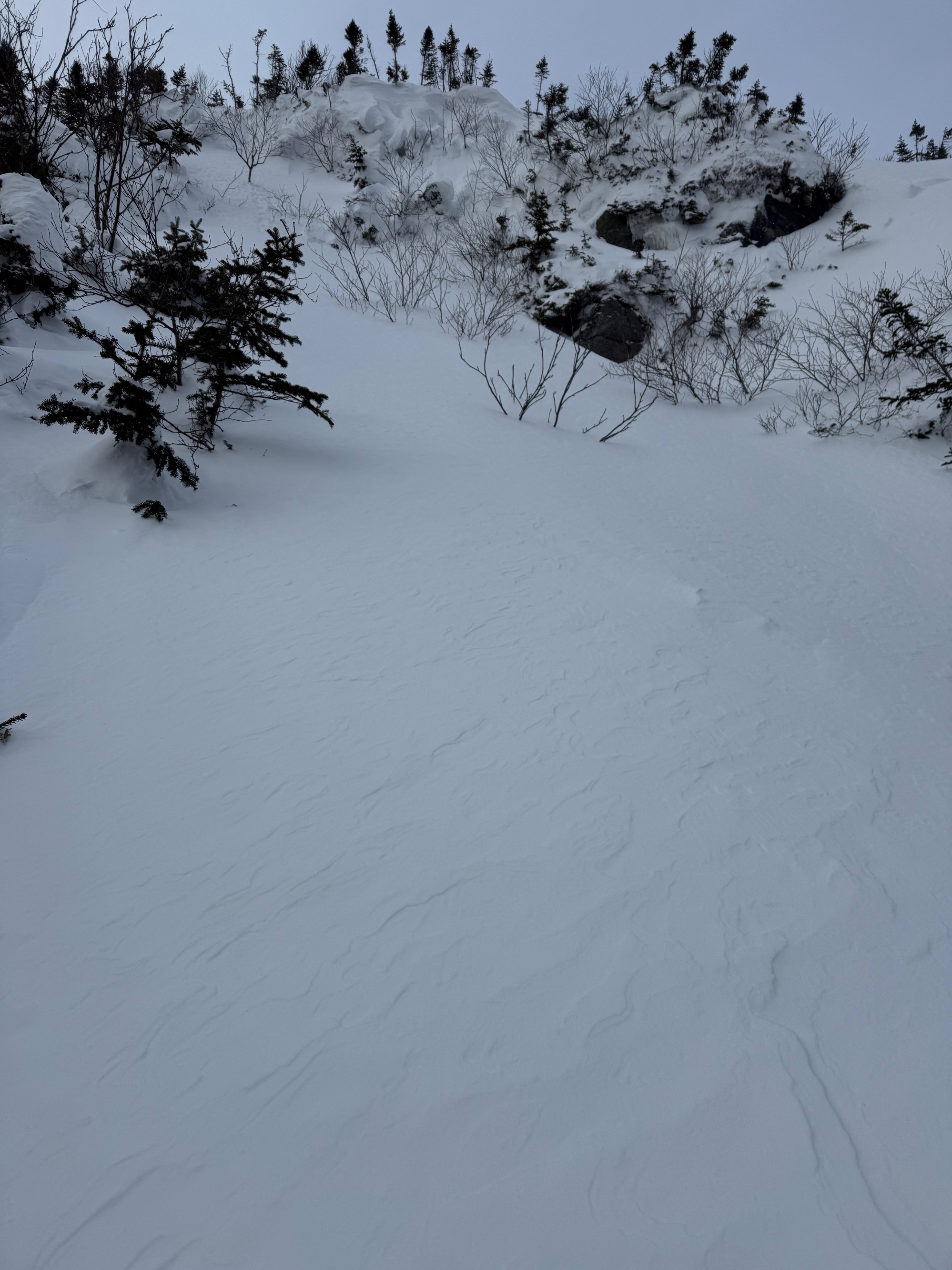
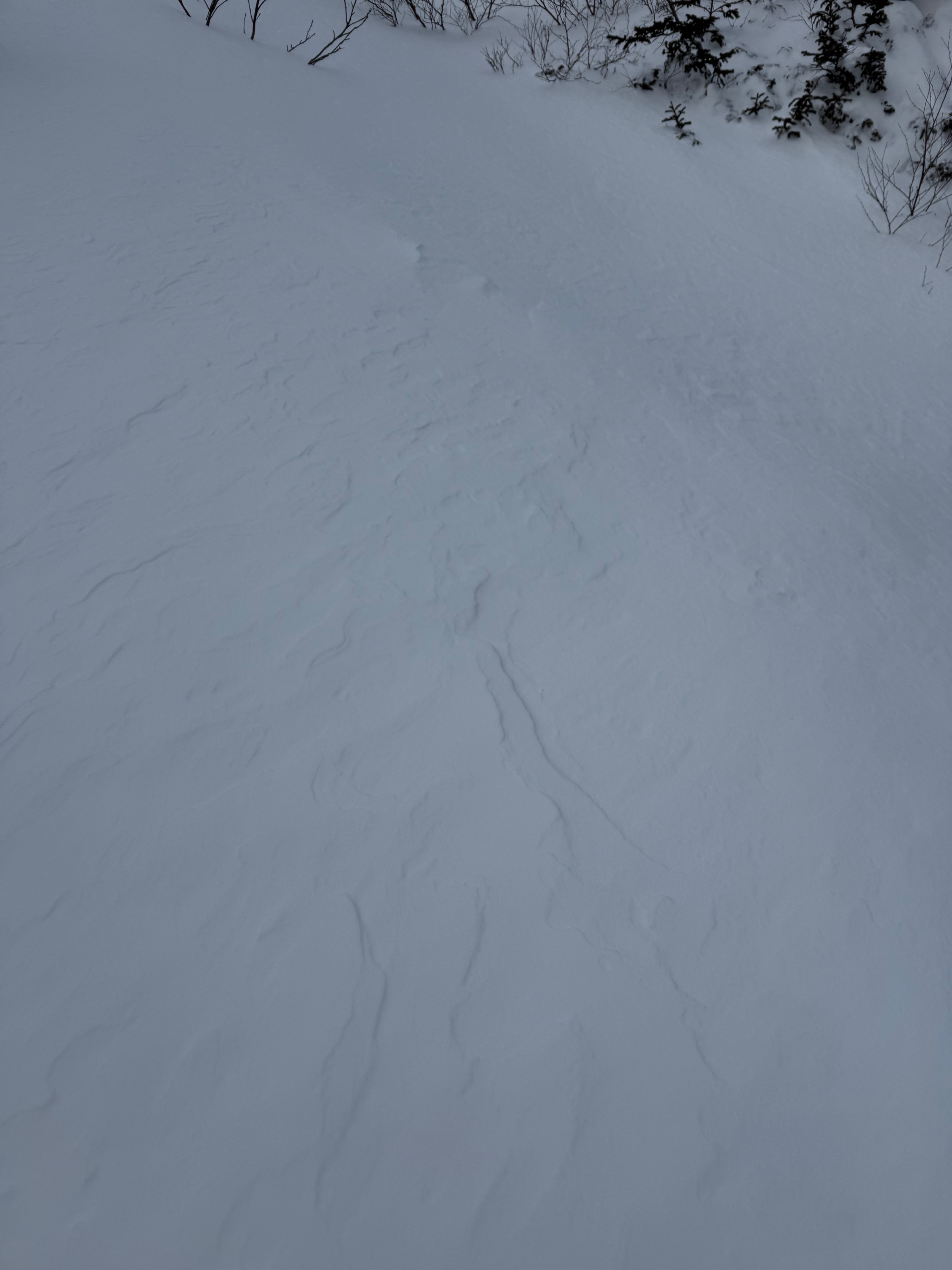
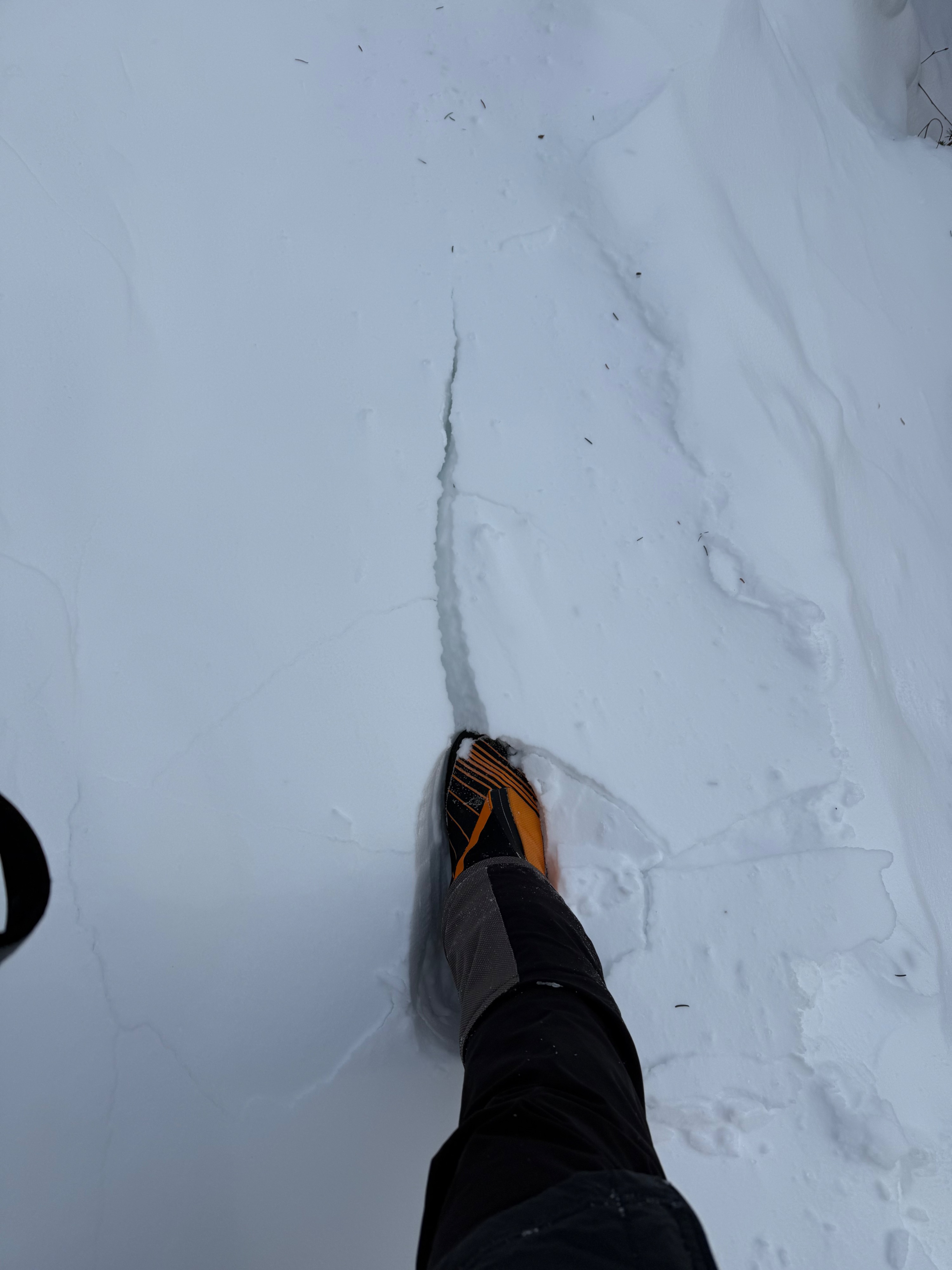
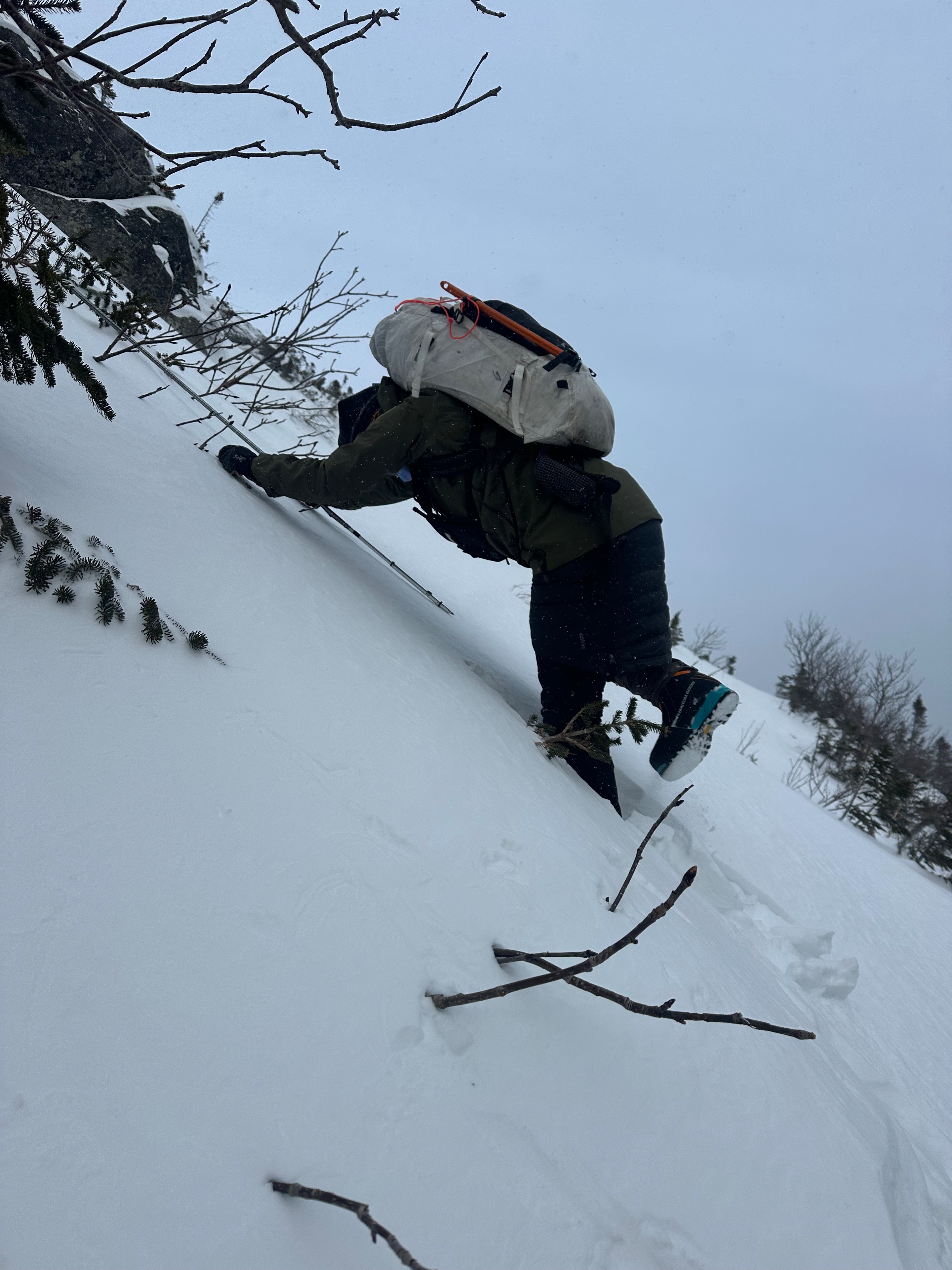
Today, as a terrain partner and observer, I went out with an MWAC forecaster. We hiked up to a little more than 4,000’ elevation on the Lion’s Head Summer Trail to look at the traverse, as this typically is a sheltered, isolated pocket and a SE aspect. We wanted to dig into the snow to assess the structure of the snowpack in this SE aspect after days of cold temperatures. In a more wind-affected area in the lookers right area of the traverse, found very firm pencil hard snow and no concerning structure. To the looker’s left area, we found softer snow that was more sheltered from wind with a cliff band above. Here we found a thin wind-skin with soft snow underneath, a strong-over-weak structure. While results were stubborn and did not propagate, these are the types of area we discussed taking time to assess, and also reassess as continued cold temperatures are forecast. Localized cracking underfoot along Lion Head trail
Weather
- Air Temp
- 4
- Cloud Cover
- scattered
- Wind Loading
- none
- Recent Snowfall
- 0.51
- Snow Avail For Transport
- small smounts
A little bit of snow was falling around 10 am (S-1) and it looked like this snow was moving, but we discussed that it did not seem to be loading and was sliding down the traverse and drifting into the trees. Partly cloudy skies and above-freezing temperatures made for more pleasant conditions.
Snowpack
A member of the forecasting team assessed this area Saturday (1/18) and remarked there were more snow drifts along the trail today and a larger slab across the traverse. On the hike up, we encountered localized cracks underfoot along the trail, no propagation, although some more open sections were packed down and stiff from the wind.
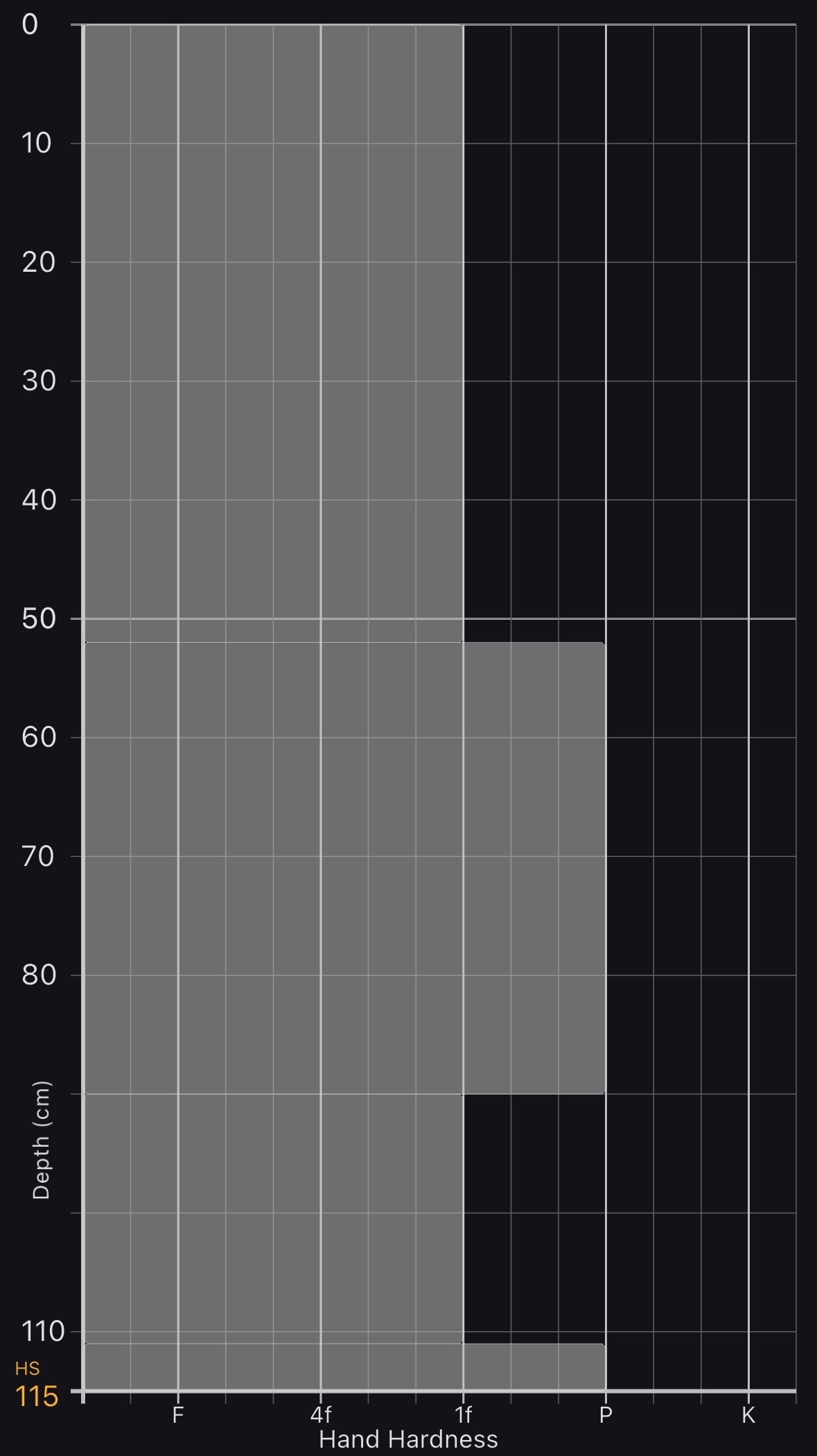
I dug a hasty pit at 4,250’’ on the traverse on a SE aspect, finding hardness changes albeit a lack of a specific weak layer within 115 cm that sat on top of a thick crust. During my hand-hardness test, I found 1F and P hard snow, but the pit itself varied in hardness. Roughly thirty feet over to the looker’s left, the snow had a thick windskin of pencil-hardness sitting on top of fist-hard snow. This slope was more protected under a small cliff. These observations were on the same aspect, maintained 4,250’ in elevation, and implied spatial variability.
Both slopes are wide and planar, which could be an efficient sliding surface for new snow. Wind coming over the ridge transported snow, which slid across the planar slope and deposited in our tracks and near dense trees instead of loading a new wind slab.