
Quick report
- Cracking
- specific
Today was our first field observation in the Northern Selkirk Mountains this season. We found a generally deeper and more well-bonded snowpack structure compared to other locations south of here. The same prominent rain crusts are found in this location yet with less prominent facet growth around them. We did observe increasing instabilities today in the new snow and this will likely increase with additional snow load and drifting.
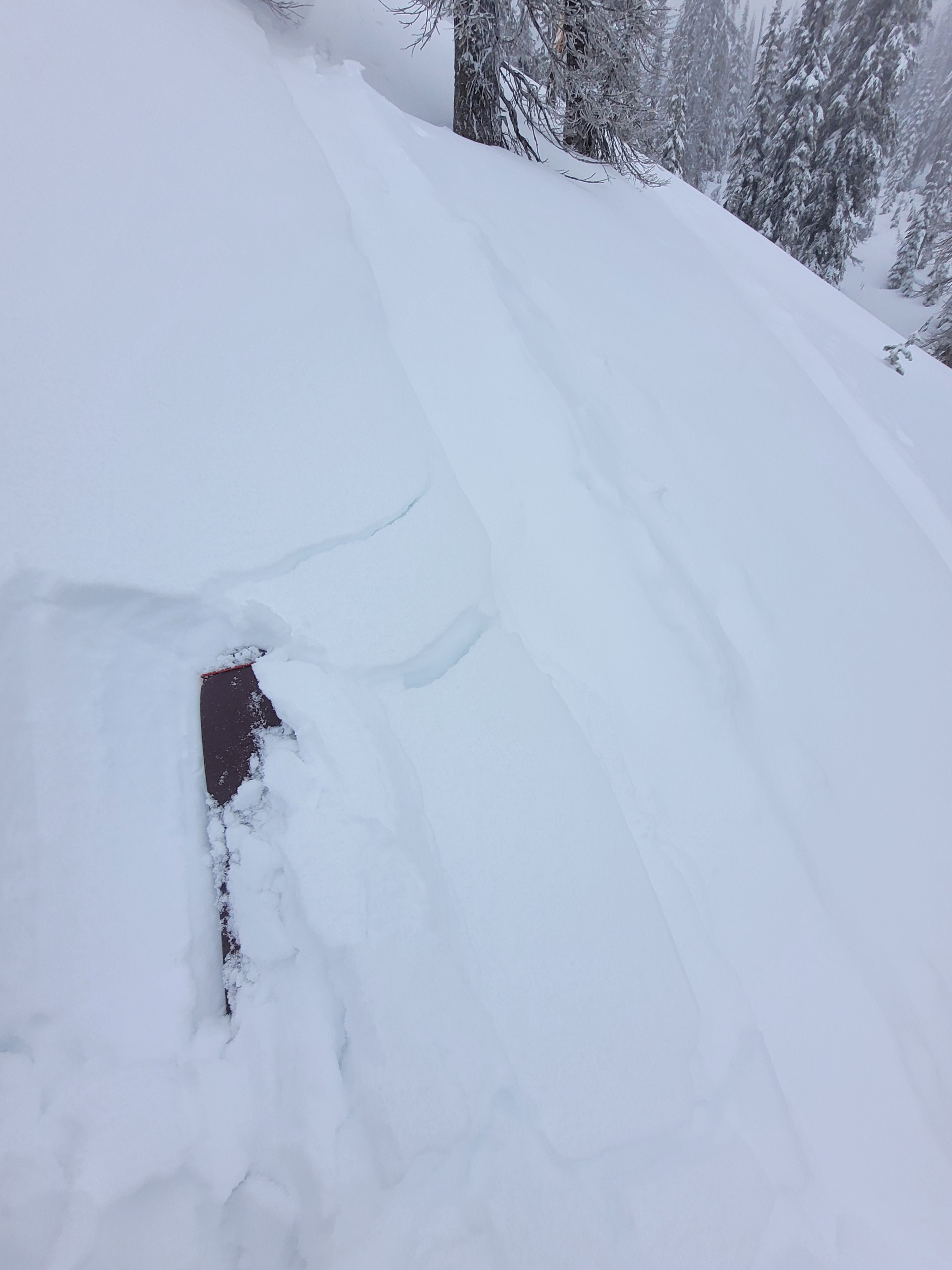
Cracking between tracks in new recent snow since 12/25.Weather
- Cloud Cover
- overcast
- Wind Loading
- moderate
- Rain Elevation
- 2,600 at 5pm
- Recent Snowfall
- approx. 20 cm since 12/25, 4 cm in 3-hour span today
- Snow Avail For Transport
- moderate amounts
Steady snowfall throughout the day. Snowfall intensity and wind speeds increased in the afternoon and consistent with today's weather forecast. Winds were effectively transporting snow onto leeward slopes. Low visibility throughout the day into adjacent terrain/ areas.
Snowpack
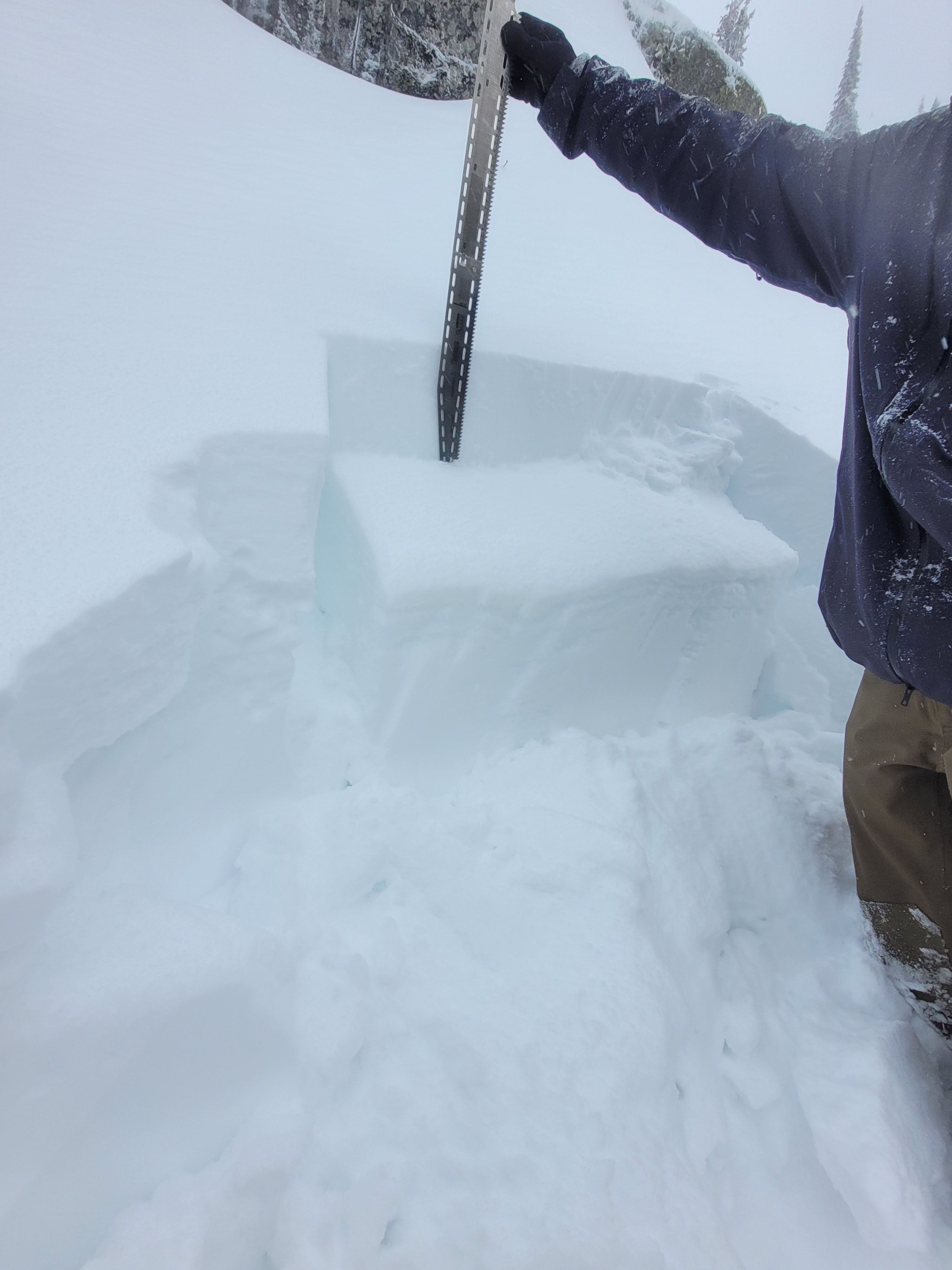
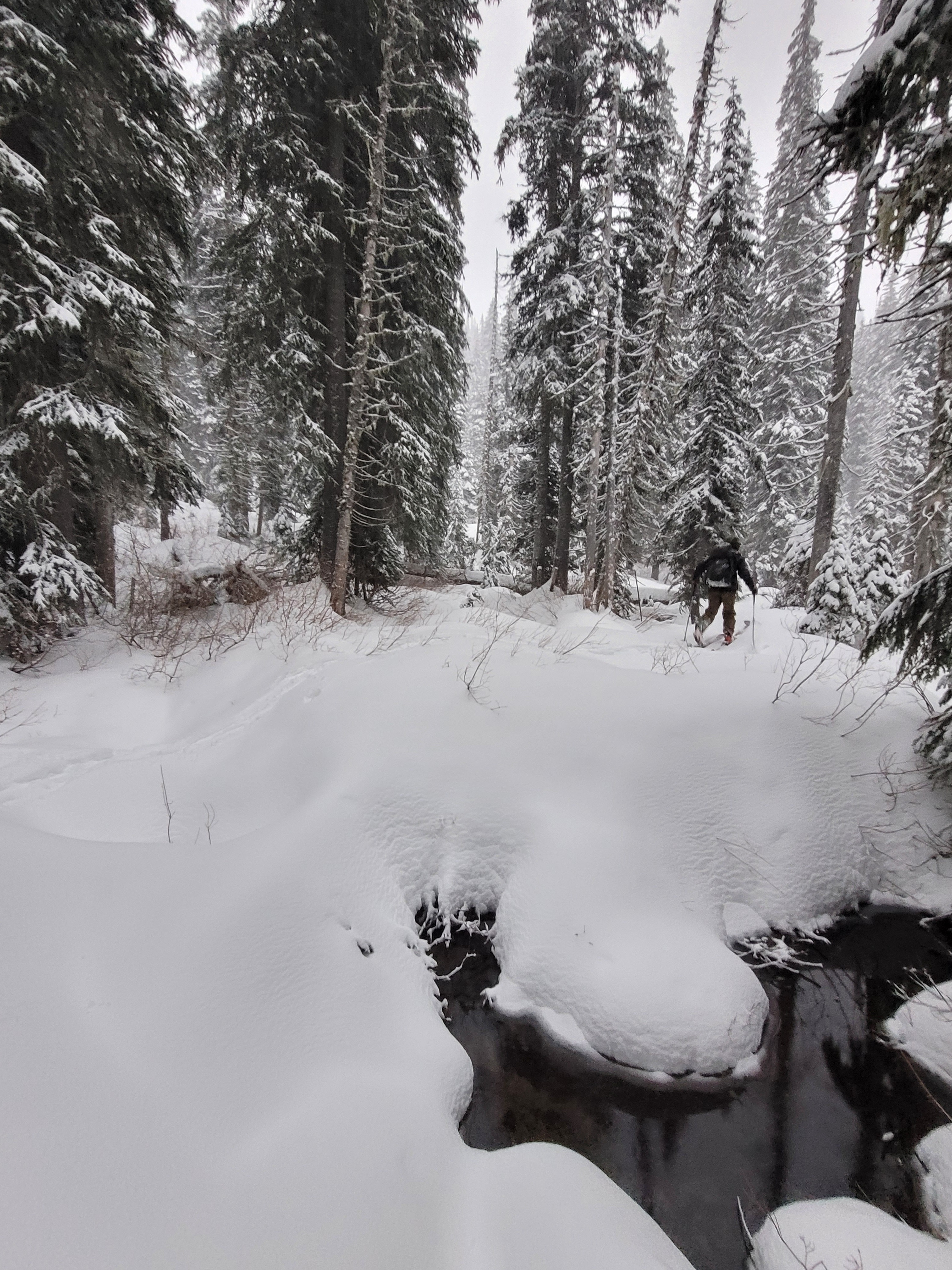
At 4,100 feet in the Cow Creek drainage, snowpack height was about 35 cm (~1ft) with a 1 cm thick (12/25) crust just below the surface. Further up the Beaver Creek drainage, near the Hidden Lake SNOTEL site at 5,000 feet, snowpack height increased to about 80 cm. We found a similar crust just below the surface as lower down. Throughout our travels today, we observed notable and varying thickness-hardness of the 12/25 crust between 5,000 and 6,000 feet. On slopes more open to the sky, the crust was thicker and more robust. In more treed areas, it was thinner and more breakable. This will likely contribute to varying amounts of new snow load that it can support before susceptible to failure. Regardless, this buried curst consistently produced cracking between tracks and easy to moderate hand shears in the new snow on top.
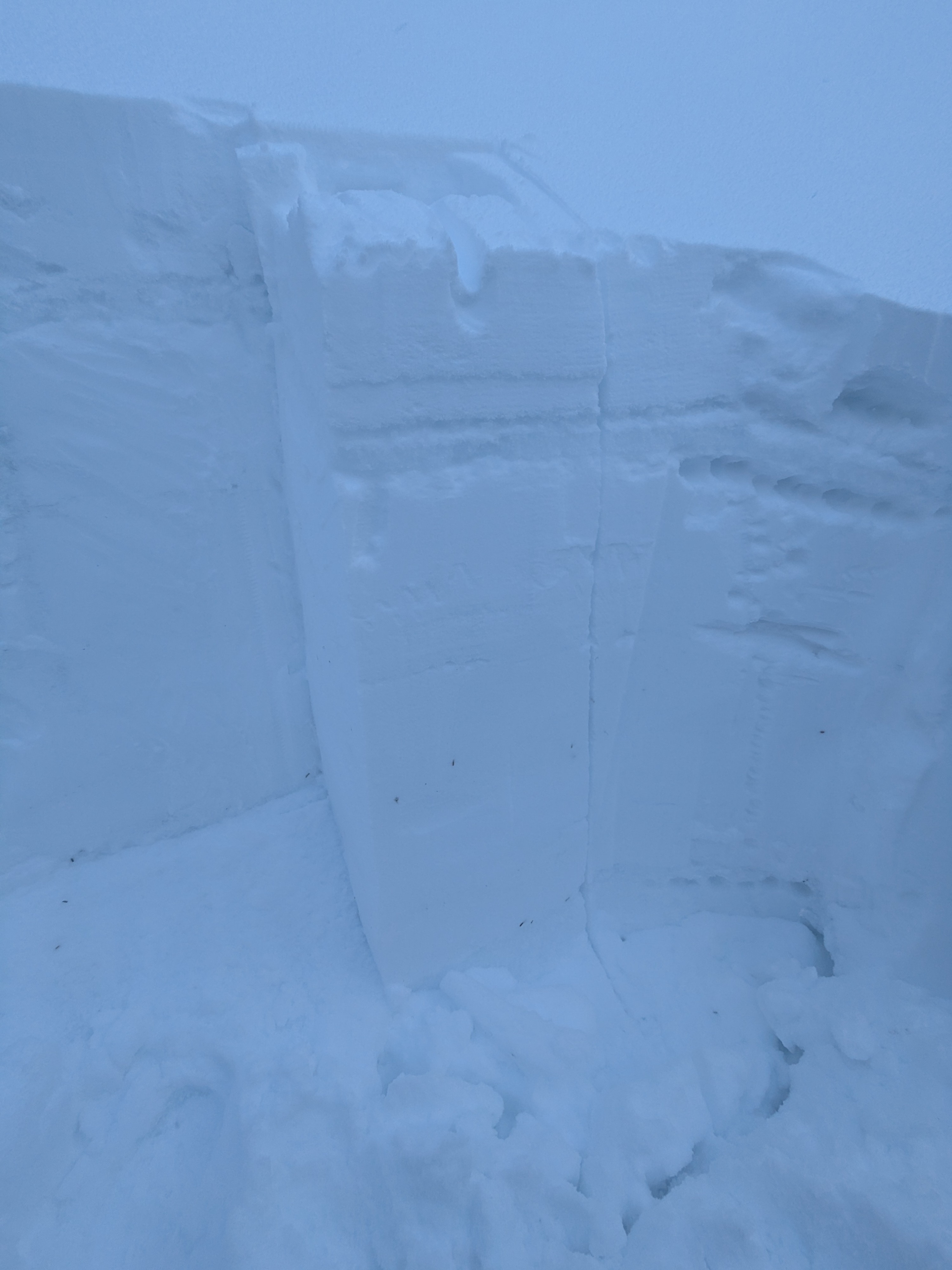
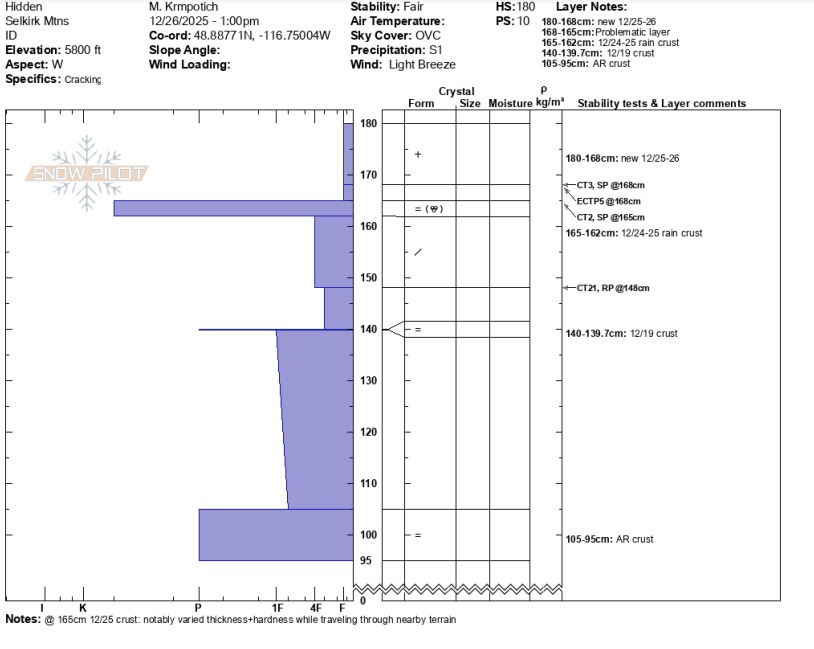
Our snowpit on a west-northwest-facing slopes at 5,800 feet had a snowpack height of 180 cm. This is by far the deepest snowpit we've seen this season in the Selkirk Mountains. The same three prominent rain crusts were found in this location as recent observations: 12/25 crust, 12/19 crust, and the Atmospheric River (AR) crust. The most notable difference we observed in snowpack structure was less evidence from wetting rains as we've documented at locations further south in the Selkirks. Less wetting rains means a overall drier snowpack, and less fluctuation in snowpack height over time and slowly building a deeper overall pack. Additionally, less presence of robust rain crust creating vapor barriers between storms has limied faceted growth around the crusts and in layers in-between. While our snowpack findings today are encouraging and pointed to more well-bonded snow layers, this areas seems anomalous for the broader Selkirk Mountains. More observations are needed to confirm the spatial extent or broader pattern of today's findings. What is expected to be consistent here with other locations are the easy to moderate force CT SP and SC, and ECTP results in the recent new snow above the 12/25 crust. There is also a suspect storm interface a couple of cm's above the 12/25 crust that was equally as reactive as the snow sitting on the crust.
Avalanche
None observed