
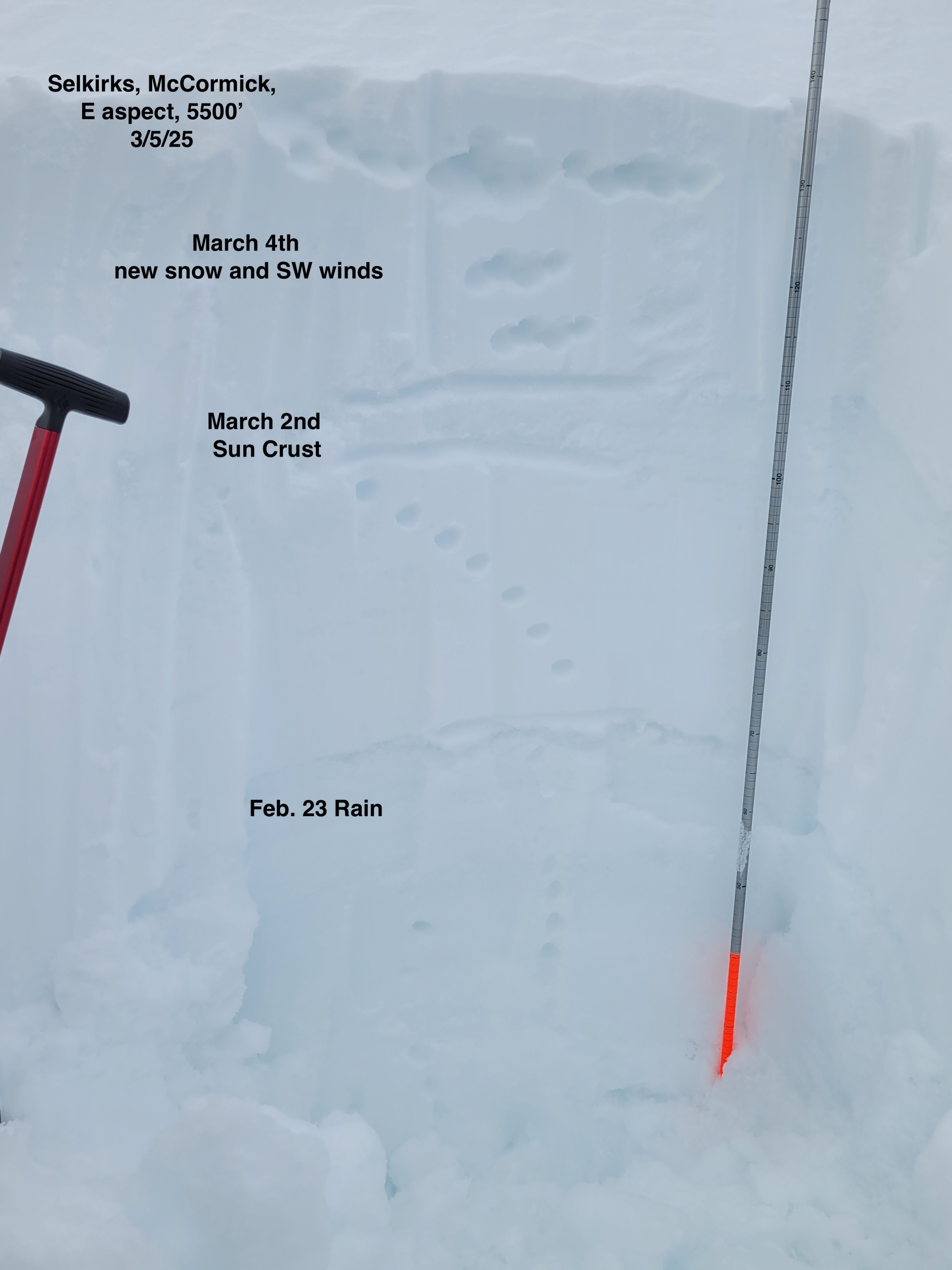
Quick report
- Cracking
- isolated
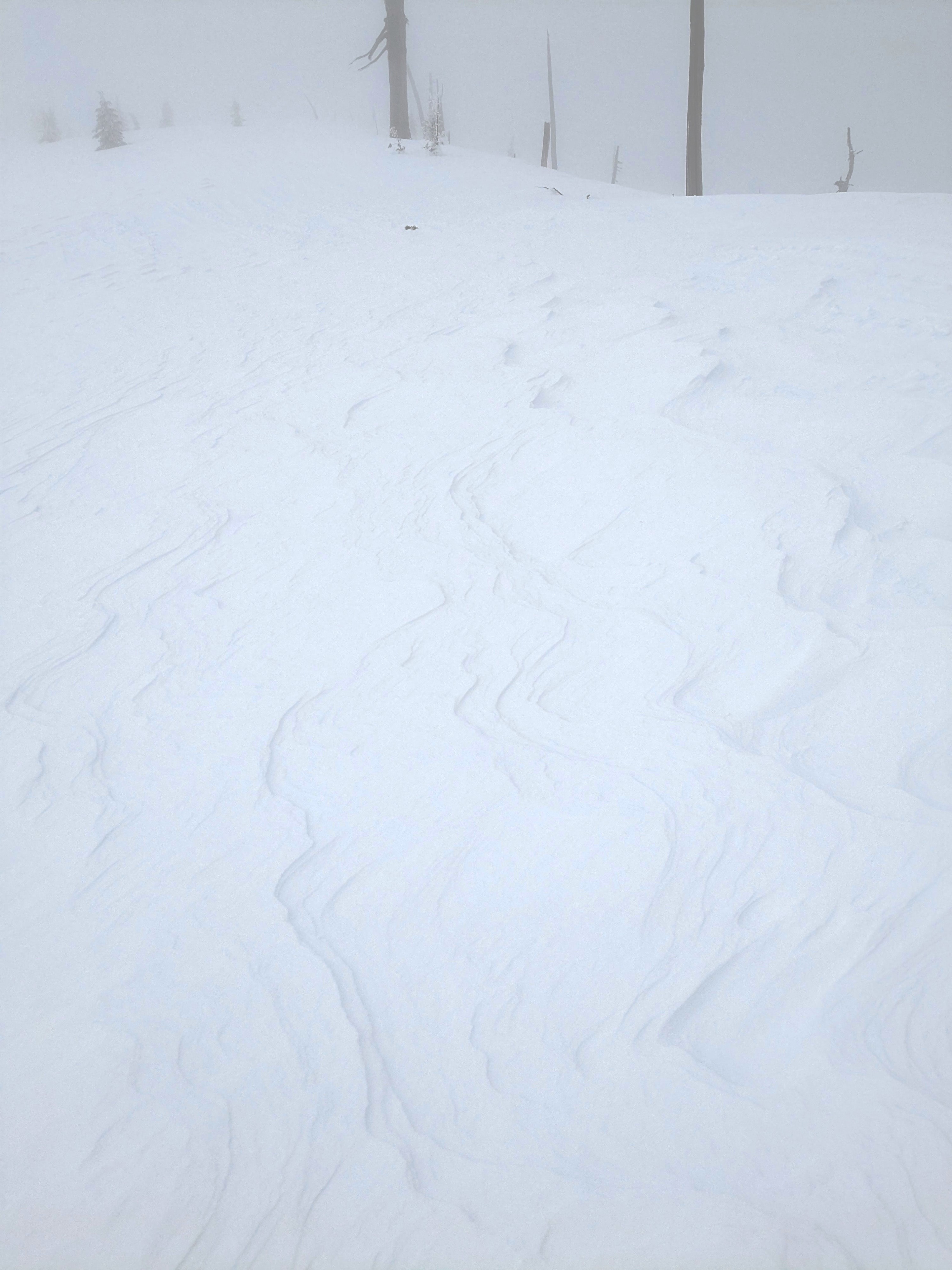
The new snow showed decent bonding at the new/ old interface, but results observed in column tests suggests evaluating before committing is good travel management. It's still possible to trigger a wind-drifted slab and we saw a fresh natural that likely ran this morning or overnight. Slides triggered in the new snow are more likley to stay confined to near surface layering as the main slab body below is well settled and seems locked up for now.
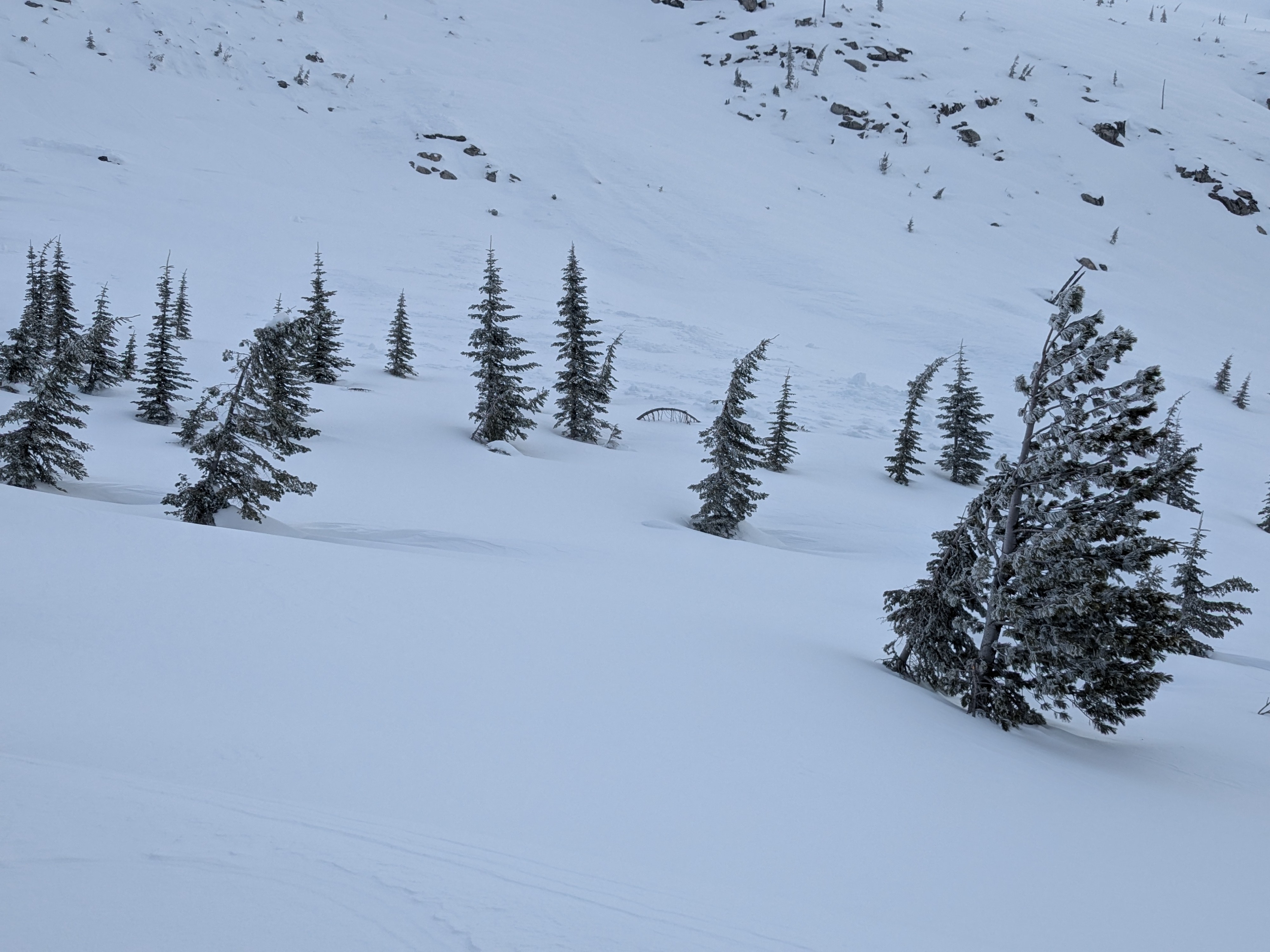
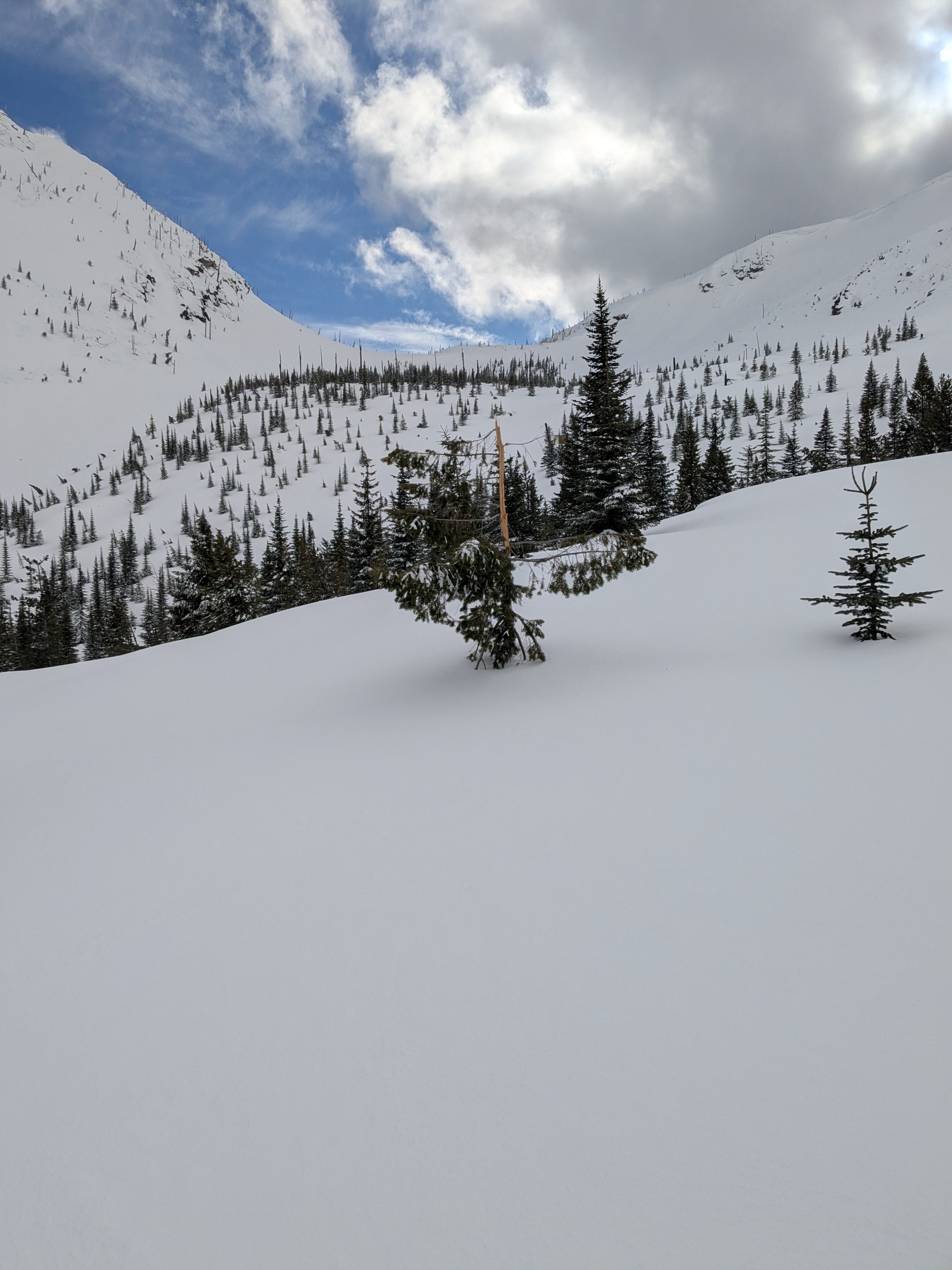
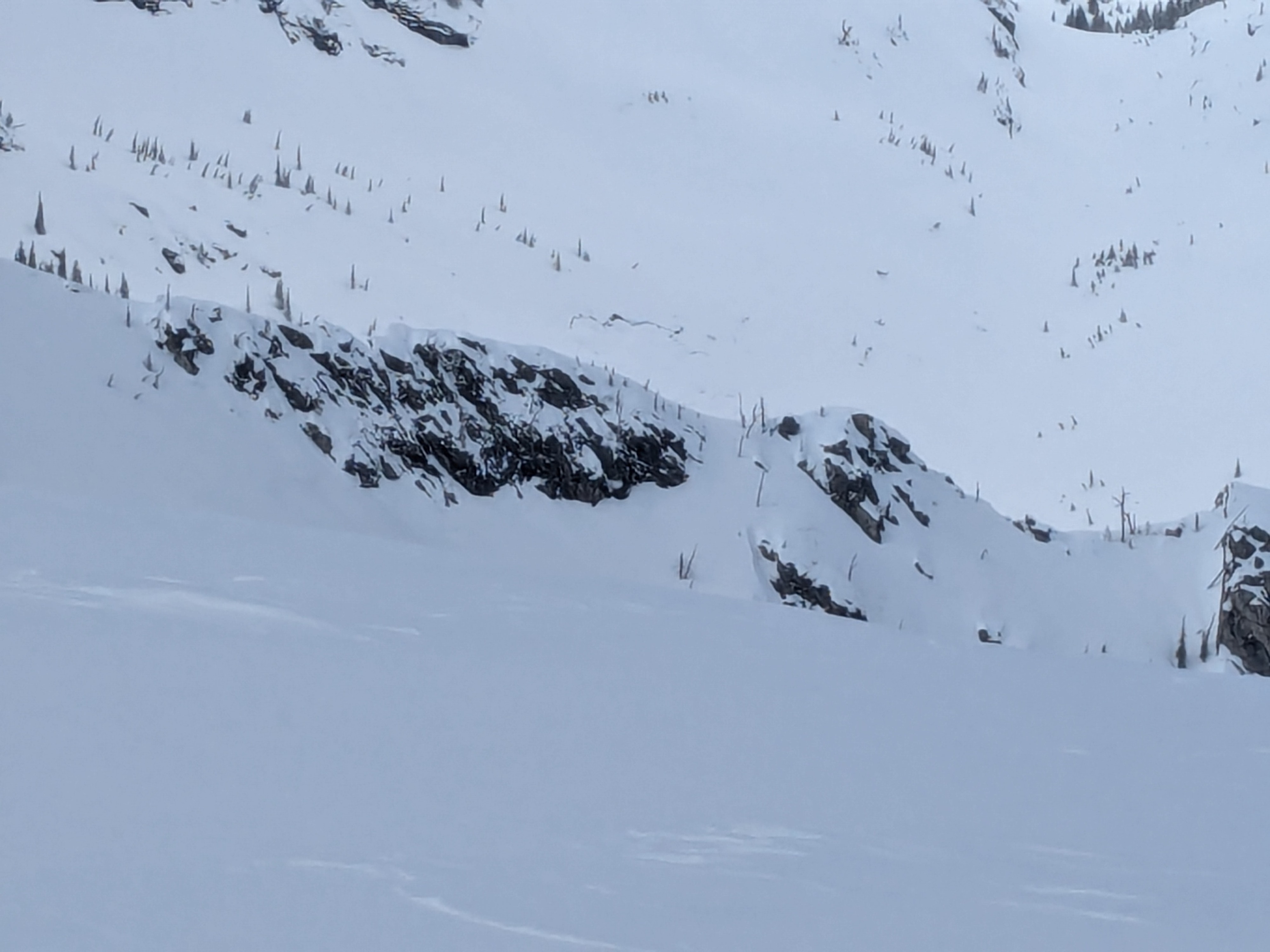
Recent slide (early today or overnight) on a E-NE aspect of Jeru Peak. Numerous older crowns and large debris piles that likely occurred during February storms. One slide in particular on an east-facing slopes ran full track into the creek bottom with tree damage. While the size of trees remained small, numerous tops were blown off from debris flow.Weather
- Cloud Cover
- broken
- Wind Loading
- light
- Recent Snowfall
- 10 - 20
- Snow Avail For Transport
- moderate amounts
Mountain fog cleared during the day allowing good visibility with broken skies. Winds were calm throughout the day.
Snowpack
On our travels between 5000 and 6500 feet, we found 10 to 20cm (4 to 8 inches) of storm snow. Around 7000 feet and on lower elevation leeward-facing slopes, new snow amounts were around a foot deep. A hard melt-freeze sun crust exists underneath the new snow on all aspects except shaded due north. Lots of diversity in snow surfaces that ranged from hard crust in wind-scoured spots to wind-pillowed areas or soft non-wind effected snow on more protected slopes. We observed isolated cracking in wind drifted areas near ridgelines and hand pits found a slightly harder (1F) surface layer above fairly homogenous 4F snow. Digging on an east-facing slope around 5600 feet yielded around 30cm (~1ft) of soft new snow directly above a 5 to 10cm P hard melt freeze sun crust from last weekend (March 1 to 2). The snow below this crust is 1F hard down to another crust (60cm down from surface, P-4F hard, 10cm thick) from the February 22 to 23 rain event. Wet snow grains, not yet refrozen, were observed below this crust and extended downward for approx. 50 cm. Column tests produced easy to moderate resistant planar failures in these upper snowpack layers (CT4 RP down 10cm, CT12 RP down 32cm under melt freeze sun crust, and CT 20 RP down 80cm on wet snow grains). Height of snowpack at this pit location was very deep - 300cm+. Today's midday to afternoon sun produce lots of rollerballs on westerly-facing slopes but none coalesced into loose wet sluffs.
Avalanche
- Size
- D2
- Type
- SS
- Aspect
- NE
- Trigger
- N
- Elevation
- 6100 ft