
Quick report
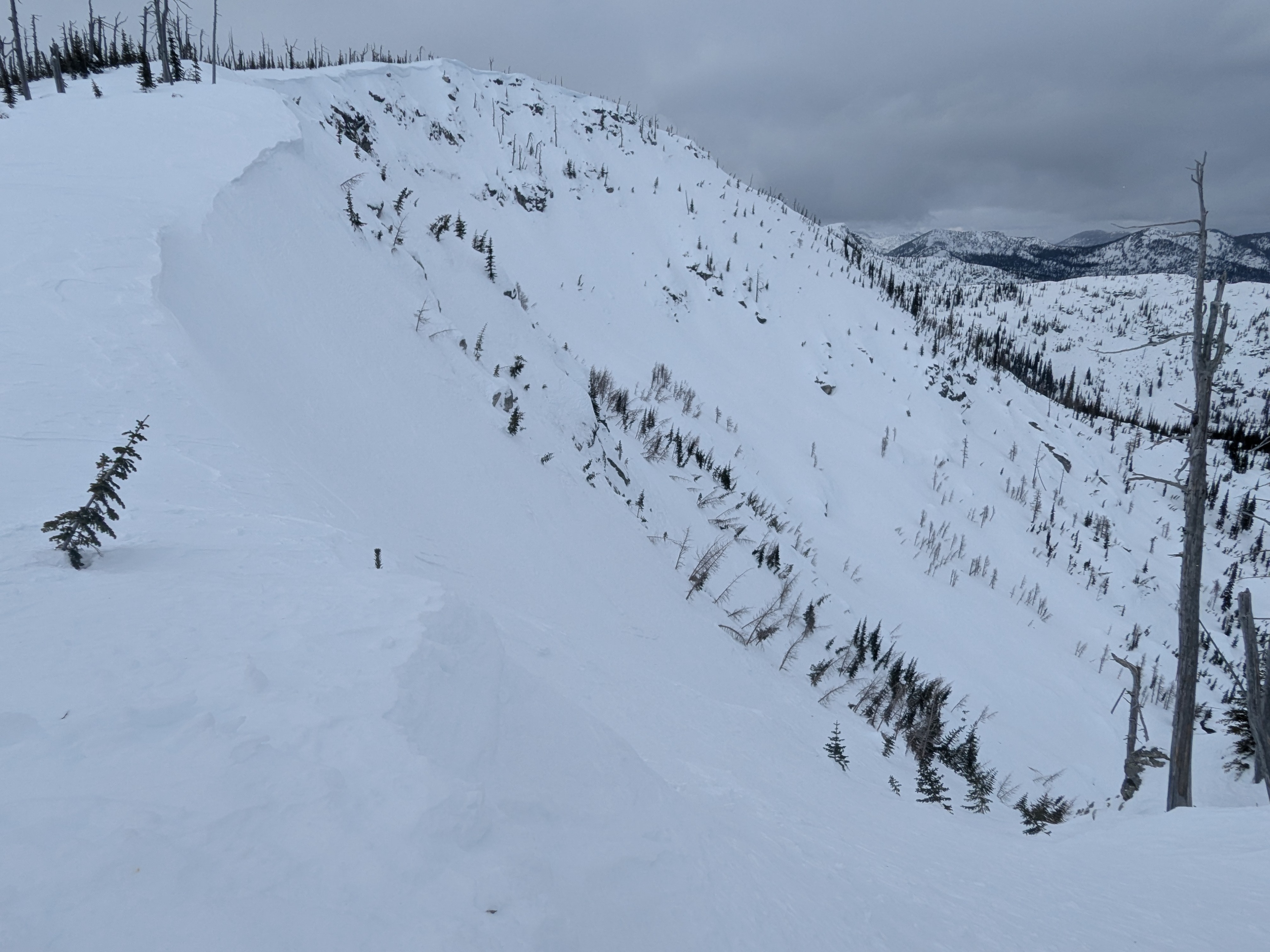
Pretty quiet in the mountains at present. Lots of slope testers traveling in steeper terrain without incident. Drifting hazards of the last week have become very stubborn but still need to be managed for in complex or extreme terrain, or where a fall could lead to a bad outcome. Slopes where riding conditions are softer, pay attention to lose cohesionless snow sluffing as you descend, and get out of the way if these piles start moving fast or entrain more snow volume.
Weather
- Cloud Cover
- broken
- Wind Loading
- none
- Snow Avail For Transport
- small smounts
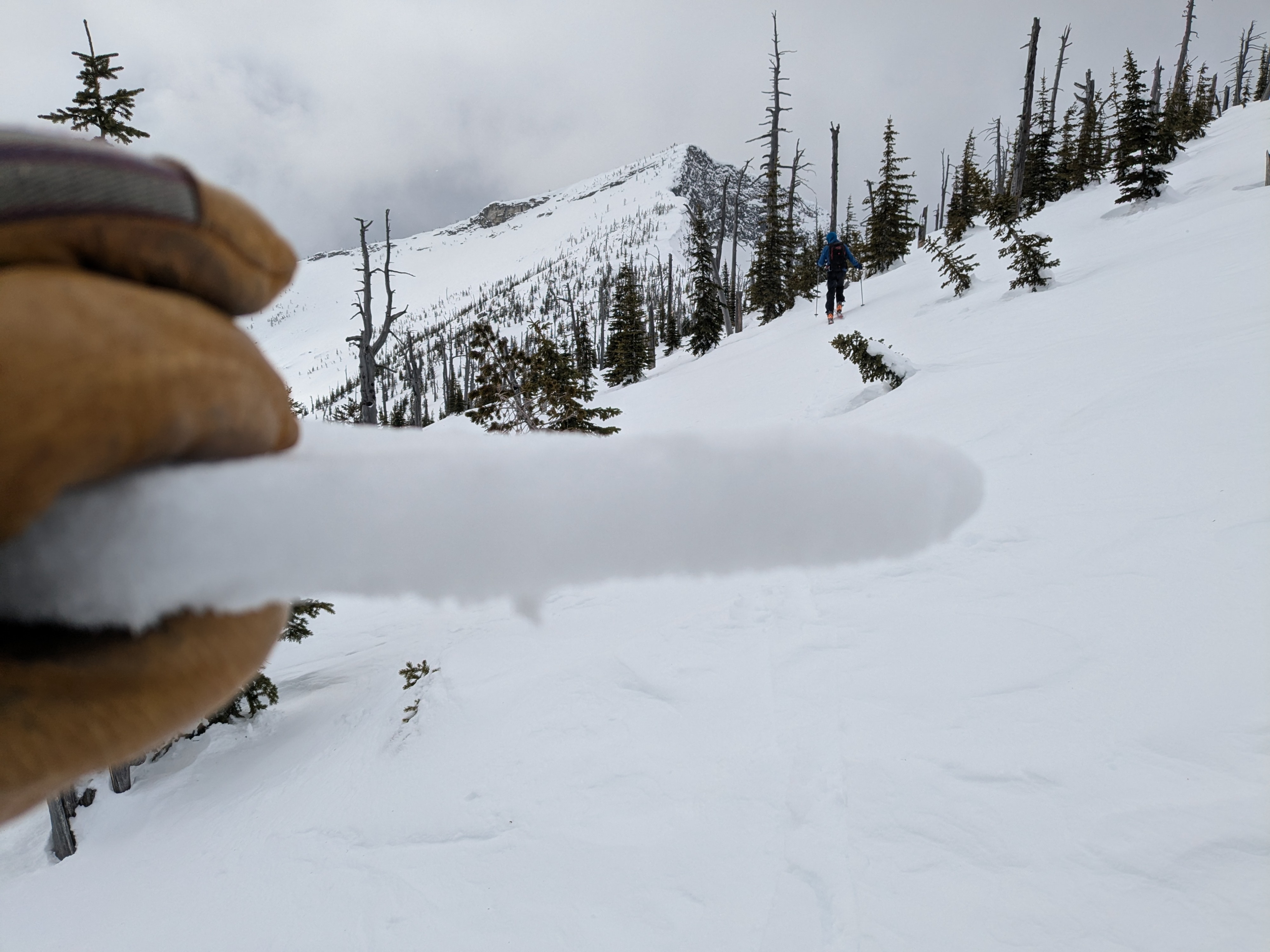
Mix of sun and clouds with light northeast winds. Light snow flurries around 1 pm delivering a dusting on surfaces.
Snowpack
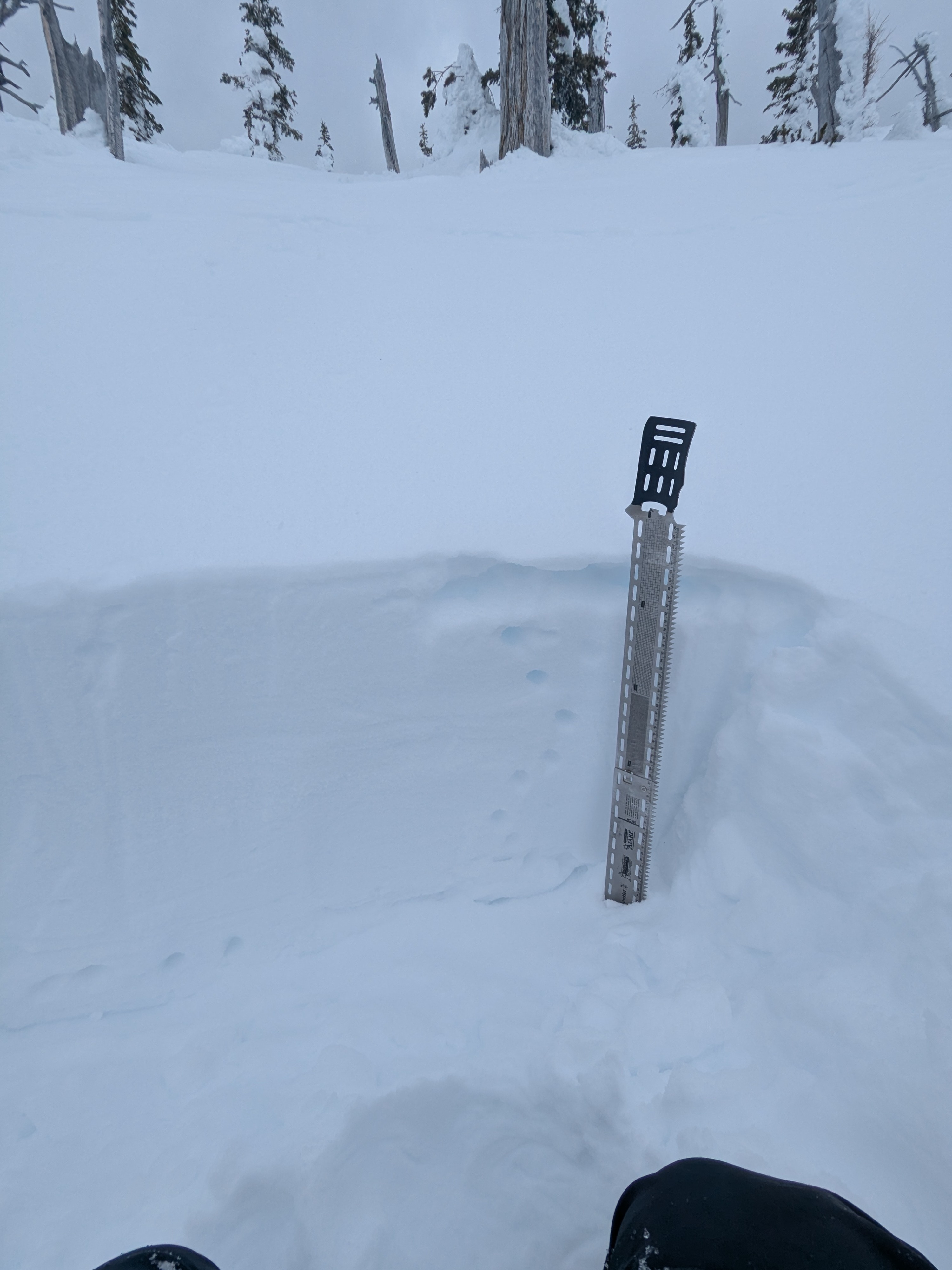
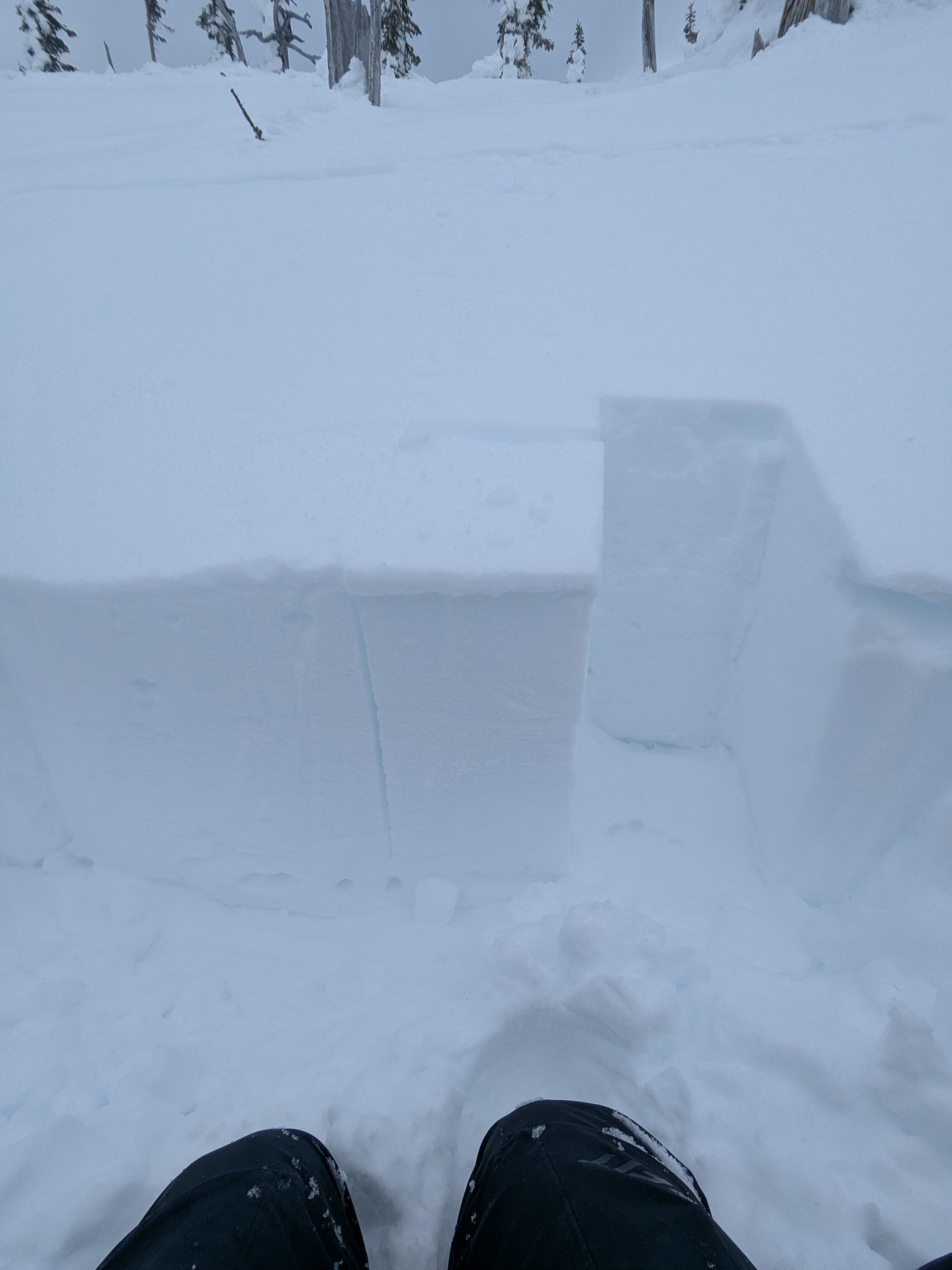
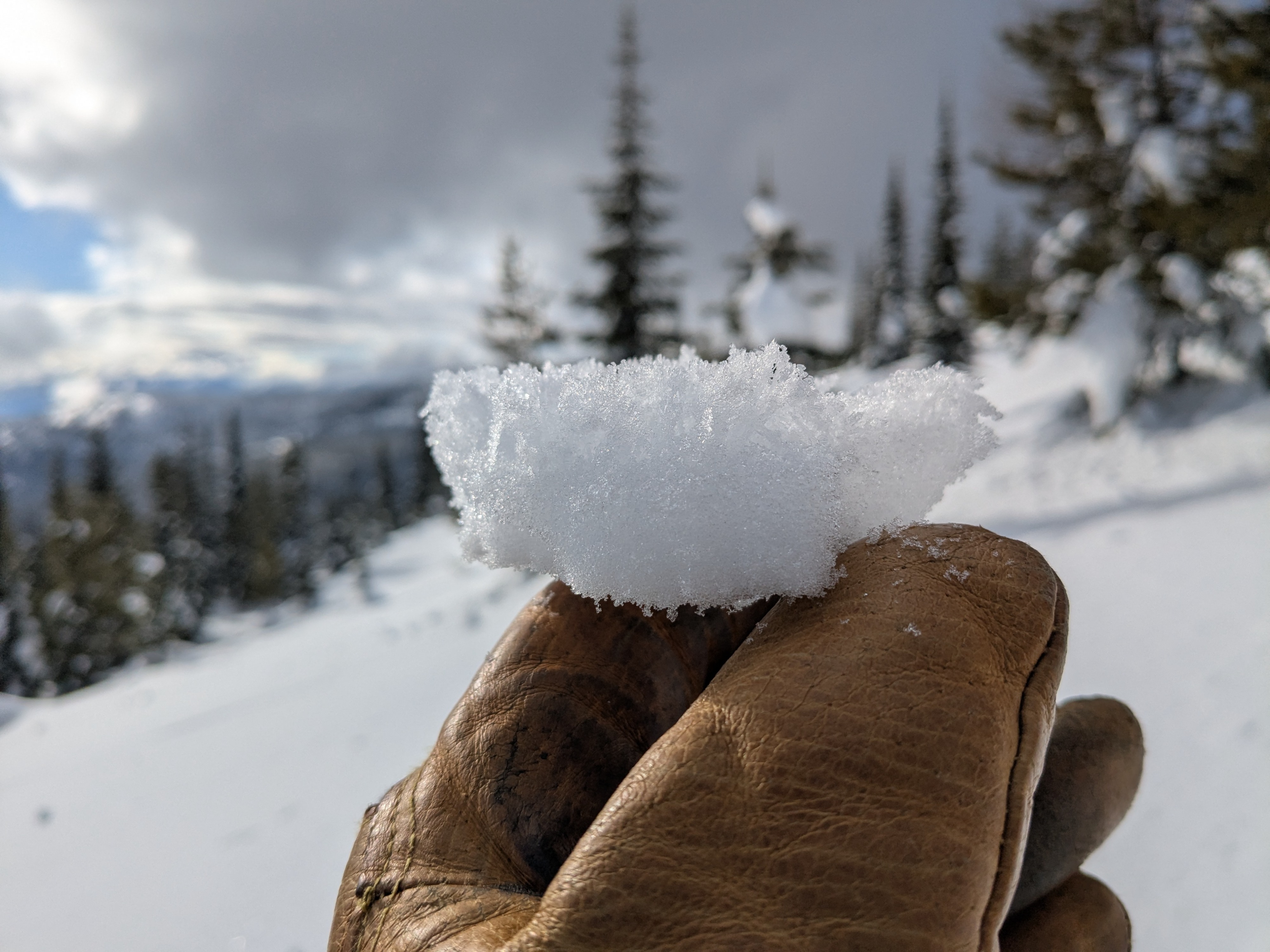
The wind and sun have done a number to snow surfaces across all aspects at upper elevations and stradling the tree line. The sun crust from this week ranges 1 to 2 cm. While supportive to skis in most places, it easily broke when isolating in a test column (CT2 SC) and pressing on the surface with a hand. Underneath, we found 5 to 10 cm of F to 4F hardness near-surface facets that ranged 0.5-1.5 mm. These were largest directly against the underside of the crust. Extensive Surface Hoar is developing above the crust on sheltered slopes ranging 8 to 10 mm. Shady slopes at upper elevations host firm, stubborn hard slabs from recent strong winds. These seem very stubborn to fail with ski pressure. Like their sun crust cousins on sunnies, they are slowly faceting below. Both surface conditions at upper elevations are building a "trap-door" setup that could pose concern onces stormy weather stacks fresh slabs on top. Shaded slopes at lower elevations is where surface faceting is deeper and could progress into a dry sluffing hazards as the cold, dry weather continues. Descending an easterly-facing slope around 35 degrees in steepness, we kicked off a couple of harmless sluffs that quickly traveled down the slope. As depth of faceting increases, these types of slides could entrain enough snow to be a viable concern. For now, sluff management is appropriate.