
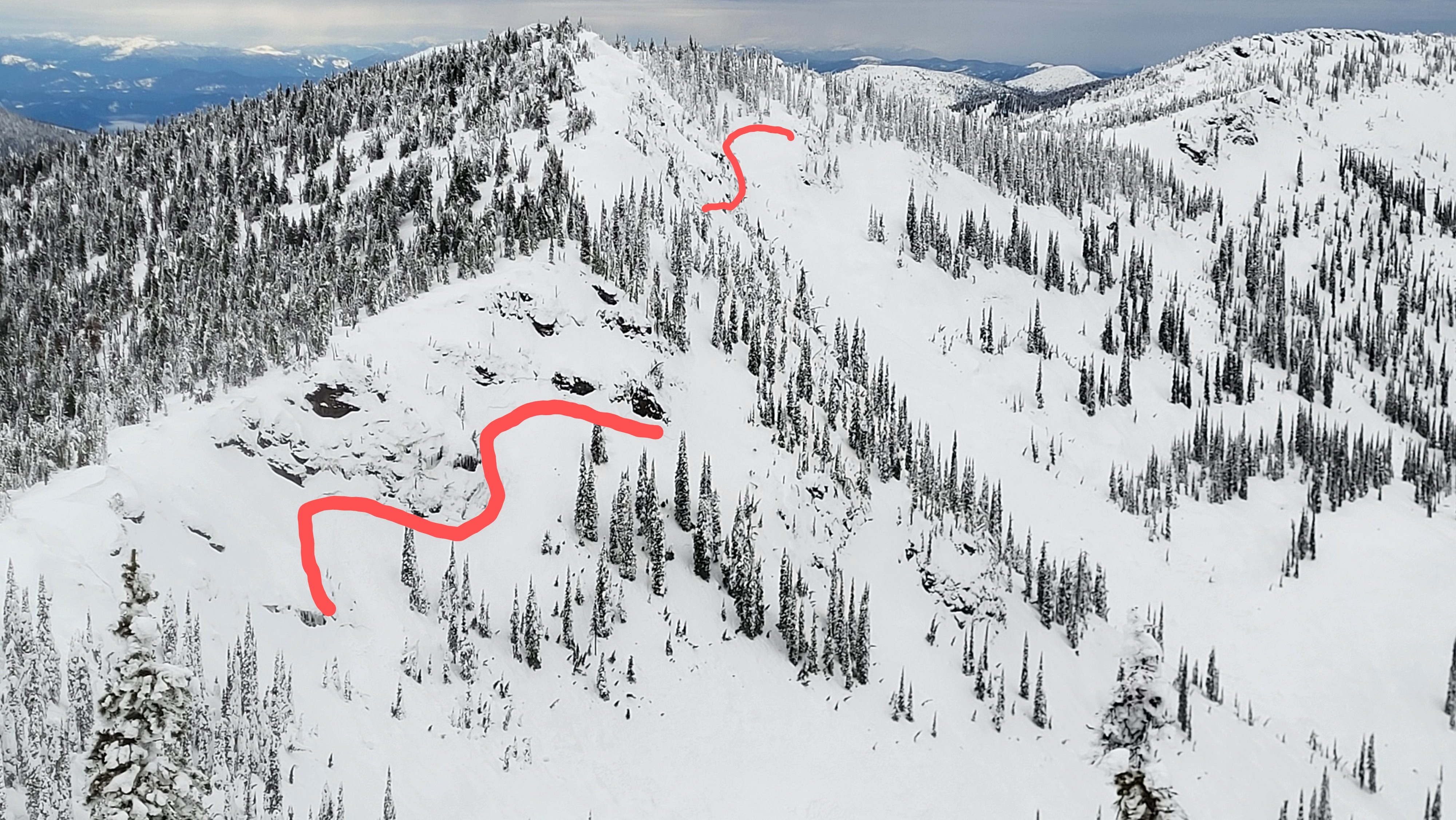
Quick report
We found a firm rain crust that became breakable between 4,000-5,500 feet - likely driven by above freezing temperatures. Above 5,500 feet, the snow surface remained firm but not icy. Areas above 5,500 feet received less rain than the lower elevations, which made the sliding surface a bit more pleasant! We went touring today primarily to assess how the warm temperatures had affected the snowpack. However, we realized that the warmer temps weren't enough to cause significant changes.
The most likely place to encounter trouble is triggering an avalanche on the 12/7 rain crust, which lies about 1-2 feet below the snow surface. Triggering an avalanche on this layer is becoming less likely as the upper snowpack consolidates, but remains a potential on steeper slopes - especially near rock bands or ridgelines. The tricky part is identifying where these trigger points are and which slopes have crept close to a breaking point.
The best way to describe the current conditions is "low frequency, high consequence." To avoid this risk, the easiest strategy is to stay on slopes around 30 degrees. If you choose to enter terrain steeper than 30 degrees, keep a close eye out for signs of instability, such as cracking or whoomfing. It’s also wise to select slopes with a clean runout that won’t lead you over cliffs, into trees, or into a terrain trap.
Subtle collapsing below our feet with ski pressure. Didn't contribute to any surface cracking.Weather
- Air Temp
- 30-34F
- Cloud Cover
- broken
- Wind Loading
- light
- Snow Avail For Transport
- moderate amounts
Mild, overcast day with light winds along ridgetops. Snow was falling off trees around 6,000 feet and slightly above.
Snowpack
Faceted grains (4F above, 1F- below) around the 12/7 rain crust remain the primary weak layer of concern. This interface sits between 40 and 50 cm below the snow surface. The portion of the slab directly above is mostly 1F hardness. The uppermost, newest rain crust (12/18) is thin and will likely degrade quickly. 4F decomposing fragments rest below this crust. In general, harder upper snowpack layers are supportive to skis but we easily punched through into weaker/ softer snow layers. Stability test continue to highlight weaker interfaces well within the realm of rider or machine triggering, but our stability test did not produce propagating results. Compression Tests did produce sudden planar and resistant planar results. These inconclusive results suggest a stubborn slab, weak layer combination with increasing consequences. The faceted rain crust of concern is a widespread setup and triggering a slide above this crust will likely break wide across terrain features due to deep, continuous snow cover across the majority of slopes. While the overlying slab gains strength faster than the weaker snow below, it'll be imporant to look for and evaluate its potential to fail and consider the outcome of a larger slide in the given terrain.
Avalanche
- Size
- D2 R2
- Type
- SS
- Aspect
- E
- Trigger
- N
- Elevation
- 6400 ft
Started below rockbands, most likely during the rain/snow event on Dec. 18