
Quick report
- Cracking
- Observed
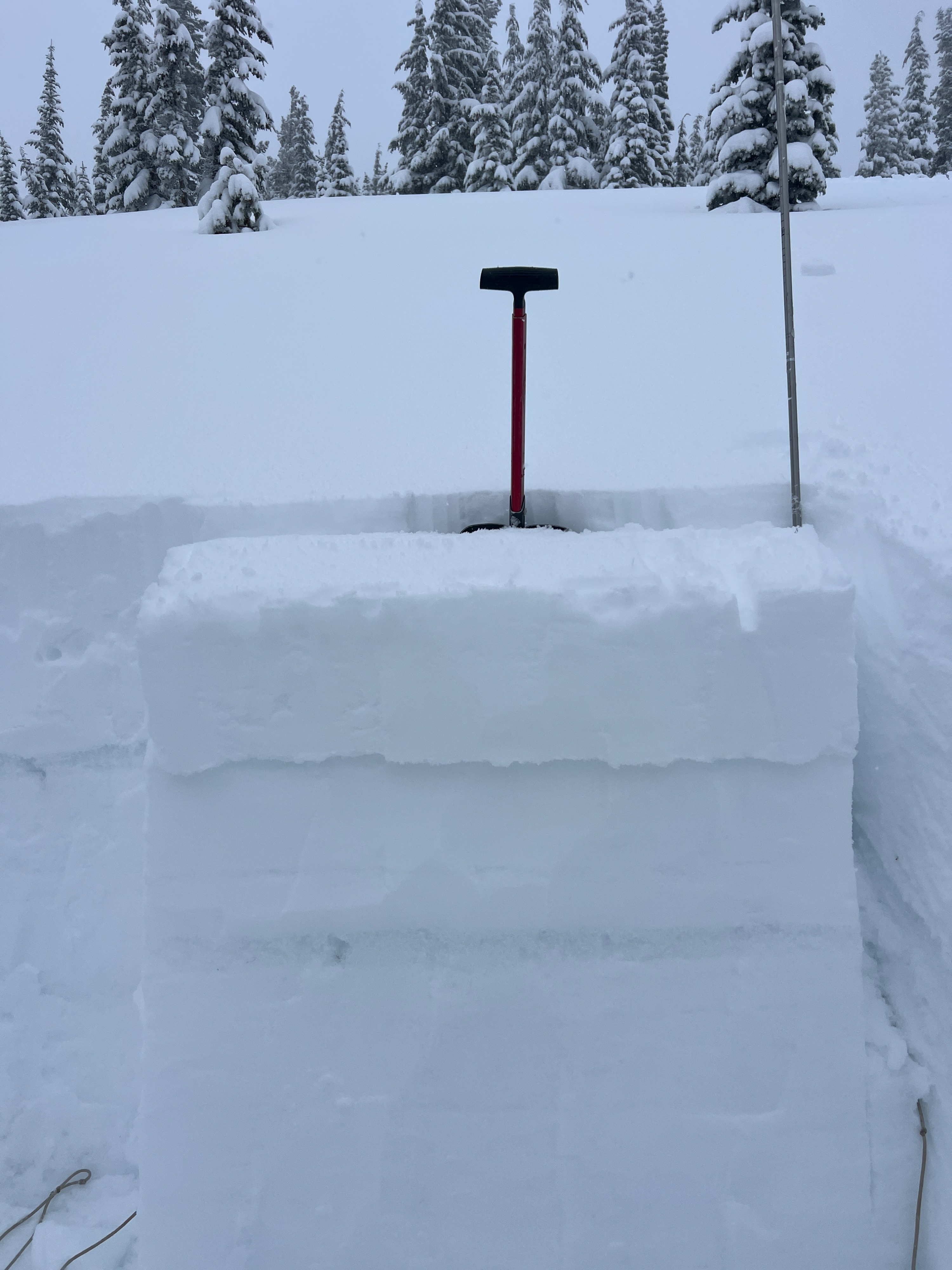
Propagating results with easy force on multiple aspects really speak to the sensitivity of the newest buried weak layer: the Valentine's Day surface hoar. With this layer being 20-25cm below the surface, it could easily be triggered by a skier or rider. The consequences increase even further if that failure were to step down deeper into the snowpack, on the older 1/28 surface hoar layer. Propagating results from today were the most reactive I've seen all season. With more snow on the way, this will only increase the possibility of triggering a persistent slab avalanche.
Overall, less cracking than expected. Cracking was confined around my skis.Weather
- Cloud Cover
- overcast
- Wind Loading
- light
- Rain Elevation
- 3,500-4,000
- Recent Snowfall
- 20-25
- Snow Avail For Transport
- moderate amounts
S-1 snowfall for most of the day, with slightly stronger periods. Fog and low-level clouds made for poor visibility. Light wind and temperatures in the mid-20s F.
Snowpack
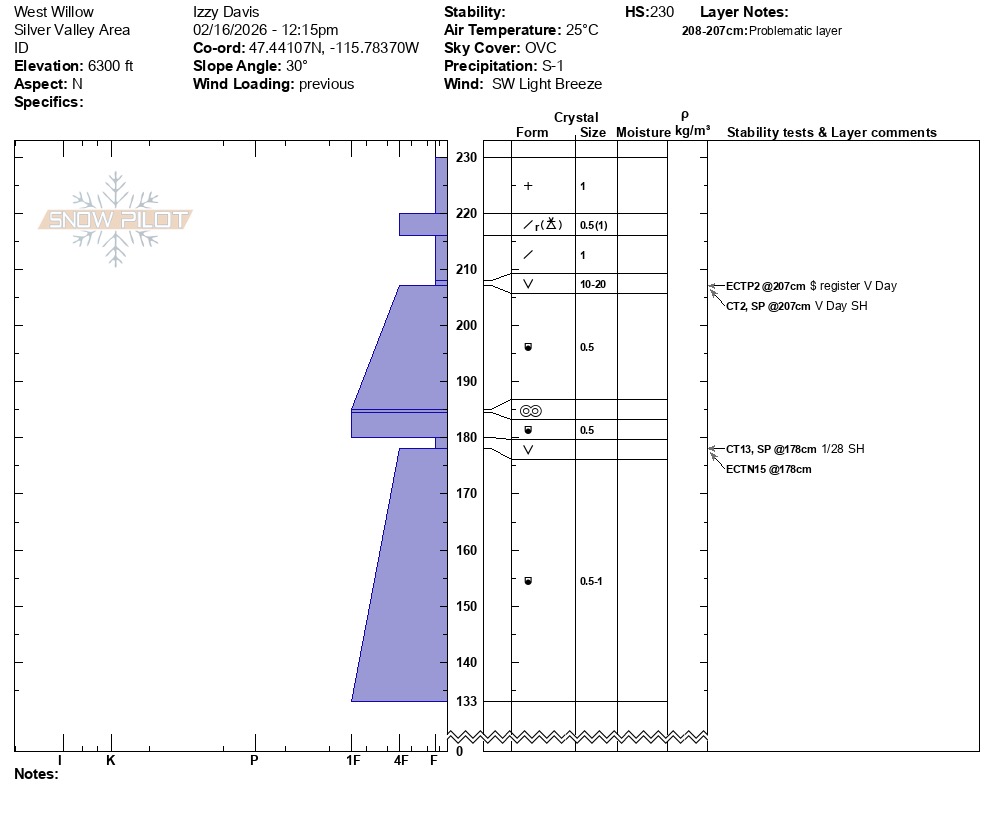
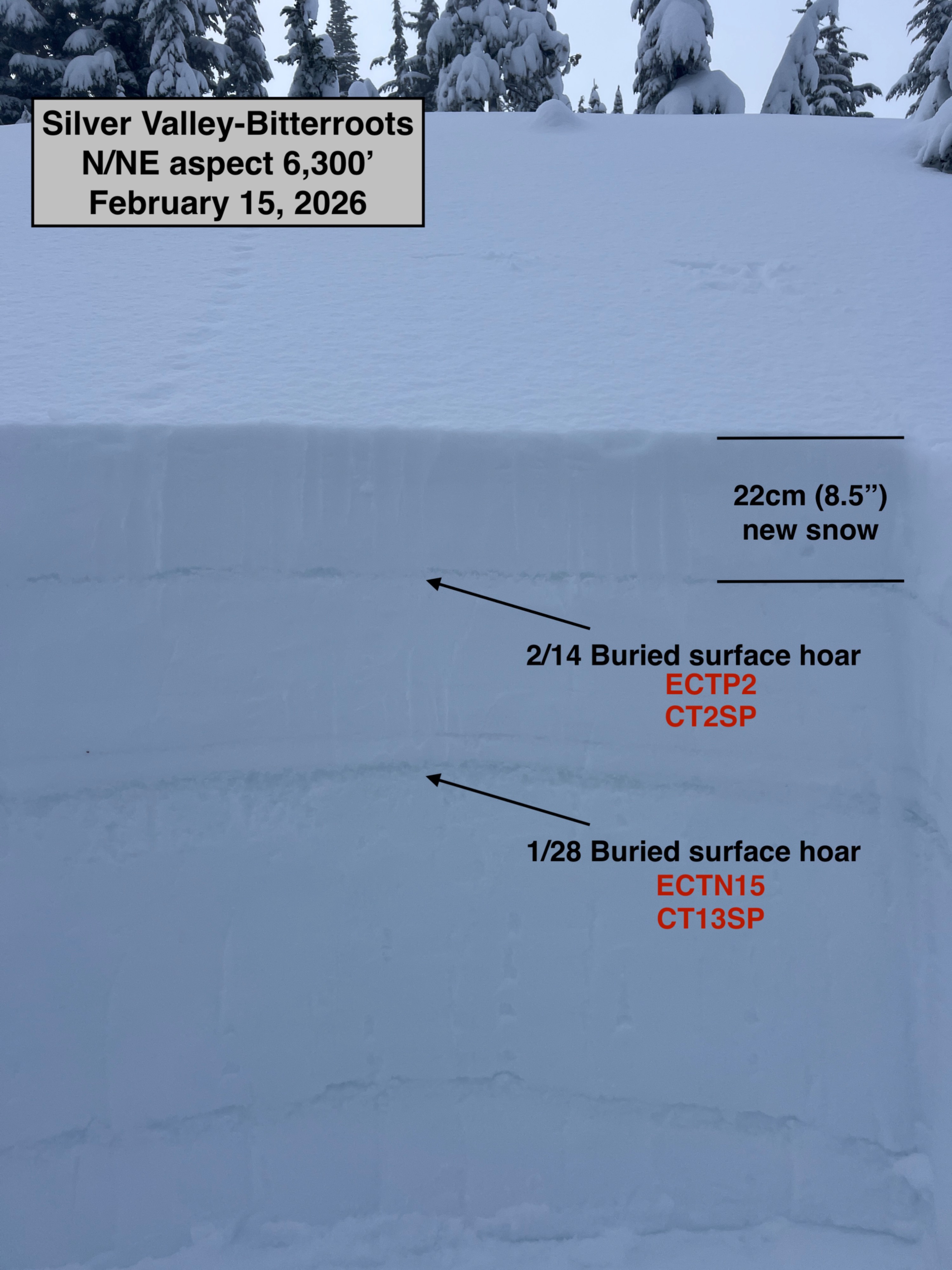
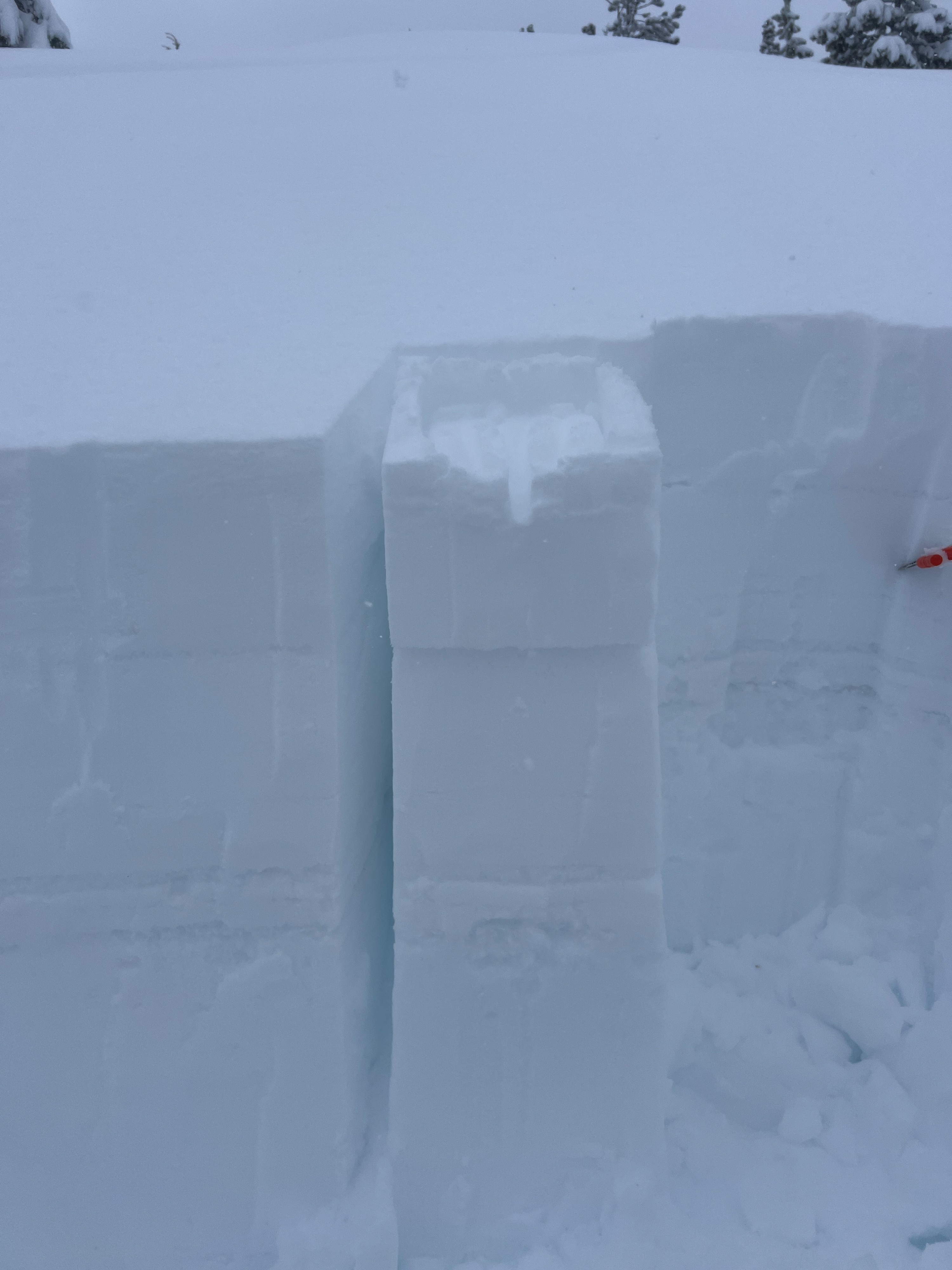
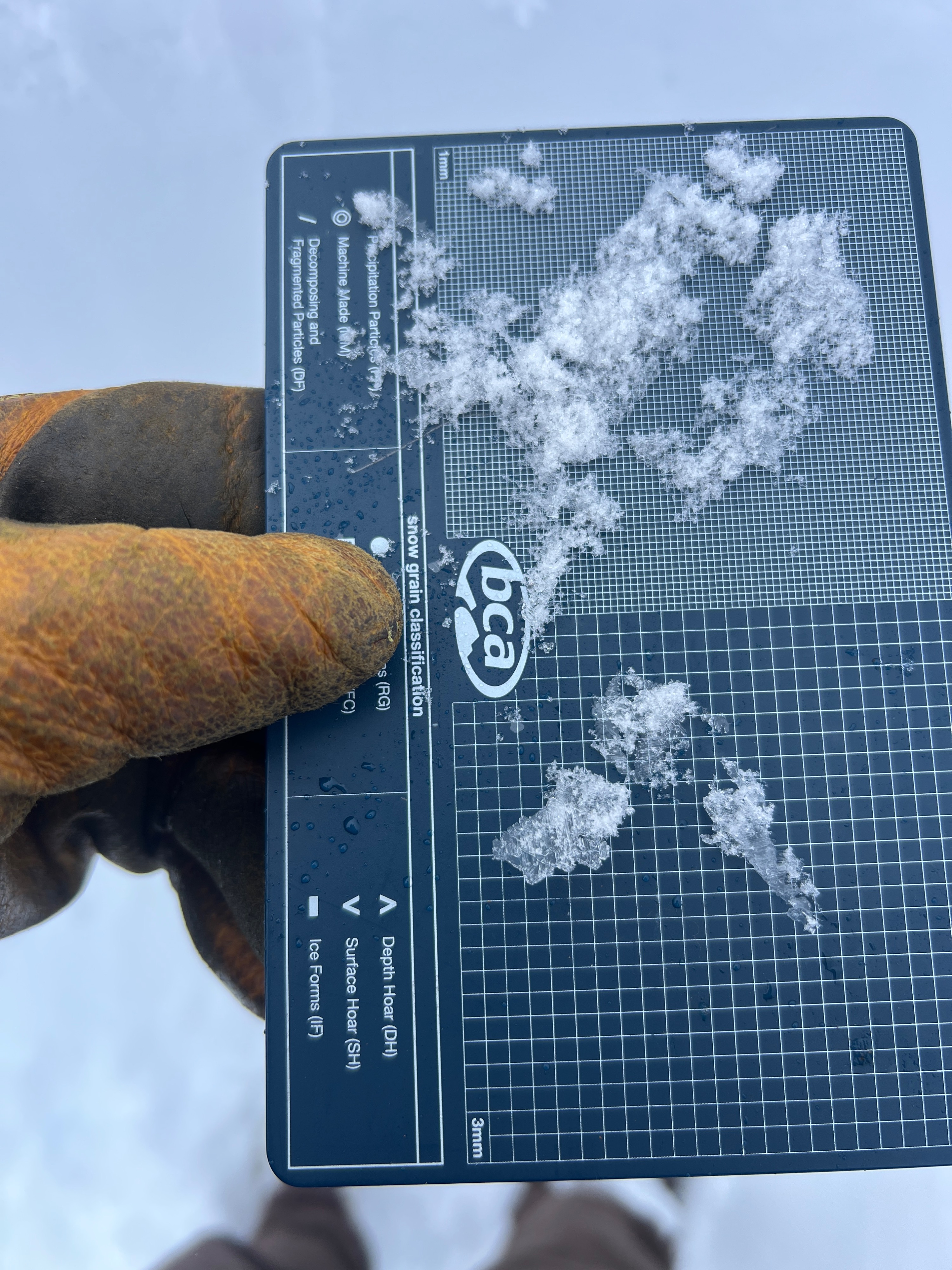
Surface hoar that developed just prior to Valentine's Day was buried intact by the recent snow. I first dug on a N/NE aspect near 6,300', and found this new weak layer below 22cm of new snow. The buried SH feathers were very large, with some >1cm. The new snow on top was on the denser side- the perfect density for being cohesive and "slabby." The V Day surface hoar immediately jumped out to me, and the 1/28 surface hoar was also easily identifiable just 30cm below. In my ECT, the V Day SH failed with just 2 taps. The weak layer collapsed with a "cash register" effect. The 1/28 SH had an ECTN15. This is a perfect scenario for an avalanche initially failing in the upper weak layer to step down and fail deeper in the snowpack.
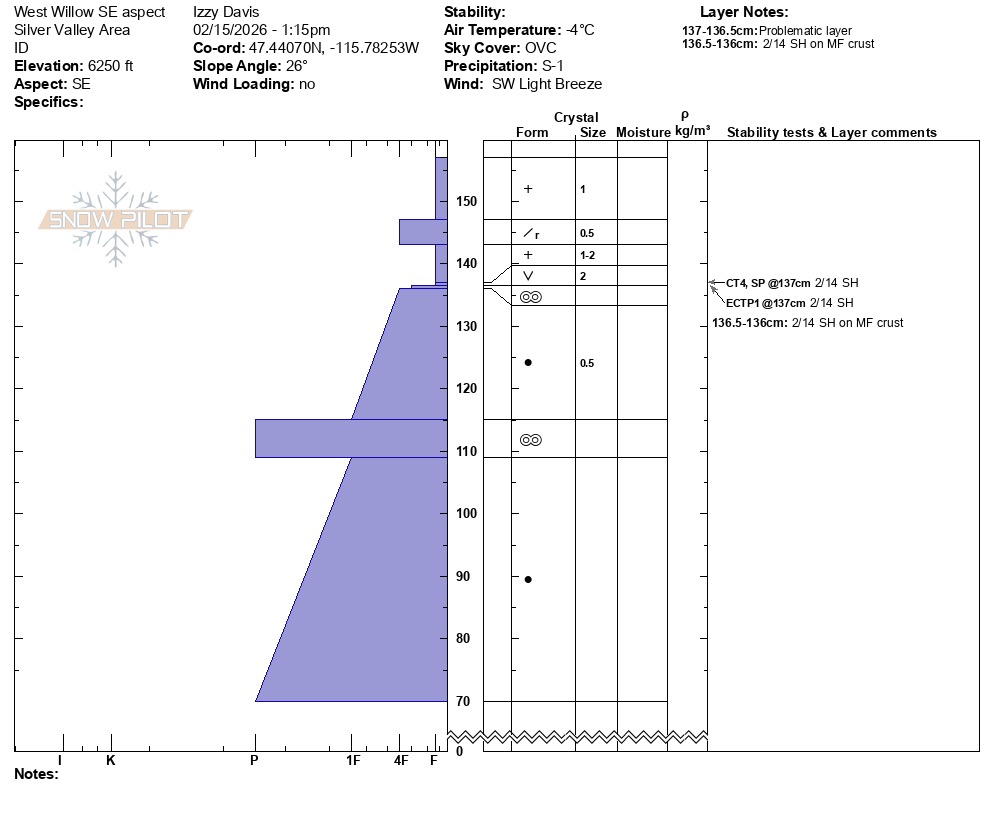
I rolled over to a SE aspect, and although the V Day SH was harder to make out, I could still see a thin grey line. At this location, it took just 1 tap in my ECT to get propagation. The SH was significantly smaller here, around 2mm. But these small grains were sitting on a thin melt-freeze crust. The 1/28 SH was not found here, and a thick melt freeze crust replaces that layer on southerlies.
Moving onto an E aspect, it again took no time to identify the V Day SH. Just like the N/NE aspect, the feathers were very large, and the 1/28 SH was sitting 30cm or more below. Test results here yielded an ECTN9 @ V Day SH, followed by an ECTP15 @ 1/28.
I did not get any results in my snowpack tests within the new storm snow.
Avalanche
None observed.