
Quick report
- Cracking
- isolated
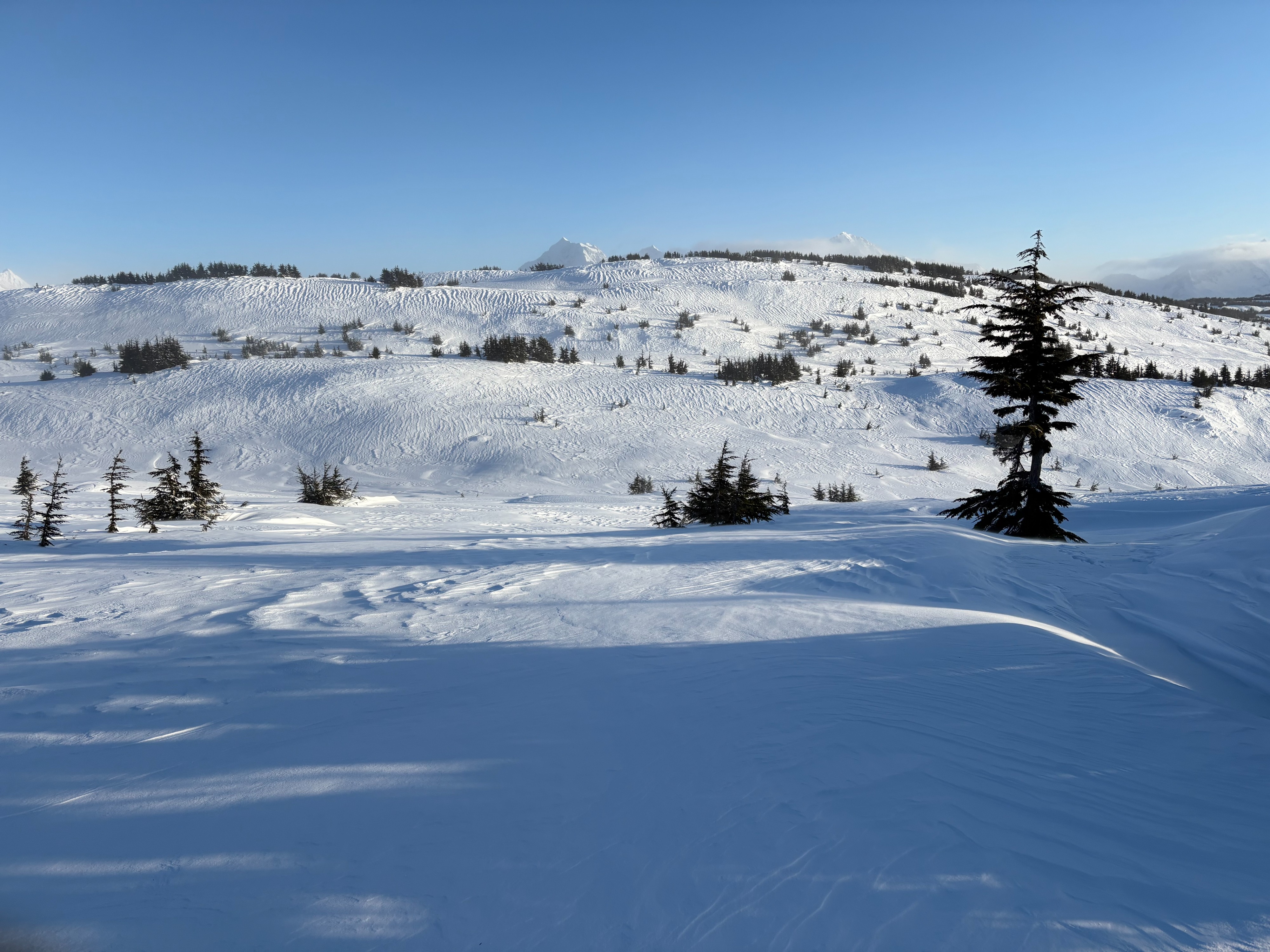
We returned to Snug Harbor with the goal of reaching Lost Lake and evaluating snow conditions along the way. We were surprised to find significant snow transport overnight, which partially covered many tracks from previous days in areas that were previously wind sheltered.
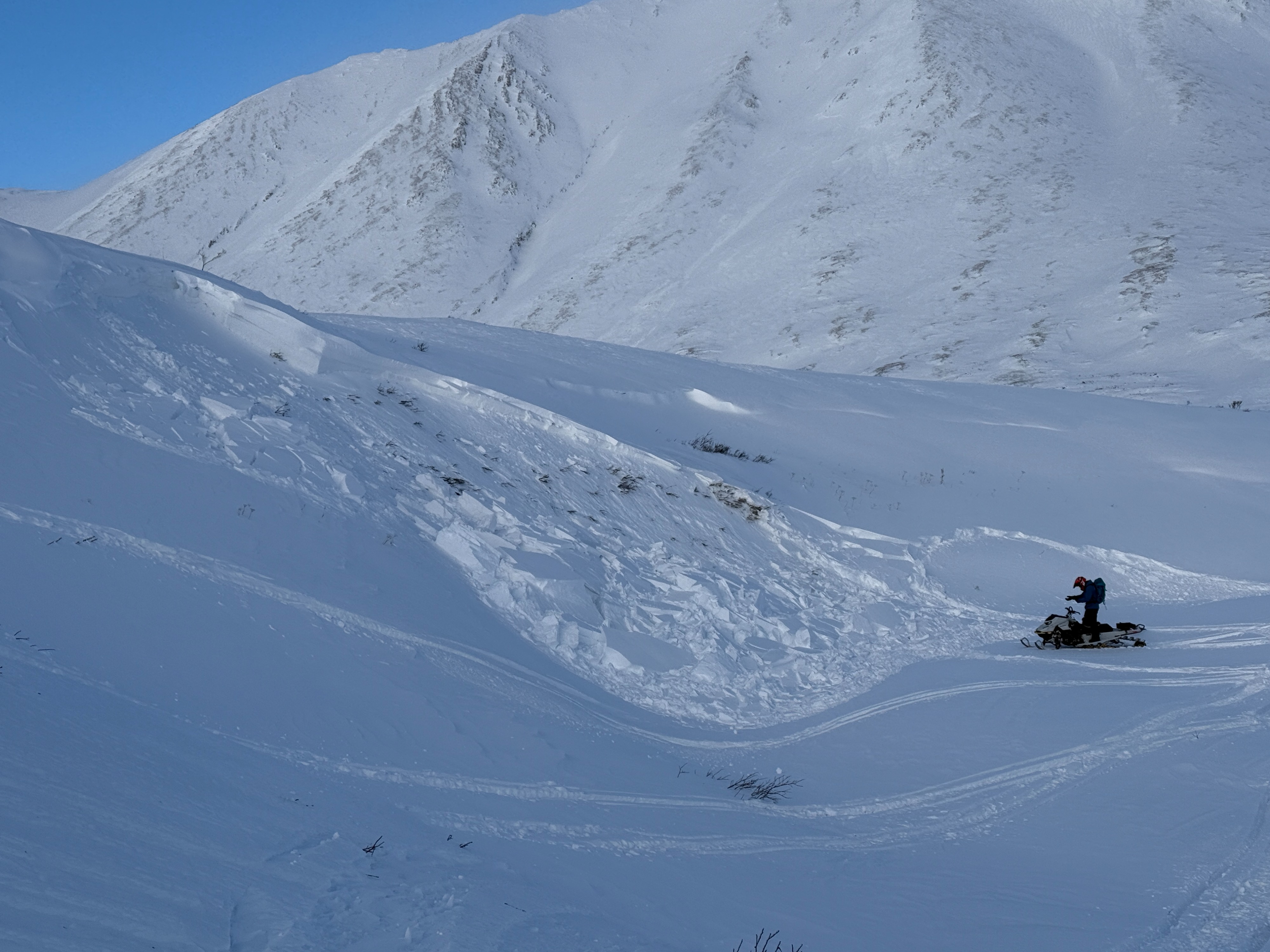
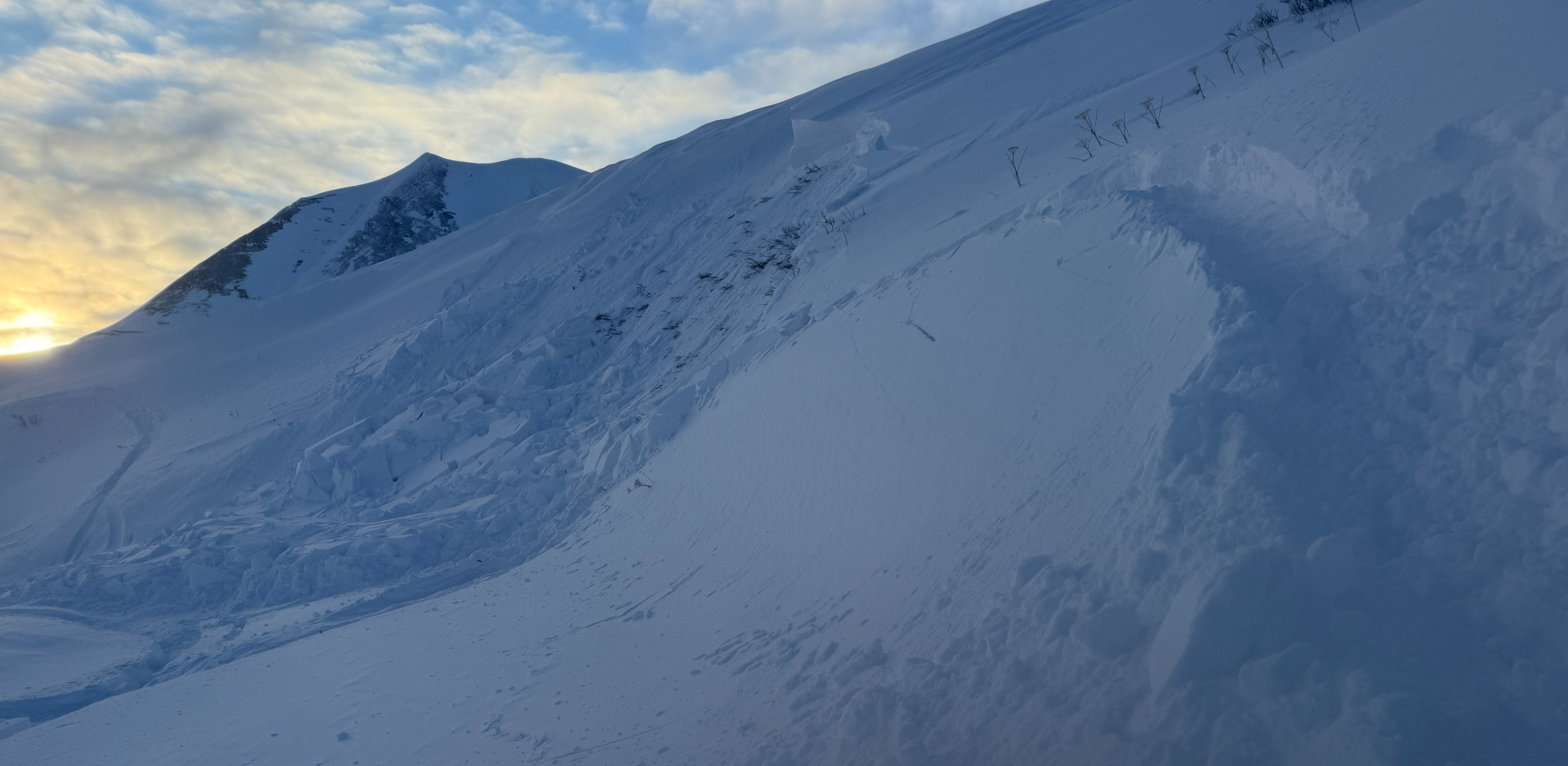
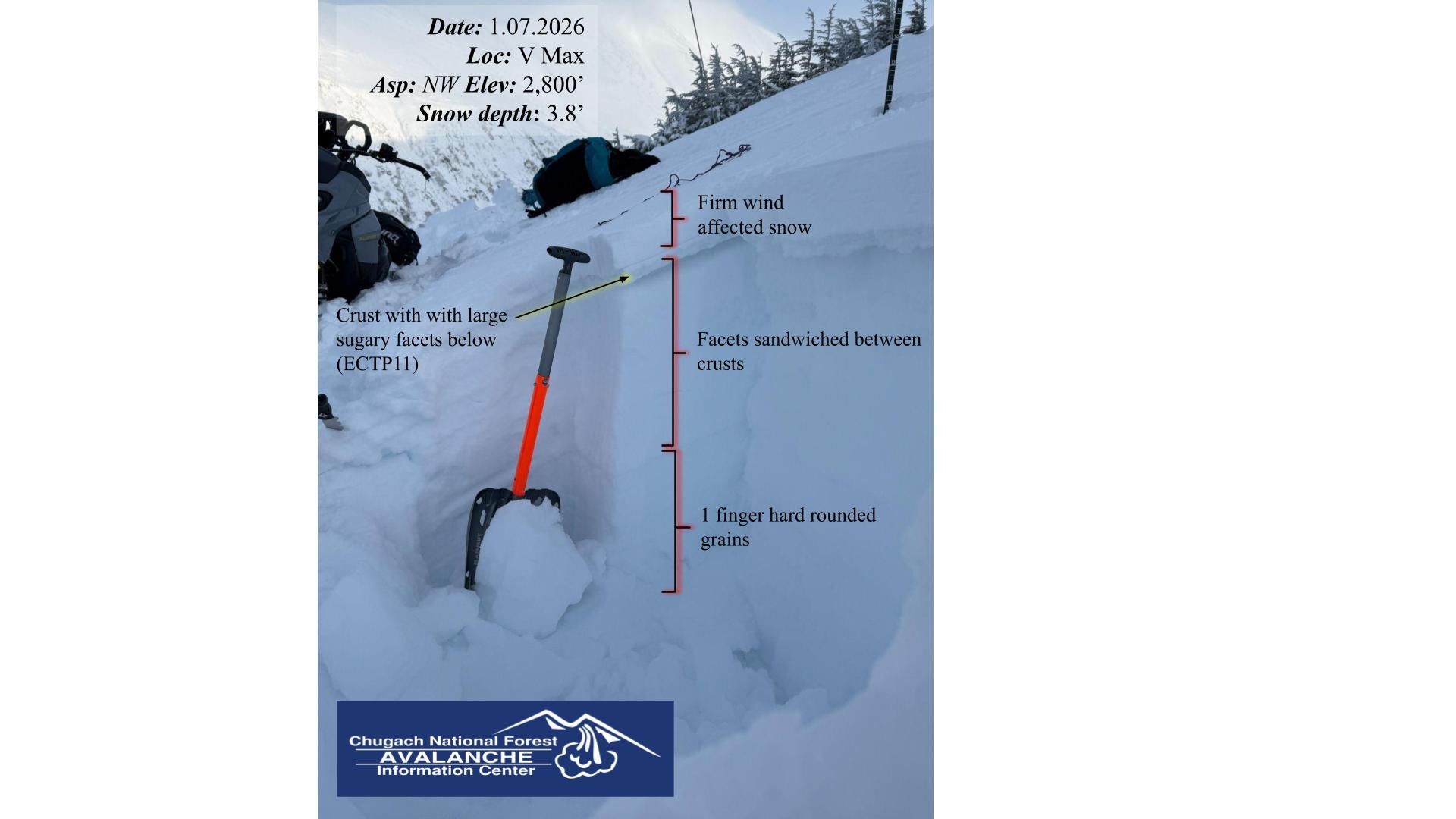
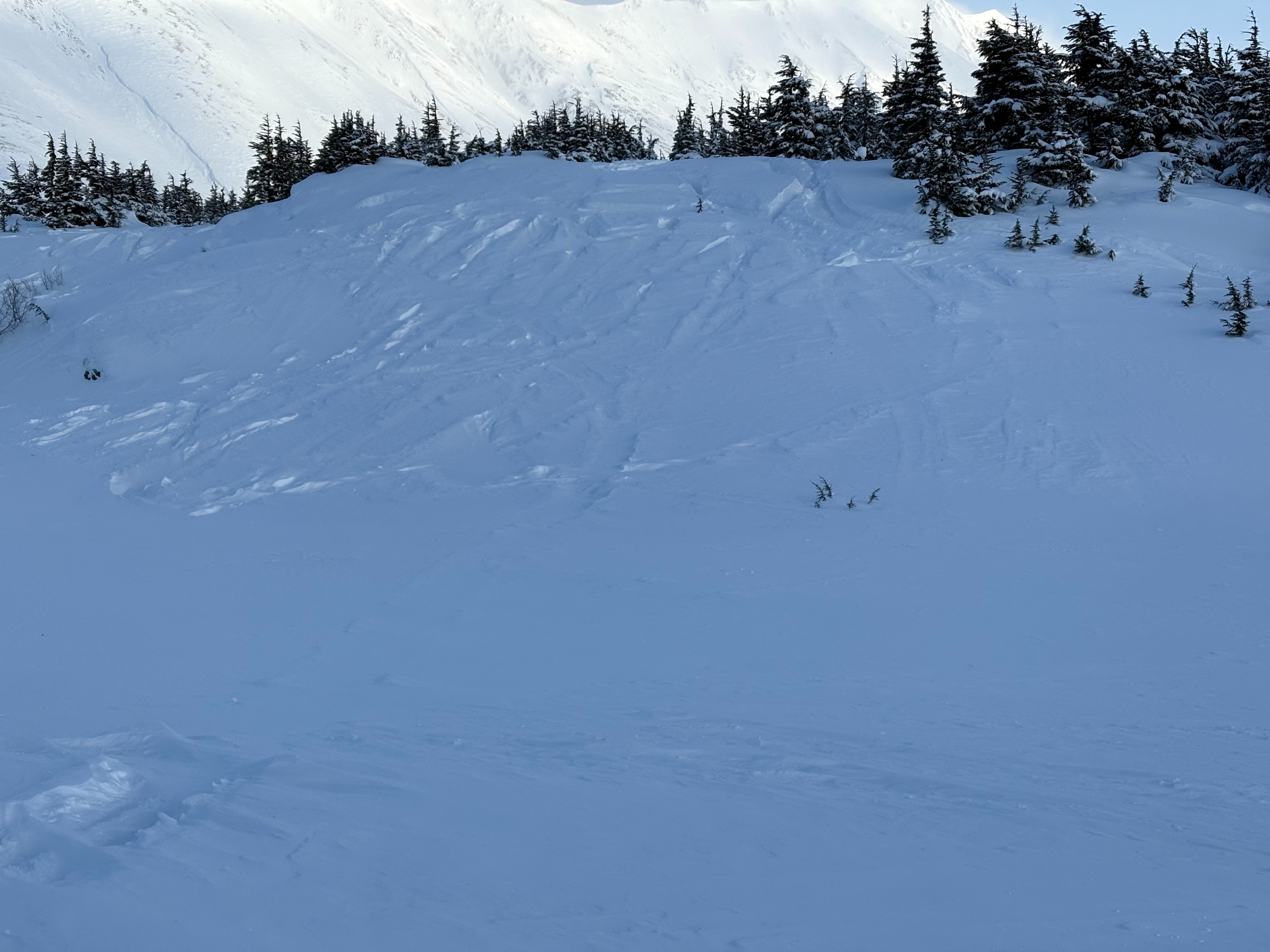
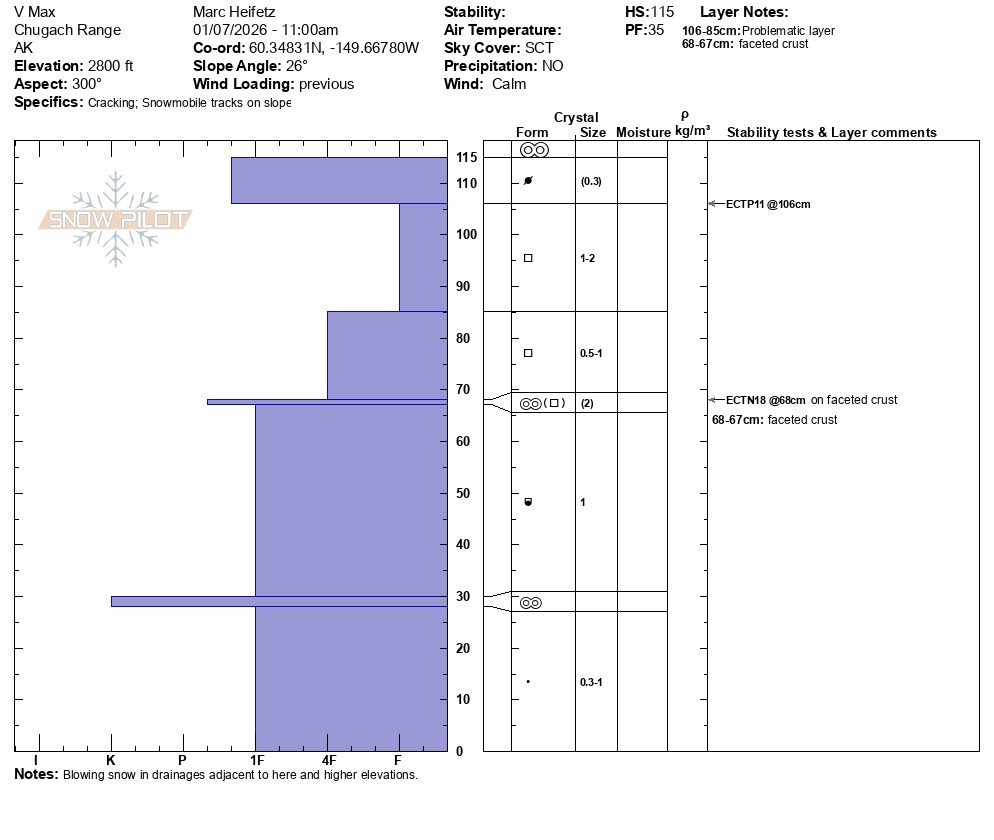
We dug two snowpits in the V Max area and found concerning instability. A stiff, wind-deposited slab sat atop weak, sugary facets. In the same area, we experienced shooting cracks extending more than 20 feet in front of our sleds. We also observed a small snowmachine-triggered avalanche at 2,600 feet in the Boulder Creek gully just south of V Max. The avalanche crown was 1–3 feet deep and failed on the weak faceted layer beneath the recent wind-deposited snow.
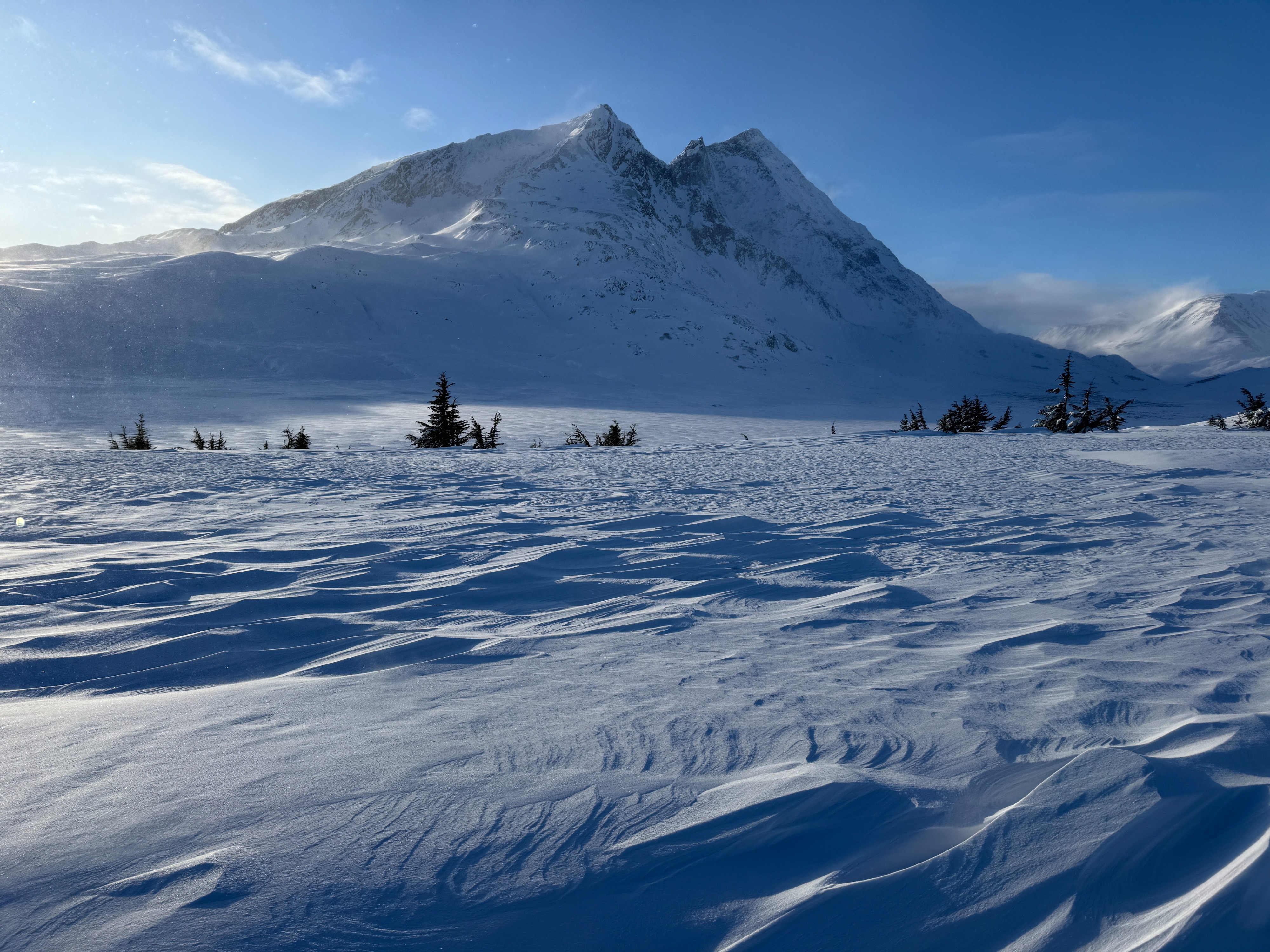
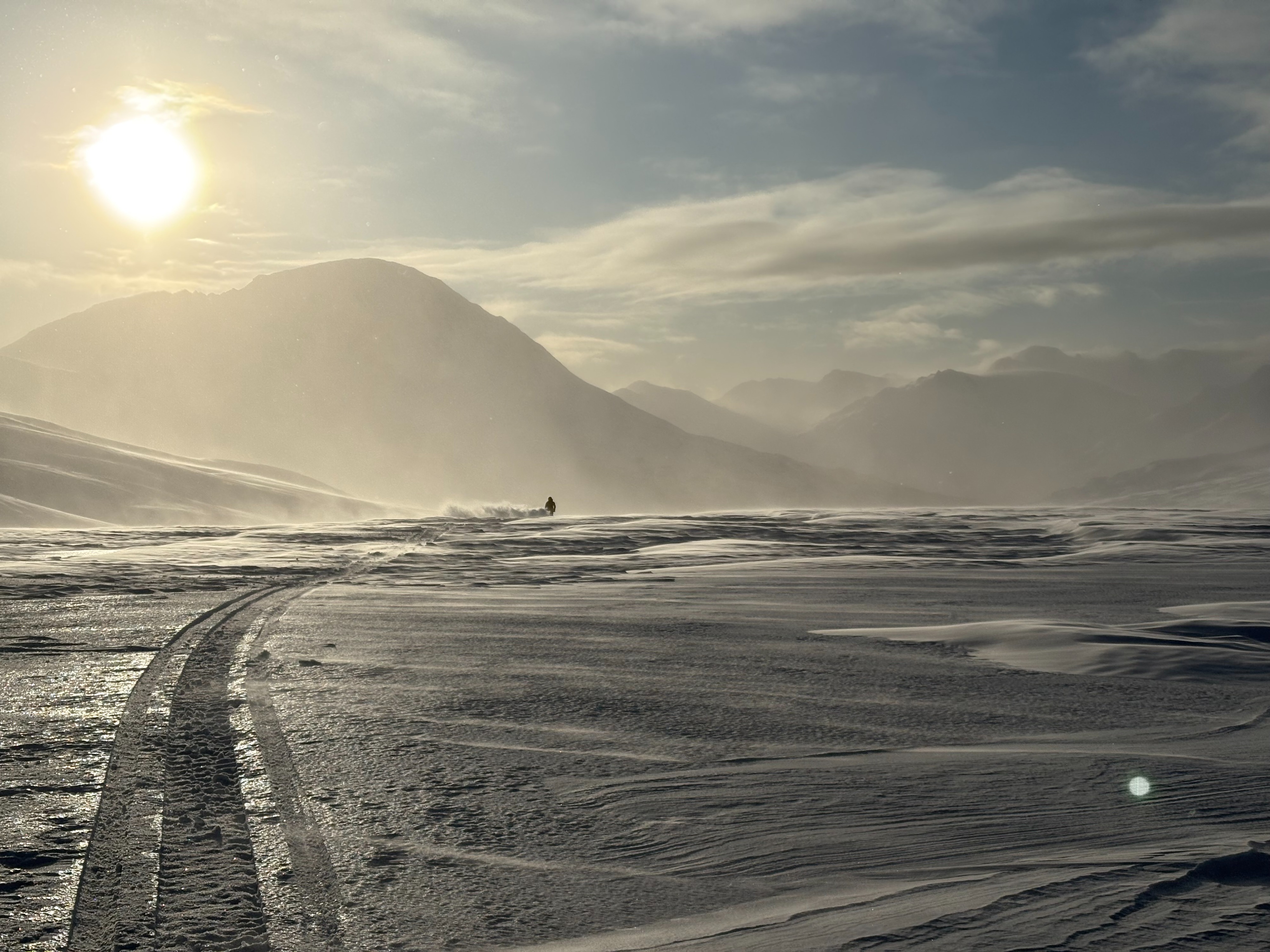
We traversed toward Lost Lake and encountered strong winds across much of the region, including most of the Lost Lake area. Finding sheltered snow proved difficult, and much of the area had developed a new surface crust. Snow coverage in the valley bottoms remains brushy in places, while higher elevations show widespread wind stripping on ridges with snow deposited into gullies and other sheltered features.
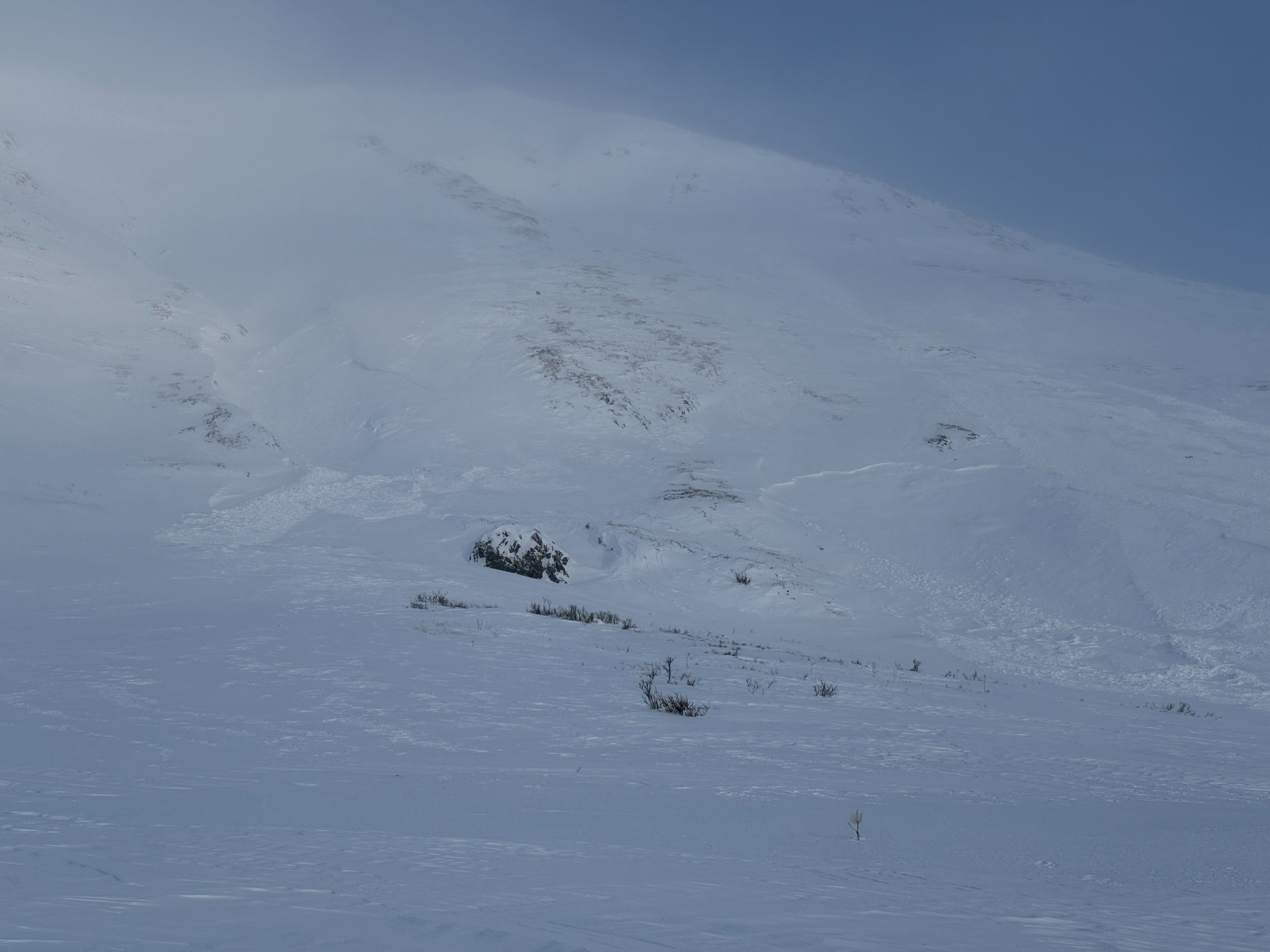
We observed shooting cracks propagating more than 10 feet ahead of our snowmachines on a wind-loaded slope on V Max Hill. We saw more recent natural avalanche activity in the Boulder Creek drainage, where two avalanches released on slopes of a peak just southeast of Noel Hansen Mountain. The larger of the two avalanches was roughly 1 foot deep, 200 feet wide, and ran about 100 feet. We also observed a snowmachine-triggered avalanche in the Boulder Creek gully. This avalanche had a crown depth of 1–2 feet, was approximately 50 feet wide, and ran about 20 feet, leaving a pile of debris next to the trail.Weather
- Cloud Cover
- scattered
- Wind Loading
- intense
- Rain Elevation
- 0
- Snow Avail For Transport
- moderate amounts
Winds were much stronger then yesterday and blowing through areas that were previously sheltered.
Snowpack
We dug two snowpits on a northwesterly slope at 2,800 feet on V Max and observed unstable ECT results within the top foot of the snowpack, with failures occurring on weak, sugary facets. The upper half of the snowpack consisted mostly of a stiff windslab of varied depth over weak snow, with faceted layers of varying hardness sandwiched between crusts. Total snow depth ranged from 3 to 5 feet.
During our ride from V Max to Lost Lake, we found numerous pockets of wind-deposited snow resting atop weak facets. Wind scoured most areas we traveled through, and a thin wind skin or stiffer, wind-affected snow sat over faceted layers. Where snowmachines punched through the top crust layers, we could clearly see weak, sugary snow beneath.