
Quick report
- Cracking
- specific
- Collapsing
- specific
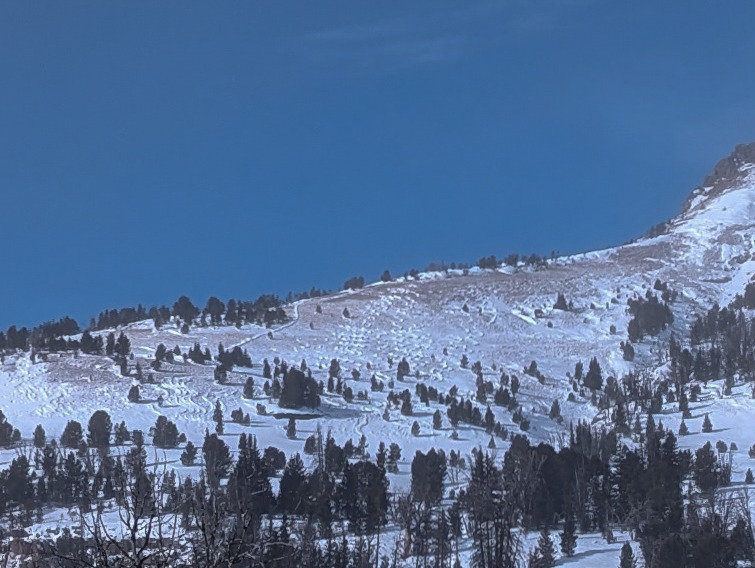
Toured into the terrain about a mile to the SE of Breccia Peak. Togwotee was hit hard by winds in the last 24 hrs and the new 6" of snow that came in with this storm has been quickly redistributed. East slopes in the alpine are almost bare and lee slopes at tree line have up to 5 ft of wind deposited snow.
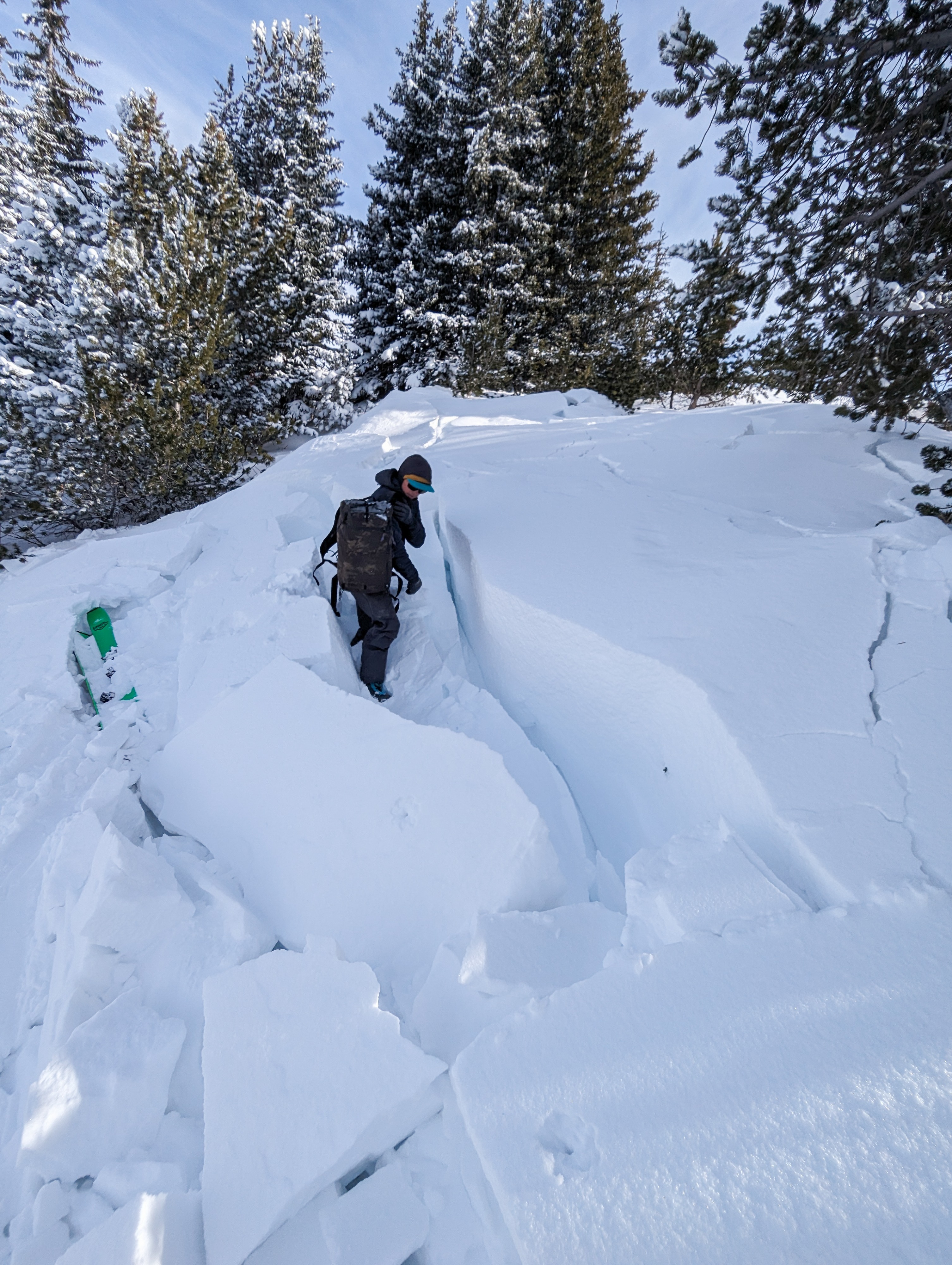
Two natural slab avalanches were observed at 10,000' and 10,400', both on NW aspects. At 10,000', wind deposited a slab that propagated roughly 50' wide but due to the shallow slope angle (25 to 30 degrees) did not run. Cracks were open several feet and slab depth was roughly 3 feet down to basal facets.
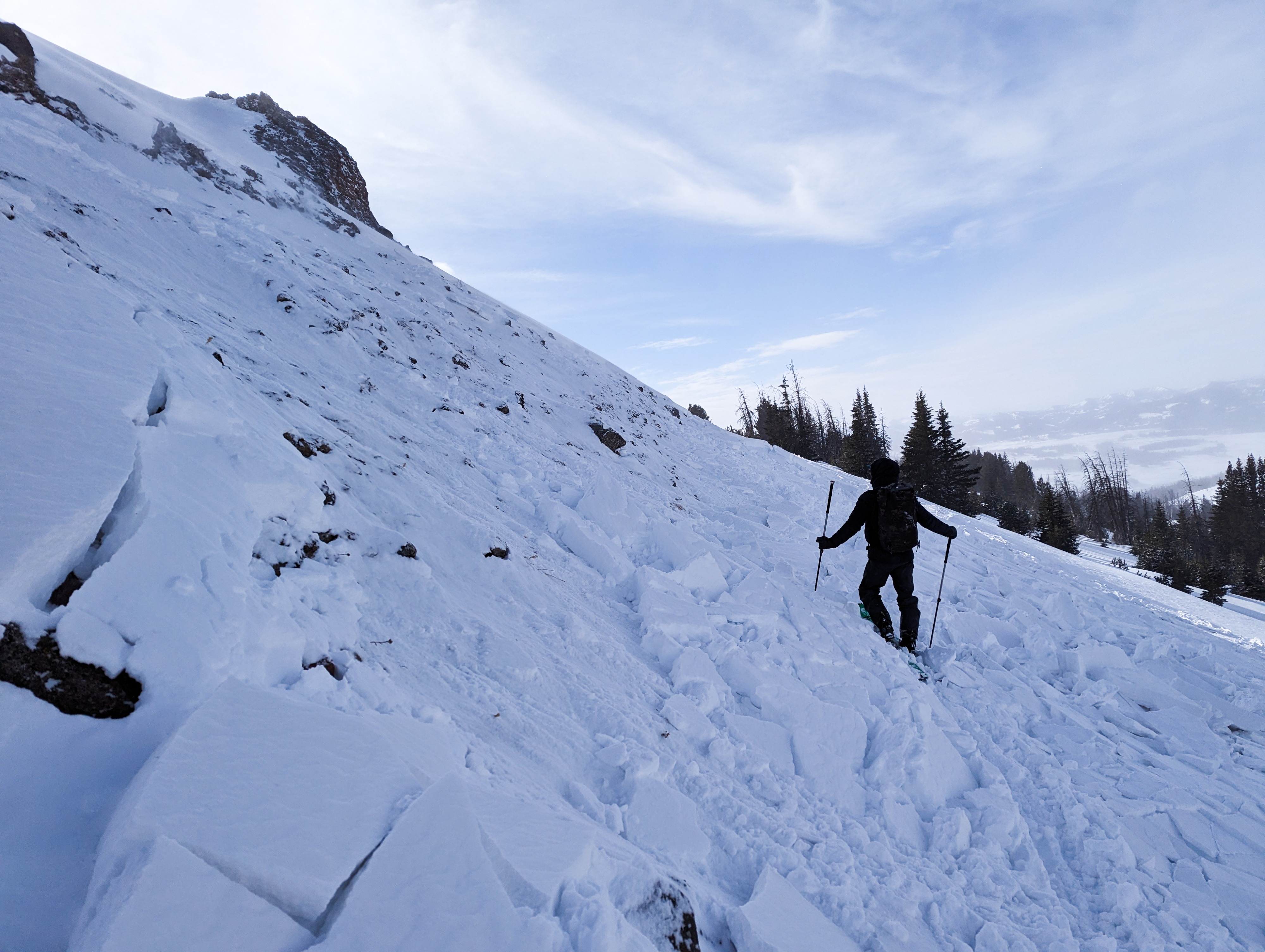
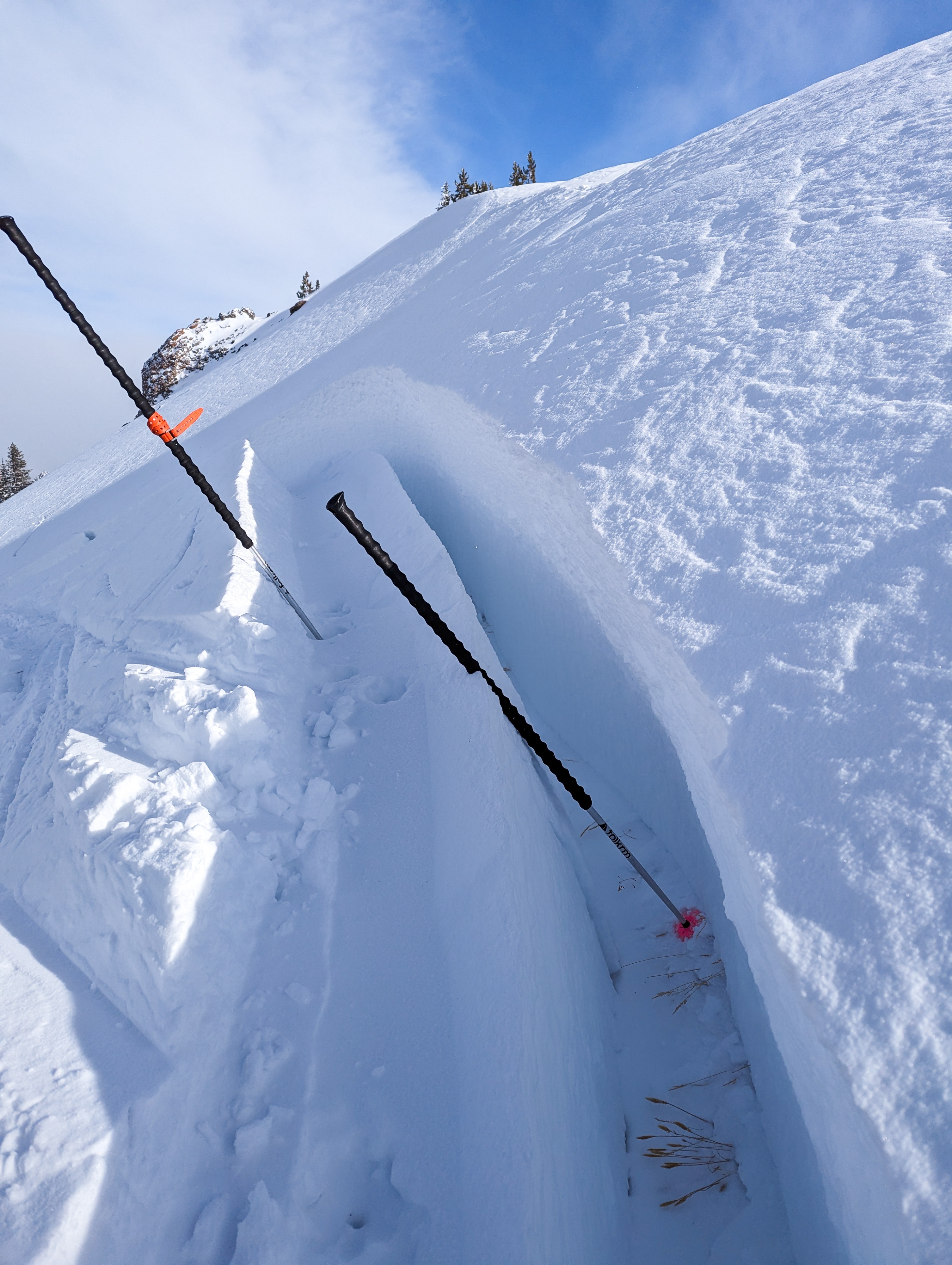
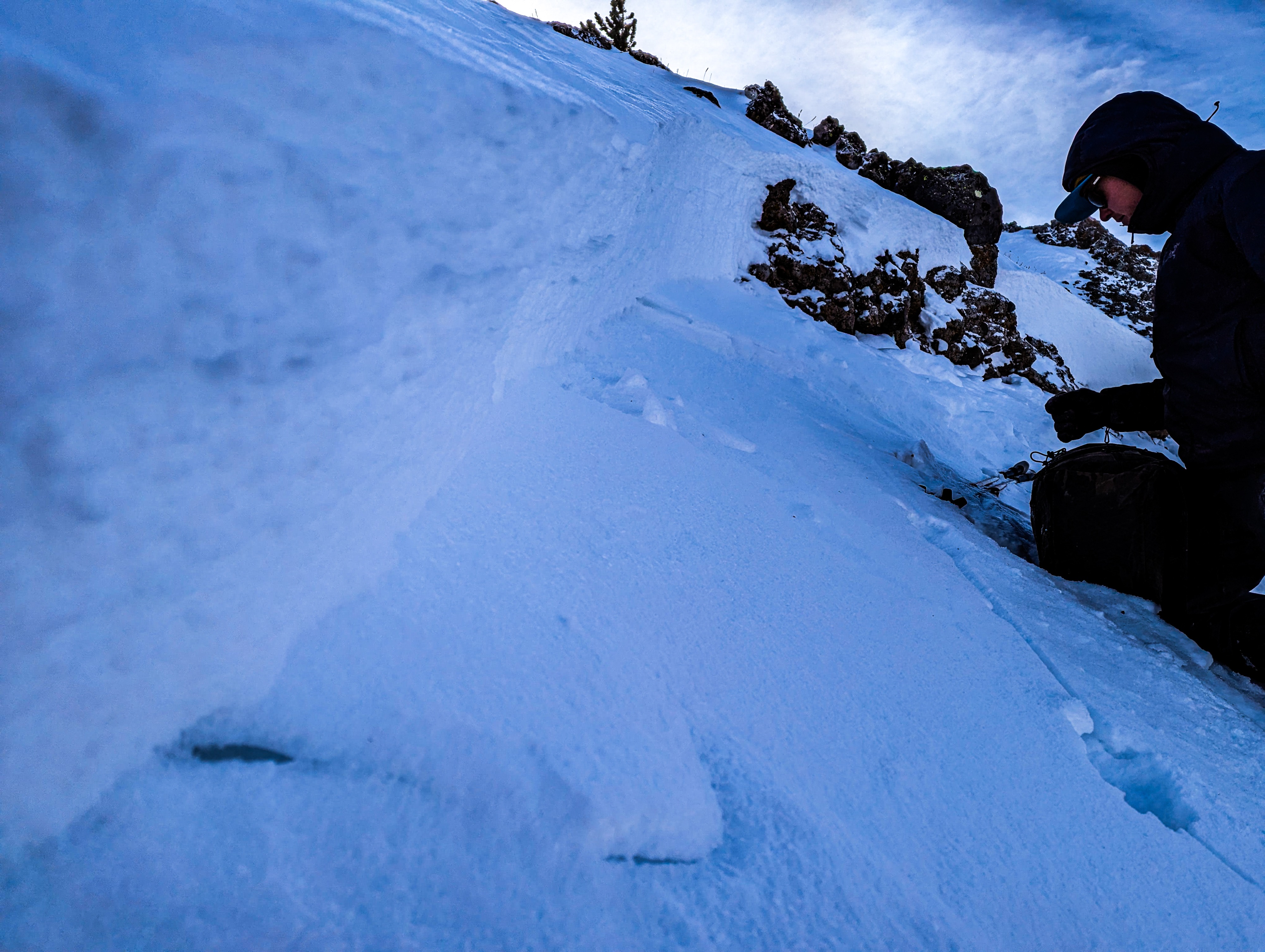
At 10,400', the second observed natural avalanche propagated roughly 250' and ran maybe 30' on the ground (D1). Of note, the crown thickness varied from 1 foot in thin, rocky, and steep (40 degree) terrain to almost 4.5 feet. On the thick end of the crown, it appears that a wind slab roughly 1 foot thick failed and then stepped down to basal facets at the ground (4.5 feet total). This can be seen in the pictures.
While these 2 avalanches were small, the same problem (loading on lee slopes where wind has deposited snow on weak early season snow) can be extrapolated onto bigger, steeper terrain and will be worth looking for.
Shooting cracks and whumphing was observed at treeline in wind loaded areas.Weather
- Air Temp
- 7
- Cloud Cover
- few
- Wind Loading
- moderate
- Recent Snowfall
- 6" from storm
Cold and breezy morning on Togwotee following a night of strong E winds - averaging 35 mph and gusting to 70 mph above 10,000' (over 800 miles total at Grouse weather station)
Snowpack
From the road (9400') to tree line, snow heights vary from stripped bare to 4+ feet. In sheltered trees, snow heights ranged from 10 to 20 inches with a melt-freeze crust noted on south aspects below the recent 5" of new snow. Shady aspects hold mostly soft snow with developing facets (weak snow) towards the bottom of the pack. At these lower elevations in the trees, while there is poor structure, there is very little cohesion in the upper half of the snowpack with little in the way of slab properties. This changes drastically closer to 10,000', particularly on lee (W-NW) slopes where wind has deposited ALL the snow into one finger hard slabs over 3 feet thick. These thick slabs sit on a week layer of basal facets at the ground.
Avalanche
- Size
- D1 R2
- Type
- HS
- Aspect
- NW
- Trigger
- N
- Elevation
- 10400 ft
Natural wind slab avalanche observed at 10,400'. Propagated roughly 250' and ran maybe 30' on the ground (D1). Of note, the crown thickness varied from 1 foot in thin, rocky, and steep (40 degree) terrain to almost 4.5 feet. On the thick end of the crown, it appears that a wind slab roughly 1 foot thick failed and then stepped down to basal facets at the ground (4.5 feet total). This can be seen in the pictures.