
Quick report
My primary concern remains the November drought layer buried 12/1, which is now 3+ feet deep. This layer was thick when it was buried (meaning it would take more time to heal) and composed of multiple types of snow grains that like to linger. The premise of repeater avalanches is on my radar and has shown up in some of the observations lately. Thank you for submitting them!
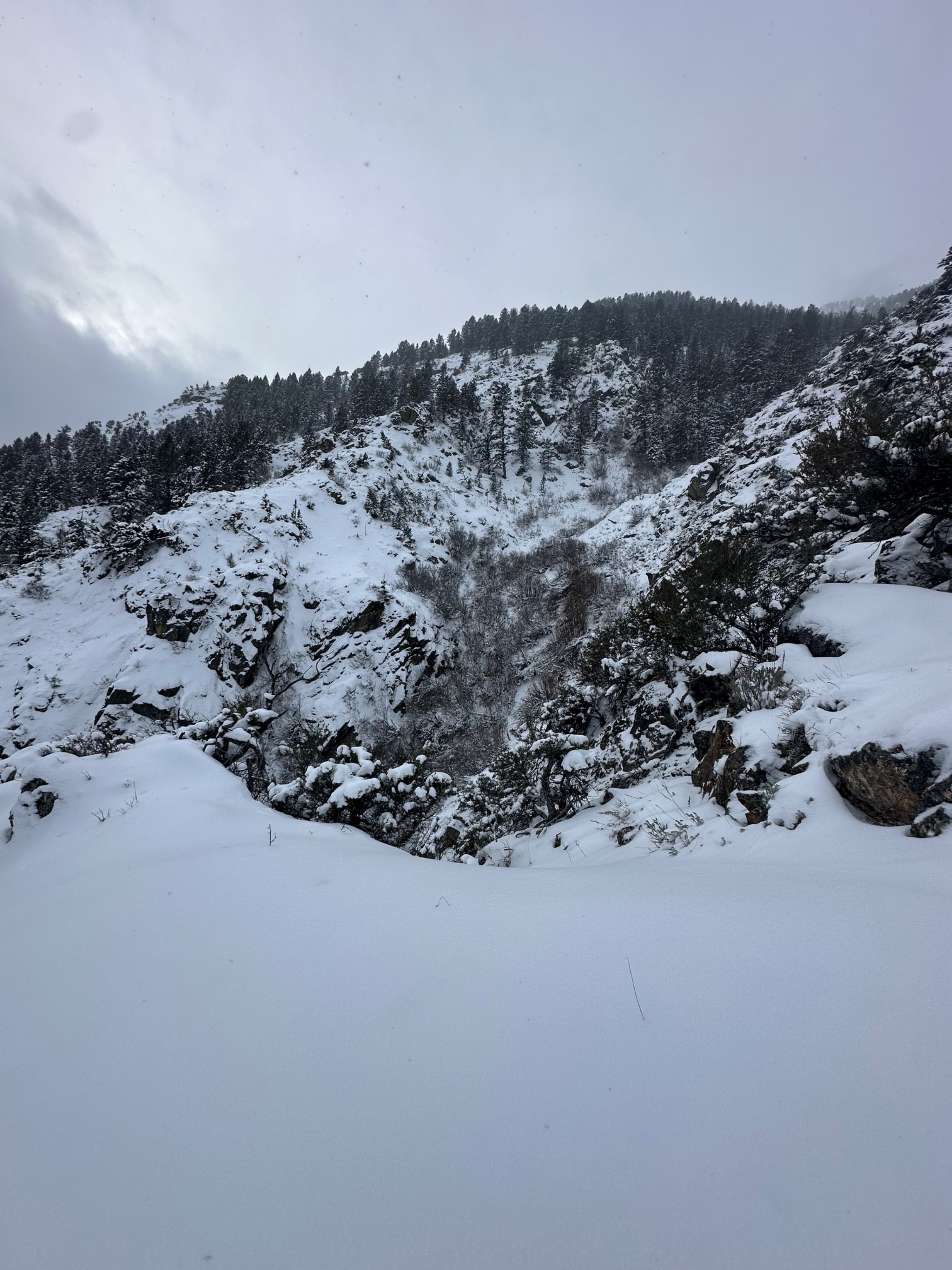
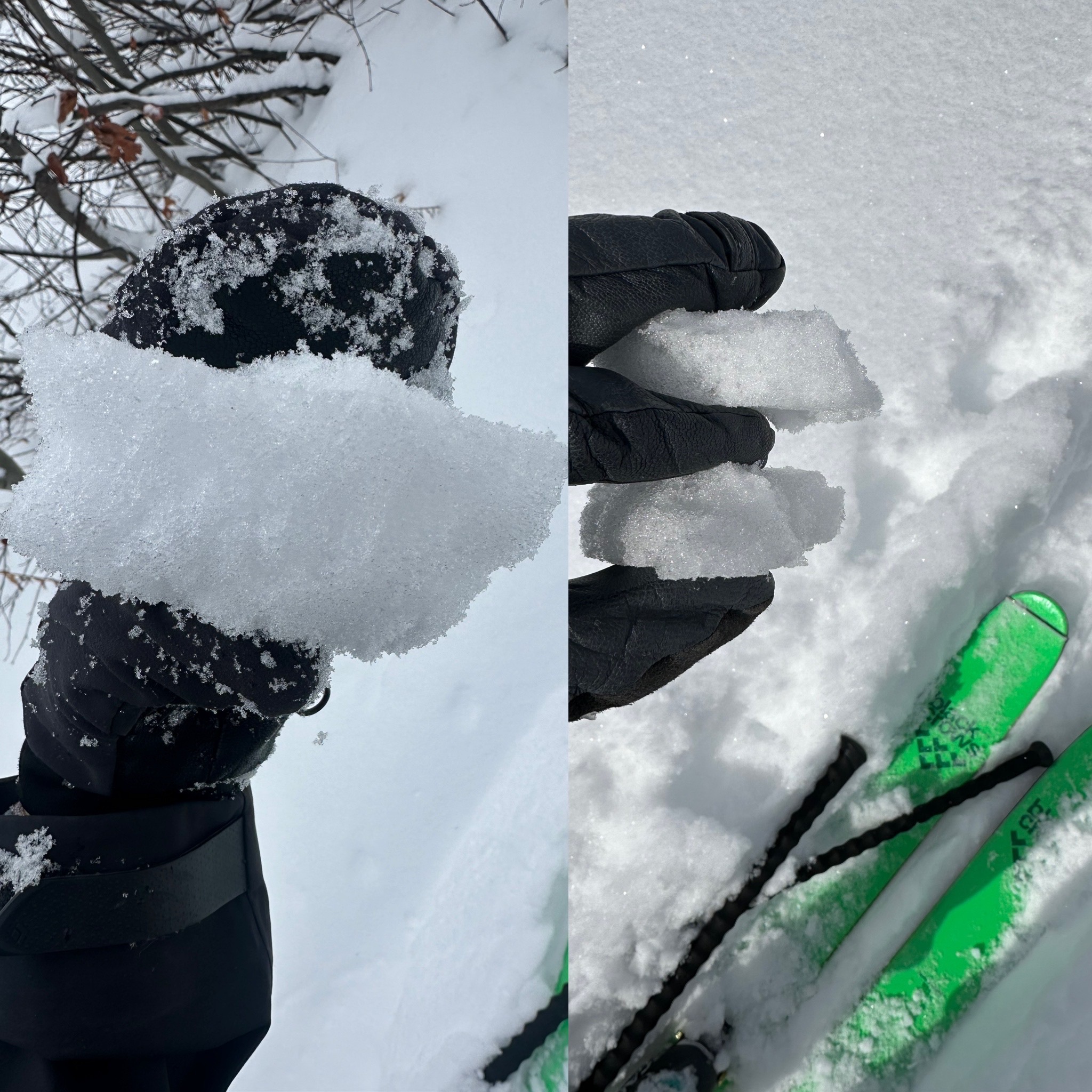
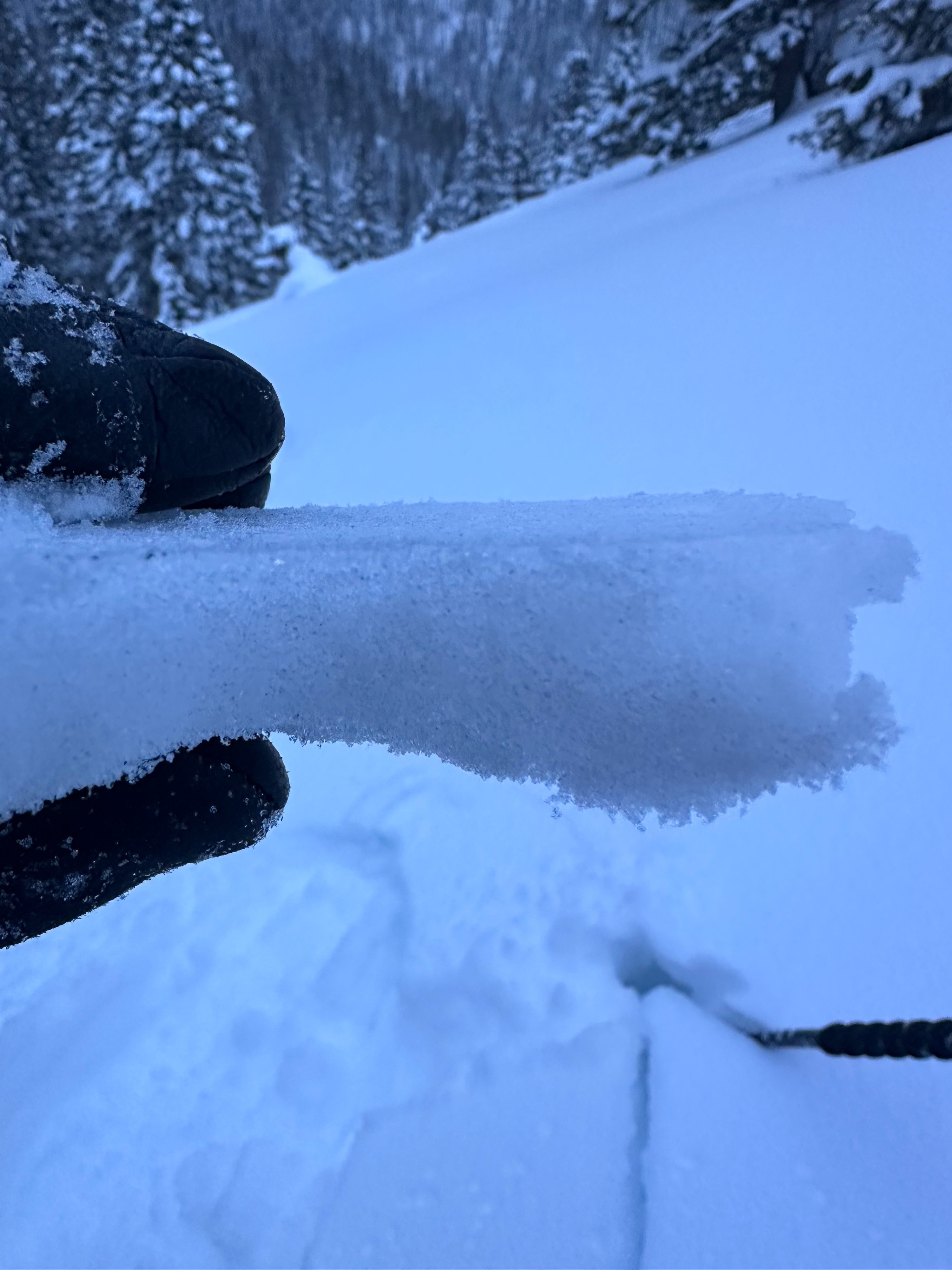
The rest of this ob is my inner nerd musings, so feel free to read no further unless that is your cup of tea. I hit multiple features (in separate tours today) on different aspects at similar elevations to try to understand the crust buried 12/7 because it may be a future player, given the right weather, mainly because it is burly. This crust is slick and up to 10K. The character of it drove some curiosity as I usually have not seen a crust like this occur strictly from melt-freeze events, regardless of how warm the temp swings get. It is relevant because it may behave differently. In some places (the Salt, the Snake), it resembles what I would expect with 2 days of above-freezing temps. What I noticed particularly at the Pass was a smooth glaze of clear ice atop melt-freeze grains, which implies the introduction of free water into the snowpack not via solar radiation (so rain, snow rain "snain" mix, drizzle, whatever), and temps + precip on snowpack tracker imply the same. I toured up to ~8,500 feet (the elevation of the pass) on Pyramid, briefly at the Pass to double check, and then dipped into Taylor. It appears that where water has fallen on slightly smaller-grain snow (east, north aspects), the capillary barrier has preserved it as a glassy ice layer starting around 8,400 feet. On other aspects, it infiltrated larger-grain snow and refroze as an overall slicker layer. This layer is now 1.5 feet deep in this section of the Tetons and is far thicker and stronger than observed in adjoining areas which might drive some future faceting, but hopefully not.
Please note that this crust is not a "bridge," and instability continues to be indicated below it on the November drought layer.
Dec 1. layer (now ~3 feet deep) is still active, and humans are triggering avalanches each day since it's burial (now over a week ago). This layer is present on NW-N-NE aspects in the middle elevations and all aspects above 9,000 feet. The taper in activity reads as such: you can ski these locations and get away with not triggering an avalanche; you can also ski these locations and trigger a large avalanche.
Weather
- Cloud Cover
- overcast
- Wind Loading
- none
- Recent Snowfall
- 2
- Snow Avail For Transport
- small smounts