

Quick report
- Cracking
- isolated
- Collapsing
- isolated
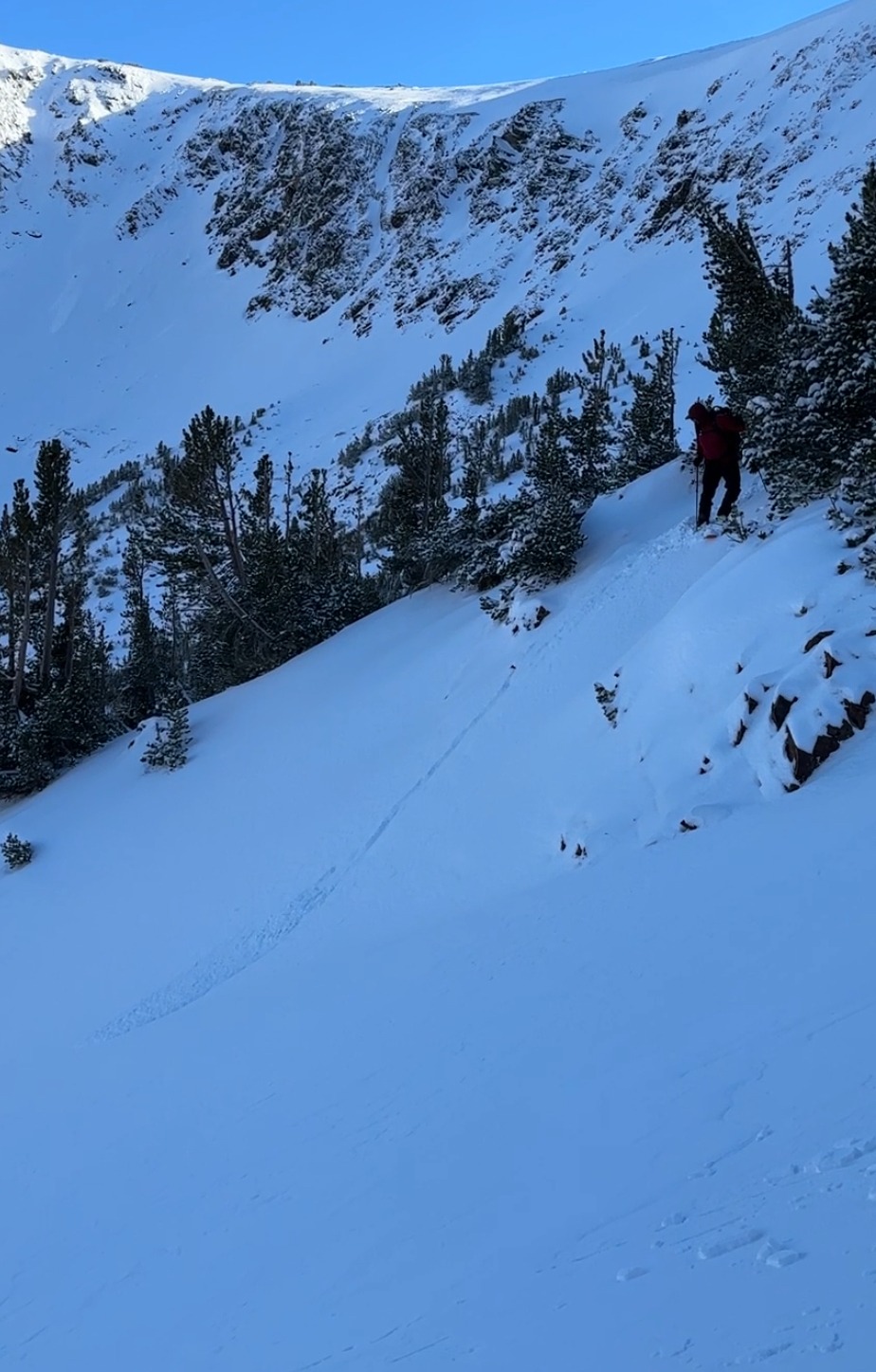
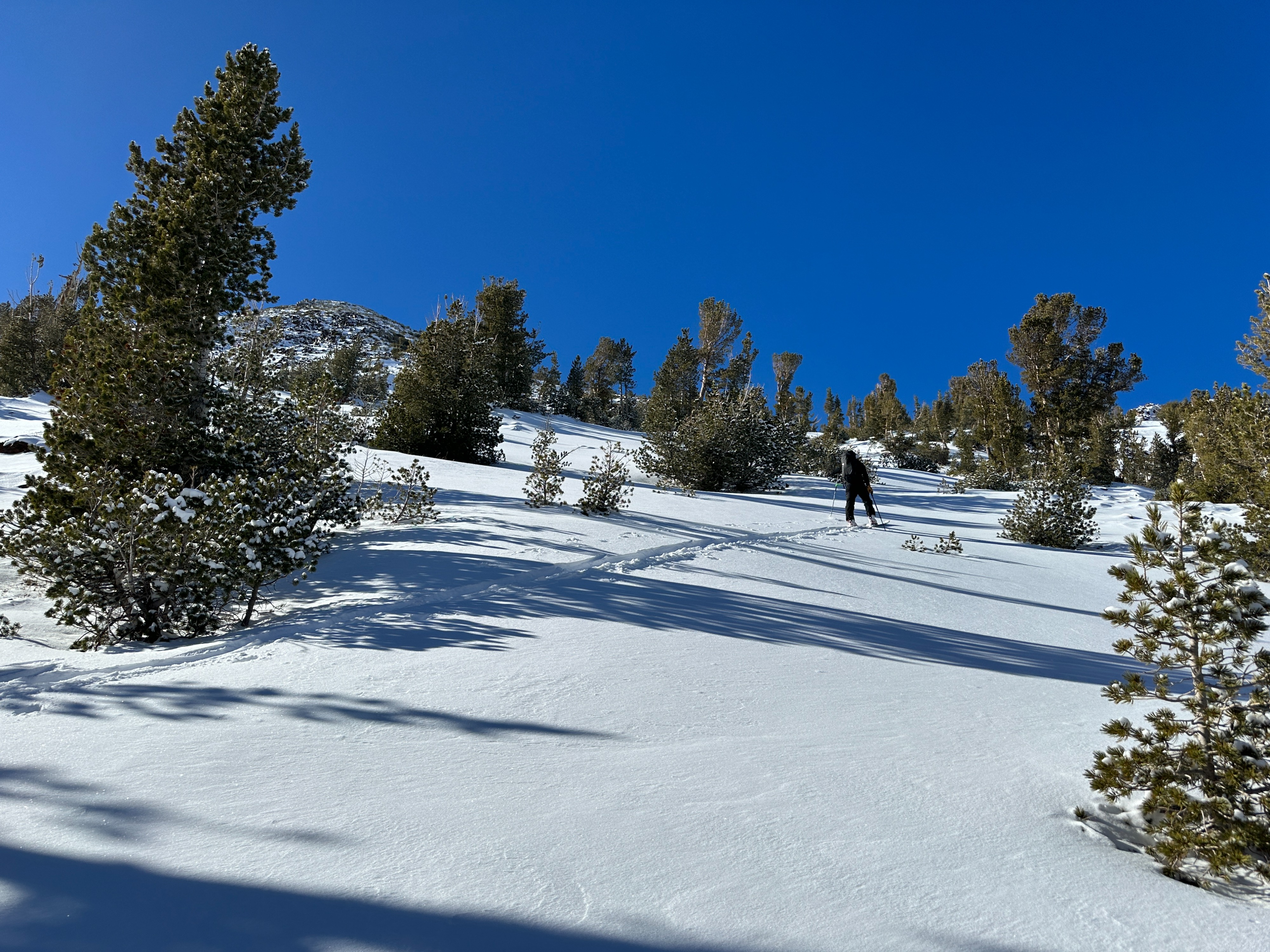
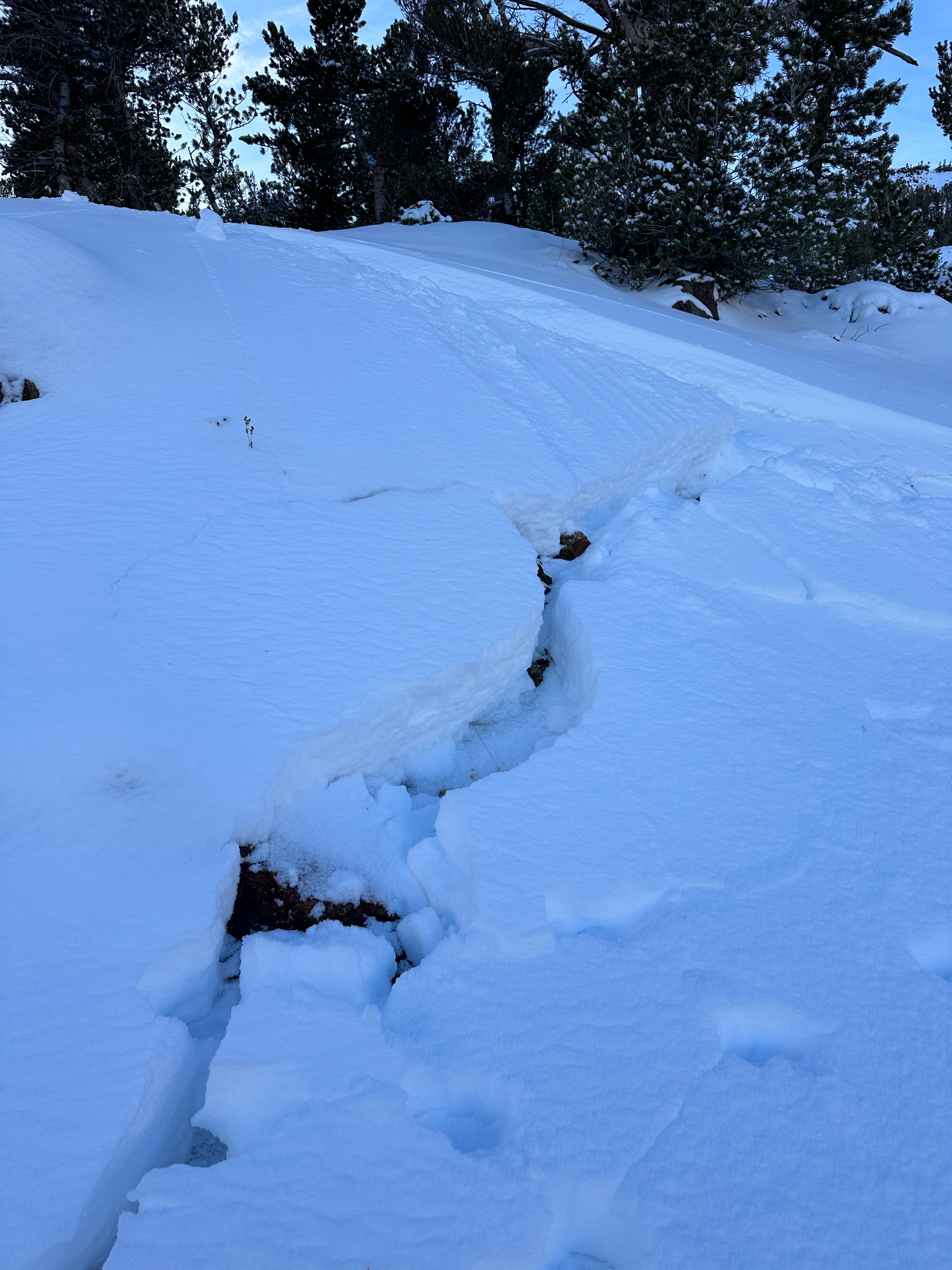
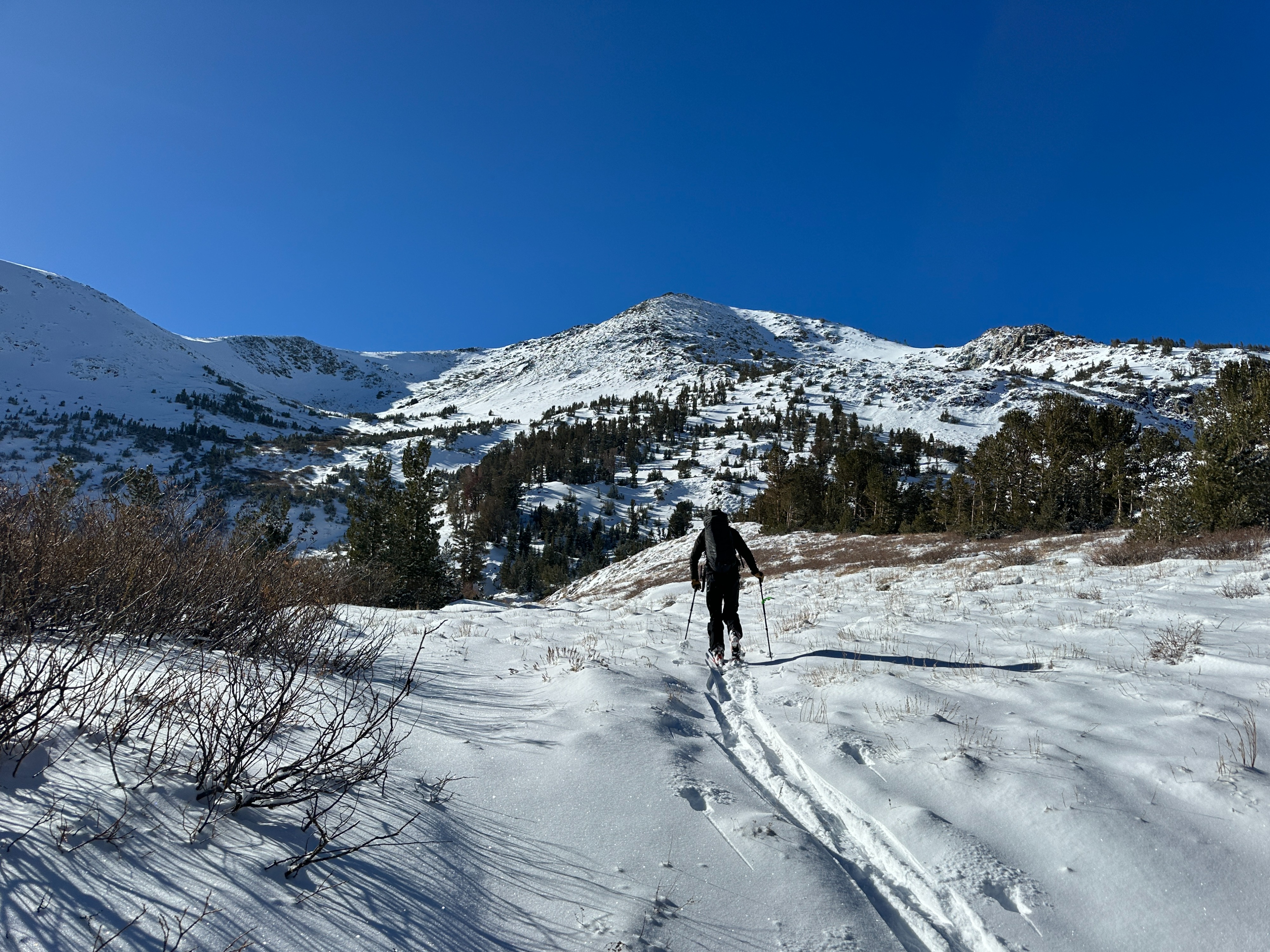
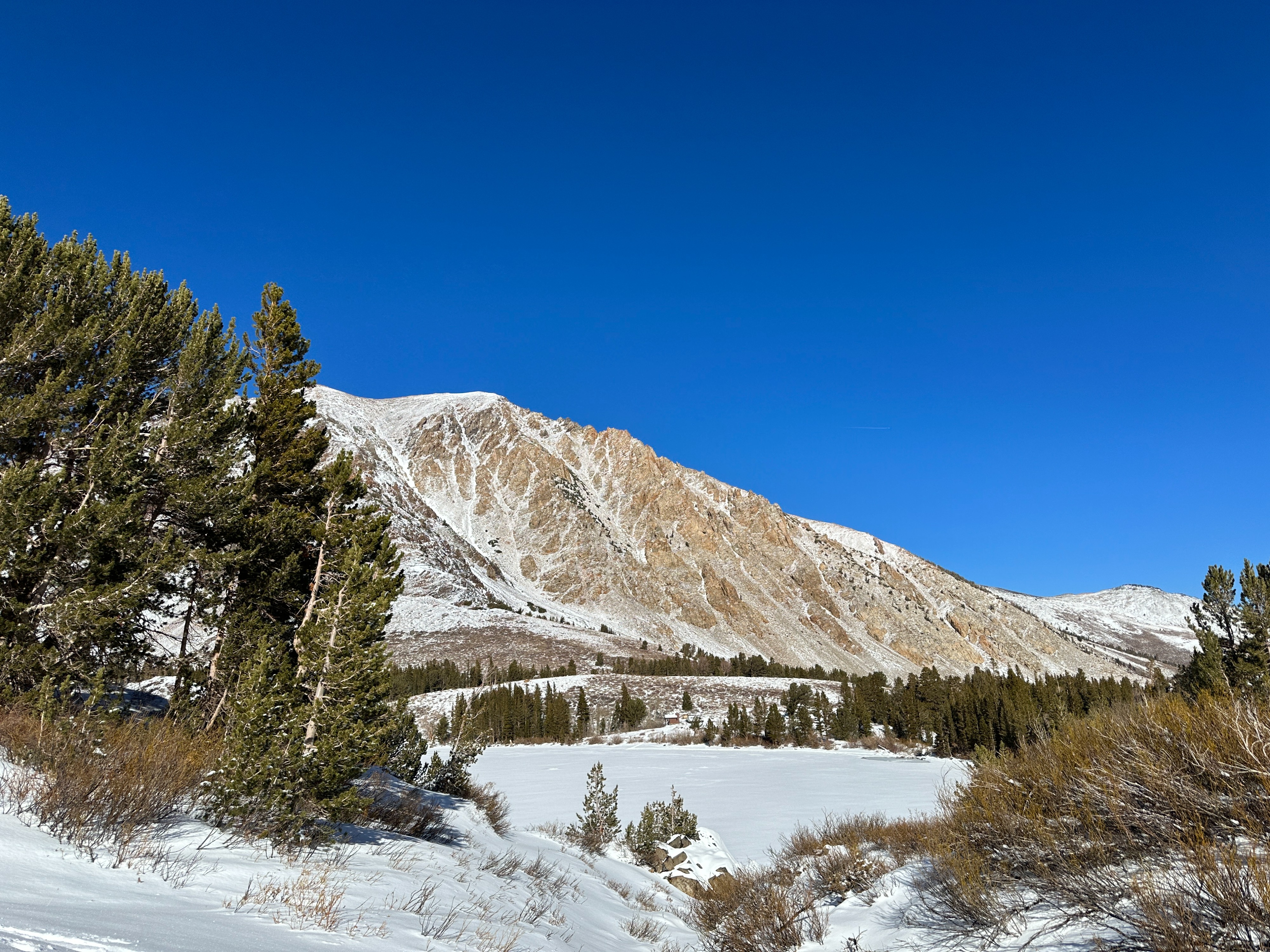
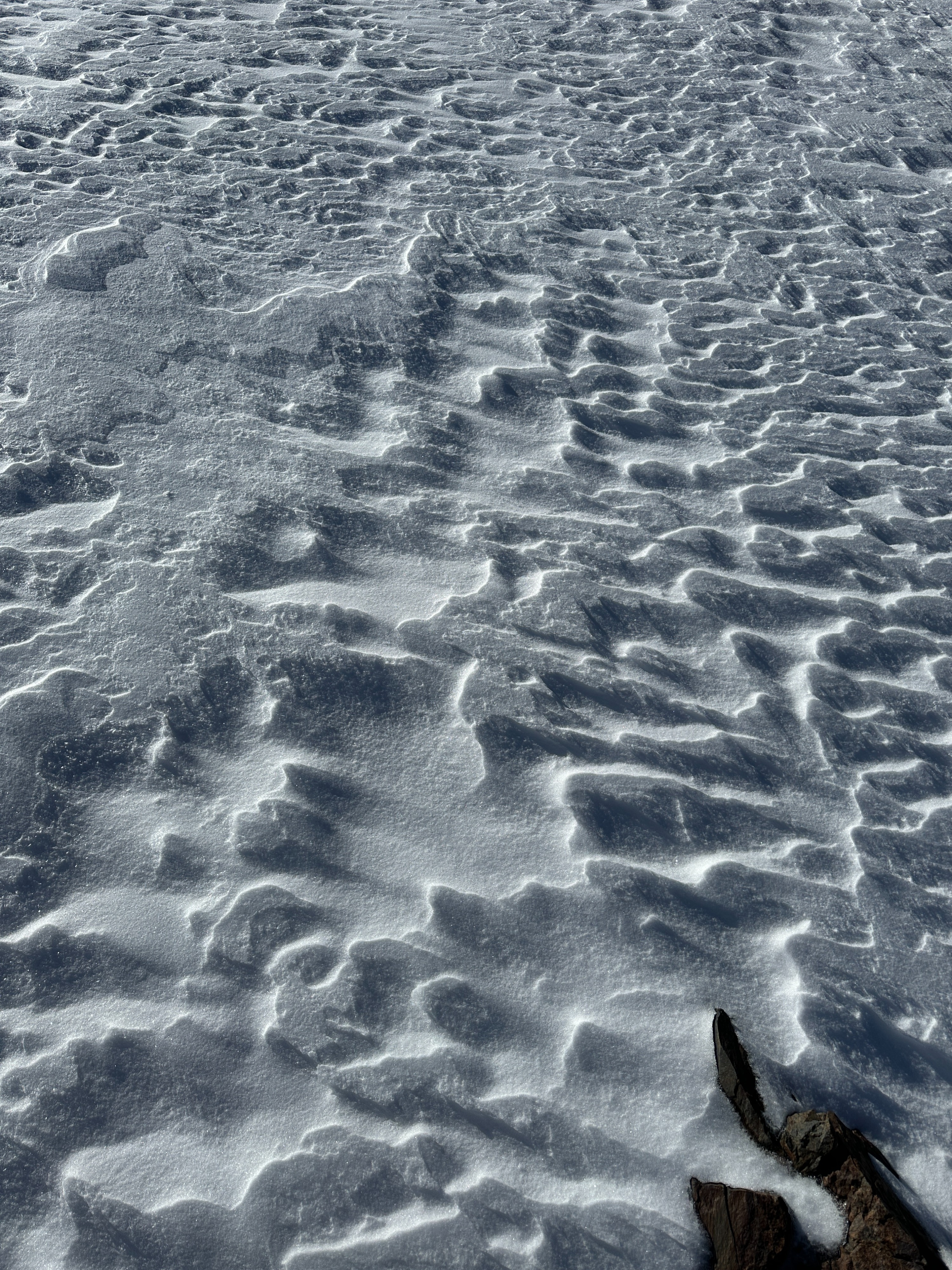
We traveled to the northern end of the forecast area to survey the overall coverage in the Virginia Lakes area as well as to see how the snowpack has evolved following a week of intermittent snow showers. In Virginia Creek, up to 6" or so of accumulation occurred during the last storm cycle. Coverage ranges from bare rock to areas with about a foot of soft, unconsolidated snow. In areas with favorable wind deposition, HS was measured as high as 83 cm, but on average, the snowpack remains very thin and unsupportive. Weak sugary facets and depth hoar dominate the base of the snowpack. However, areas with a cohesive slab atop this poor structure are very isolated in their distribution. Where these factors overlap, signs of instability, such as shooting cracks and collapsing, were evident. Collapsing was mostly isolated in distribution, but a few collapses were larger in areas where the effects of recent winds have created a cohesive slab on a terrain feature scale. Despite good visibility on the first clear day following the weather event, no slab avalanches were observed in the Virginia Lakes area today. Surface snow in this area was light and fluffy, and it was easy to initiate small dry loose sluffs on steep test slopes. Several point-release dry loose avalanches were observed on steep north-facing terrain, though none were larger than D1 in size. The largest hazard encountered today was simply moving in the terrain. The shallow and unconsolidated nature of the snowpack provided little support, and the potential for encountering shallowly buried obstacles such as rocks, fallen trees, or bushes is virtually certain. More data is needed at higher elevations to continue to assess the P. SLab distribution and sensitivity. On the drive up to Virginia Creek and as we approached the TH we spotted several Dry Loose avalanches up to D1 on North aspects mid-slope ATL. Isolated cracking and collapsing were experienced on our traveled today.
Weather
- Air Temp
- 30
- Cloud Cover
- few
- Wind Loading
- previous
- Recent Snowfall
- 15-20 cm
- Snow Avail For Transport
- moderate amounts
Mostly sunny with calm winds NTL.
Snowpack
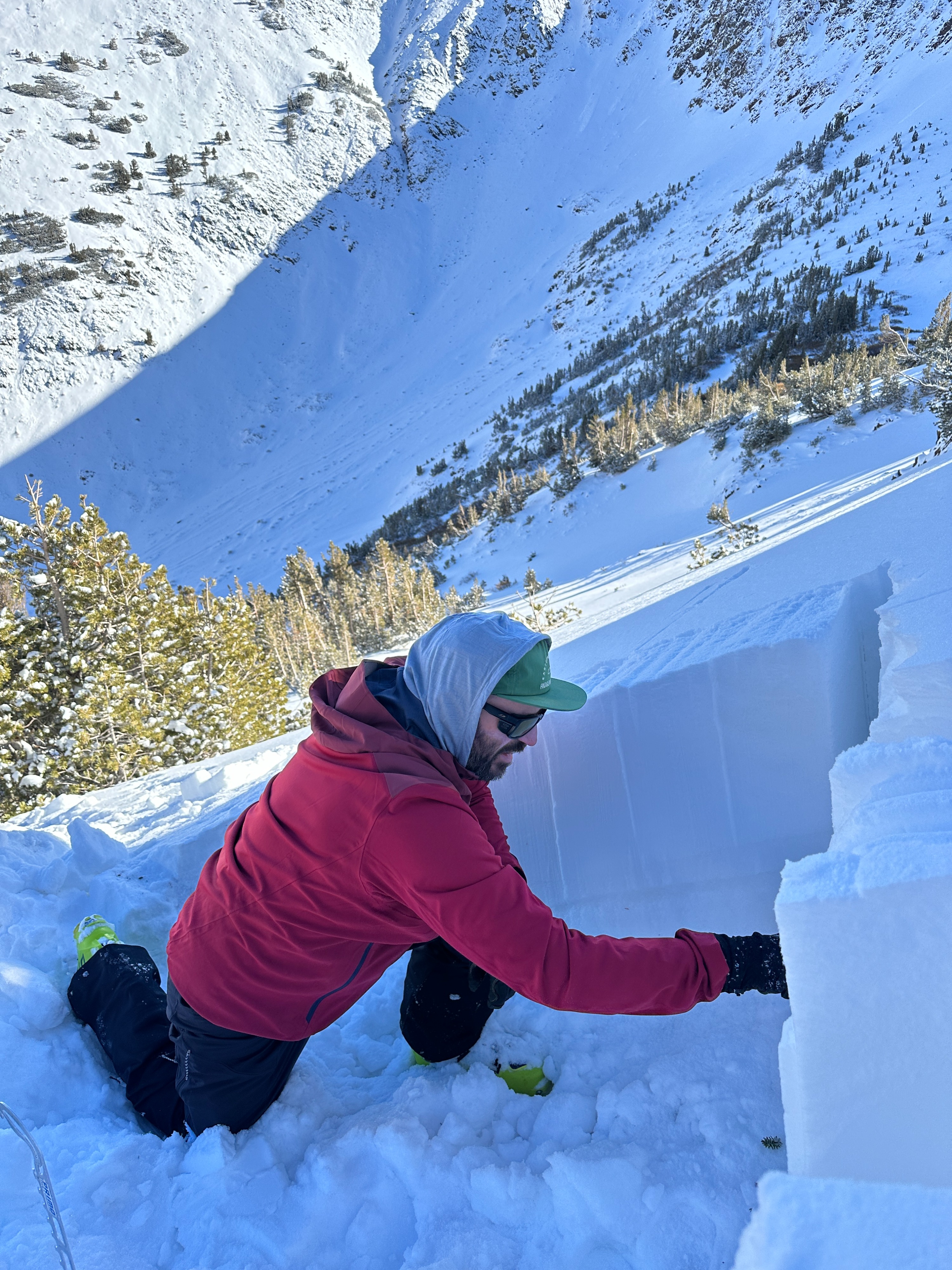
Height of snow ranged from 15cm to 1m in depth. The height of recent snow accumulations ranged from 10cm to 25cm. Ski penetration ranged from 0 -40cm. Boot penetration was largely to the to the ground everywhere (same range as HS). At 10400' ENE HS 83cm - We experienced a slope scale collapse (small wind-drifted terrain feature) in the skin track at the moment ski penetration decreased from 30cm to 10cm (i.e. I moved onto a supportable wind-pressed slab). Dug in there to find approx. 30cm of FC under a 40cm 1F slab. Stability tests indicated reactivity ( if the whumpf wasn't enough.) PST 37/100END, ECTP11, and CTE (9)Sudden Collapse all on the 12/06 facets under a wafer-thin melt-free lens. Weak and unconsolidated snow. - Overall, we noted more evidence of incohesive surface snow than wind effect. Dry loose sluffs were easily triggerable on steep test slopes. Traveling on skis was quite unpleasant, and the equipment sustained some damage.
Avalanche
- Size
- D1 R1
- Type
- L
- Aspect
- N
- Trigger
- N
- Elevation
- 10700 ft
Multiple small dry loose avalanches were observed on steep north-facing terrain Ntl and ATL