
Red Lake glades, Shoulder of Black Mountain - VA Lakes
Quick report
- Cracking
- isolated
- Collapsing
- isolated
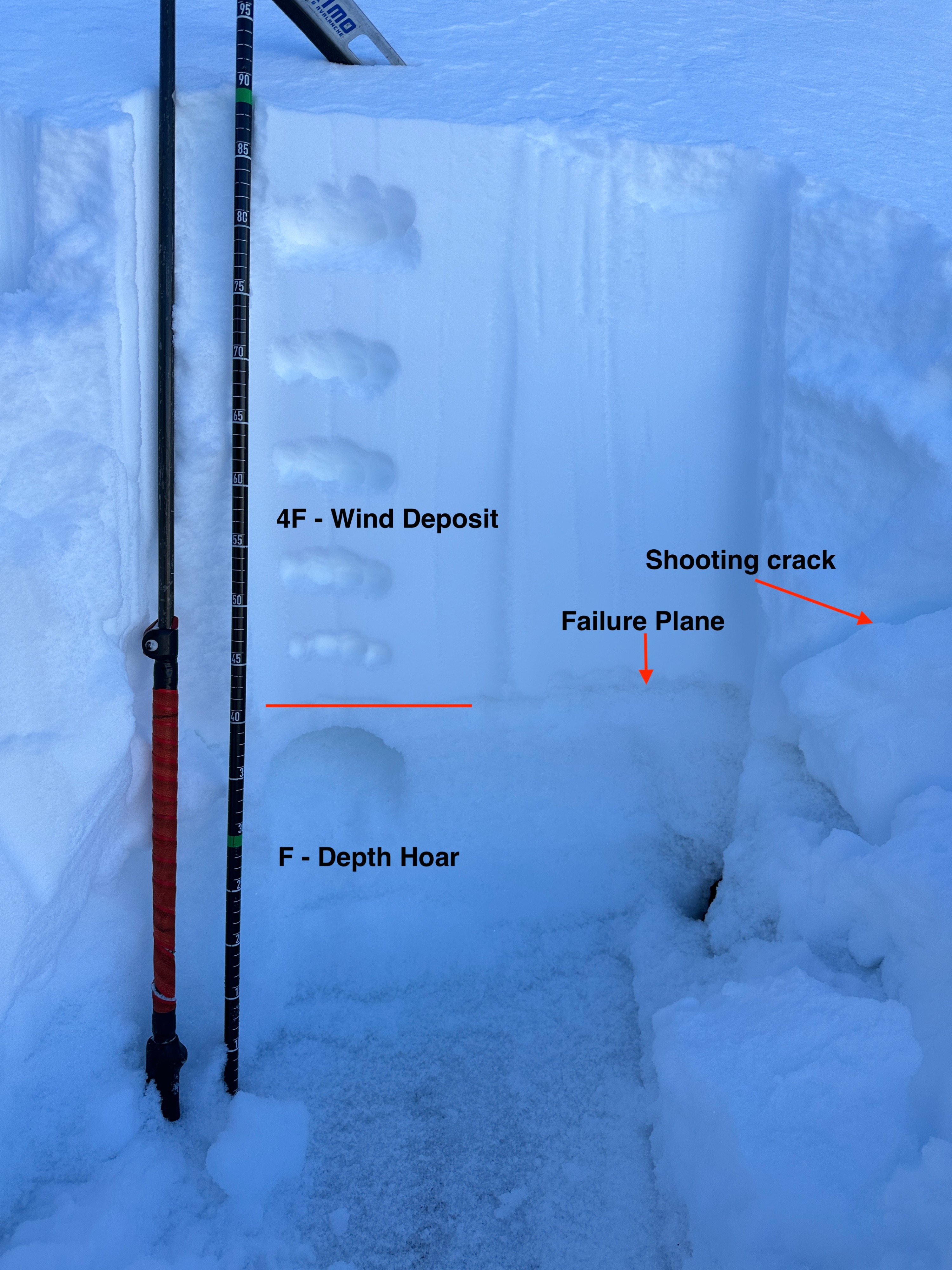
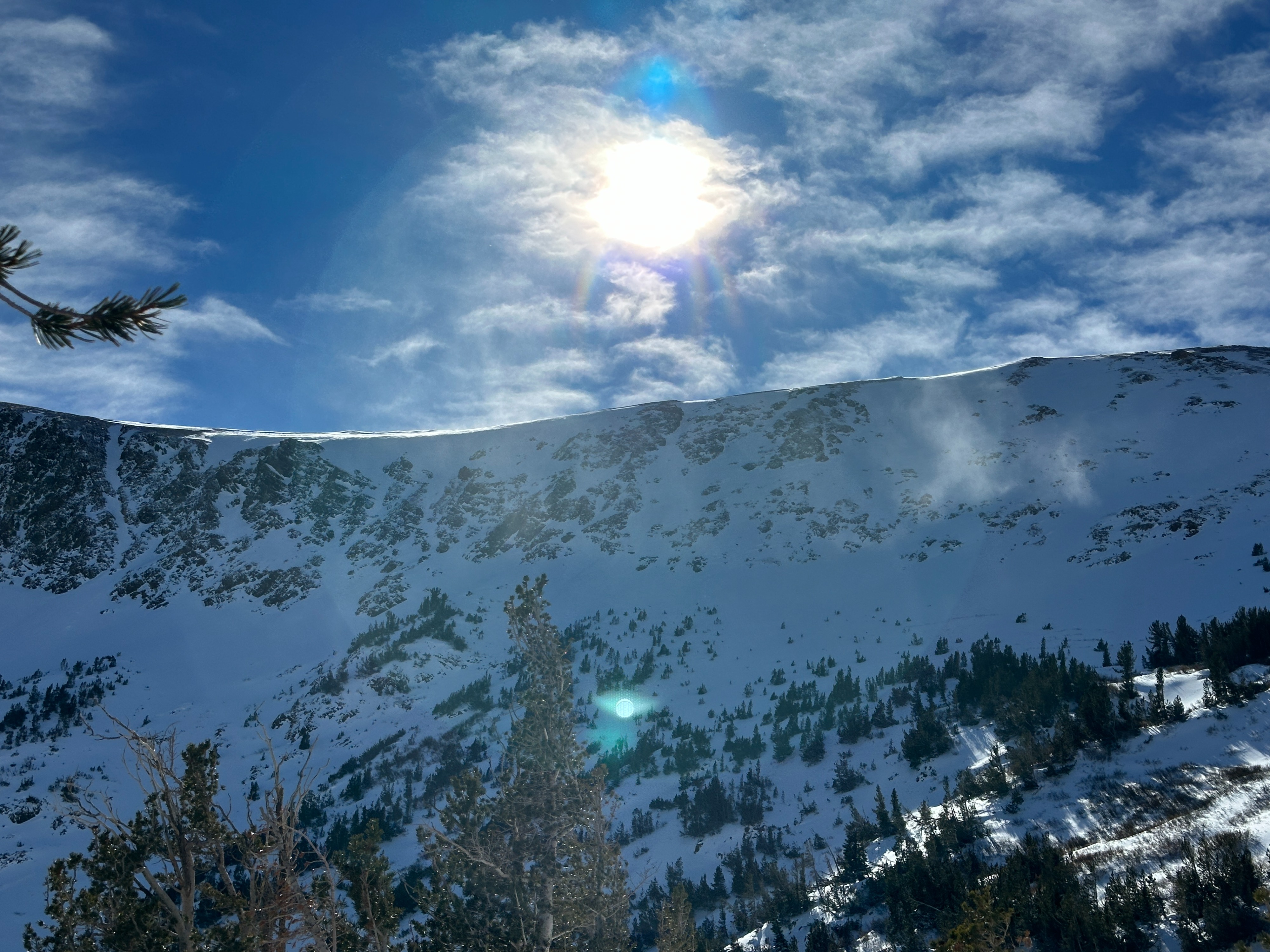
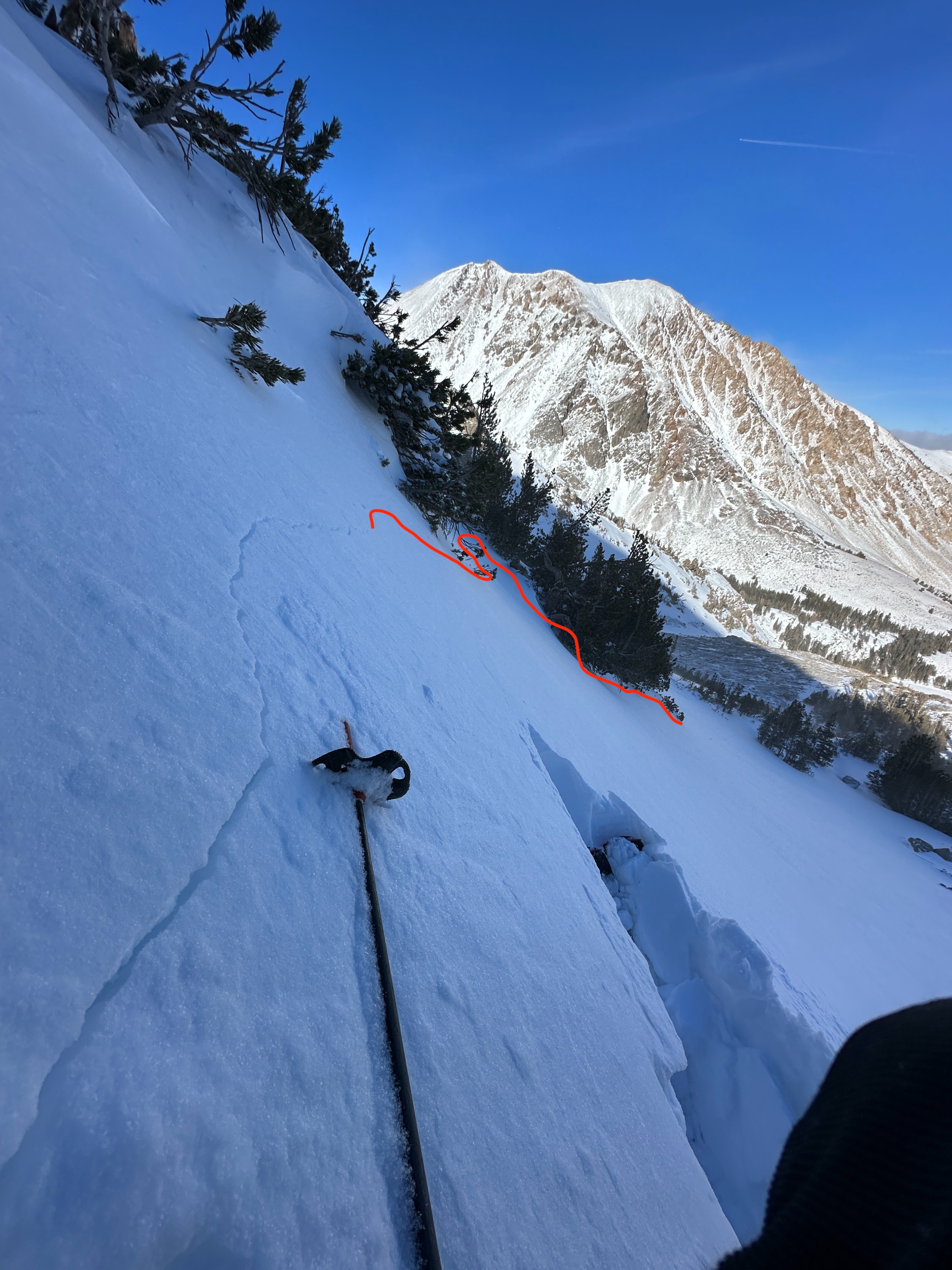
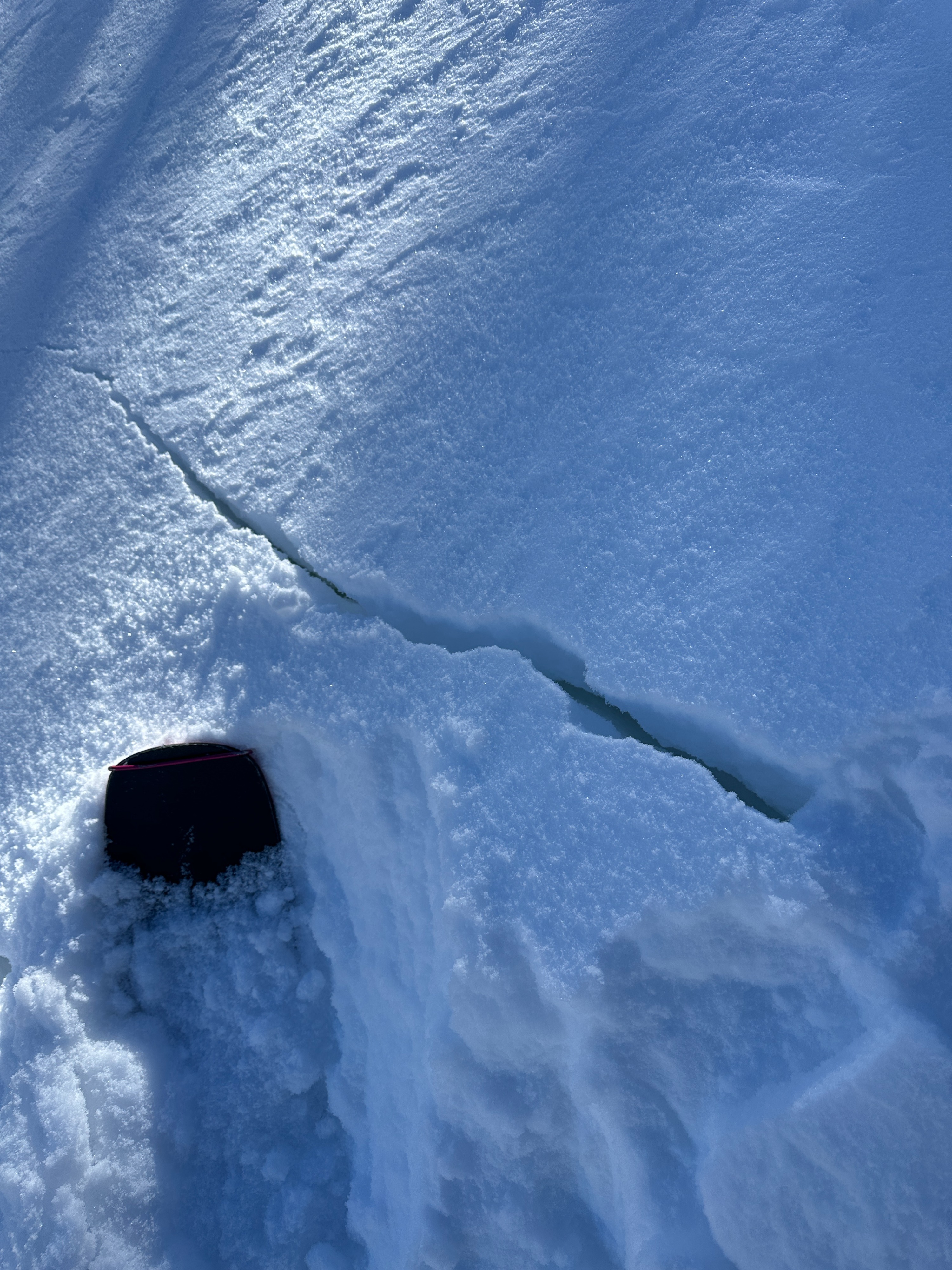
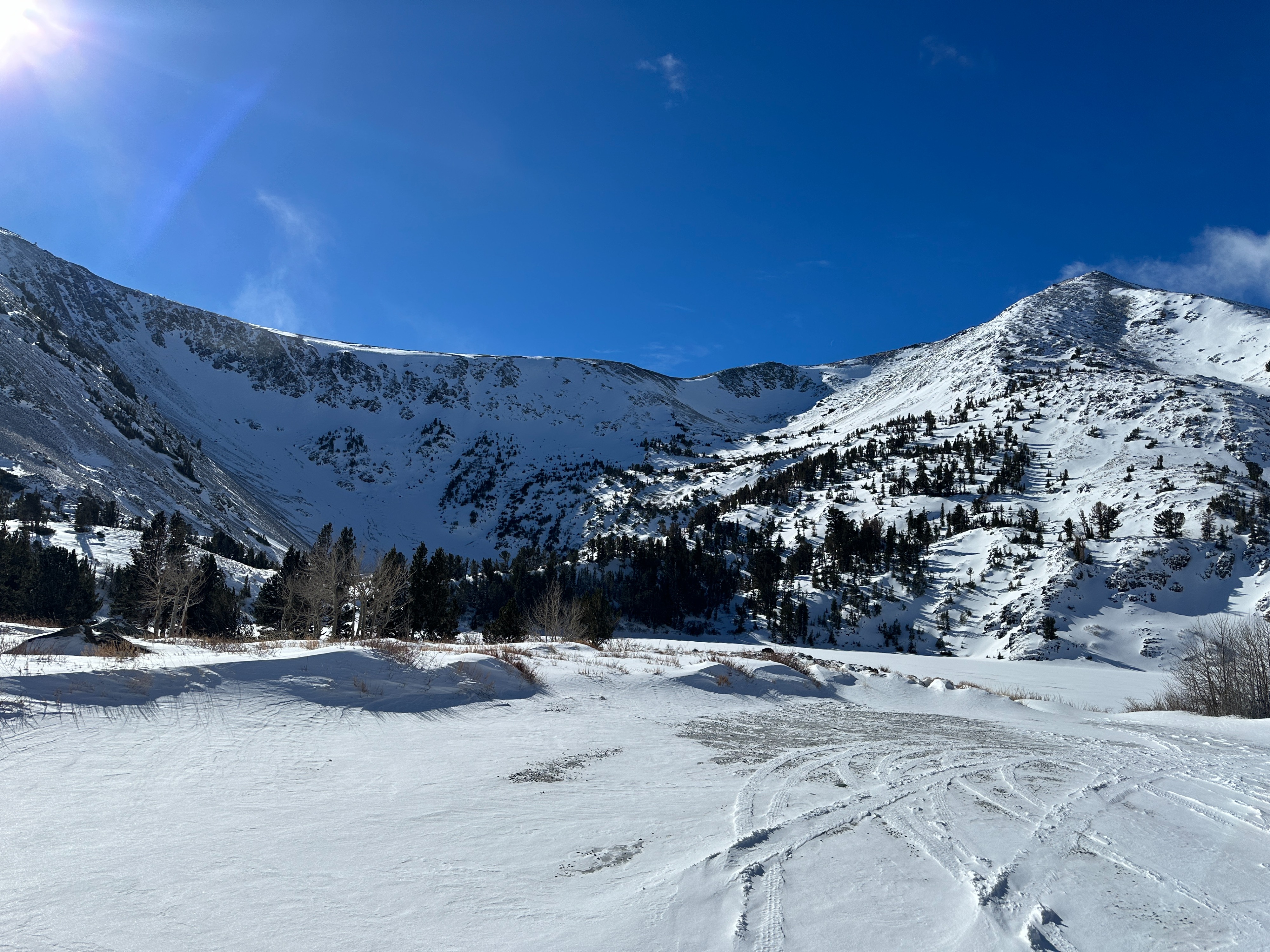
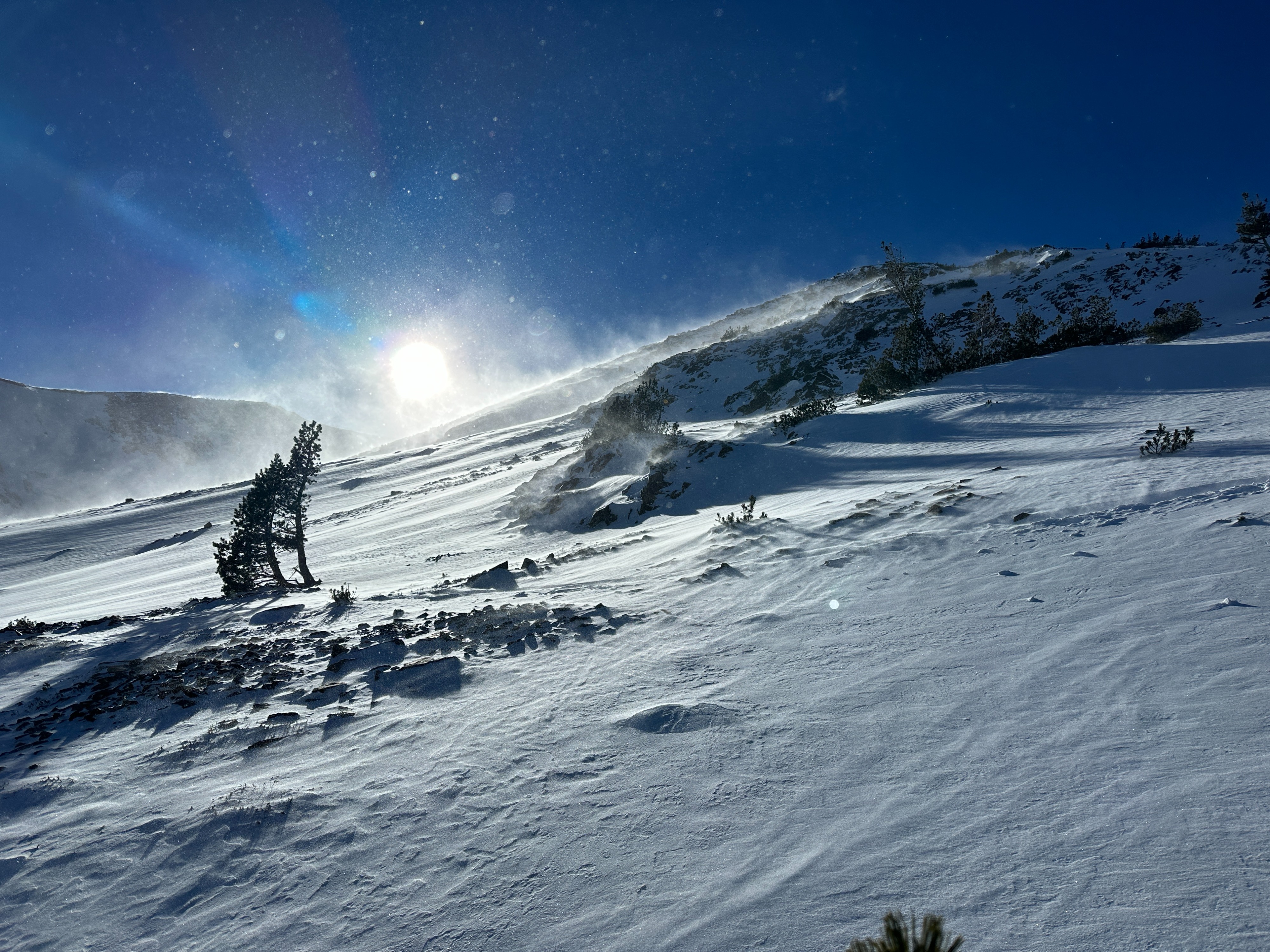
Headed to the Virginia lakes area today to get a post-storm survey in the northern end of the forecast area. - Snow totals in the area were about 4”, with some favorable deposition zones holding closer to 6” of fresh snow. - North winds continued to transport snow throughout the day, stripping high-elevation start zones and redistributing snow in atypical ways near treeline. - Coverage remains intermittent, with broad areas of exposed rock and dirt across the landscape. - Shallow coverage continues to be front of mind when moving through terrain. - I observed several collapses on today’s tour. All the observed collapses were in areas with recent wind loading. - The most significant collapse rumbled across the slope in a cross-loaded area on an NE aspect at about 10800’. This collapse could be described as slope scale and initiated a shooting crack around 30 meters long. I dug in at this location and found a pretty simple all-be-it-weak snowpack structure. (see photos below) - Some shallower surface cracking was observed on wind-loaded terrain features. These deposits ranged in size from thin dinner plates to about 30 cm of fresh wind deposit.
Weather
- Air Temp
- 18
- Cloud Cover
- few
- Wind Loading
- moderate
- Recent Snowfall
- 10-15
- Snow Avail For Transport
- moderate amounts
It was a cold and windy morning in the Virginia Lakes area. North winds dropped in speed by midday to more moderate speeds. Blowing snow continued throughout the day.
Snowpack
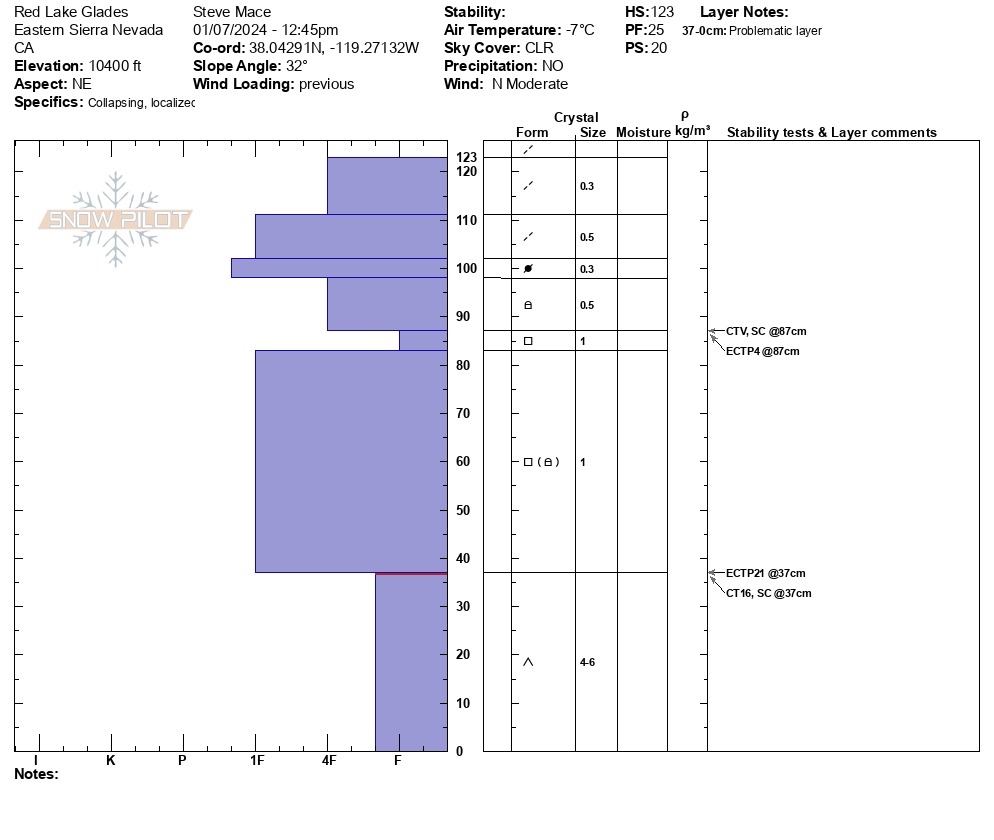
- I dug a profile on an NE aspect at about 10,500’ in a wind-affected area near the treeline. My evaluation highlighted two layers of concern. - About 20 cm below the surface, a weak layer of faceted snow sandwiched between two stiffer layers of wind-packed snow showed itself first. (CTVSc, ECTP4) - The second layer of concern remains the well-developed depth hoar at the base of the snowpack. (CT16 SC, ECTP21) - See Profile for more details.