
Quick report
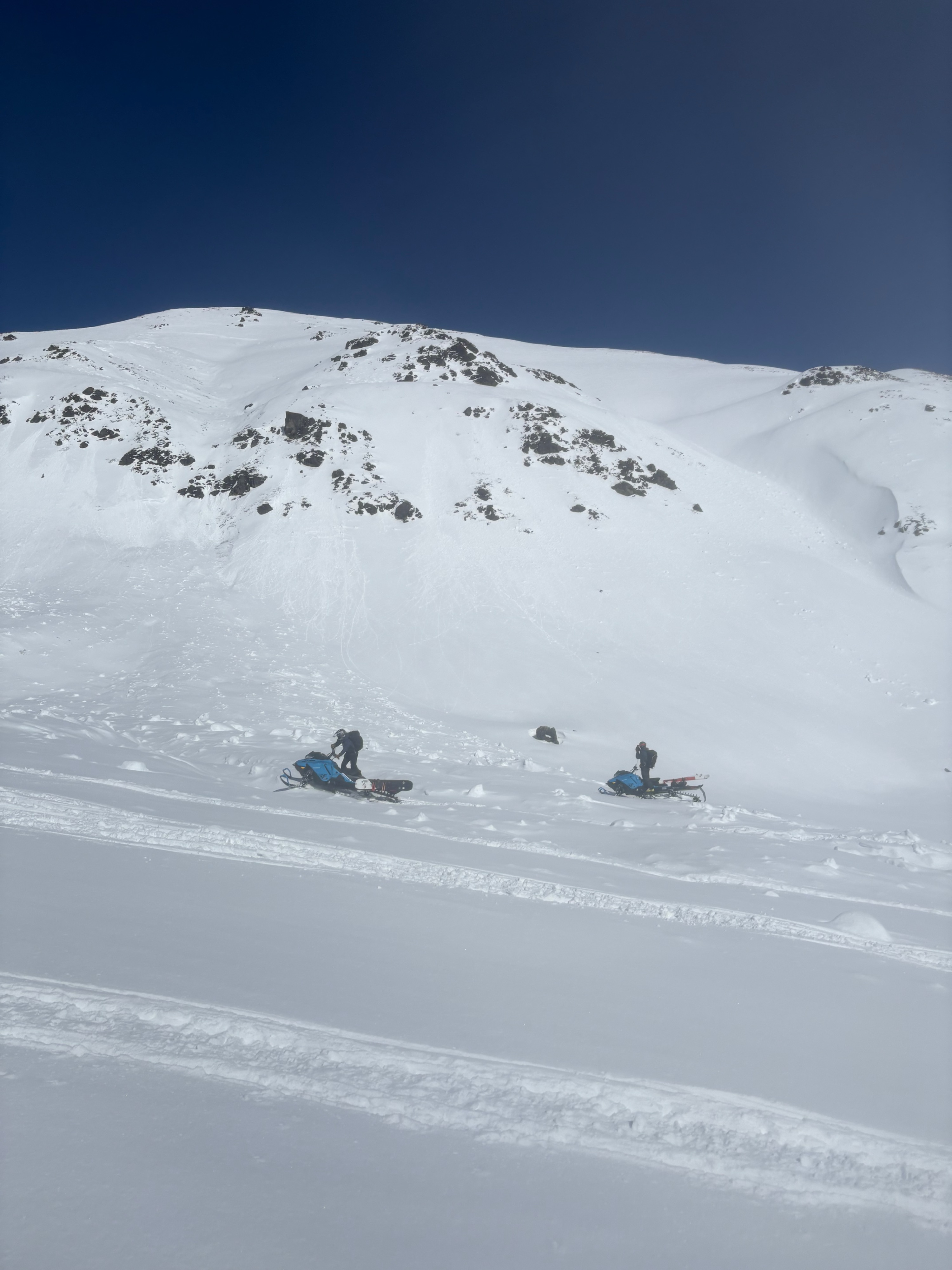
The day started clear and sunny. We took the sleds to the west side and enjoyed good snowmobiling conditions on flat, low-angle terrain. We dug a number of hand pits, sled-cut some smaller slopes, and climbed a few smaller, steeper slopes.
Conditions felt great, with recent snow having dried out overnight, no signs of instability, and smooth, soft, supportable snow. While we acknowledged some new, large cornices from the recent storm, our biggest concern was warming snow and related instabilities.
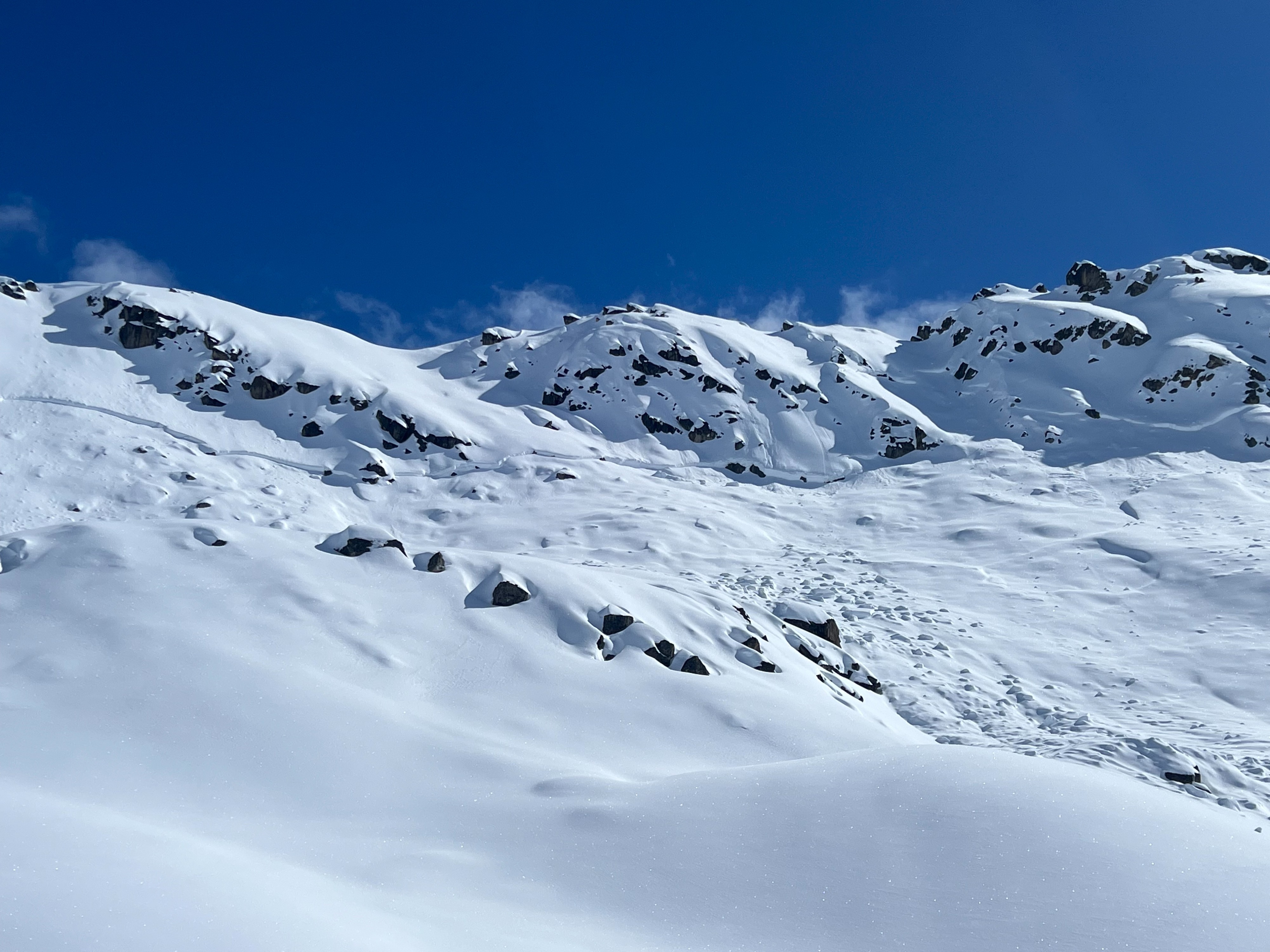
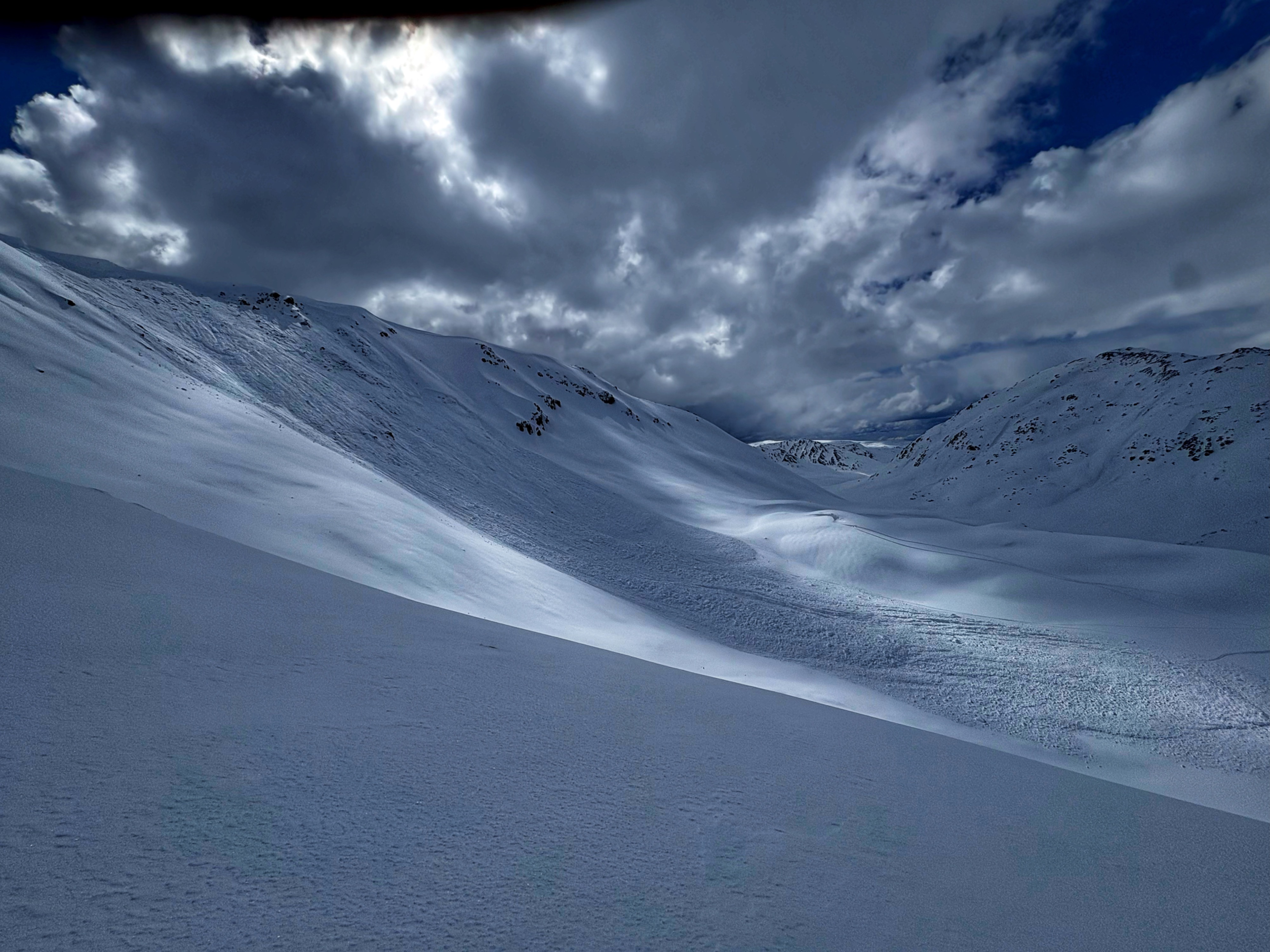
We climbed to the back of the valley, where we dug a pit and investigated a recent avalanche that likely occurred sometime in the last week. Clouds started building with some convective energy, but we wanted to get in a few turns, and with the improved coverage and easy access, we gained the ridge on the back of Skyscraper with the objective of finding a ramp back down to the valley.
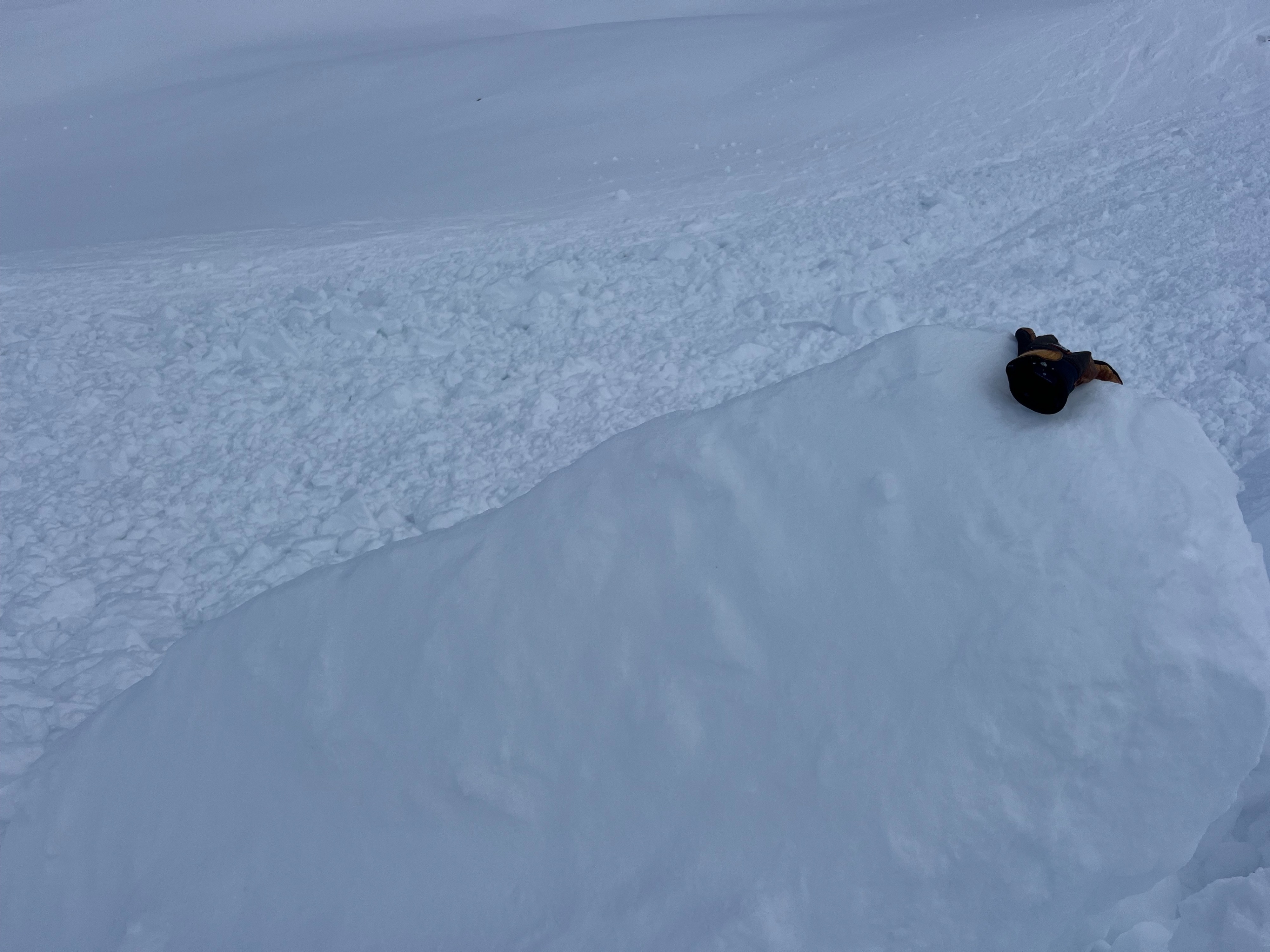
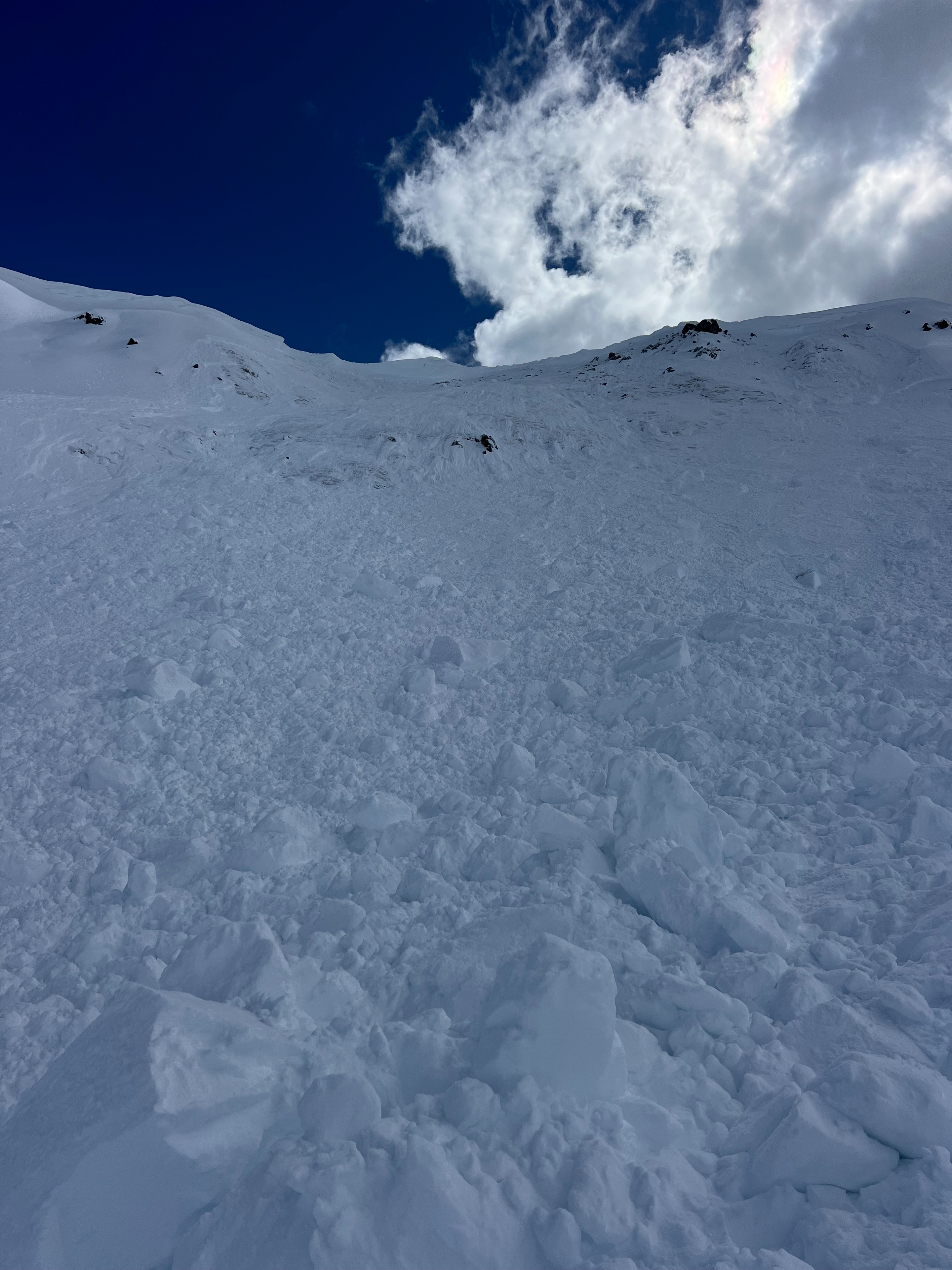
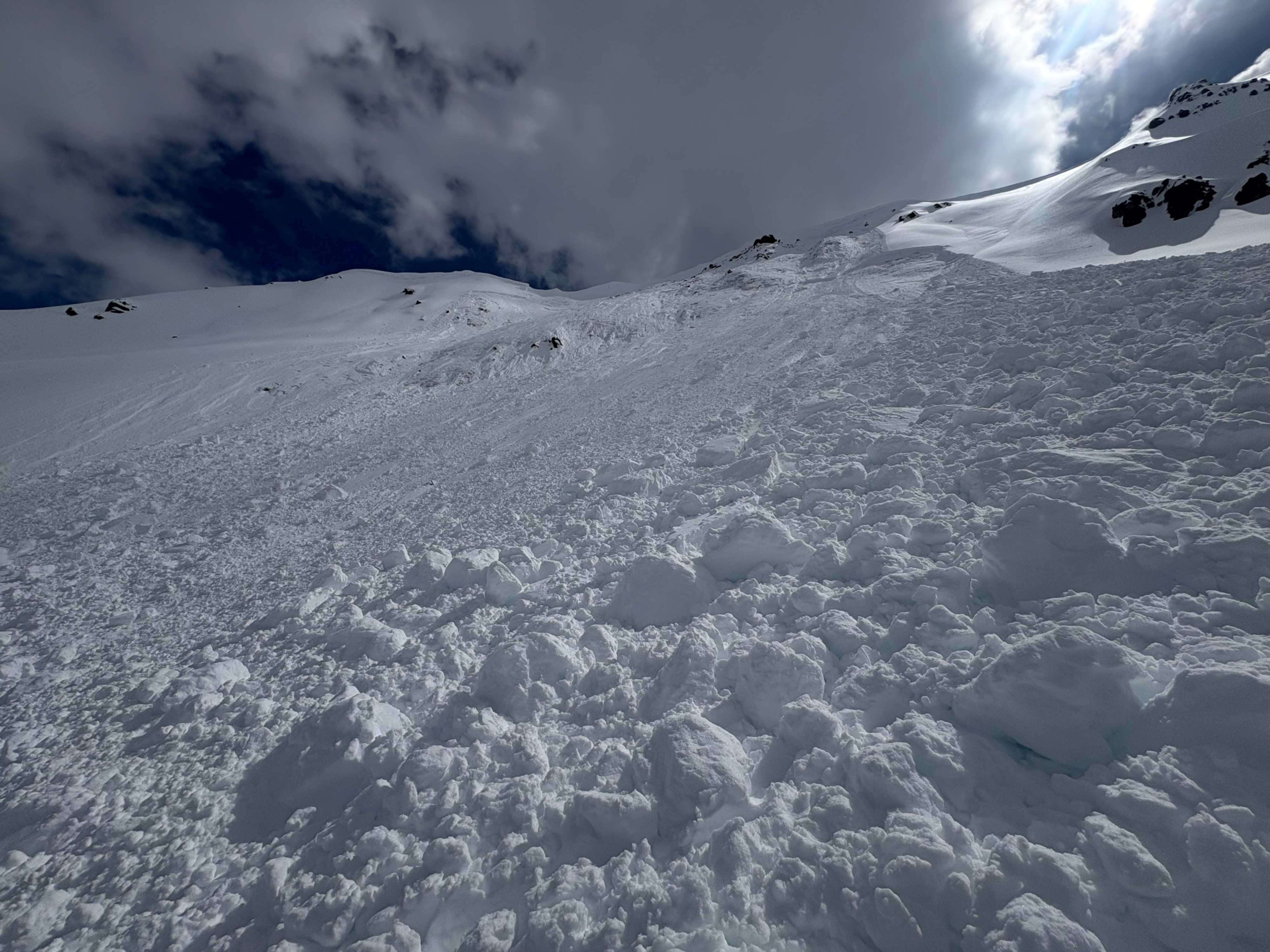
After gaining the ridge, we did a mix of bootpacking and sidestepping to traverse to a point where we could drop in to the slope. While approaching our entrance, we got too close to the edge of the slope and triggered a very large cornice. Two of our party fell onto the slope on the other side of the ridge. The cornice fall triggered a large persistent slab avalanche that ran another 4-600 vertical feet, carrying two skiers down the slope. Both skiers came to rest above the debris, with one buried up to their waist. When the slide came to rest, the skier at the top of the slope communicated with the others and descended to render aid. All gear was accounted for, and a bewildered sense of shock and awe was shared.
This was a very close call, and we are thankful that everyone is O.K. This was a large avalanche, and it could have easily ended differently. We performed a profile along the flank and observed weak, faceted snow near the ground that the avalanche failed on. While the slide was likely mostly recent storm snow, it took much of the season's snowpack with it. Stability tests revealed some stubborn failures in the upper snowpack and we are unsure if it would be possible for a skier or sledder to trigger a slide this size.
What we are sure of is that cornices are large and fragile, and will warm and become unstable during the day. The cornice we triggered was probably several thousand pounds, and easily destabilized the slope below, triggering a very deep avalanche. The snowpack is complex and untrustworthy. While it might be difficult for a skier or rider to affect these deeper layers, it's not out of the question, and as they age, these cornices could fail naturally and trigger large avalanches below them.
Just after 1 pm, we were traversing along the Skyscraper ridge when we triggered a very large cornice, which sympathetically triggered a large persistent slab avalanche.Weather
- Air Temp
- 30
- Cloud Cover
- scattered
- Wind Loading
- light
- Rain Elevation
- 1000
- Recent Snowfall
- 6
- Snow Avail For Transport
- moderate amounts
The day started clear and sunny. Winds were calm, and the temperature warmed with the sun, but a cool breeze and clouds helped keep things at bay. By noon, some convective development was obscuring the sun.
Snowpack
A bit of graupel capped last night's 1-3'' of snow that fell as rain below about 1000'. We found a dried out, somewhat right-side up snowpack, with areas of punchy, wet, faceted snow on solar aspects and at mid elevations. At upper elevations and on northerly aspects, the snowpack appeared dry. Some instabilities were observed in snowpits in the upper meter of the snowpack, but these did not translate to instabilities or avalanches on the slope.
In our flank profile, we observed dry, loose facet near the ground that the avalanche ultimately failed on.
Avalanche
- Size
- D2.5 R3
- Type
- SS
- Aspect
- NW
- Trigger
- NC
- Elevation
- 4600 ft
Avalanche was triggered by human triggered cornice fall, which led to the release of the persistent slab avalanche.