
Quick report
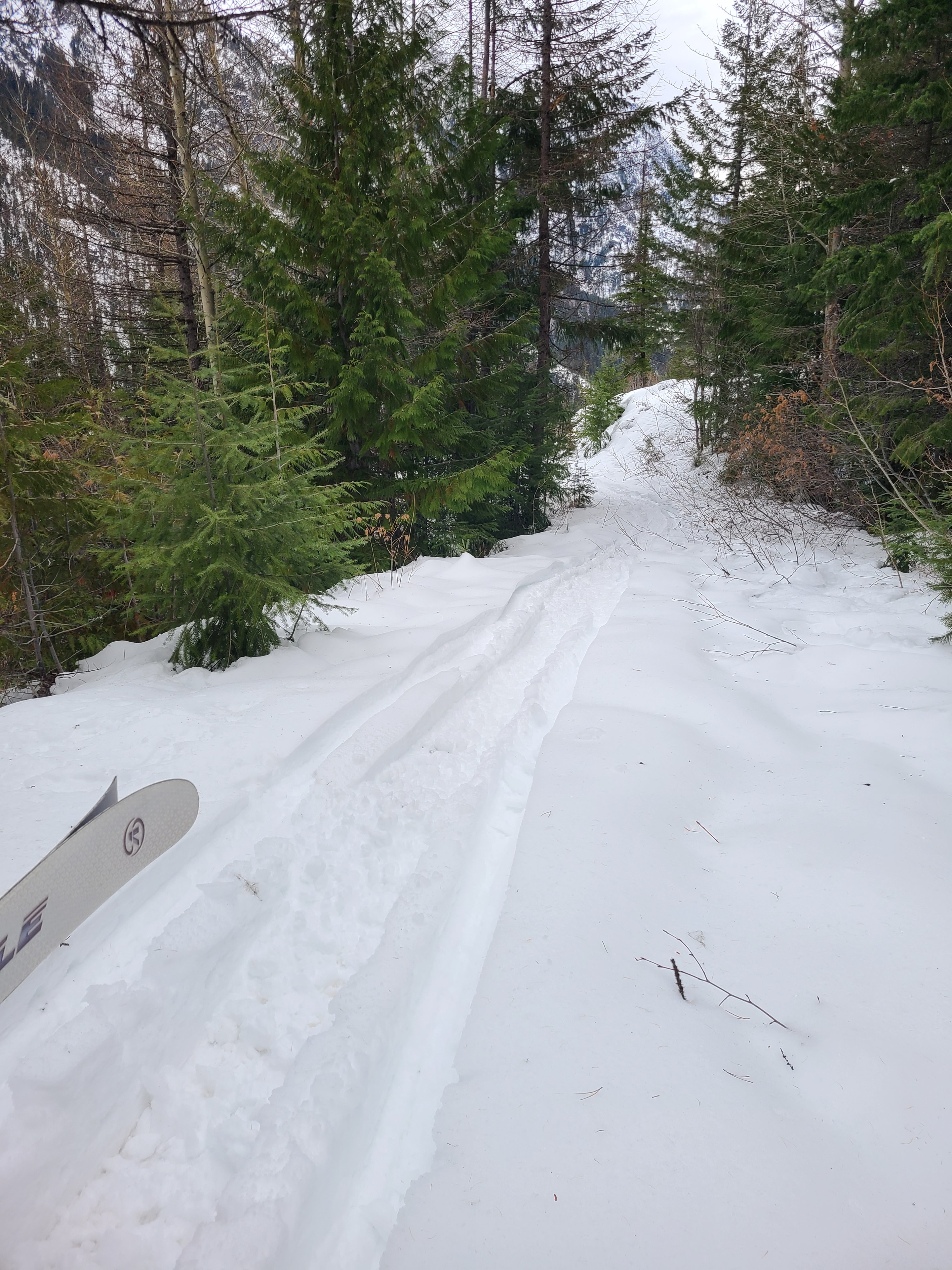
Well, some days don't quite go as planned. It can be especially challenging after large storm events with complex precipitation patterns. Our goals were to observe the recent storm snow, identify where precipitation switched from rain to freezing rain to snow, and document the natural avalanche cycle. We were also curious to investigate any lingering wind slab instability at upper elevations. Unfortunately, we were met with incredibly challenging snowmobile conditions after leaving the packed path at the bottom of the valley. The combination of a strong, but not supportive, crust on the surface and deep unconsolidated snow below kept the riding unpredictable and quite sporty. The time consuming riding and then some unfortunate mechanical issues had us turning around before leaving the lower elevations.
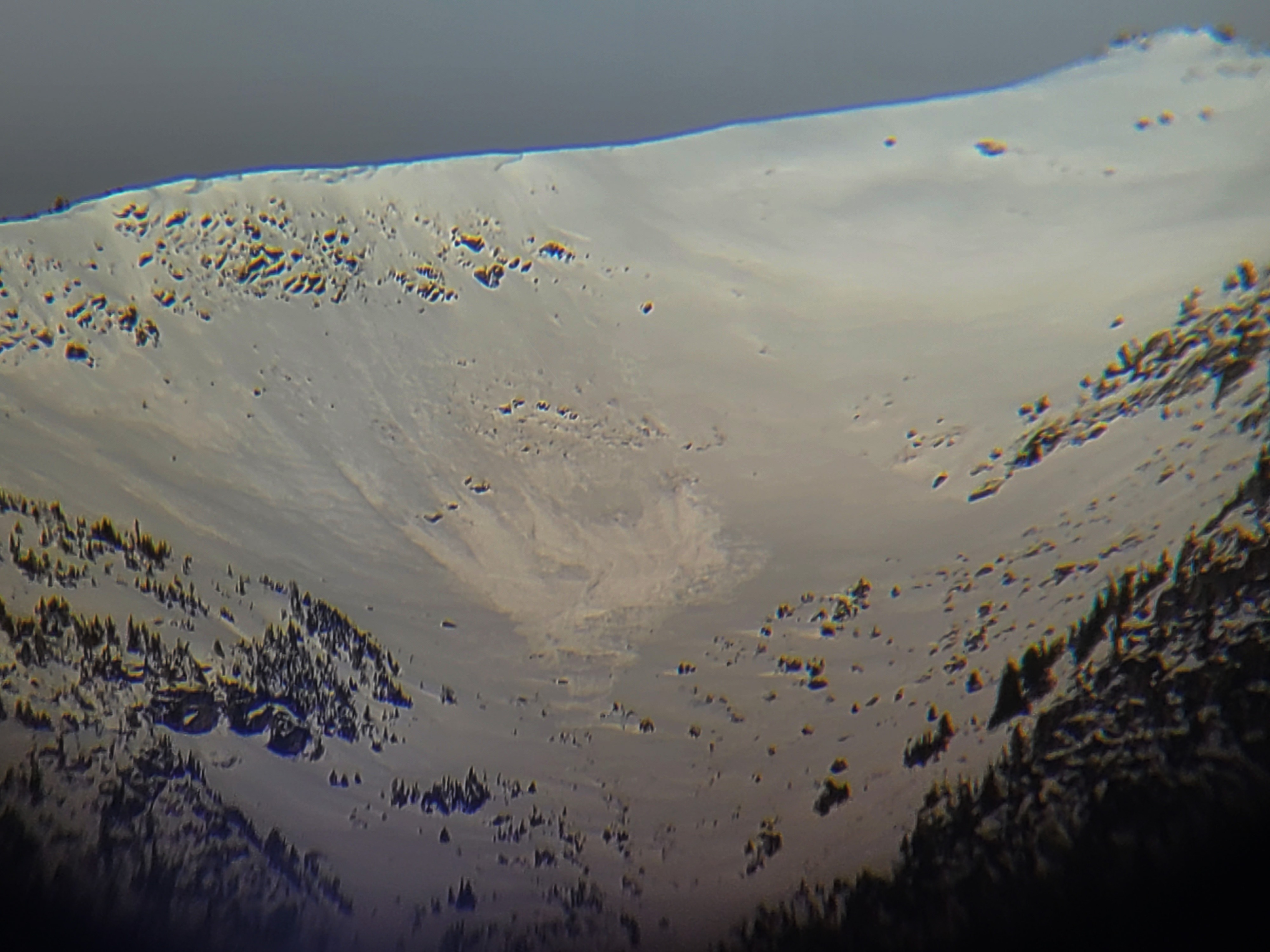
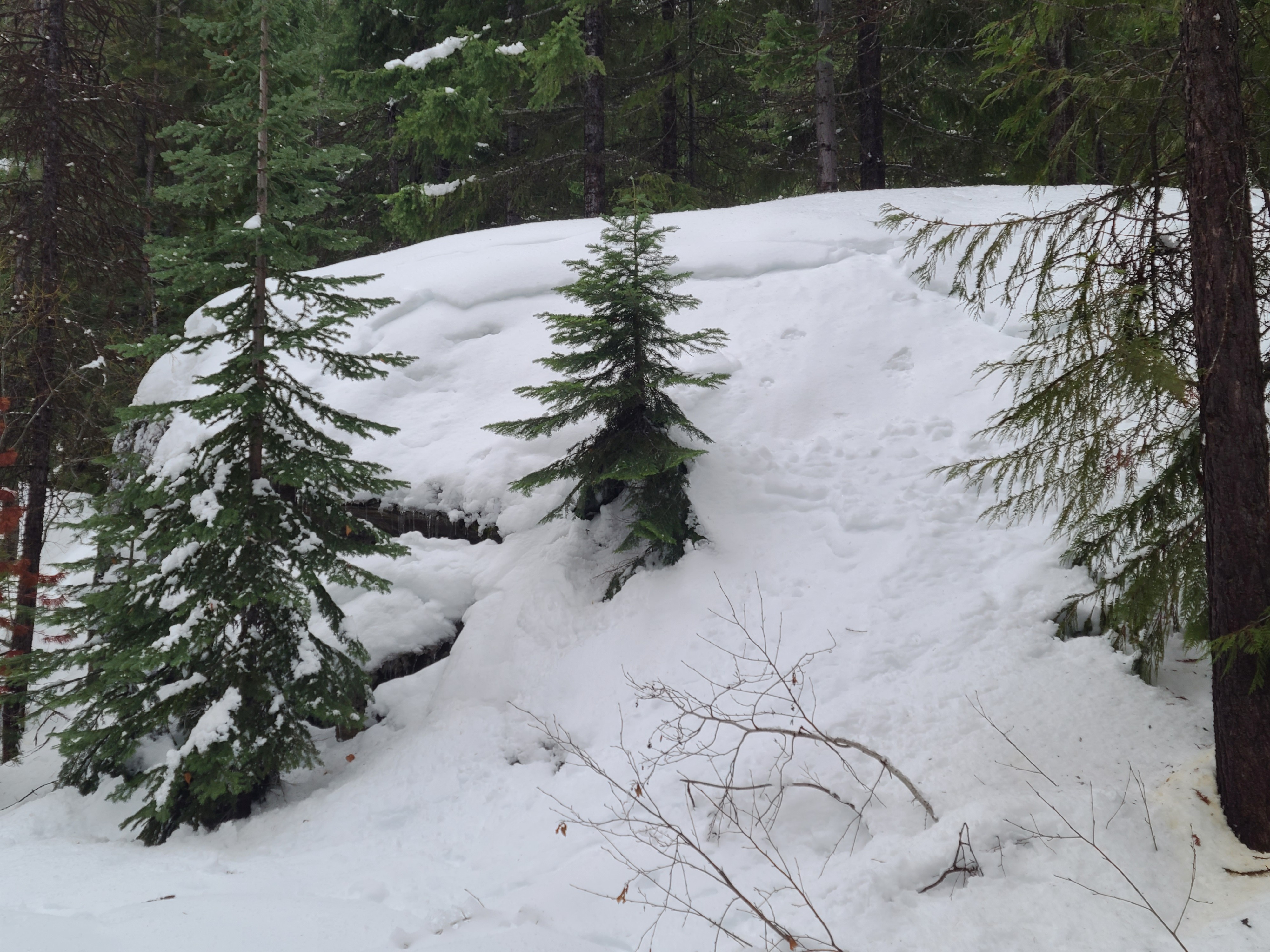
Small crowns on steep convexities were visible throughout the terrain. These all looked to have failed during peak snowfall rates on 12/17, before precipitation switched to rain and freezing rain. One very large avalanche on the eastern lee slope of Big Slide Mountain. It was difficult to tell from a distance if this slide ran as a wet or dry slab.Weather
- Cloud Cover
- broken
Mild temperatures hovering right around freezing with broken skies and calm winds.
Snowpack
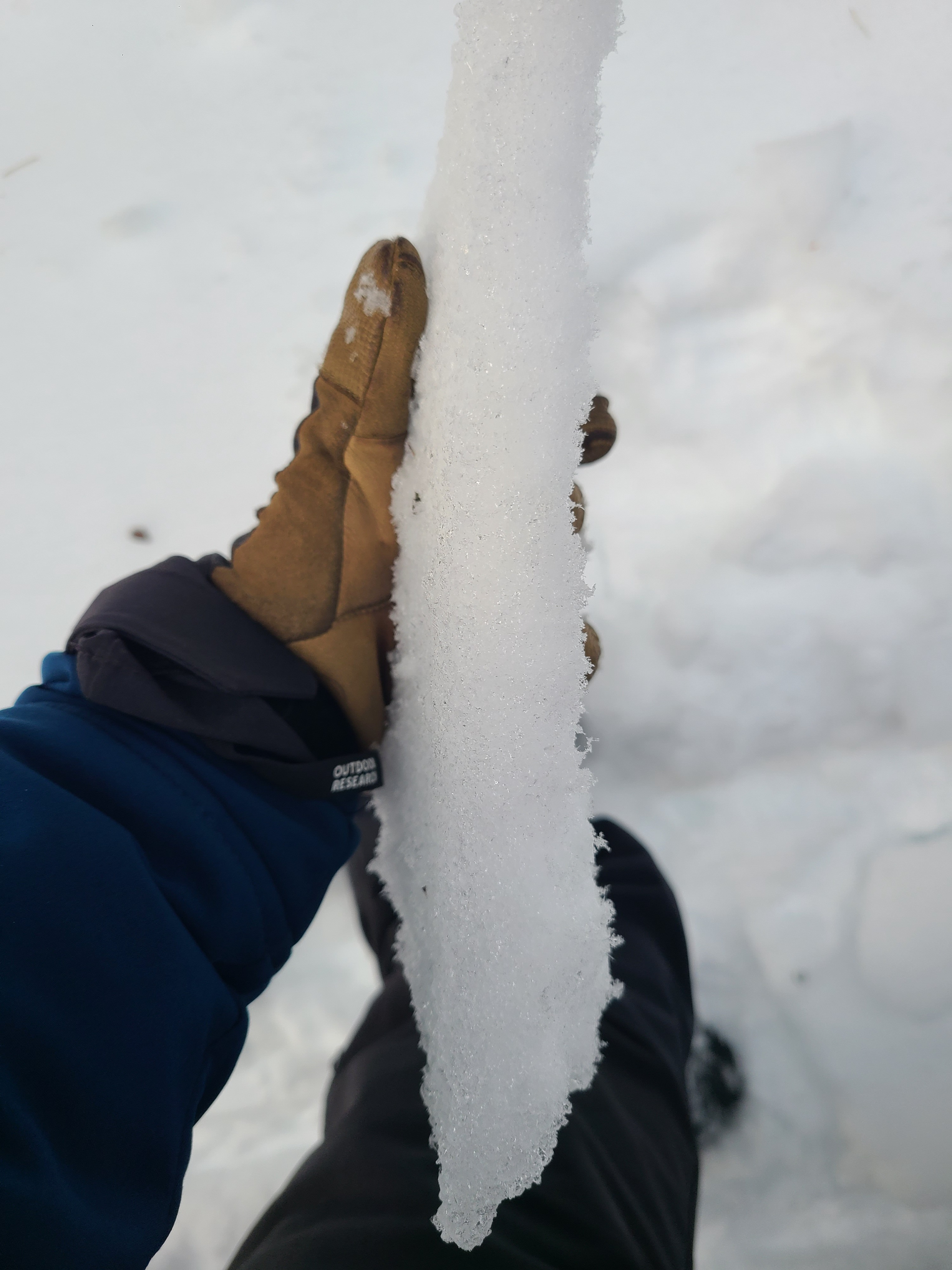
The snowpack is still shallow at low elevations and doesn't increase much with elevation. We measured 60cm of snow in the valley bottom and 60cm at 3700ft. Around 30cm of moist, recent storm snow (12/17-12/18) rests over the 12/7 melt-freeze crust. The snowpack is covered with a thick (2-3cm), breakable freezing rain crust on the surface at least up to 3700ft.
A quick crown profile on mini avalanche on a steep convexity indicated that it had failed on the 12/7 melt-freeze crust.
Avalanche
- Size
- D3 R3
- Aspect
- E
- Trigger
- N
- Elevation
- 7400 ft
Small crowns on steep convexities were visible throughout the terrain. These all looked to have failed during peak snowfall rates on 12/17, before precipitation switched to rain and freezing rain. One very large avalanche on the eastern lee slope of Big Slide Mountain. It was difficult to tell from a distance if this slide ran as a wet or dry slab.