
Quick report
We were able to move some surface snow above the wind crust. Skiing was generally good atop the wind crust and in the new snow, but periodically we broke the crust. We saw one recent small dry loose avalanche on steep terrain under some cliffs - looked like earlier same day, natural trigger. Our pit tests were significantly more reactive than any we saw during February in this area. Our travel was in the new snow that fell yesterday and last night over a basin-wide wind crust. In some locations the new snow was bonded to the wind crust and in others it was not bonded at all. No pattern to the elevation, slope, aspect, tree cover that I could figure. Where the new snow was bonded, travel was easy.
Weather
- Air Temp
- 24F
- Cloud Cover
- few
- Wind Loading
- none
- Recent Snowfall
- 12
- Snow Avail For Transport
- moderate amounts
Snowpack
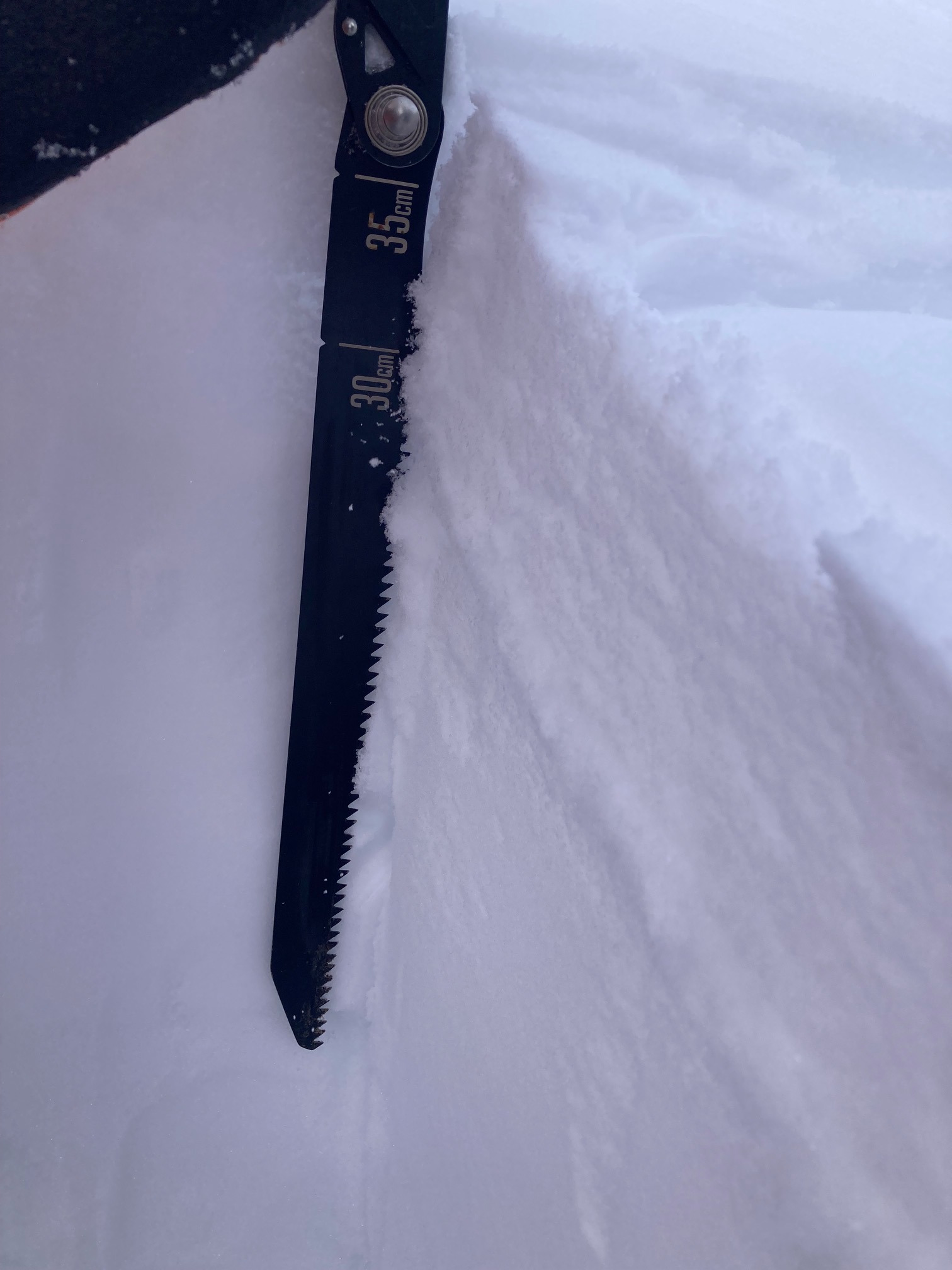
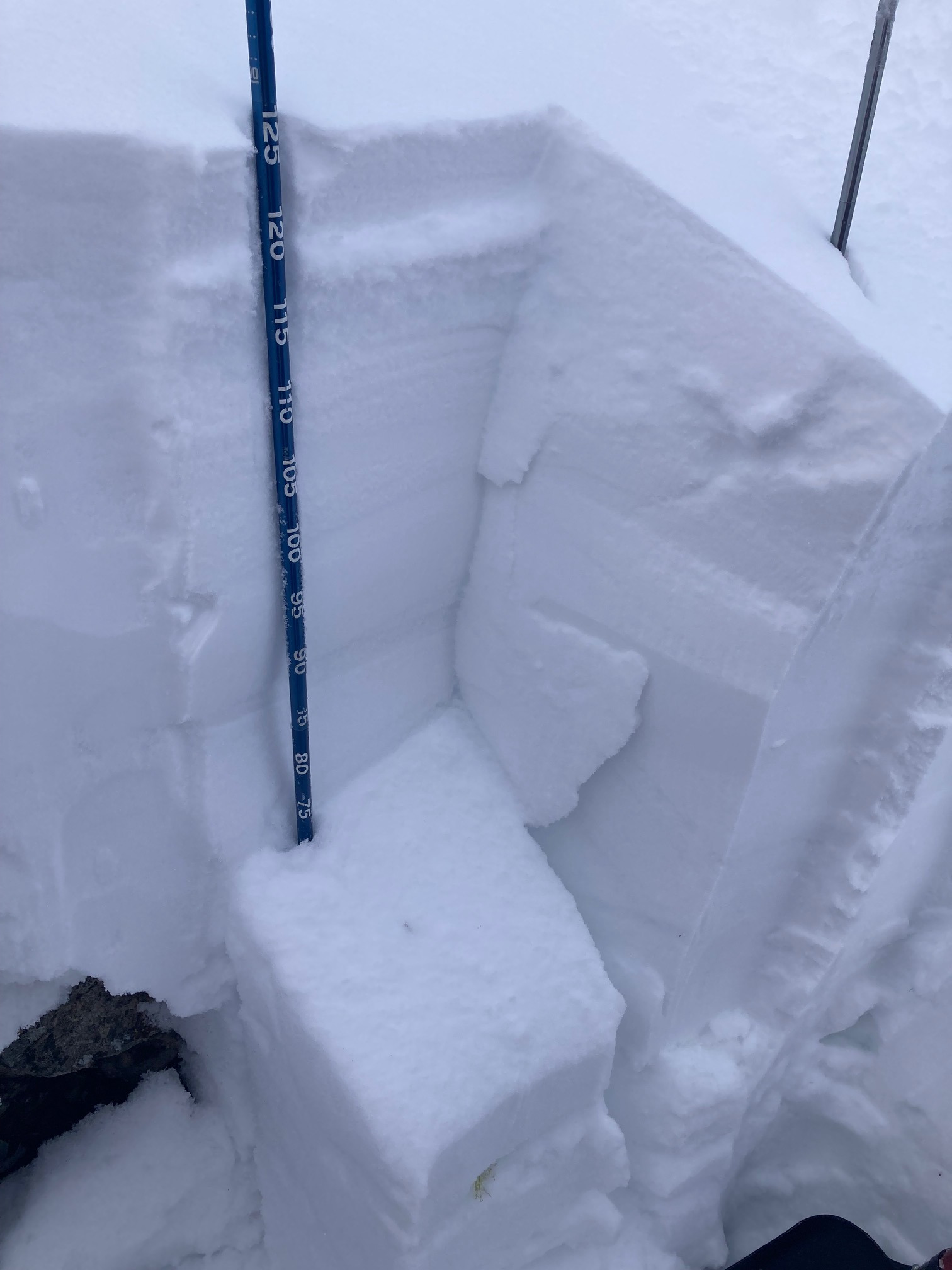
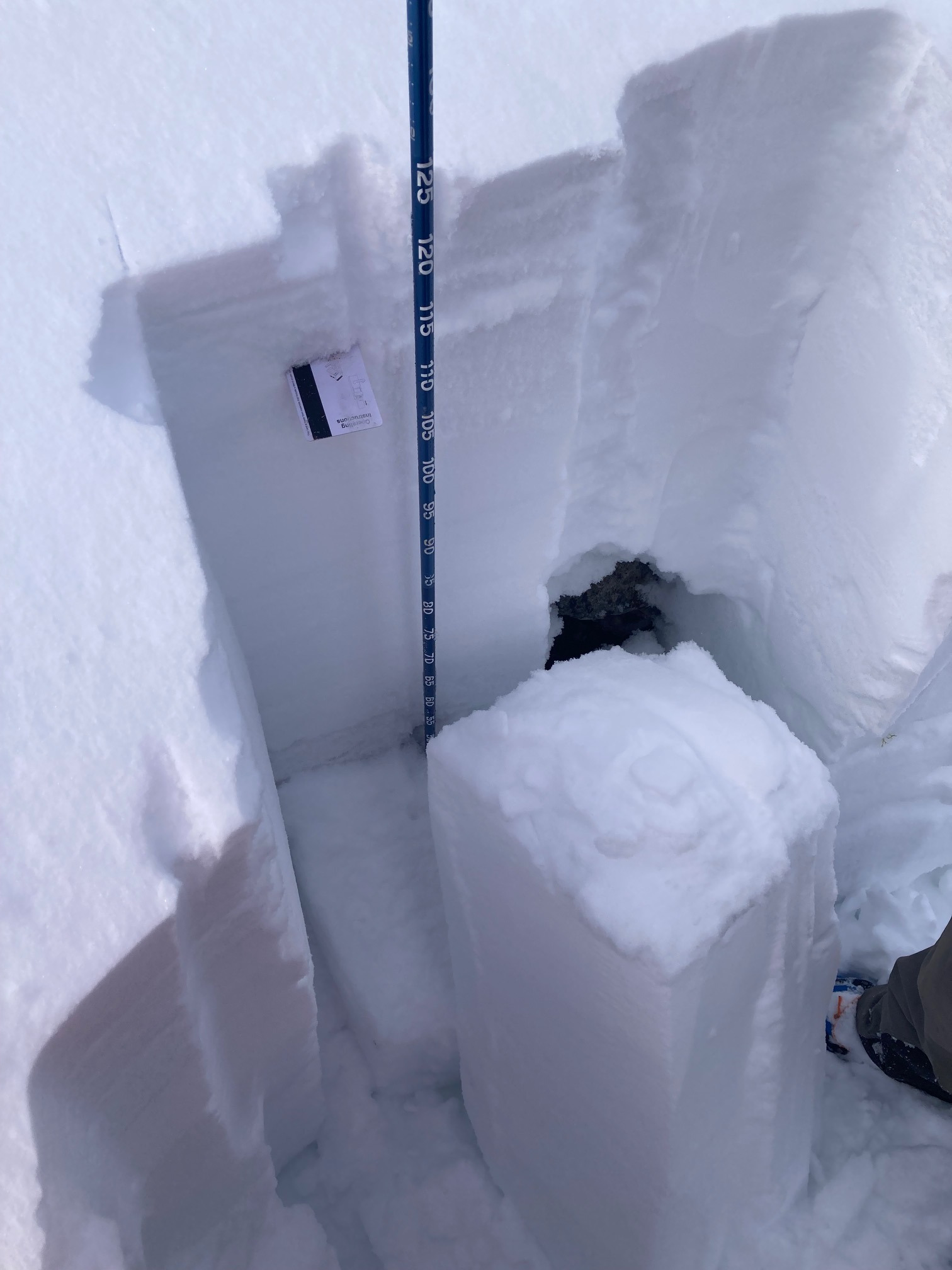
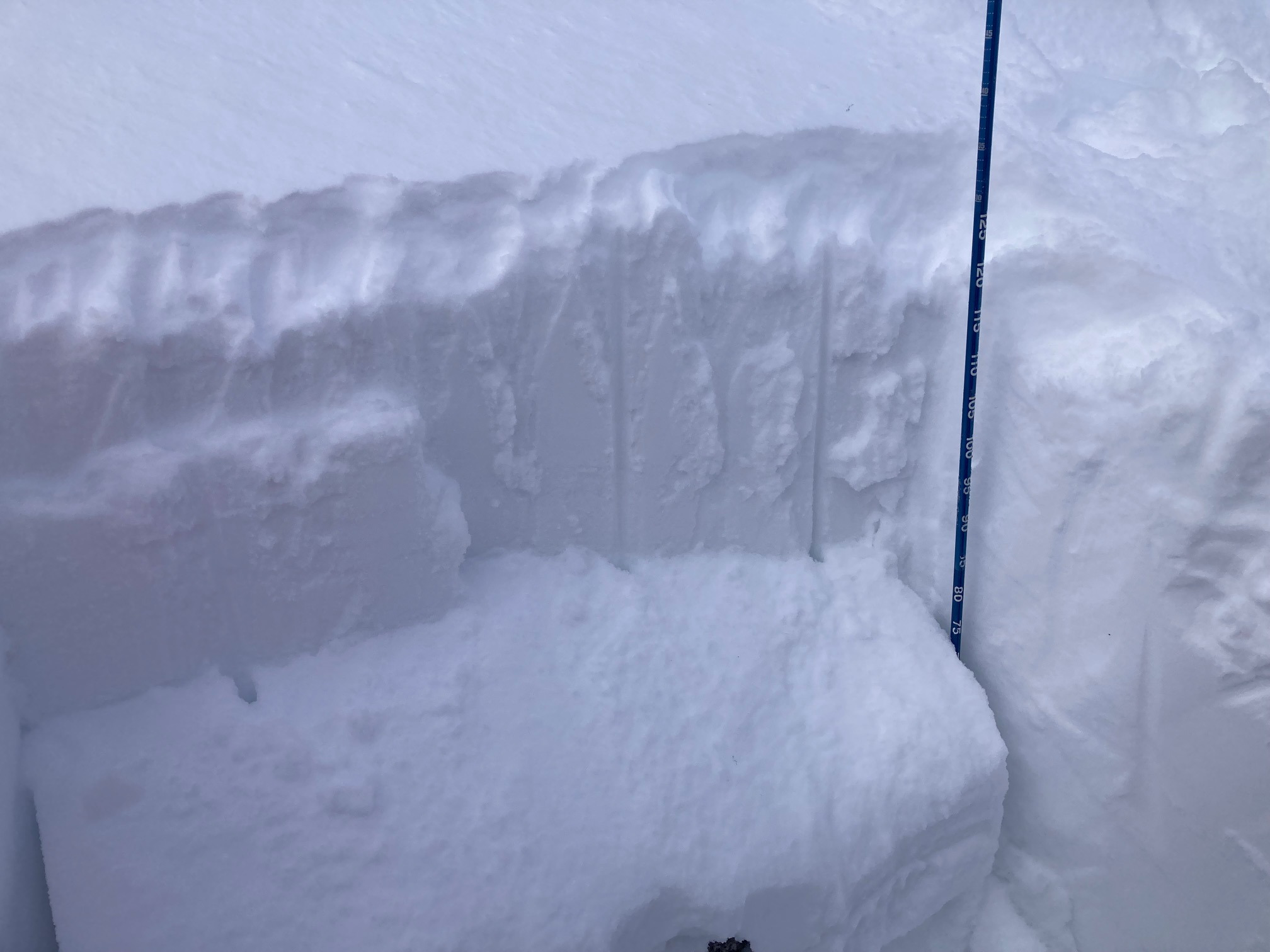
While walking uphill, I thought the avalanche problem was limited to the new snow over the wind slab from 2 days ago, but we had pit test results that confirmed NWAC's "complicated" snowpack description and suggested a bigger problem. We did two isolated column tests and an ECT. In both columns the new snow fractured over the wind slab on the first hand tap. (Sudden Collapse (CTE SC) - Photo 1). This was consistent with our travel observation of the new snow sliding off the wind slab. In the first column, we had a sudden planar fracture on 13 about 50 cm above the ground and about 10cm above the EFT (Photo 2). In the second column, we had sudden planar failure on 14 on an intermediate minor crust about 75cm above the ground and about 25 cm above the EFC (Photo 3). Both blocks slid off the column with near zero friction (CTM SP). Striking results compared to other tests we've done recently where we have found collapses but not much movement. In the ECT we had sudden planar failure (fracture across the full width and slid easily off the column) on 12 (ECTP12) on the same layer as isolated column number 2. (75 cm above the ground and 25 cm above the EFC). (Photo 4) (I wish I had a photo that included the still in tact block that slid off). These observations were made at 6000' on ENE aspect on a 36 degree slope and height of snow was about 130cm.
Avalanche
- Size
- D1 R1
- Type
- L
- Aspect
- NE
- Trigger
- N
- Elevation
- 6300 ft
The following description is my estimate from viewing this avalanche from 500 feet away across a valley. Accuracy is suspect. Loose dry debris slid over the wind crust from the base of the cliffs for 150 vertical feet and entrained the new snow for the length of the path. Debris field was a quarter the length of the path and 3 feet deep.