
Quick report
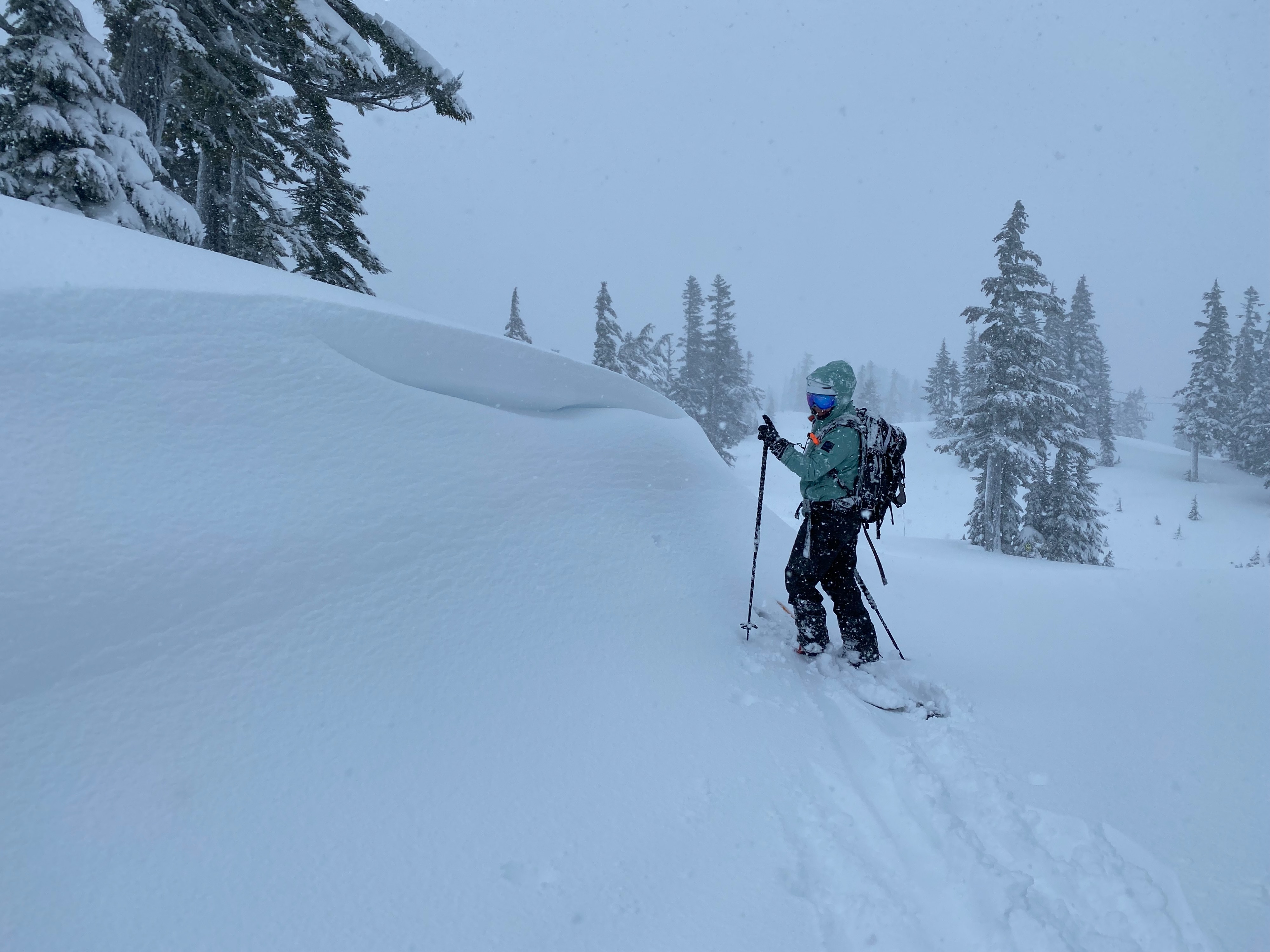
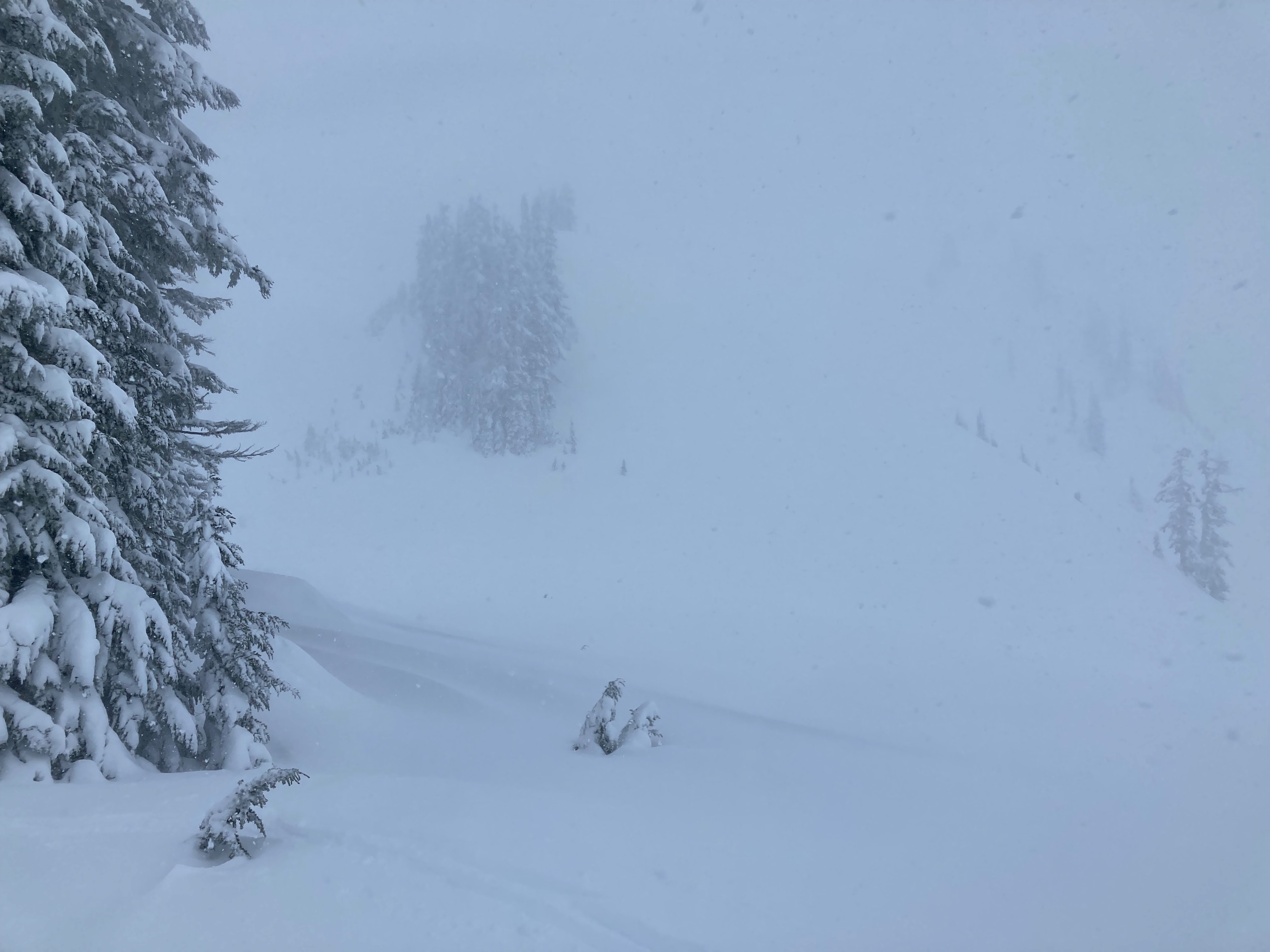
Heavy snowfall and strong winds were our two main red flags for the day. Travel was difficult with winds gusting, transporting snow and decreased visibility. We joked that wind lips and built up wind effected snow was the greatest hazard of the day, as it was common to be skiing or touring along and suddenly hit a wall of snow. We did not notice any avalanches or active avalanching throughout the day but were not convinced it wasn't happening elsewhere. The upside-down snowpack structure really stuck out to us and further hinted that the snow was unstable. We stuck to low angle terrain, staying aware of steep slopes above and around us and only considering traveling in areas free from avalanche terrain.
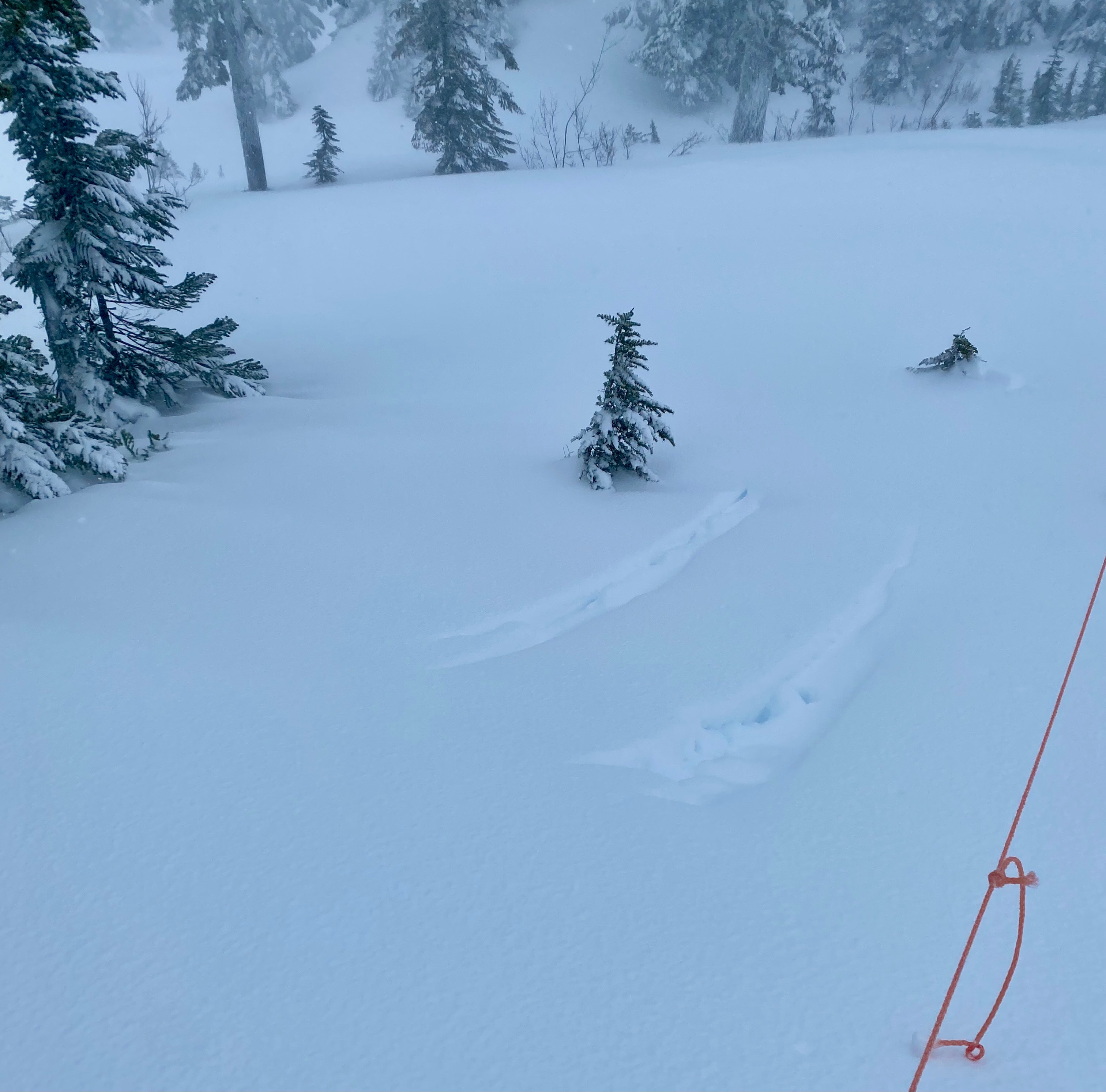
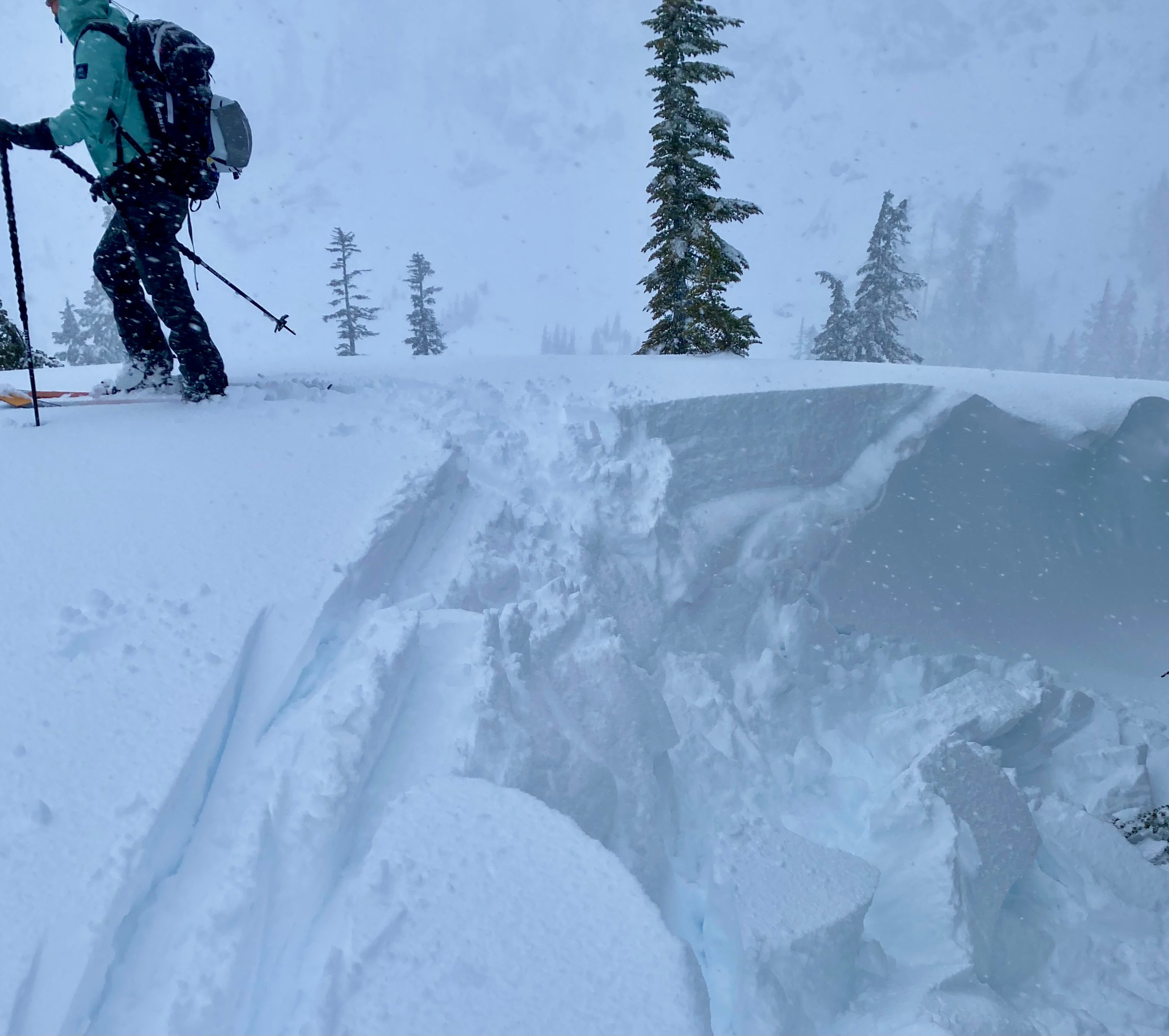
Small cracking around skis within the heavy new snow.Weather
- Air Temp
- 30-32
- Cloud Cover
- overcast
- Wind Loading
- intense
- Rain Elevation
- 2500'
- Recent Snowfall
- 50
- Snow Avail For Transport
- large amounts
Warmer temps around freezing and sustained winds gusting to strong. Heavy, relentless snowfall and snow transport making for poor visibility. Rising snow line, was 2000 on the way up and rose to 2500 by the end of our tour (11:30).
Snowpack
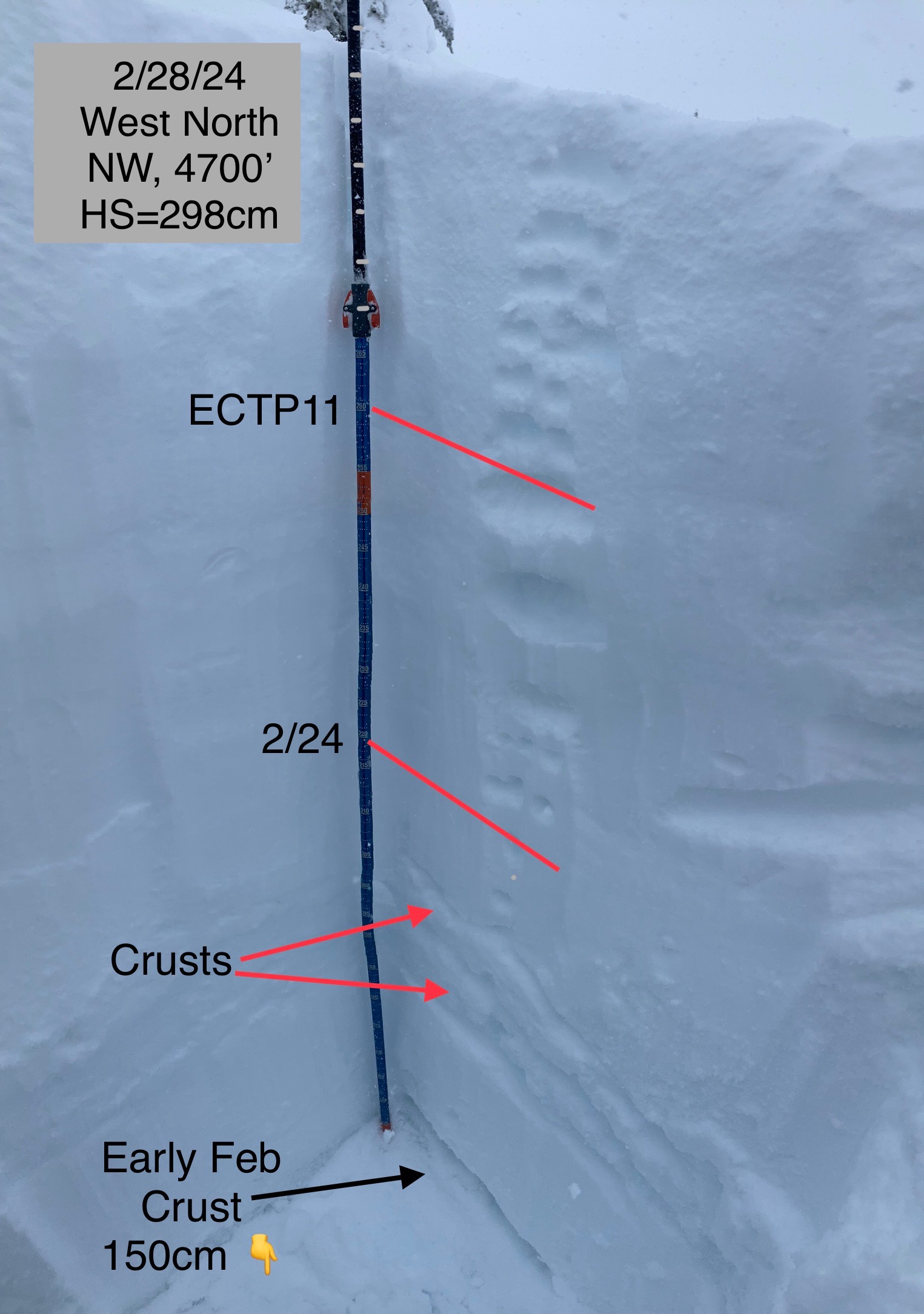
The Baker backcountry received 50 cm of new snow in the past 24 hours. Storm totals are looking to be closer to 100 cms since the start of the storm period (earlier in the week), almost doubling our snowpack and burying the early Feb crust ~150 cm below the snow surface!
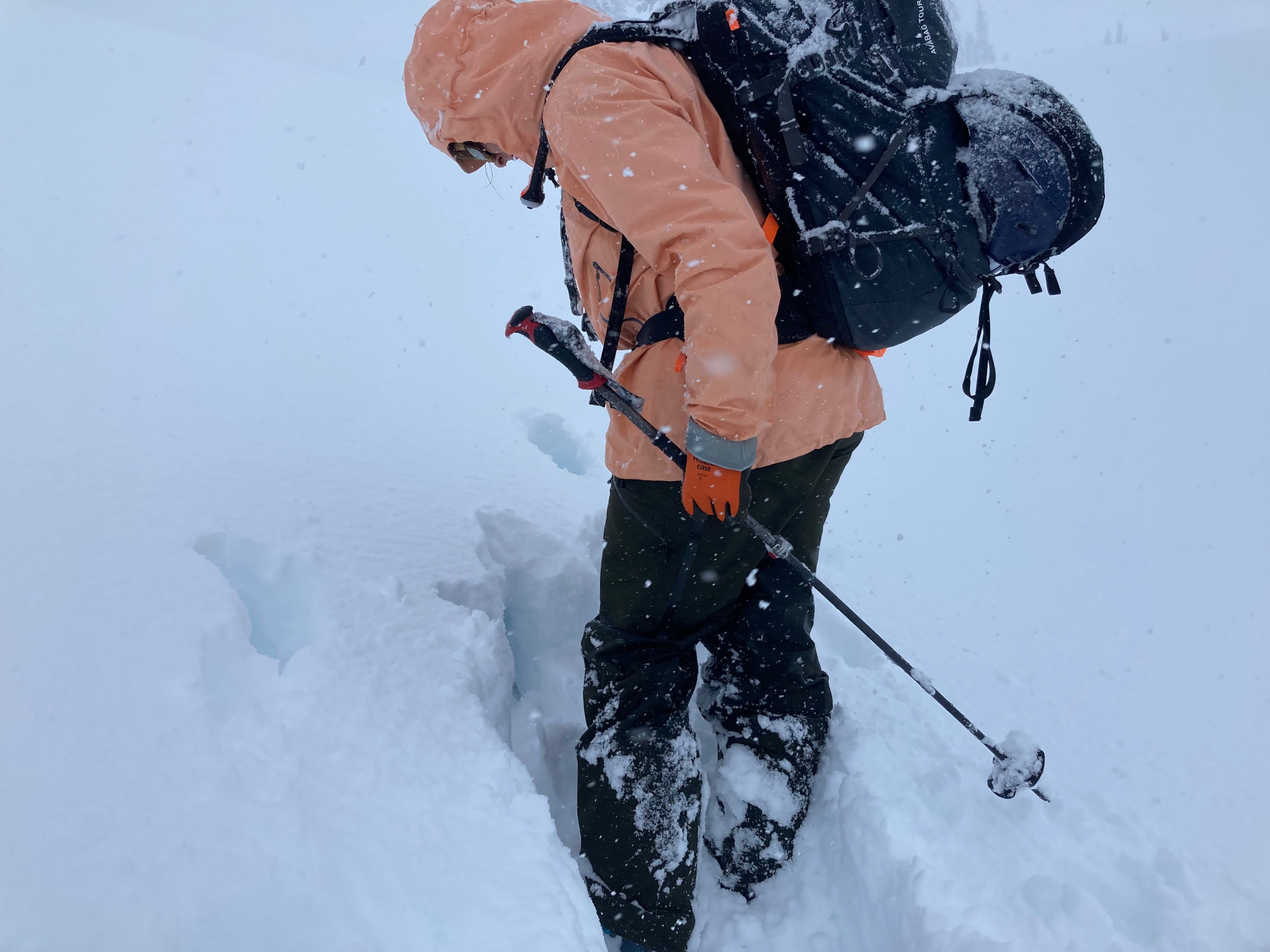
The newest snow had warmed up while accumulating, leaving the top 20 cm of heavy cohesive snow (4 figure) to sit on 30 cm of lighter snow (fist hard). Stability tests showed poor bonding and weak structure at the new/old snow interface (ECTP11, CT11) as well as at the 2/24 storm interface (CT 28). When walking or pole planting the snow seem initially supportive before sinking into the lighter snow below, indicating an upside down snowpack. Interestingly it was difficult to initiate small avalances on test slopes and we where hard pressed find any other signs of avalanche activity, though it was also extremely difficult to see even to the slopes ahead of us.
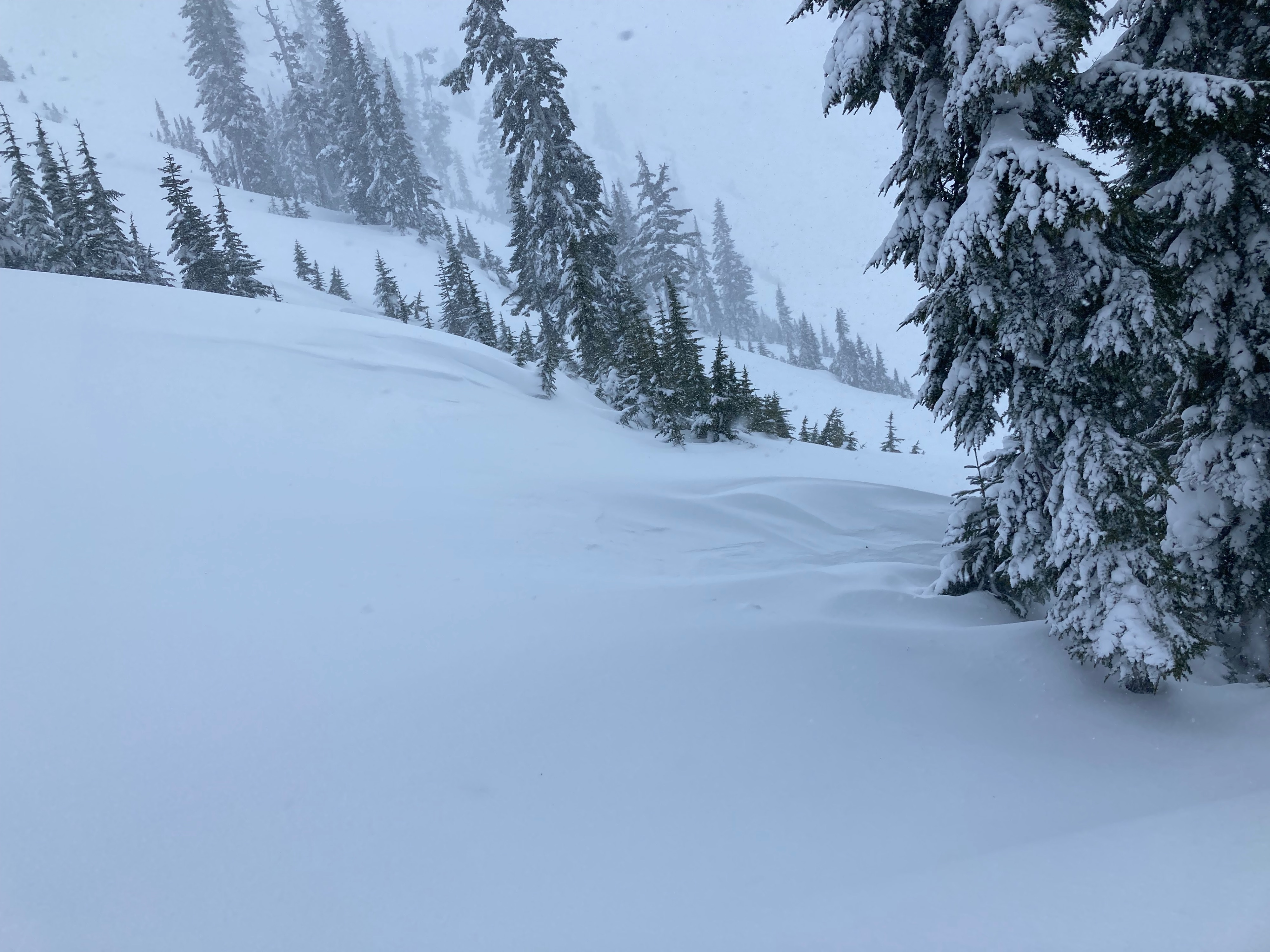
Wind loading increased the depth of the heavy surface snow on some terrain features and scoured it from others. Large wind lips and cornices built up in uncommon places suprised us while skiing.