
Quick report
- Collapsing
- isolated
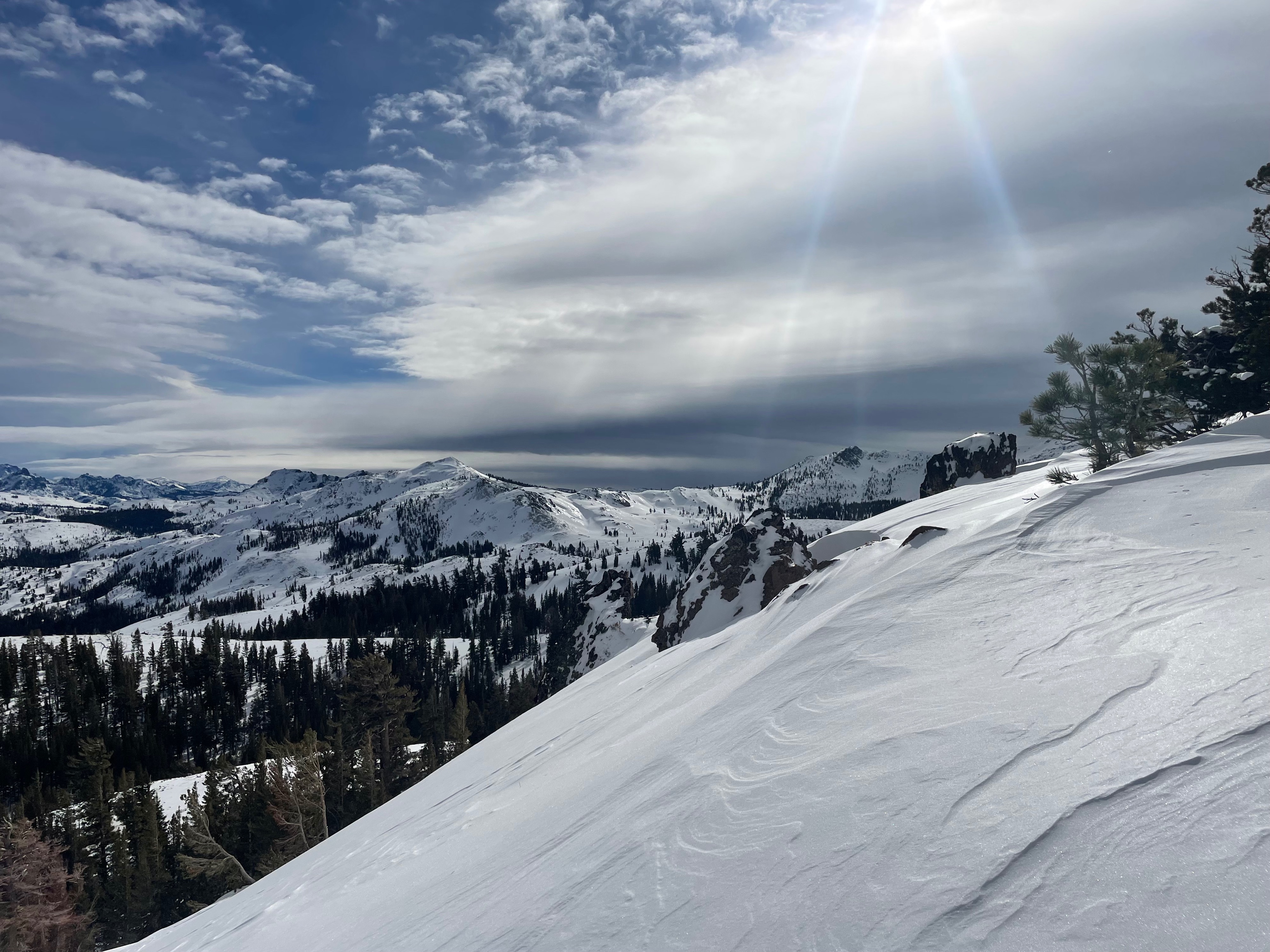
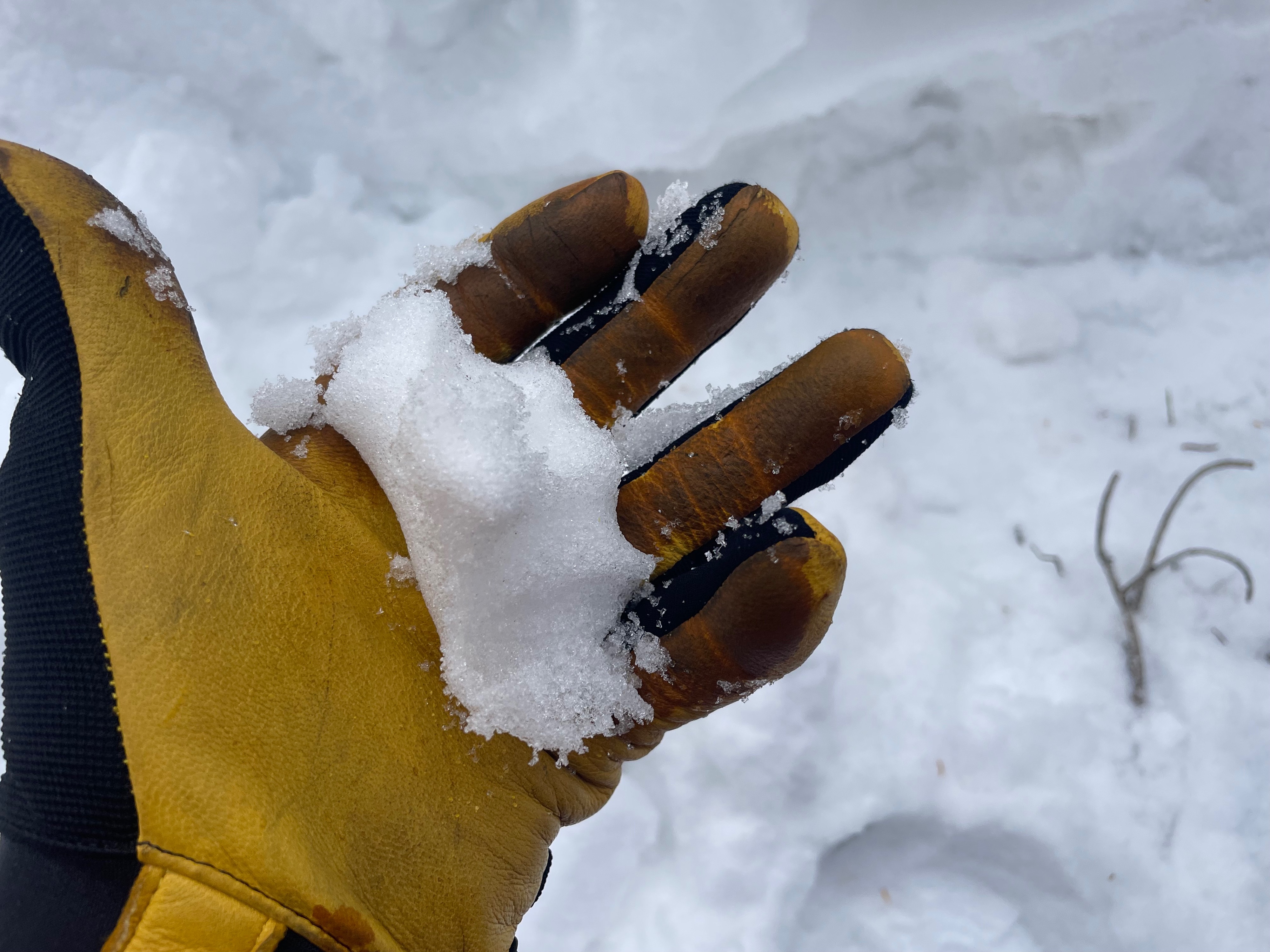
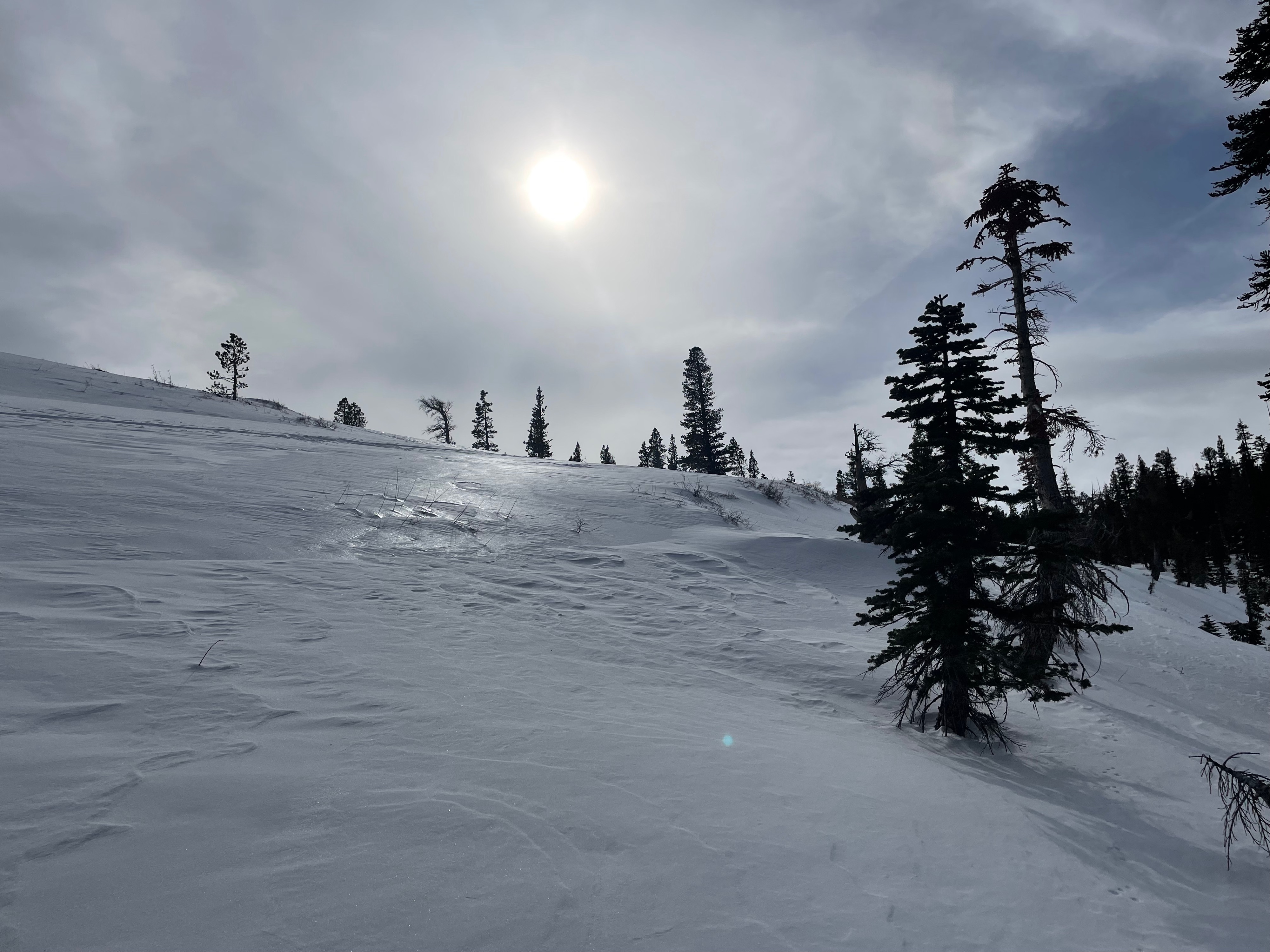
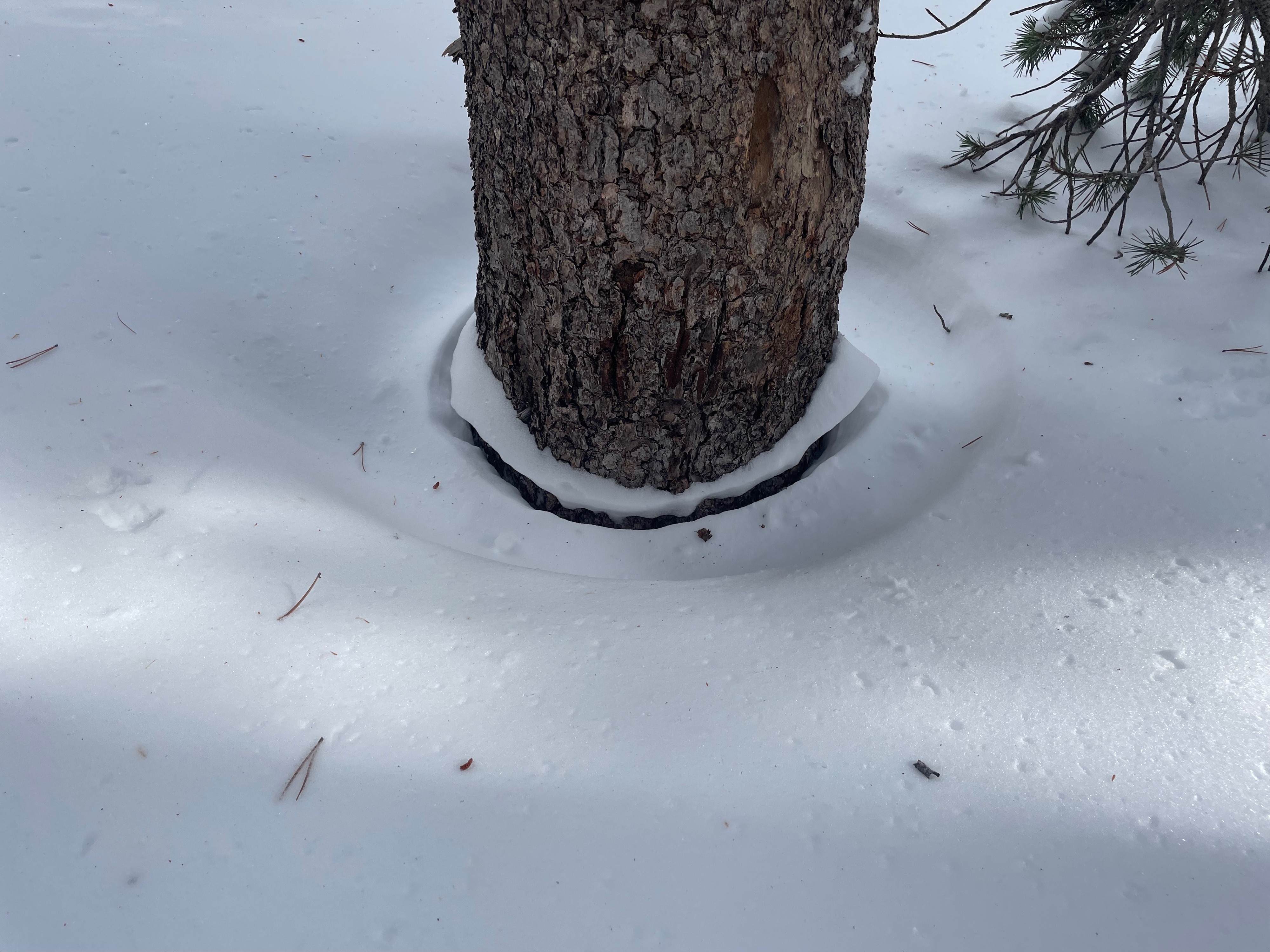
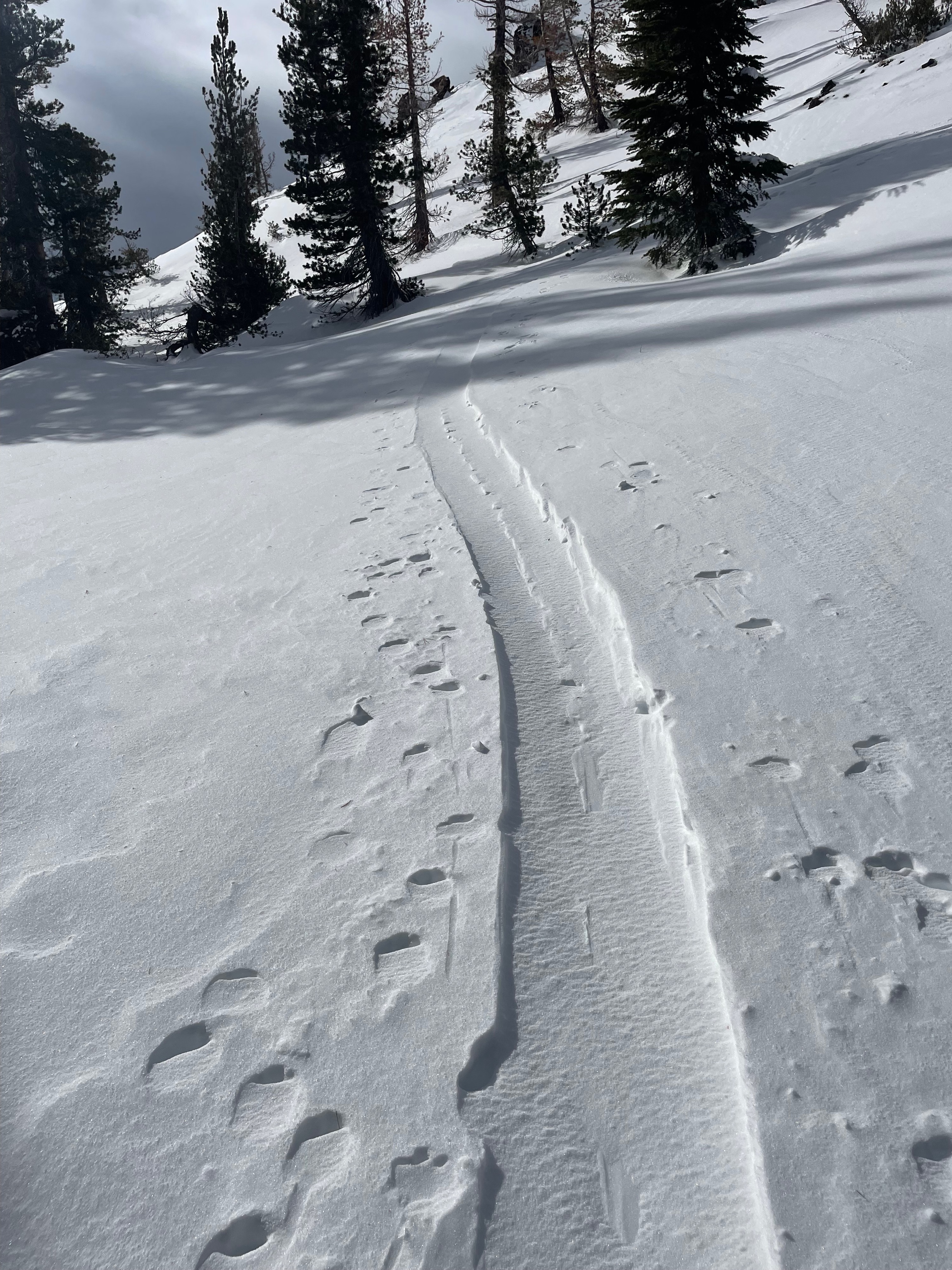
We traveled up and around Elephant's hump today, The surface snow in this area was variable with patches of soft snow on protected shaded aspects, scoured areas revealing a very thin ice crust from the last warm storm, wind affected snow and melt freeze crusts on solar aspects. We stopped to dig a pit at 8400' and got clear unstable results within the extended column tests showing propagation at 60cms down. On the ascent we also observed settlement cracks at the base of a lot of trees within this area. Winds felt nonexsistent until we reached near tree line terrian and open areas above 8500'. There was small amounts of snow transporting filling in skin tracks in front of us. Winds were blowing out of the W-SW loading easterly slopes. Mostly overcasted skies made for flat light conditions and it was hard to see how much snow was blowing off the peaks above us in the surrounding area. Near the summit we had good views at Polaris bowl, the north face of the Nipple and surrounding ridgelines, there was no signs of recent avalanches on any of these peaks. The descent was was enjoyable riding with denser/supportable snow near the surface that allowed one to stay on top and not feel anything buried below. Once we hit the road we were able to ride all the way back out to the truck.
Weather
- Cloud Cover
- overcast
- Wind Loading
- light
- Snow Avail For Transport
- small smounts
With the incoming front there was mostly overcast skies with broken patches allowing some solar radiation to shine through. Winds were moderate out of the W-SW with occasional gusts in open areas in above tree line terrain. Ambient air temps felt warm but was not causing the surface snow to warm up at all.
Snowpack
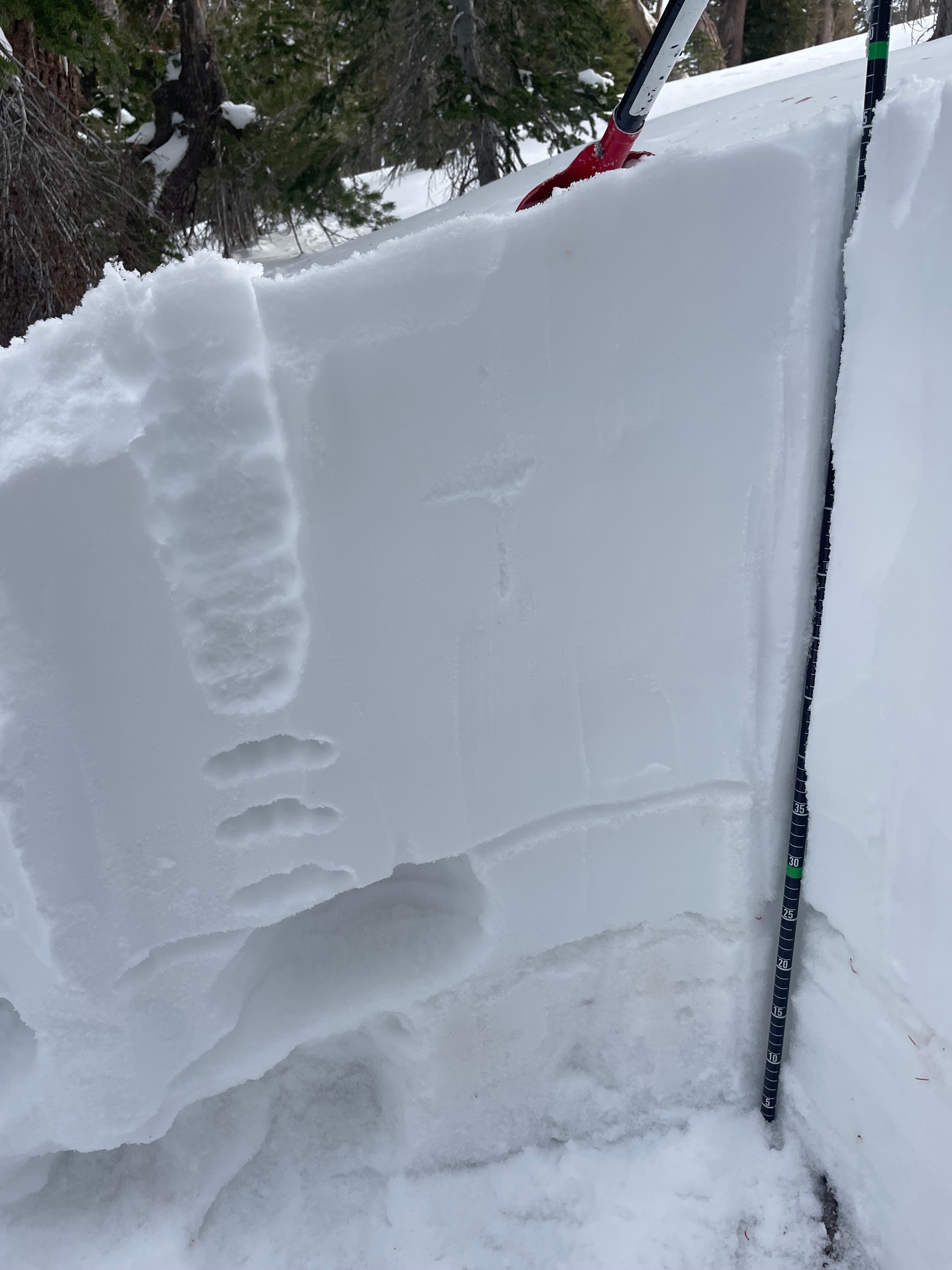
On the way up I dug a pit @ 8400' on a North aspect to check in on the PWLs within the snowpack. The HS was 90cm at this location. Starting at the top there is ~2' of recent snow from the last couple storms; that sits on top of 10cms of F-hard facets followed by the mid-Decmber rain crust. Below that 20cms of 4F hard rounding facets to the ground. The more recent snow has seemed to really settle out and has created a stout cohesive slab above the PWL layer below. Below this slab the old facets (PWL) are still dry, weak and noncompressible. The mid-December crust is also weak and breakable but still present. The grains below the crust to the ground is showing signs of gaining strength at this location and was moist and very compressible. My compression tests had good results and I moved on to the ECT and got an ECTP26 at 60cms down failing at the top of the Jan. 2 PWL facets. I follwed this up with a PST and got 50/100 ARR on this same layer.