
Quick report
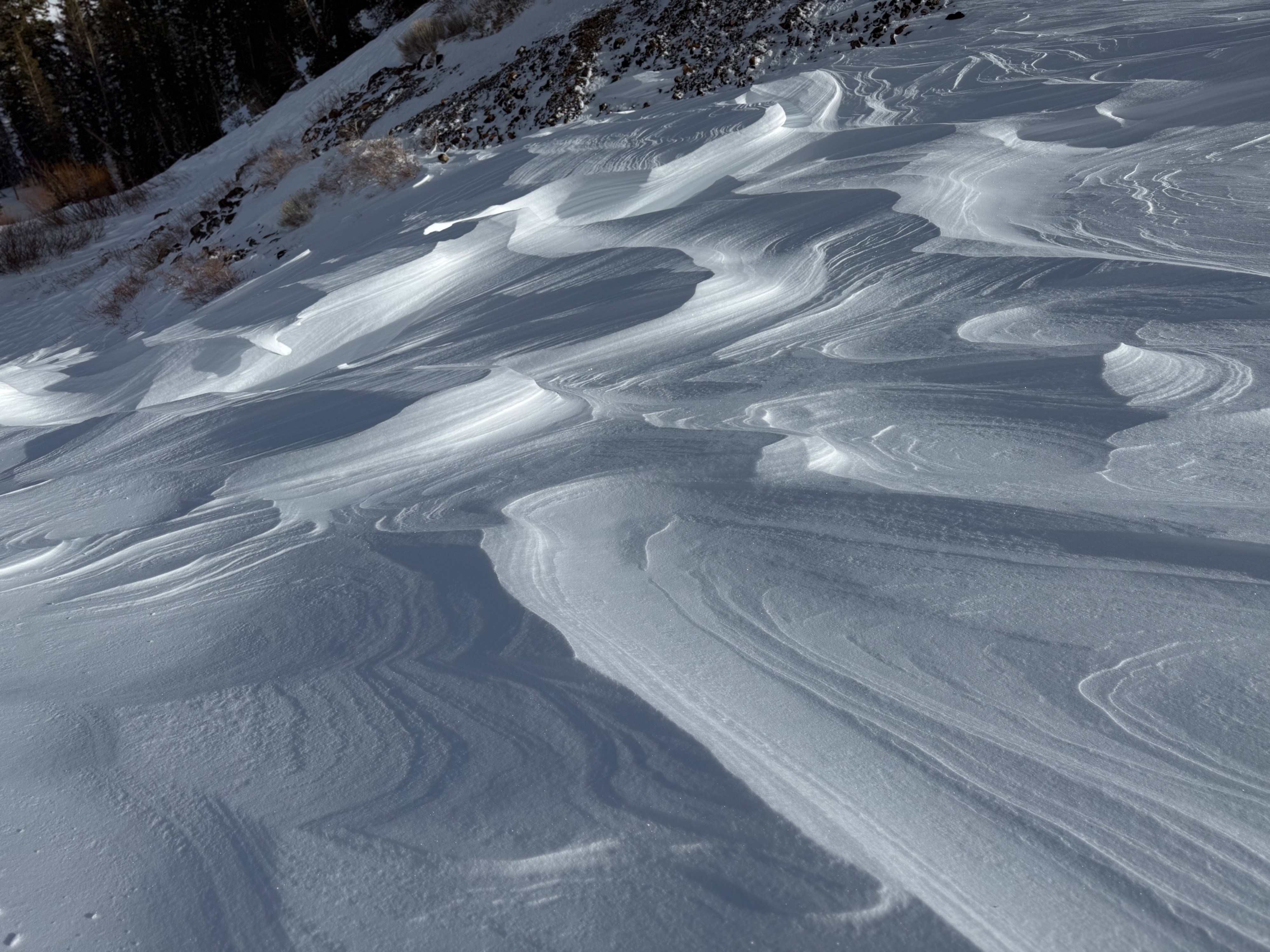
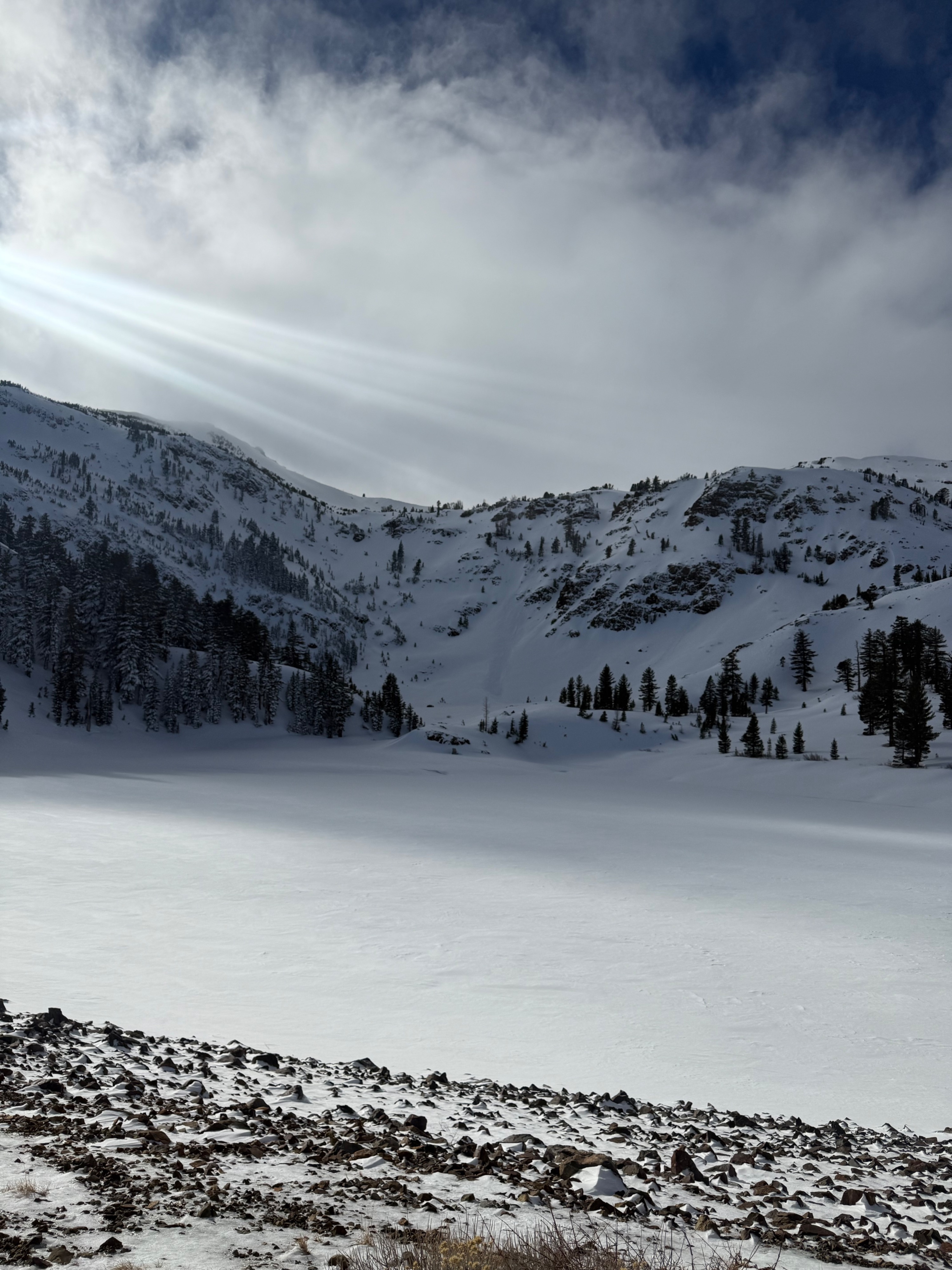
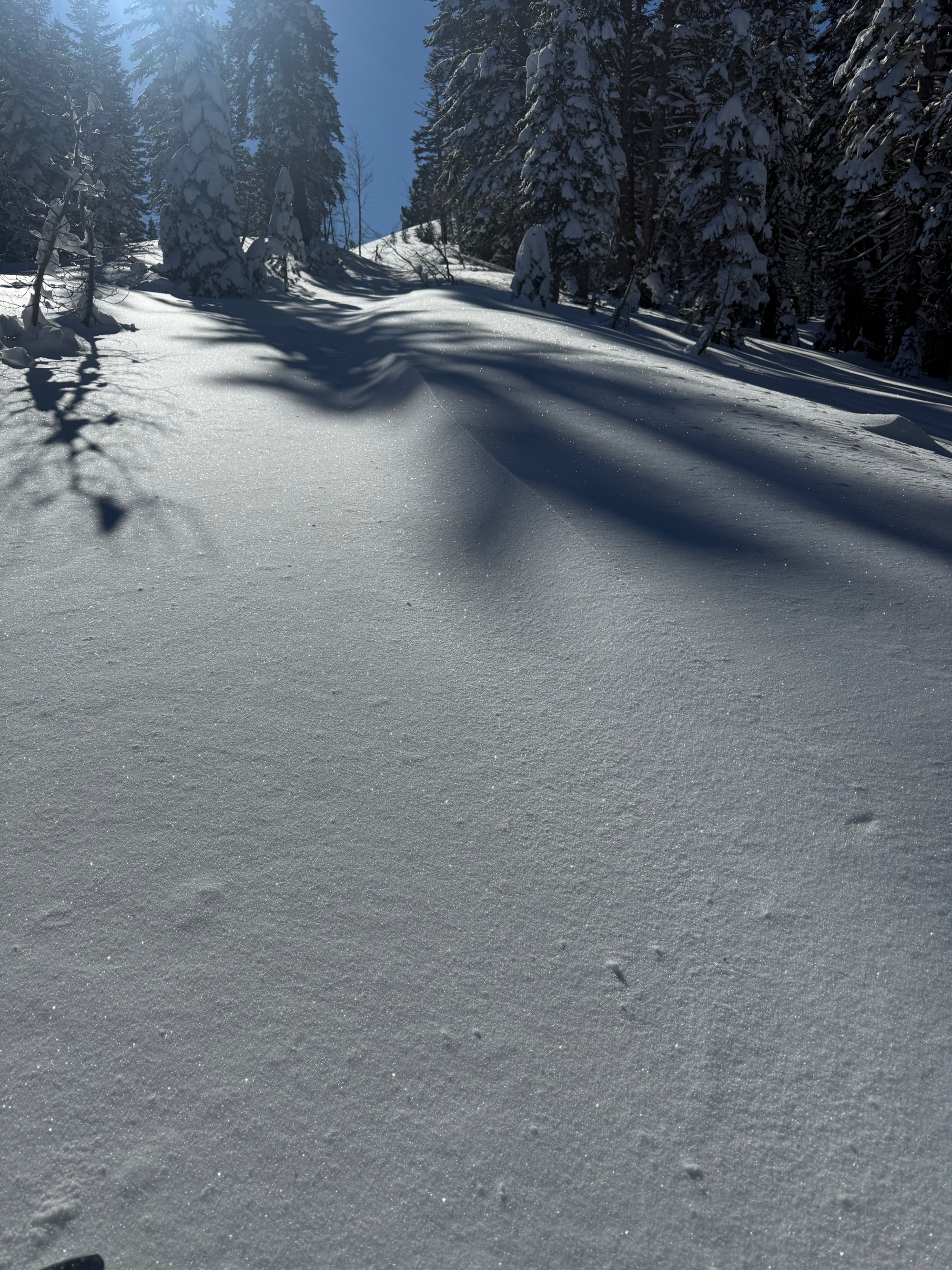
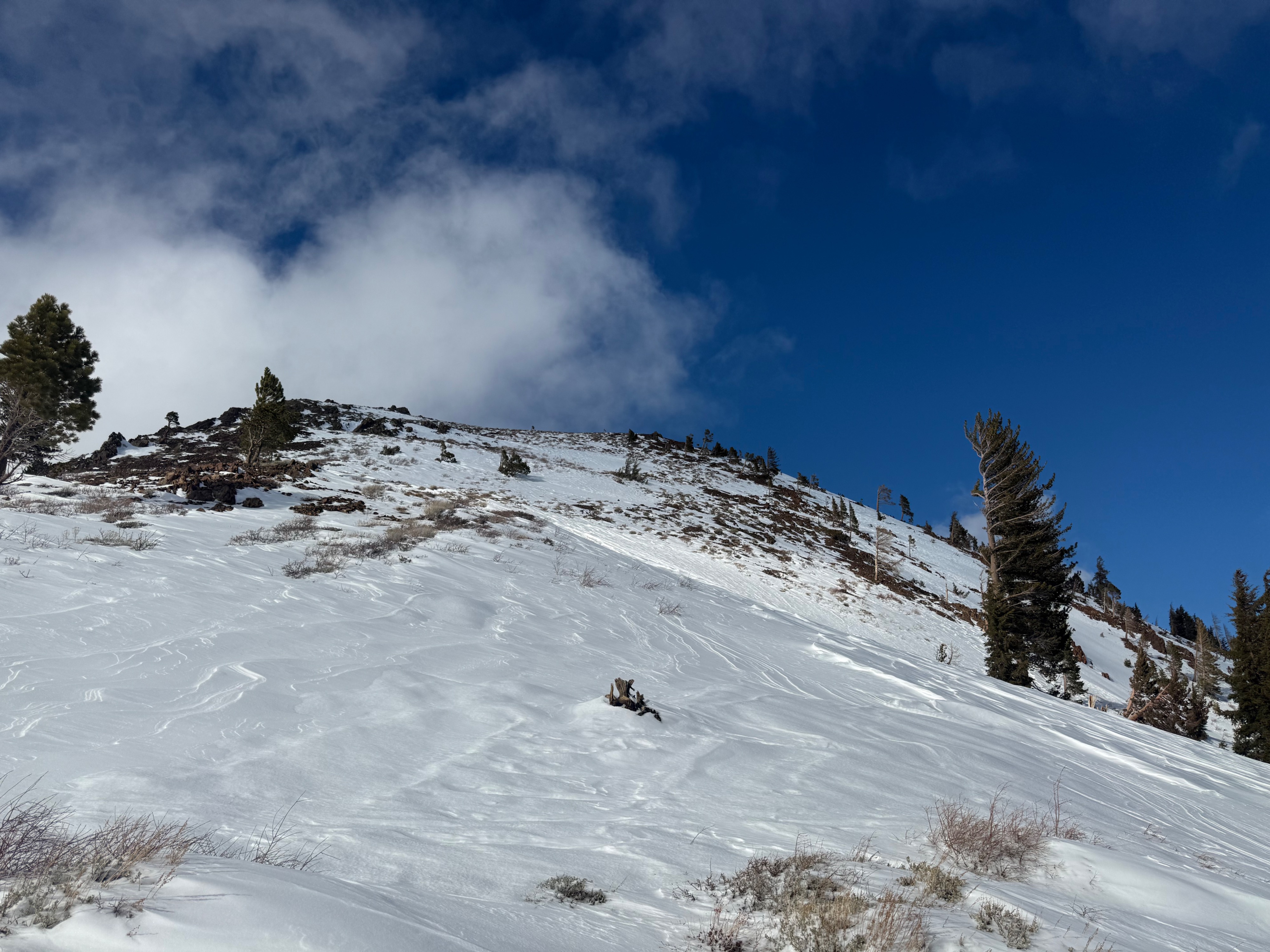
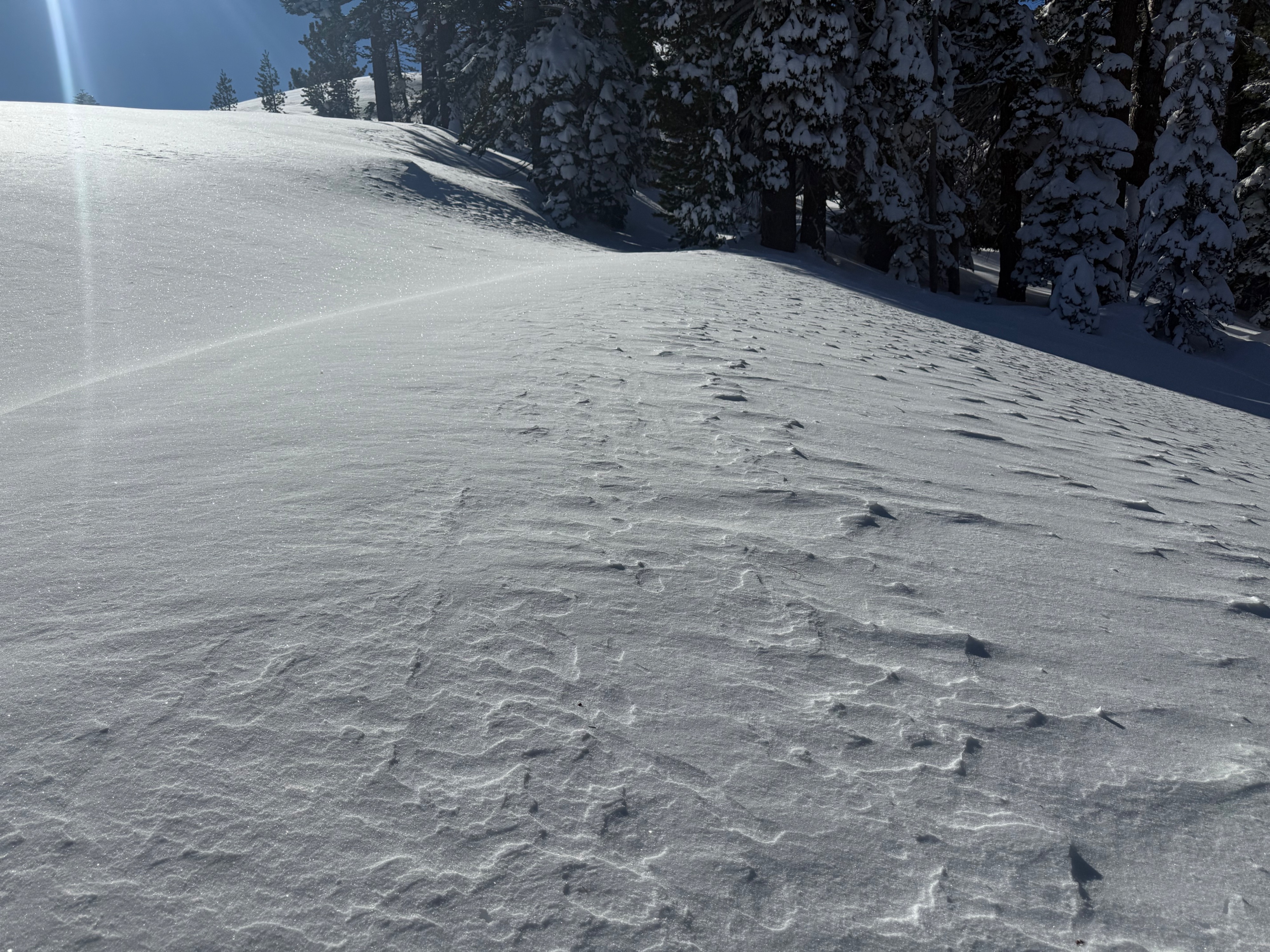
Today's conditions provided a full menu. We toured up into the Red Lake Peak/Crater Lake area. Throughout the day we saw almost all conditions. Dark shaded areas carried good unconsolidated cold snow with surface hoar present at times, where southerly aspects and direct sunshine created tree droppings, rollerballs and even melt freeze crust at the end of the day. Along the way we also encountered sustrugi, supportable wind slabs, wind scoured areas and wind slabs from 1 cm to 15 cm thick in exposed areas throughout the terrain. The interesting thing along the way was, there was no extended cracking within these wind slabs. You could feel the stiff denser snow under foot and hear the hollow sound but no extended cracking occurred. Within the Red Lake Basin we observed two seperate old natural avalanches, one appeared to be from wind loading and the other may have been heat related from the start within the last 48-72hrs, both on different aspects but approximately the same elevation. As expected the ride down provided the same outcome of variable riding in in trees, open areas and all of the above, but overall it was great riding.
We observed two old natural avalanches within the Red lake area.Weather
- Cloud Cover
- few
- Wind Loading
- none
- Snow Avail For Transport
- large amounts
Clear skies at the start of the day with a few clouds developing in the afternoon. Light to no winds throughout the day with near freezing ambient air temperatures.
Snowpack
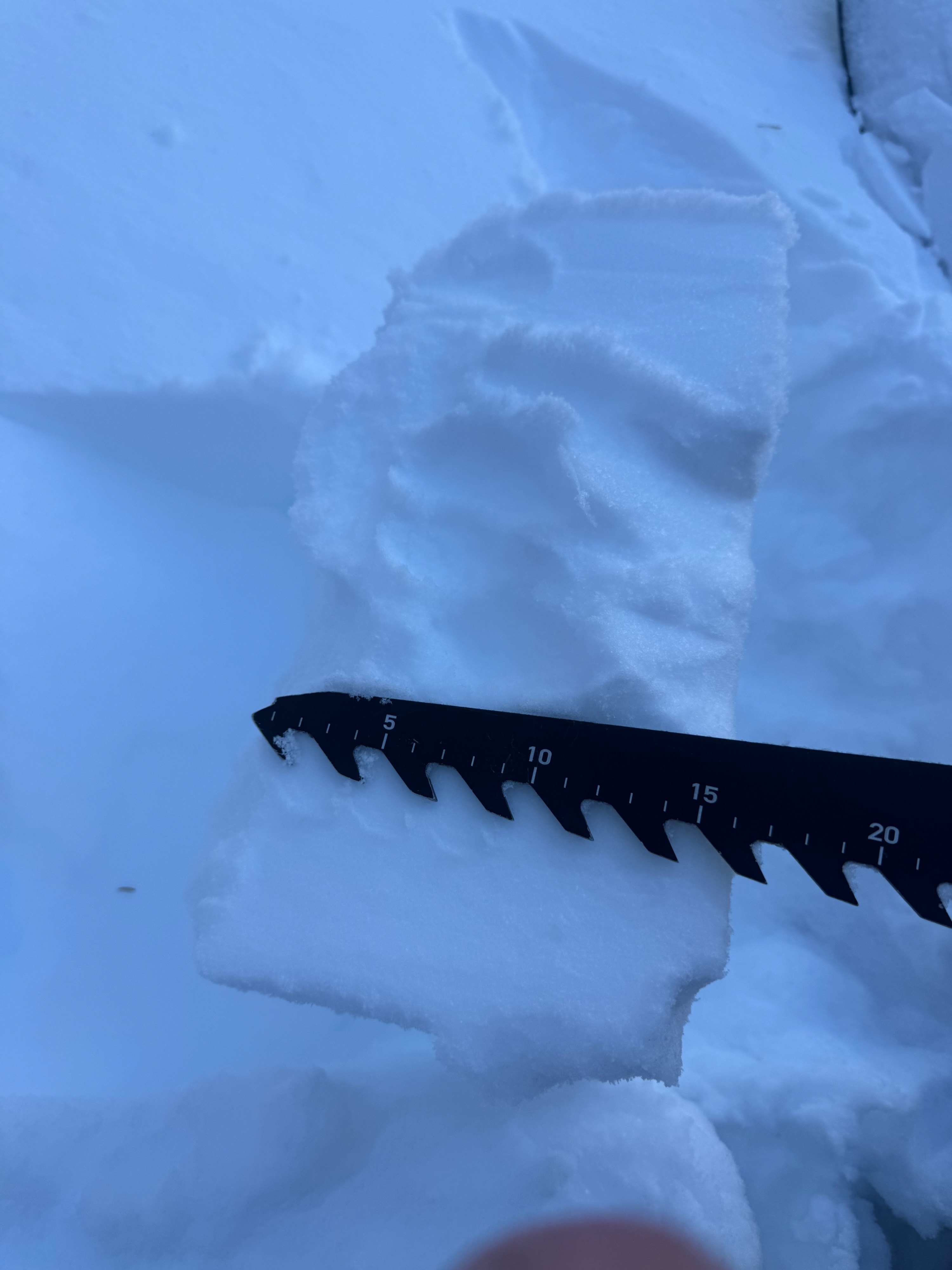
I dug a pit on a N aspect @ 8700'. There is 75 cm of new snow above the January 1st rain crust. This layer was pretty uniformed with defragmented grains and rounded grains. However, there was a density change within this layer about 55 cm down and showed clear results in both the compression test and the extended column test. The extended column test failed 2x on the same layer propagating all the way across. There was a clear density change at this layer due to either temperature gradient within the last storm or wind packed snow during the storm.
Avalanche
- Size
- D2
- Aspect
- N
- Trigger
- N
- Elevation
- 9500 ft