
Quick report
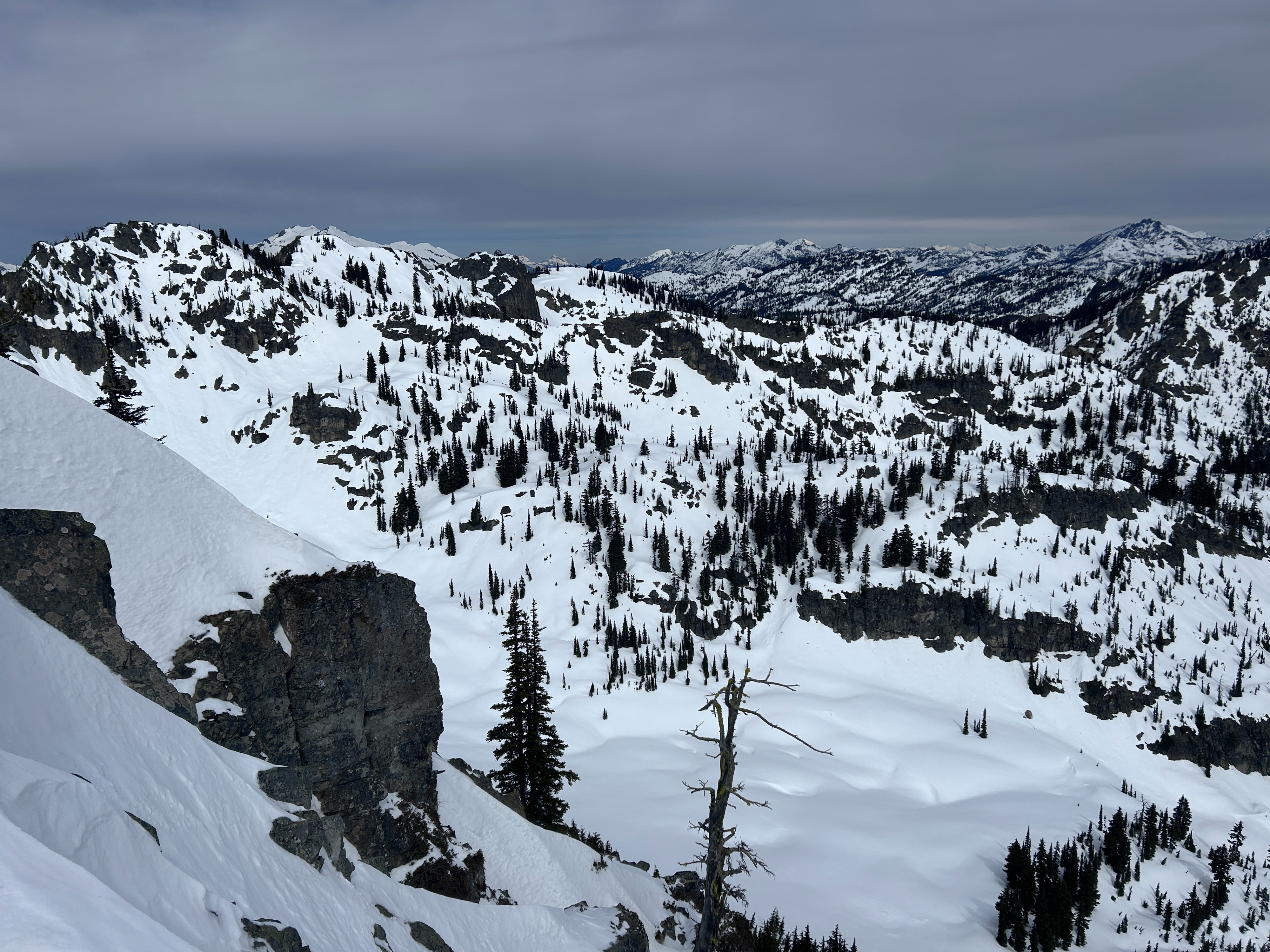
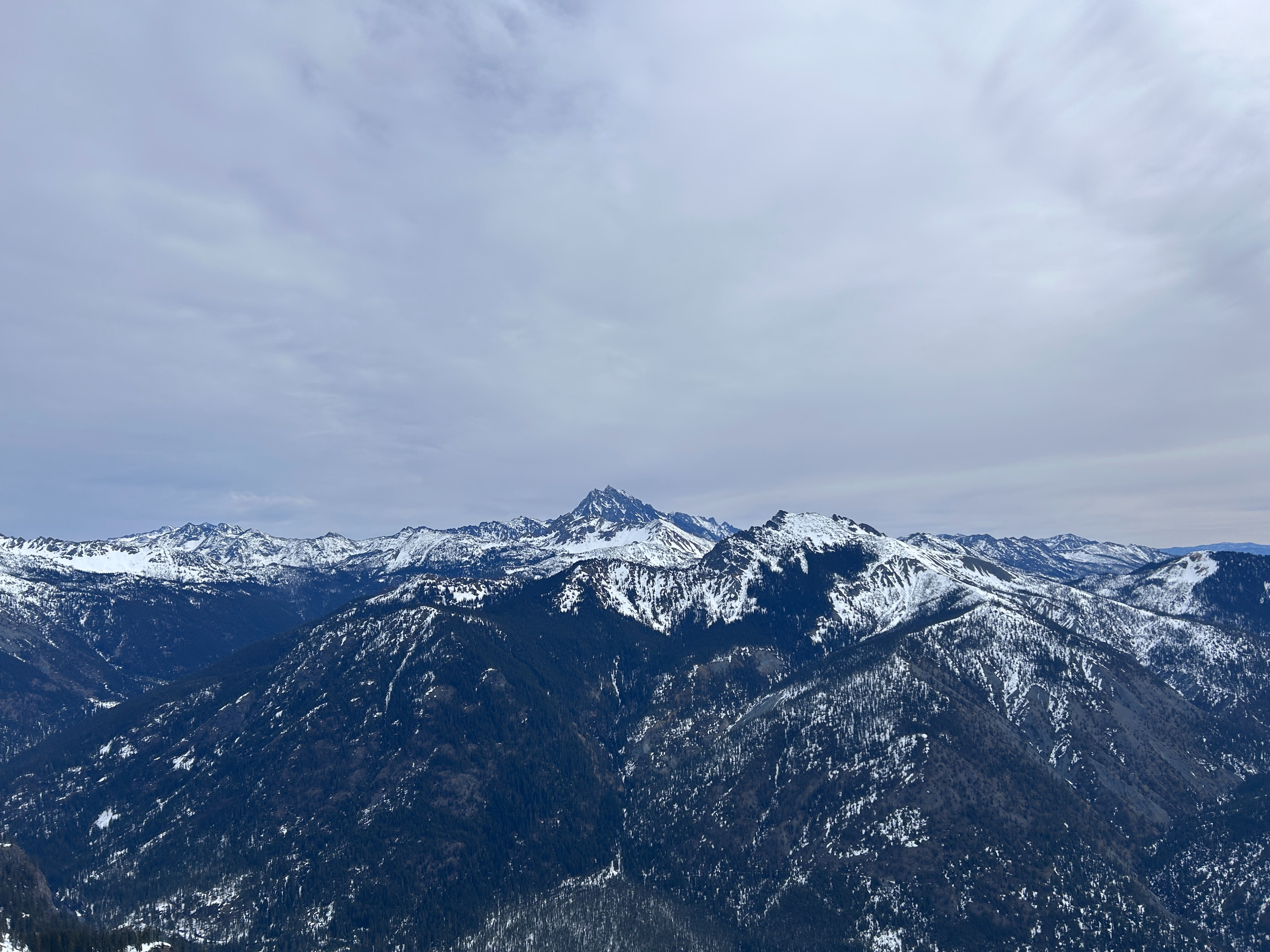
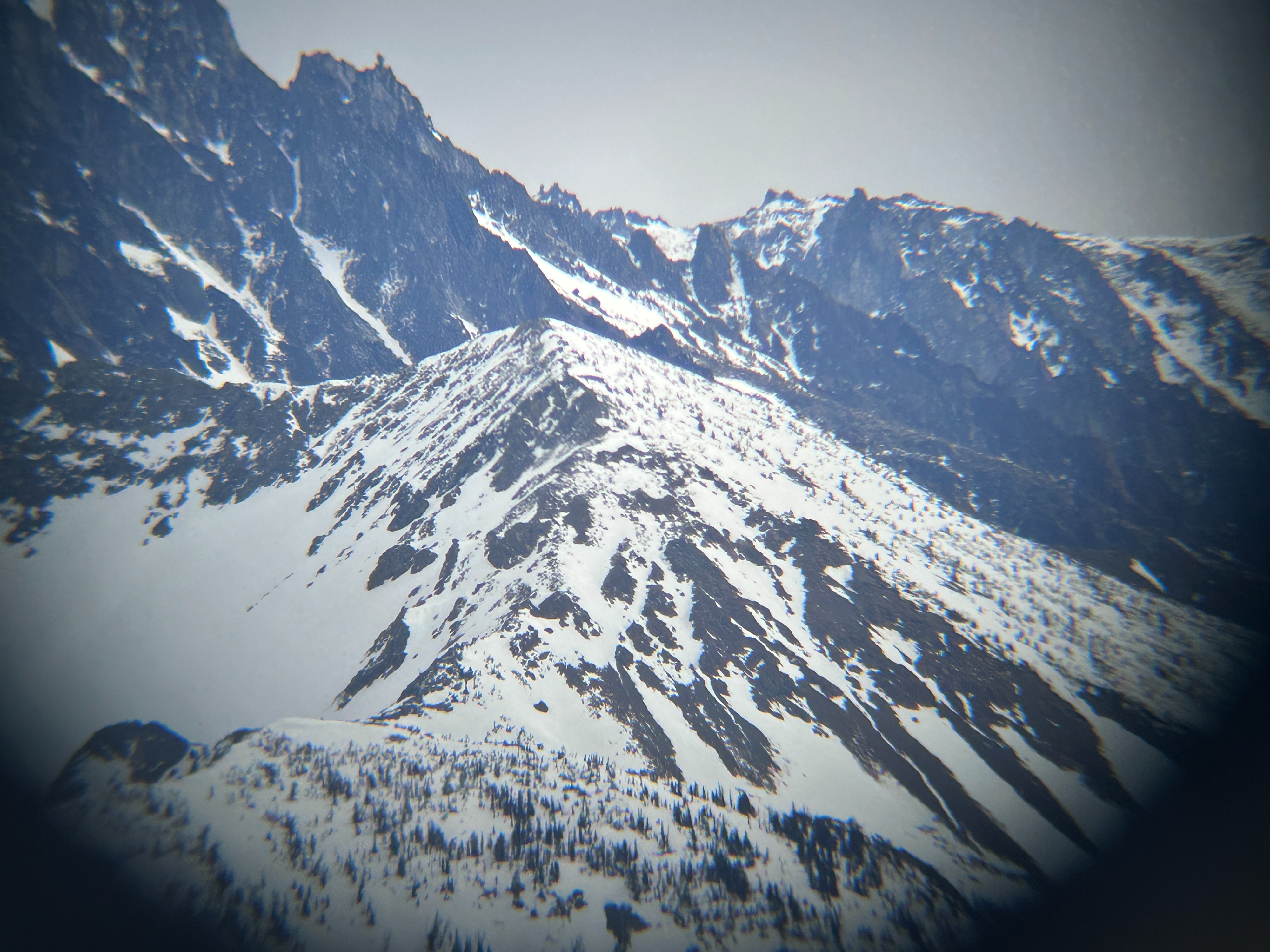
Access is a big challenge to terrain higher where you can recreate on snow. Snow coverage is very aspect, elevation, and slope angle dependent. The steeper a slope is, the less likely it is to retain snow, unfortunately. But there's plenty of it still at upper elevations on north-east aspects, and surfaces are even soft and smooth thanks to near-surface faceting. The rest of the snowpack is capped by very thick and hard crusts/refrozen snow, so deeper instabilities are non-existent at this time.
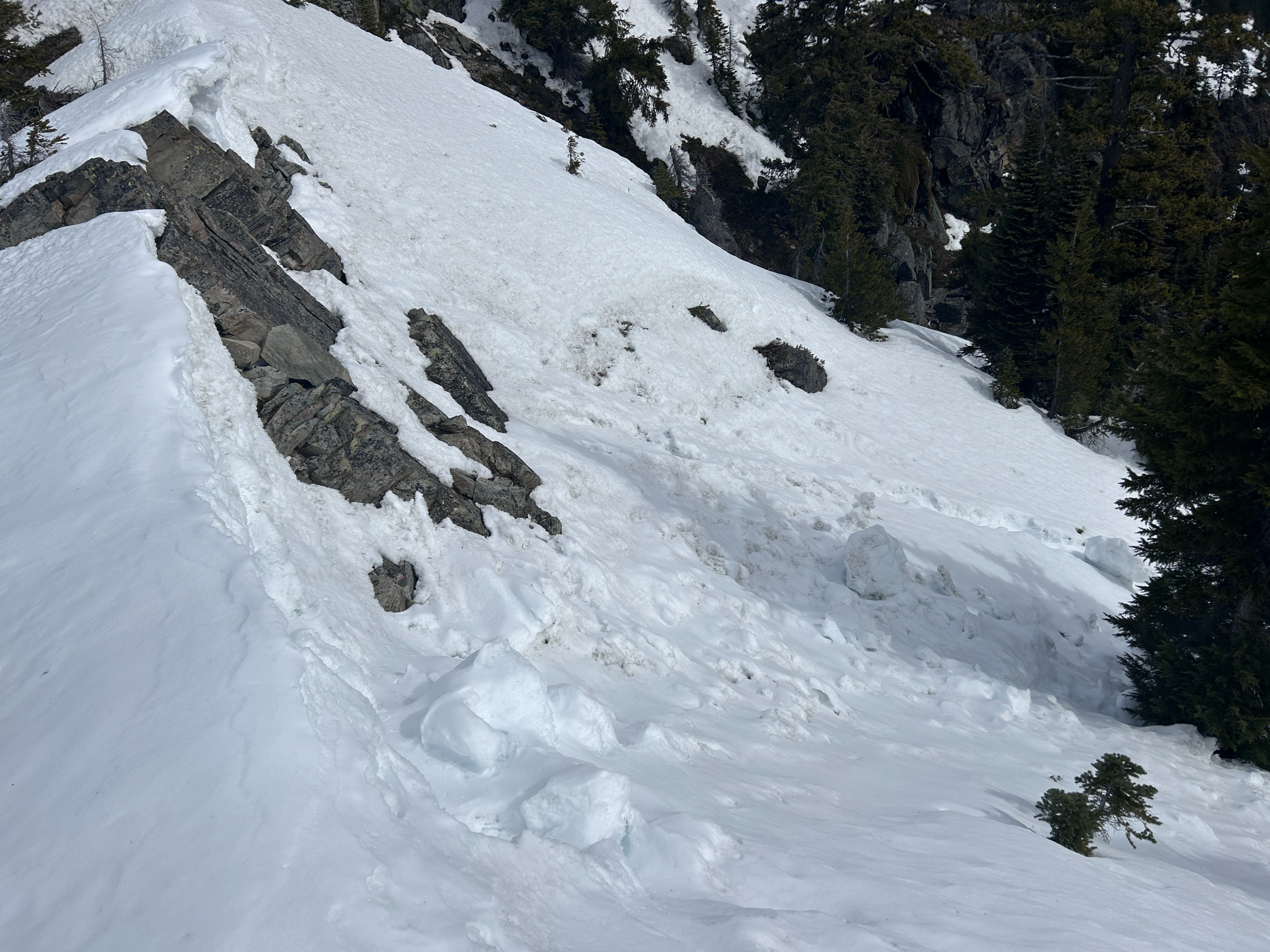
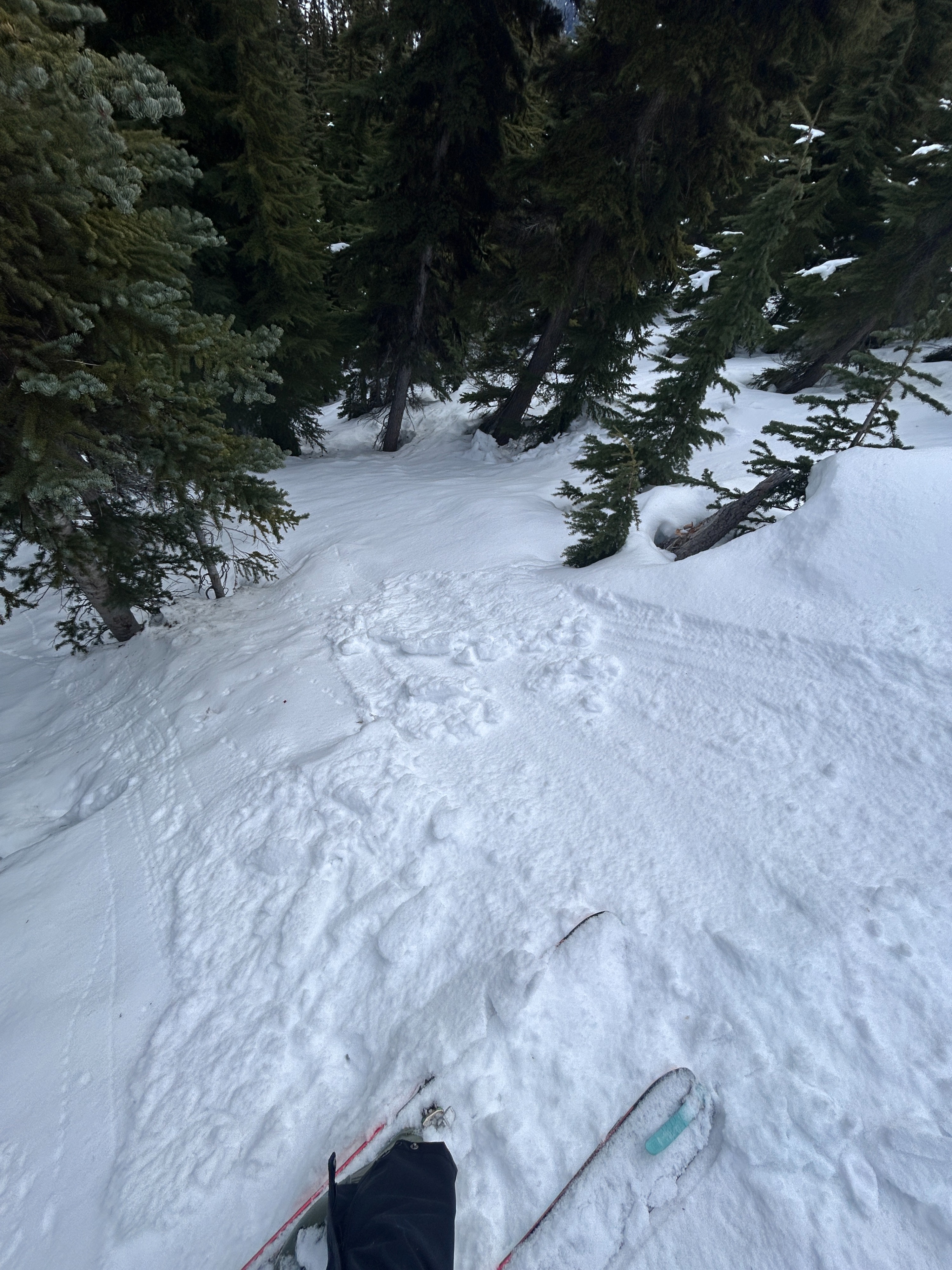
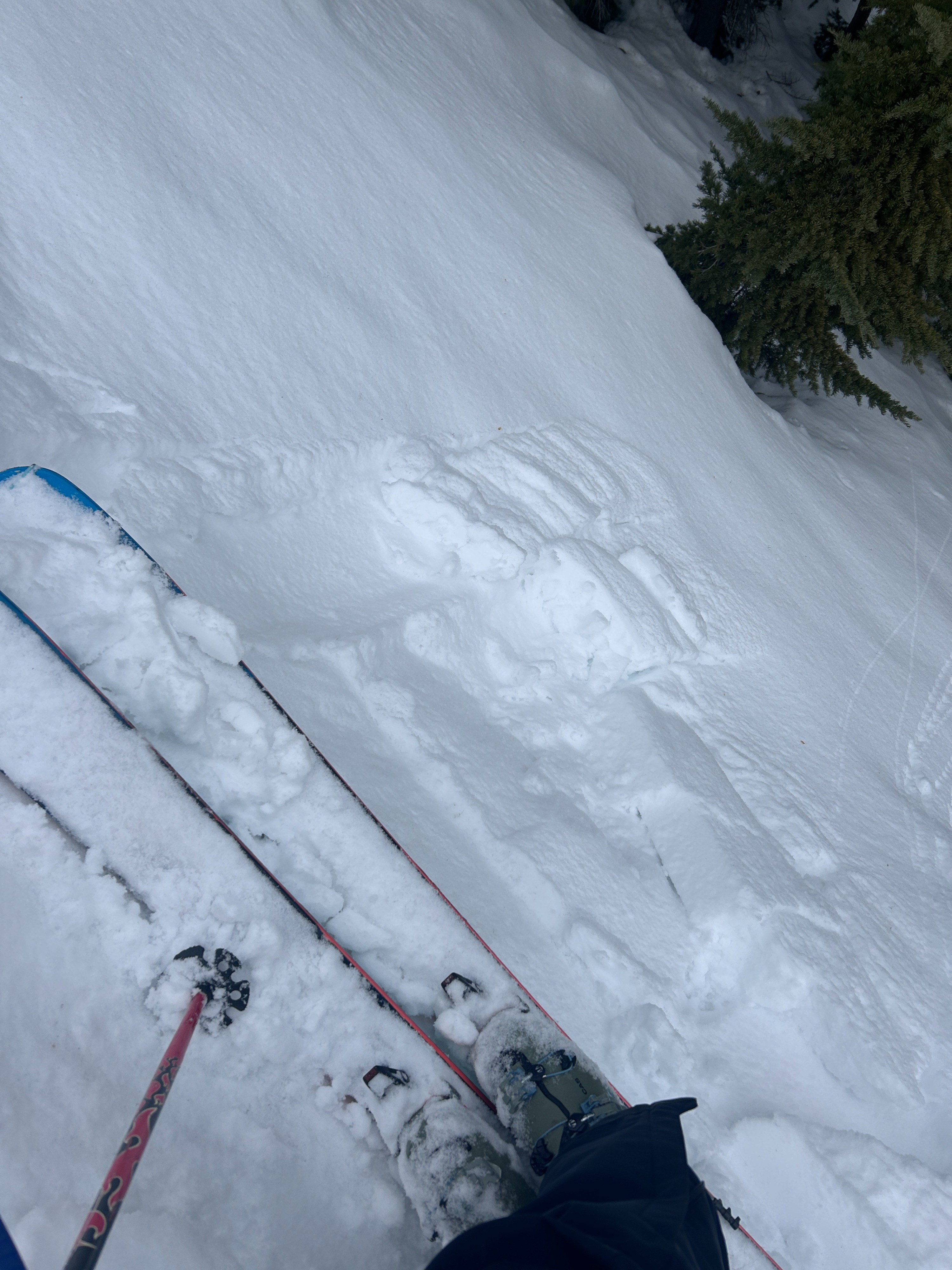
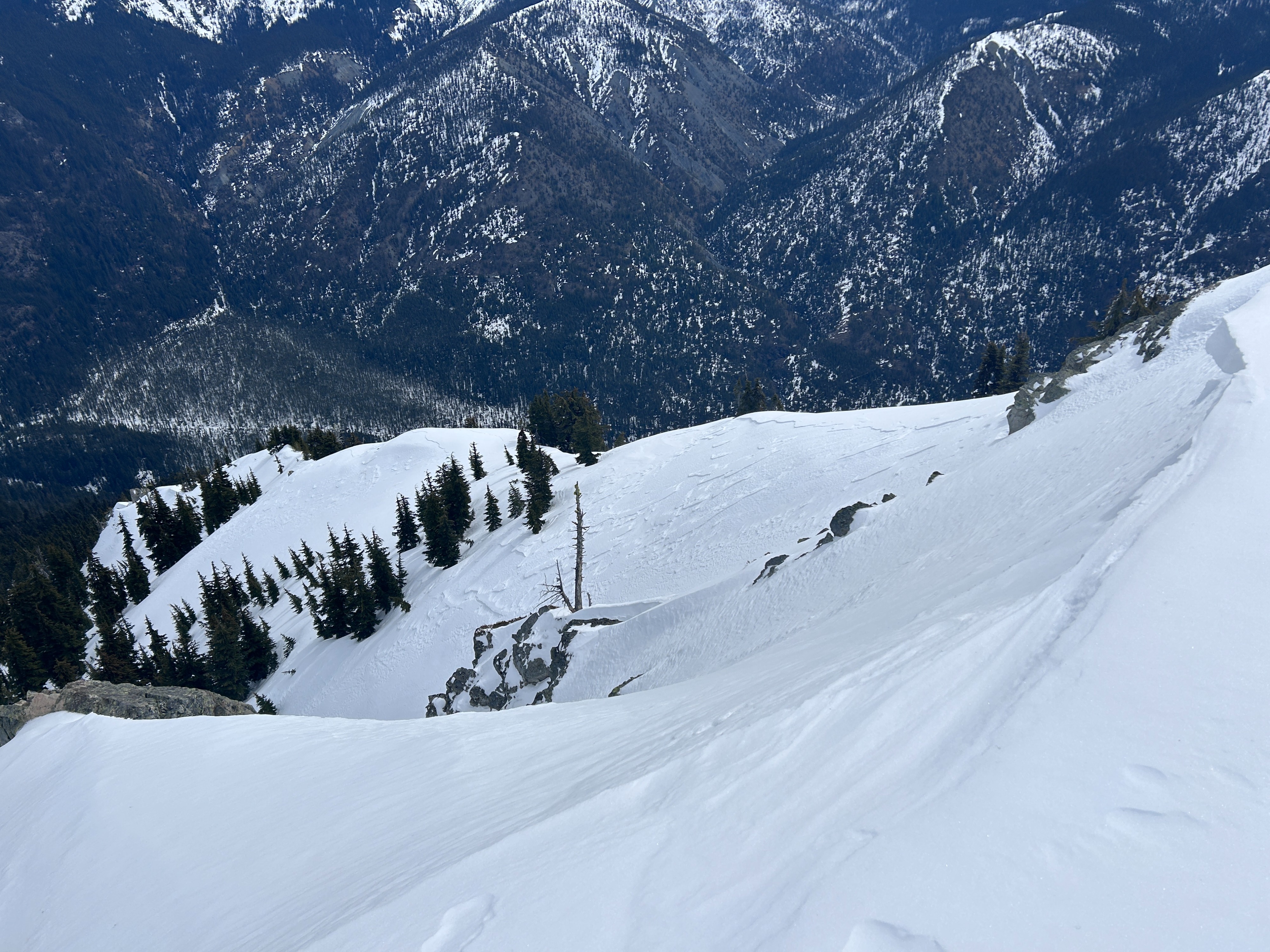
I was able to push some soft surface snow that exists at middle and upper elevations on N-E aspects that slid easily on the crust below. It could neither be categorized as a slab of snow nor dry loose, it had a little bit of both. But especially on steep unsupported terrain features, it clearly lacked a good bond to the crust. I observed widespread evidence of cornice fall but everything was very old. All the cornices I observed were well cut back.Weather
- Air Temp
- 28+
- Cloud Cover
- broken
- Wind Loading
- previous
- Recent Snowfall
- 0
- Snow Avail For Transport
- none
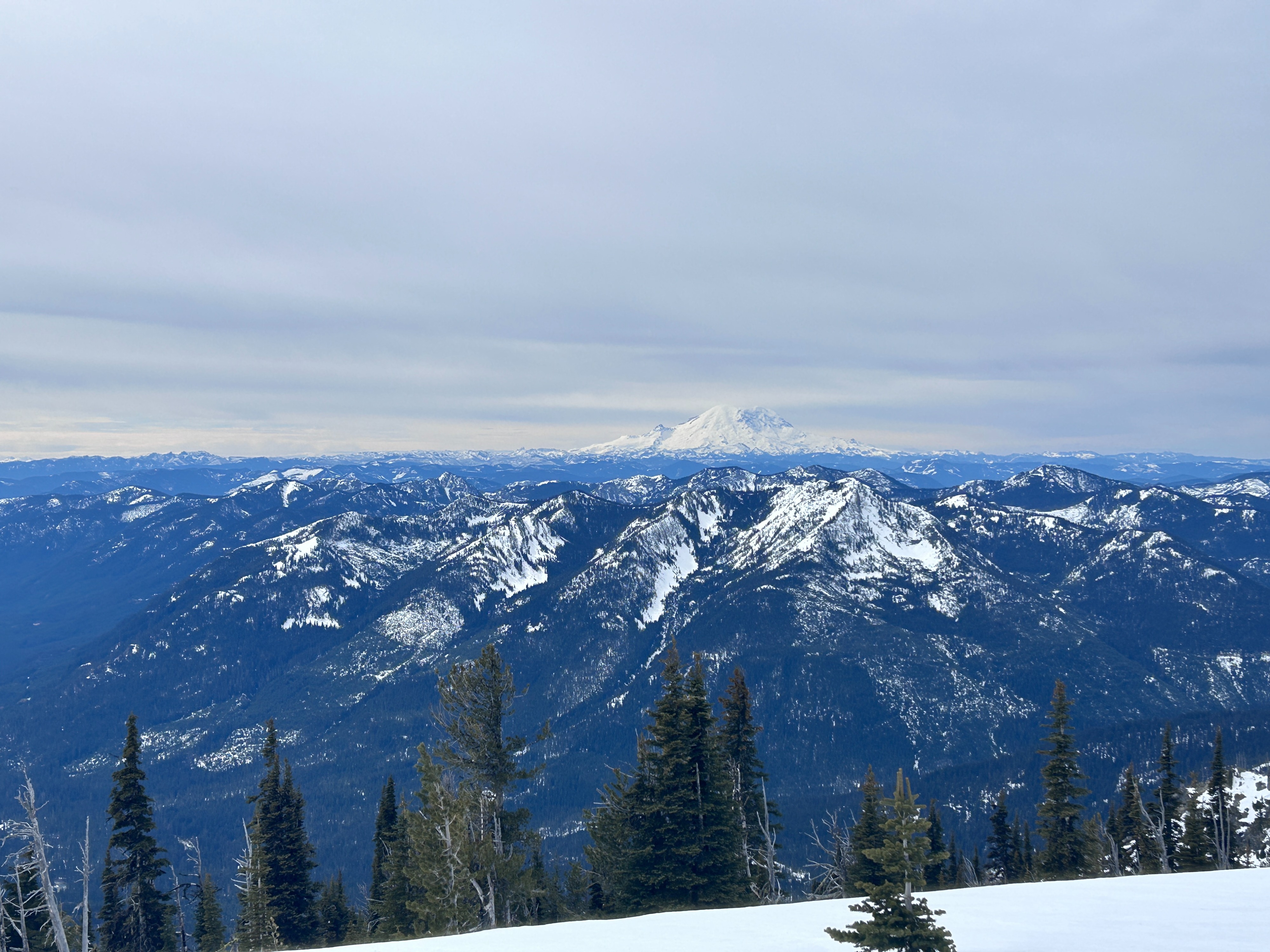
The truck read 28F at the trailhead at 8am, and temperatures definitely increased throughout the day, but there was a noticable drop in temps right at 4000 ft on my way up. The wind was calm-light and from the south. The morning started out with thin high clouds, allowed for filtered sunshine. Thicker clouds rolled in and covered the sun more fully for long periods of the day. As I was exiting the field in the truck, the clouds thinned again and more full sunshine came in.
Snowpack
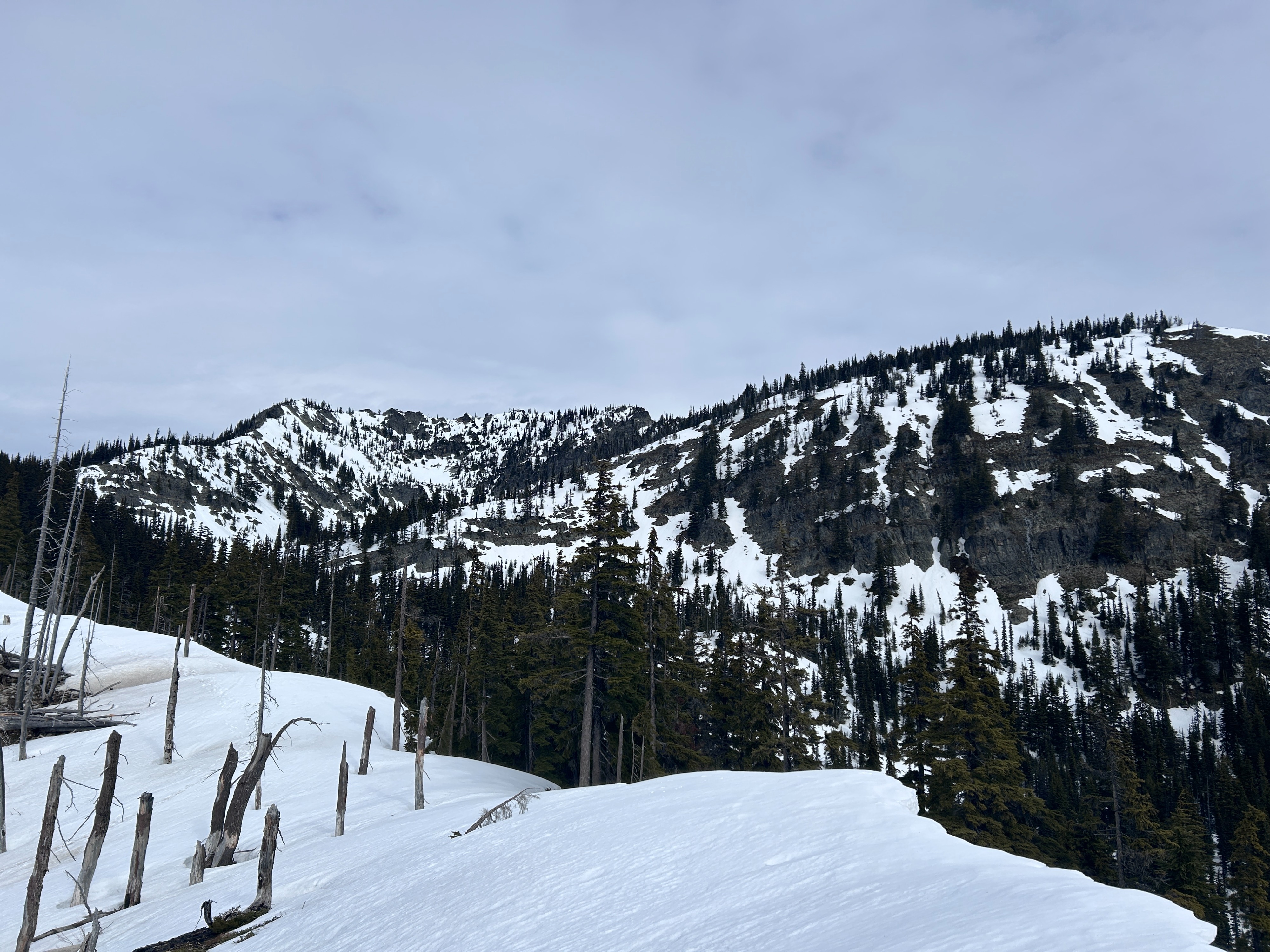
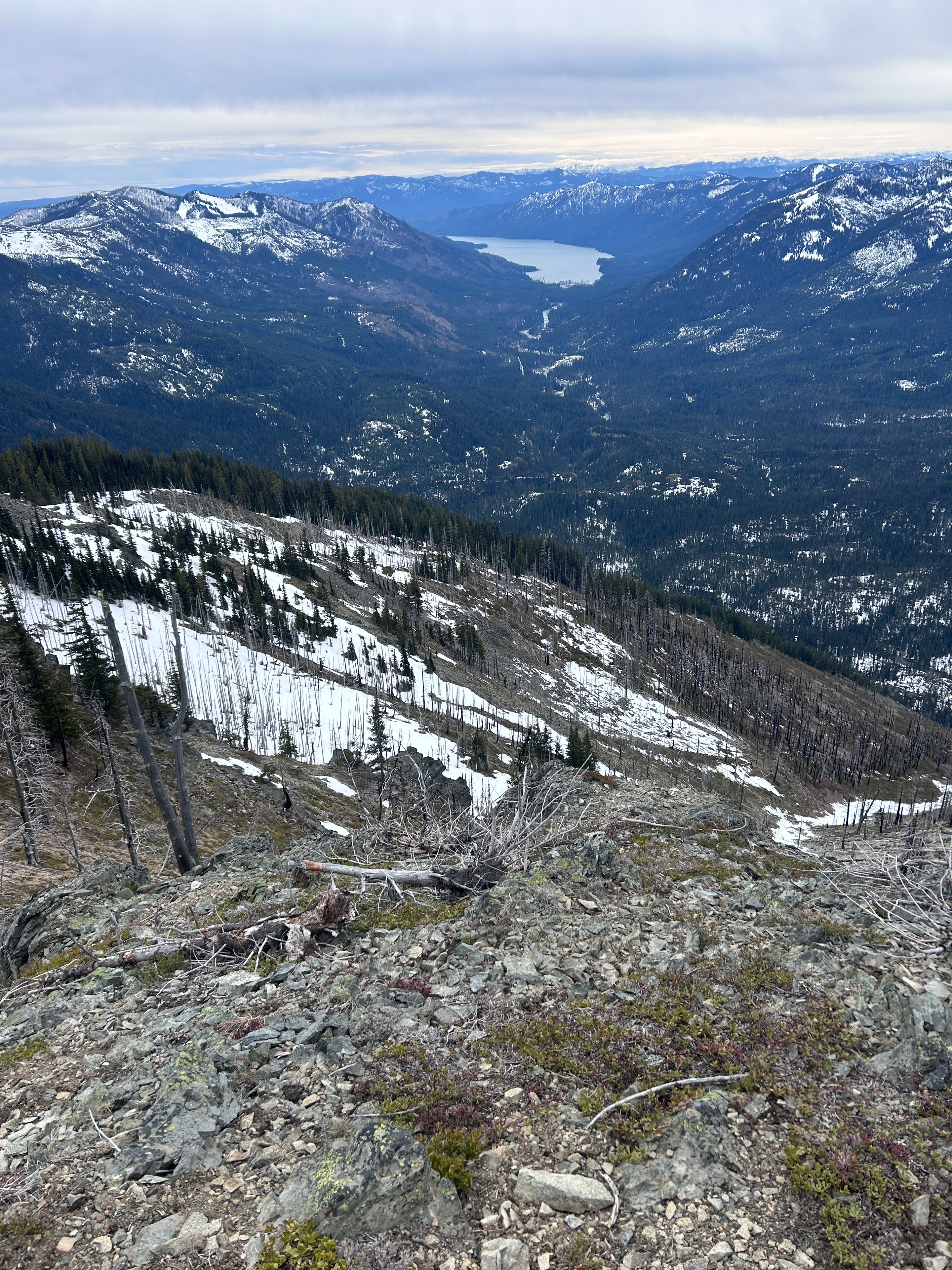
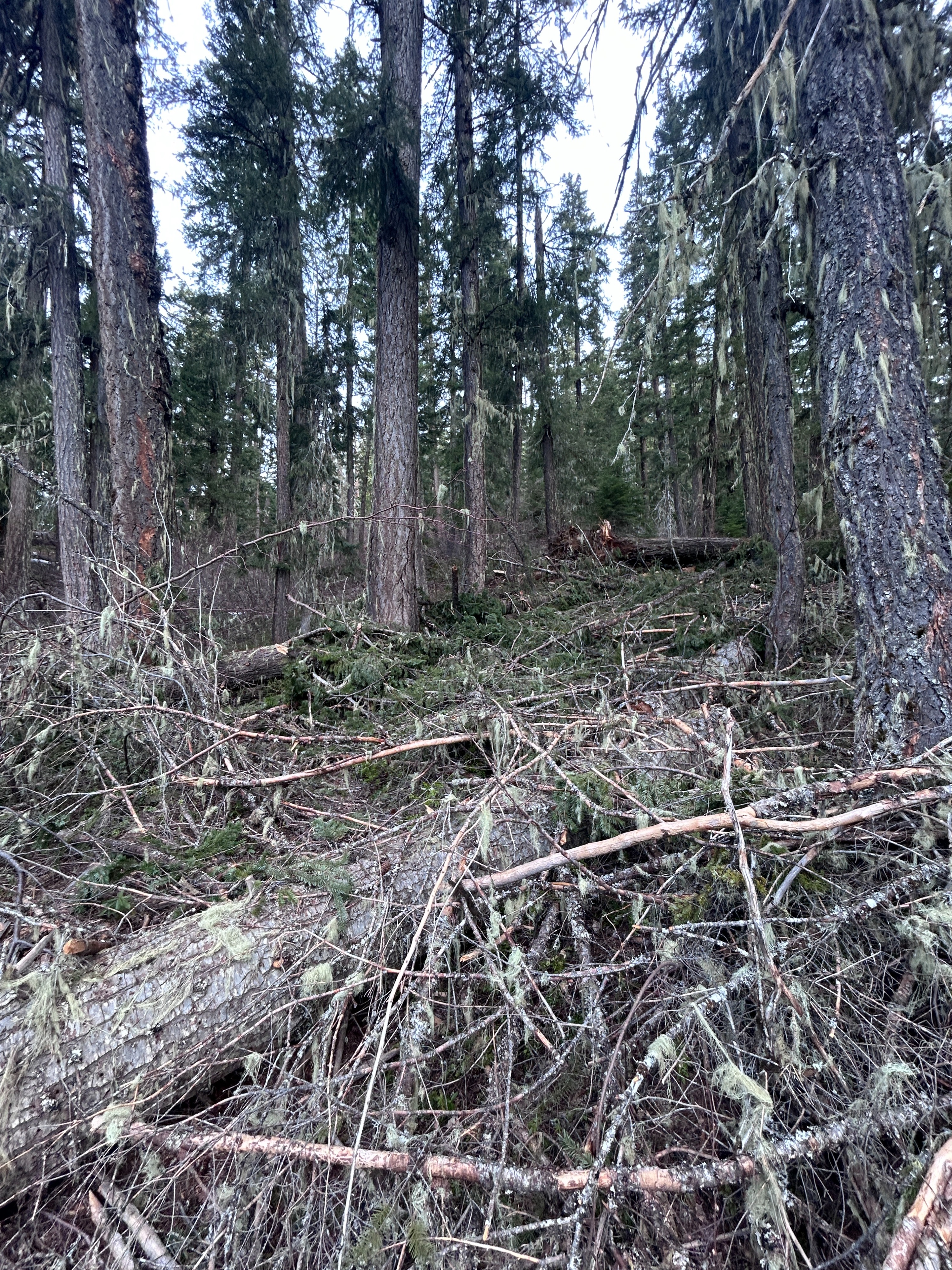
I ascended the Davis summer trail, which stays on south and southeast aspects. I begain seeing whispers of snow at 3600 ft. At 4300 ft, I was able to transition to skinning, but snow coverage was still not excellent all the way to the summit of Davis on similar aspects. From what I could tell, north and east aspects have much better coverage, and I suspect you could ski/skin to at least 4000 ft.
As the day was overall cloudy and a bit on the chilly side, surfaces remained firm and supportable throughout much of the day at all elevations. Although firm, surfaces were edgeable and I did not find a need for ski crampons. At upper elevations on southerly aspects, you can find small pockets of soft, recycling snow. This snow is more consistent on north and east aspects at both middle and upper elevations. I even found a pocket on an east aspect at middle elevations that was 2-3 inches of soft, non-faceting snow. By the afternoon, surfaces at lower elevations were punchy, and I was often sinking past my ankles.
I dug a pit on an east aspect at 6351 ft. The depth of the snowpack at this location was 228cm (90in) I found 3cm (1in) of near surface facets at the top. This sits on layers of crusts that are knife hard, however in the upper portion of the snowpack, there is a bit of crust that is faceting. Halfway down in the snowpack, I found less hard snow that still retained some moisture from a recent prolonged warm spell. As this was under at least 50cm of knife hard crusts, I didn't find it particularly concerning.
I dug another very quick pit on a south aspect at 6344 ft to compare. The depth of the snowpack was 120cm (47in). I found 45cm worth of knife hard crusts from the surface down. Below this was similarly dry/moist snow.
Avalanche
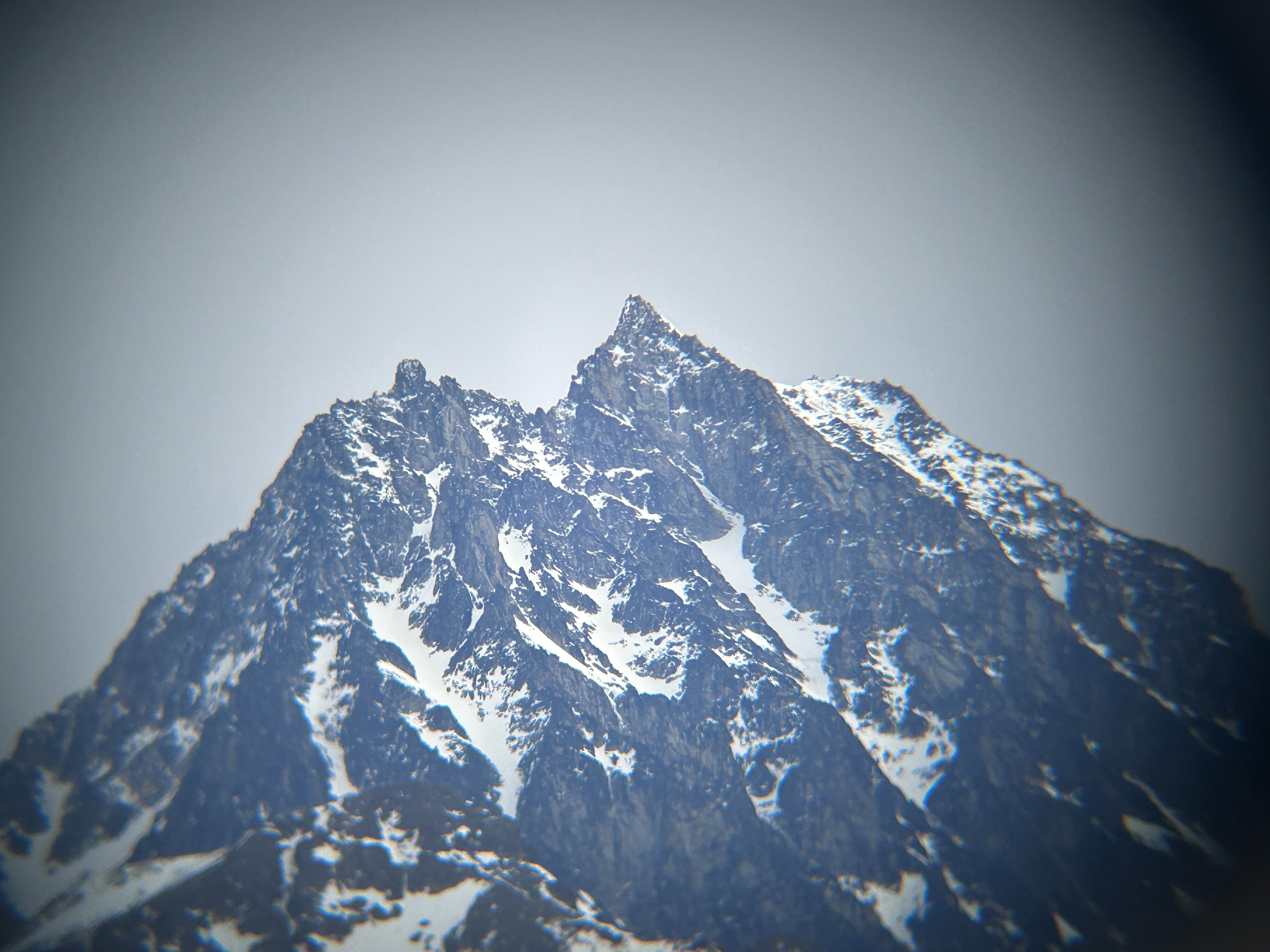
Even in glassing distant terrain, I did not observe any new or old avalanches.