
Quick report
- Cracking
- specific
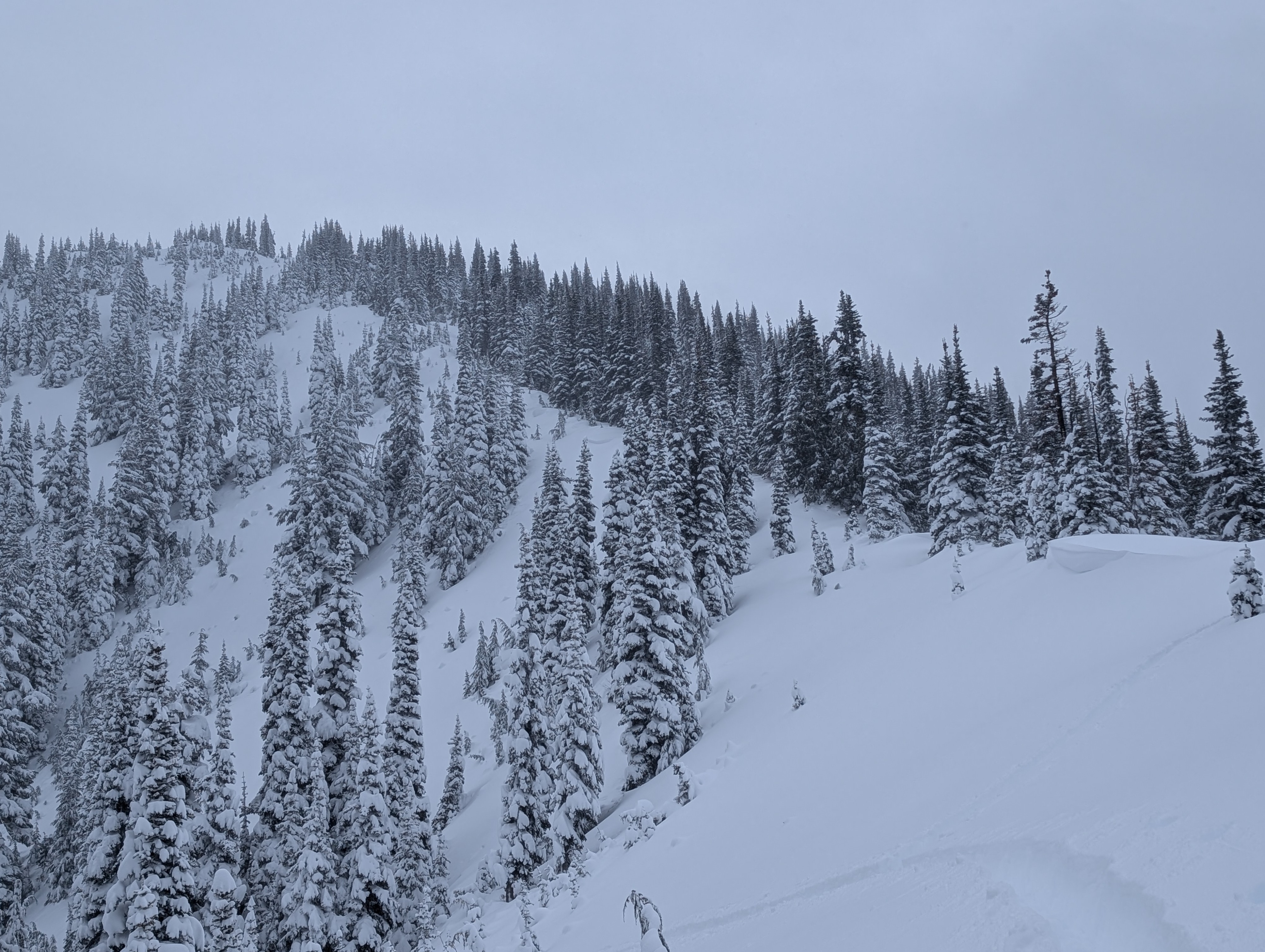
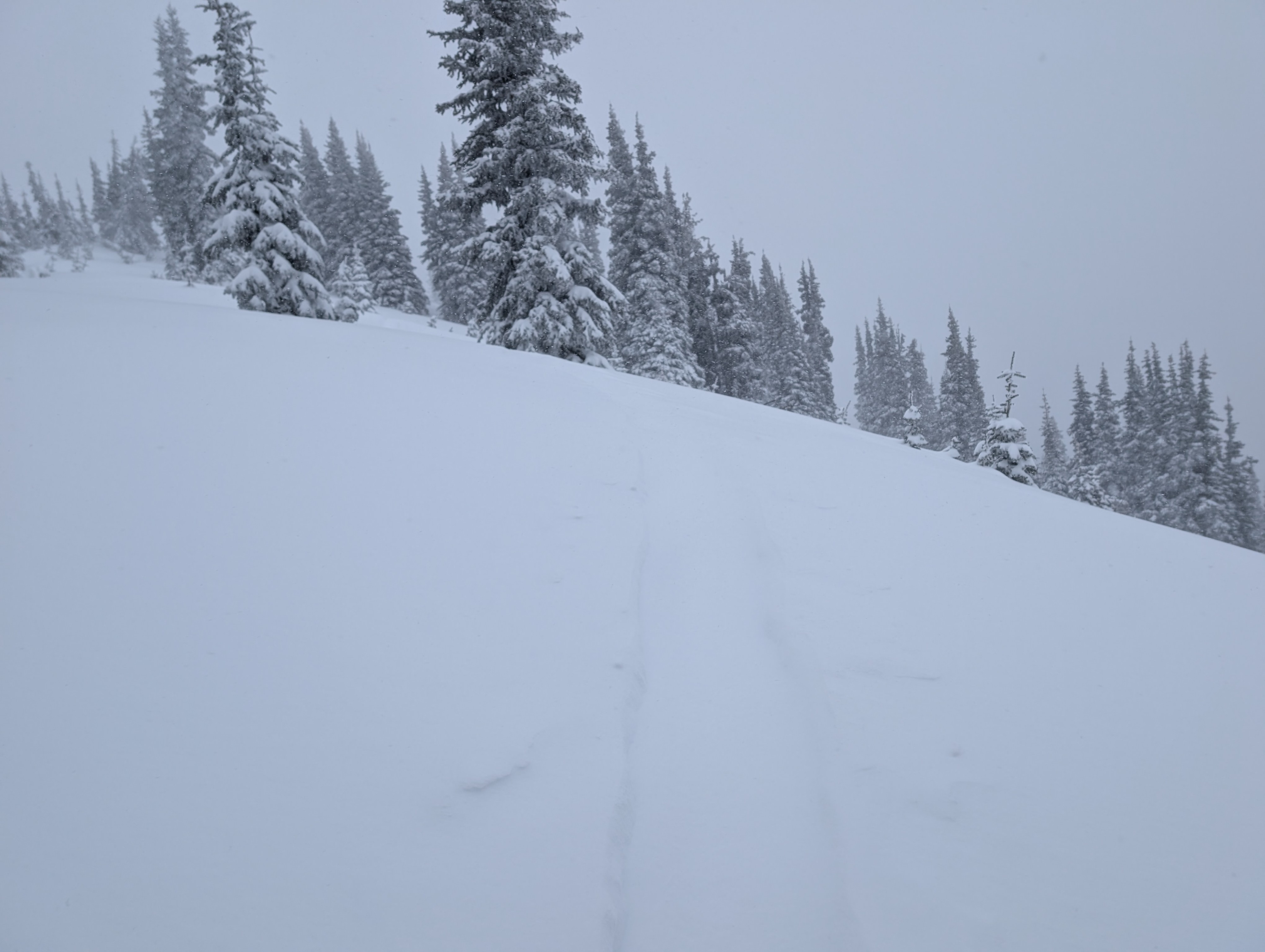
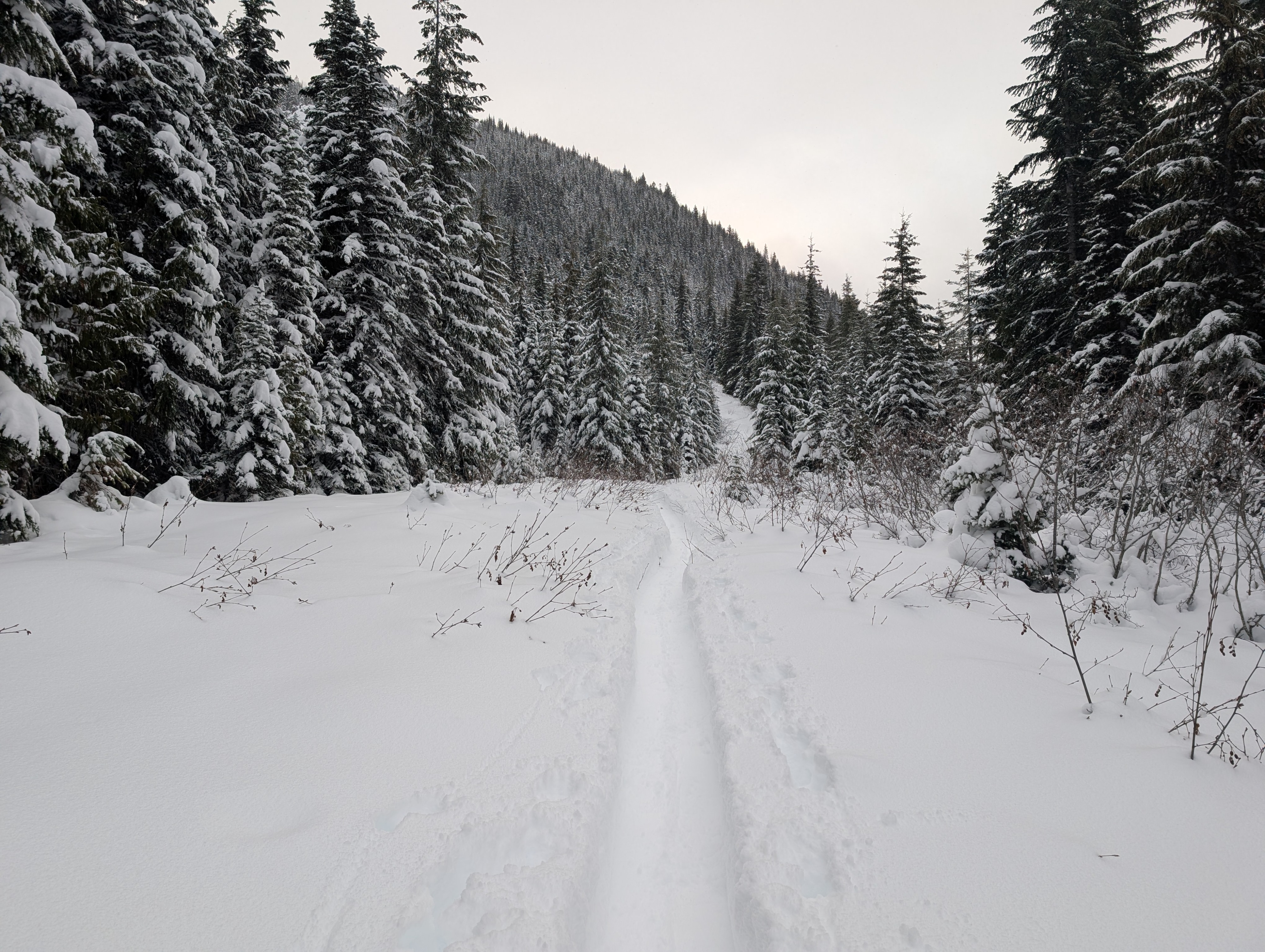
Snowpack depth is increasing by the day as snow falls and winds redistribute snow. Coverage is much improved at lower elevations, but bushes, willows, and rocks are still poking out of the snow surface. We were surprised at how much recent snow there was and although it was fairly low-density, it still felt thick when skiing. We observed active wind transport along ridgelines as our skin track filled in between laps, while cornices and wind pillows grew. The loading was enough to deter us from certain slopes that looked mighty inviting.
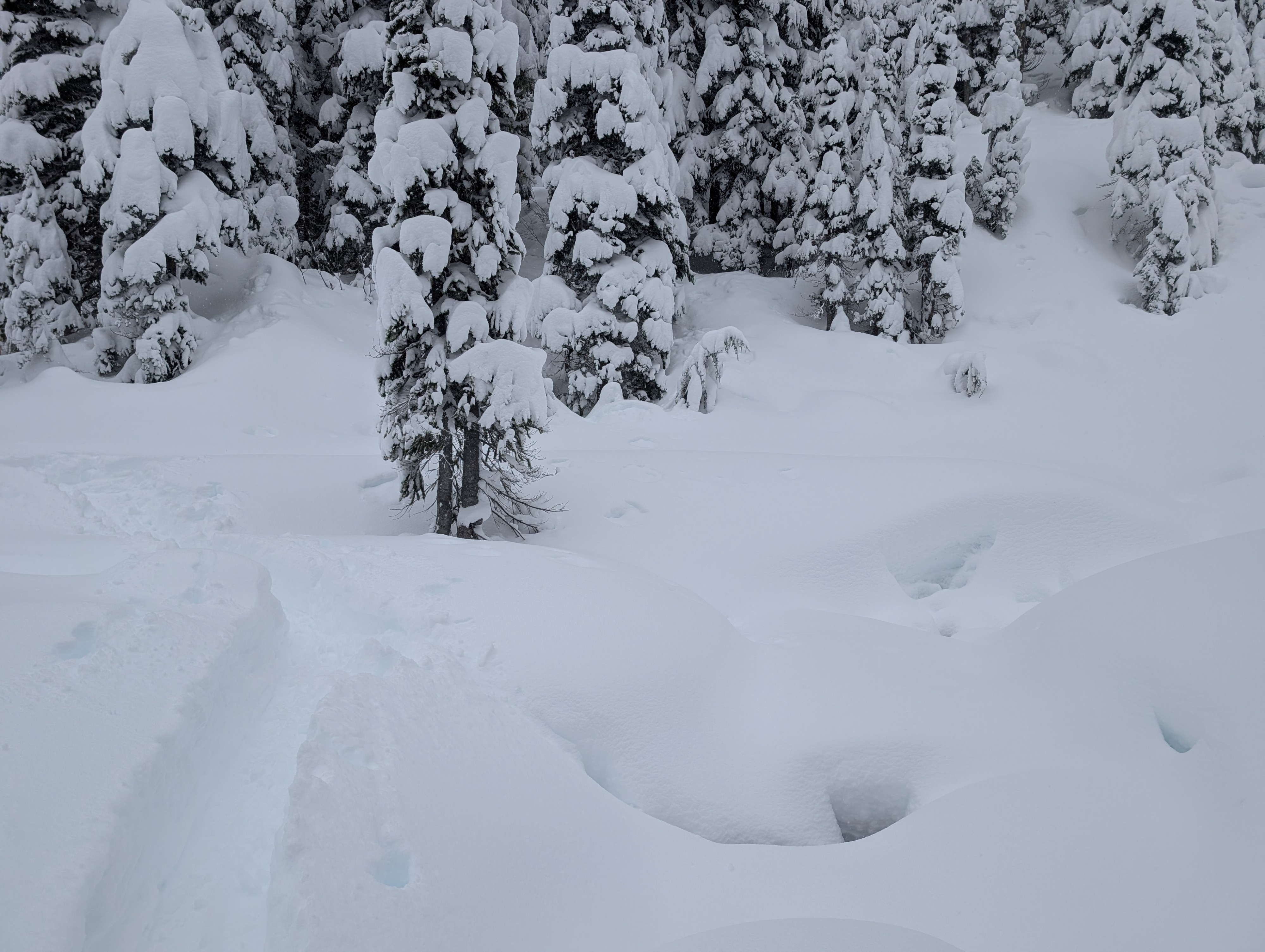
Creeks are still open and may be more hazardous than ever. They're getting harder to spot, but the soft snow around their edges can give way easily.
Two shallow natural avalanches in the area were spotted by professionals. One near Ted's Buttress and another on the shoulder between Bullion and Pickhandle Basins. Some cracking was observed in wind-stiffened terrain or near fresh cornices.Weather
Snowing and cloudy most of the day with some wind along ridgelines. The morning hours were generally a lull in the weather, and I even spotted some blue sky for a hot second. Snow intensity increased around 1:00 pm as I exited the field.
Snowpack
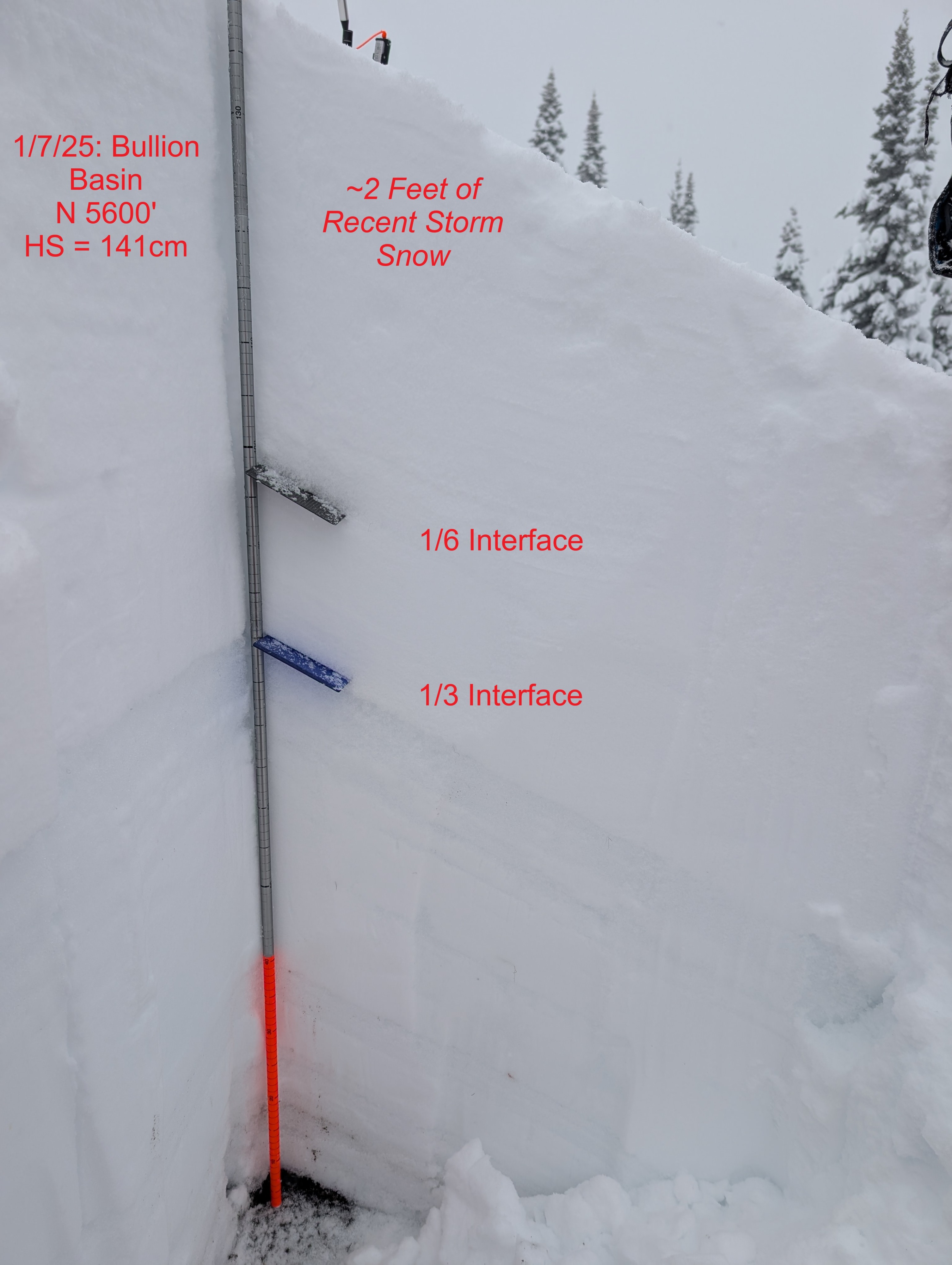
F to 4F recent storm snow sits over the 1/3 interface throughout the terrain. The depth of said snow ranges based on elevation, tree cover, and exposure to wind. In the meadow below Bullion Basin, I found roughly 45 cm of snow over the crust. On the shoulder of Bullion Peak, that depth increased to 60cm, probably with some help from the wind. A midstorm interface from 1/6 was highlighted in small and large column tests but did not propagate during extended column tests.
I also received failures at the 1/3 interface, but again, no propagation occurred.