
Quick report
- Collapsing
- specific
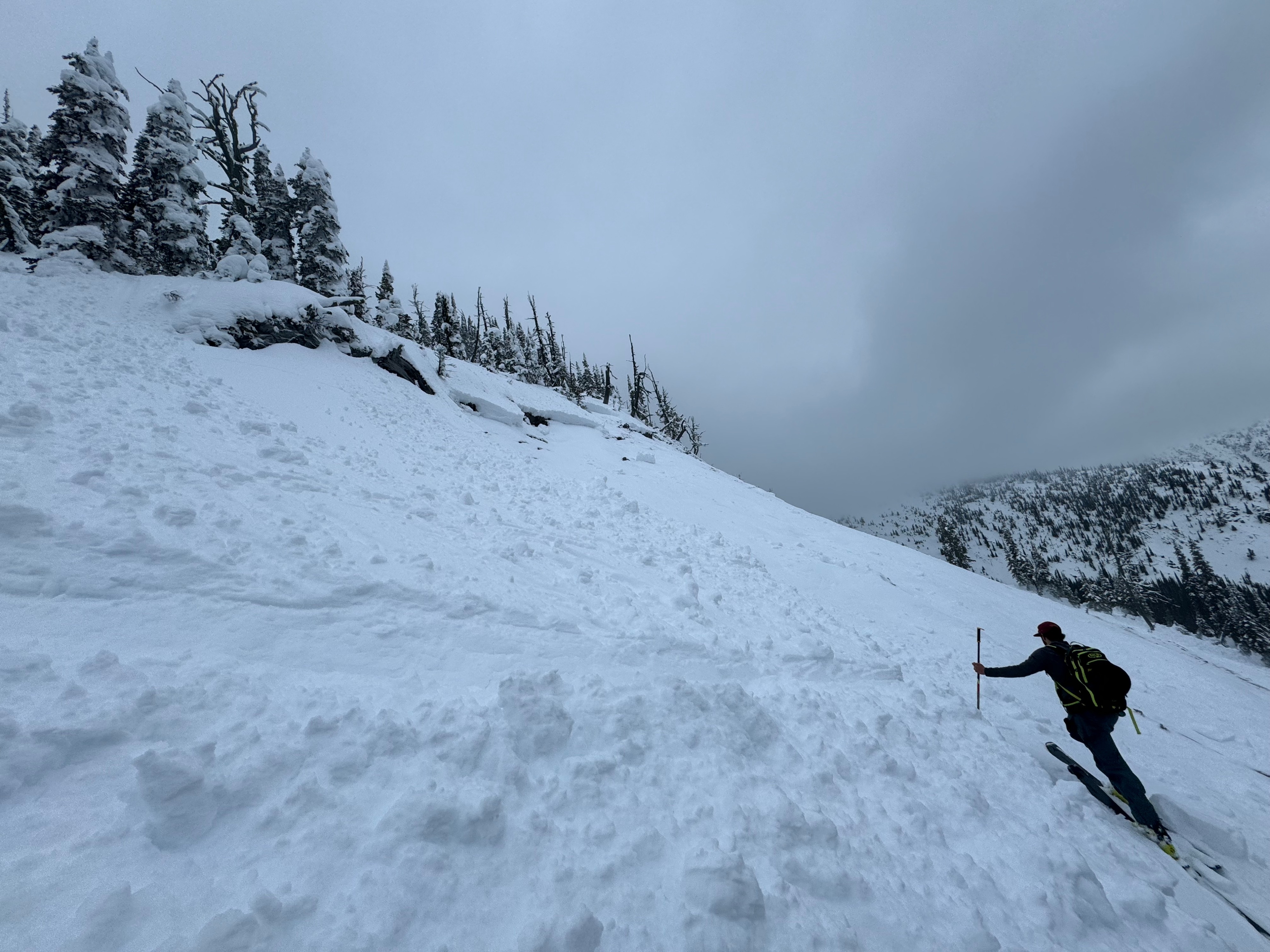
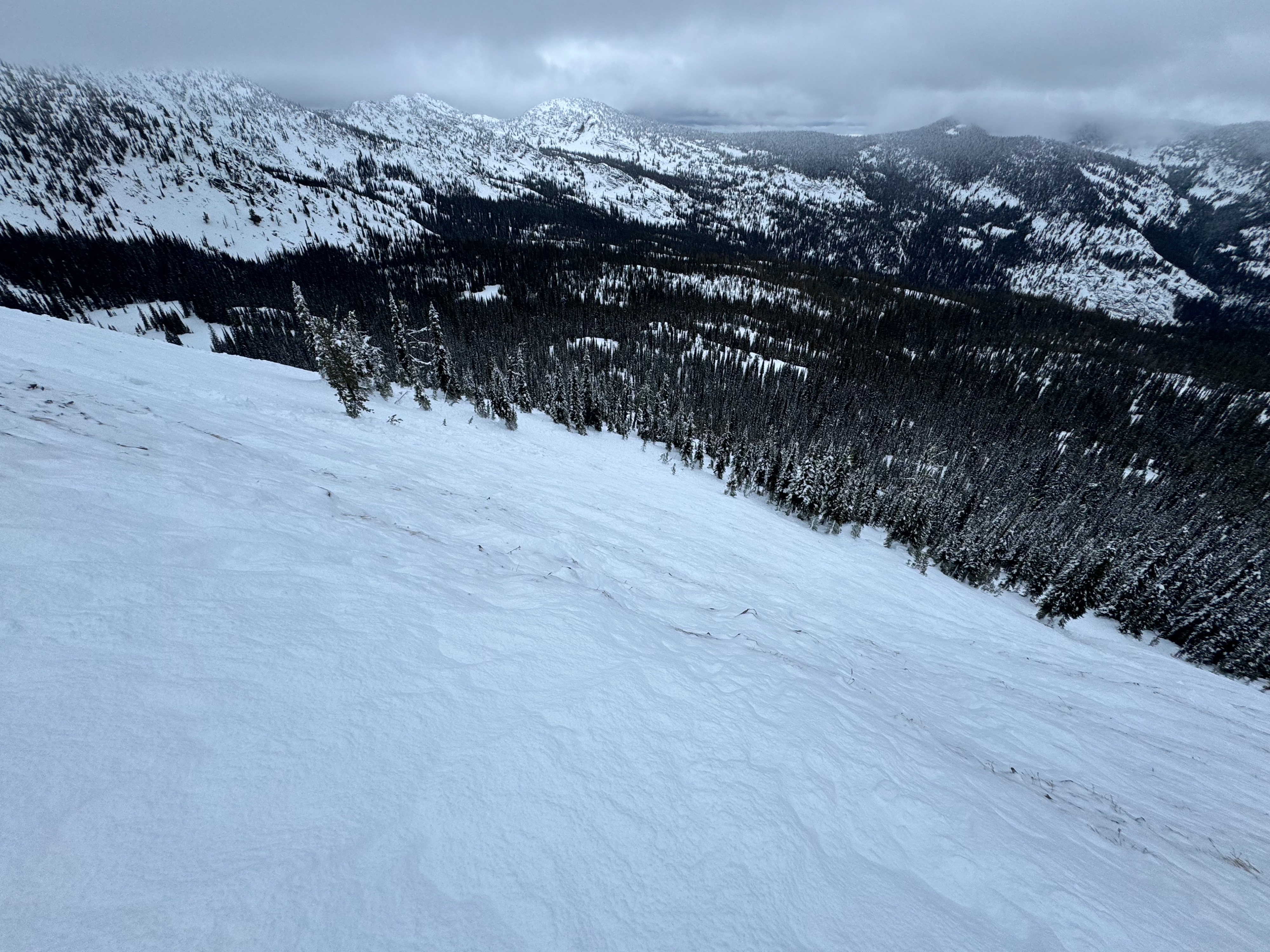
Our party toured from Point 6 into upper Grant Creek with hopes of low angle powder skiing. Avalanche danger and problems were well known, with a primary goal of mitigating the persistent and basal weaknesses through terrain management. The weather was much warmer than expected, with trees dripping wet and shedding all snow along the valley floor. Ridge tops were at or near freezing and winds were near still. Ski quality was surfy cream. While touring through low angle terrain we found isolated collapsing, confirming the known snowpack issues. With the rapidly warming conditions, the remainder of the planned tour was abandoned and I tried to set a low angle track towards home and out of the basin up to Point 6's east ridge. This is terrain I know extremely well (20 years) and I felt confident in my ability to safely travel through the zone, even with the elevated hazard. The slope at is mostly 25-30 degrees, with a single band convexly rolling to 35. To the North of our track location, Three Tiers is a bigger, more complex slope with a prominent cliff band. We avoided this slope by traversing south low through the trees to stay out from under this connected slope. The goal was to continue to do so until a 30 degree slope could be ascended. We should have continued farther, but I made a mistake and misperceived the slope angle. And, of course, "perception is something that happens to humans and not avalanches." We were lucky. My takeaway: This has been a historically poor winter for snow and as a result, our avalanche problem appears also historic in nature. Vast and pervasive faceting both in mid and base layers of the snowpack led to the propagation on a scale I had not seen previously in the Rattlesnake. This was a hueristic trap that likely contributed to my mistake in judgment in relation to the slope angle.
Avalanche
- Size
- D2.5
- Aspect
- E
- Trigger
- AS
- Elevation
- 7500 ft
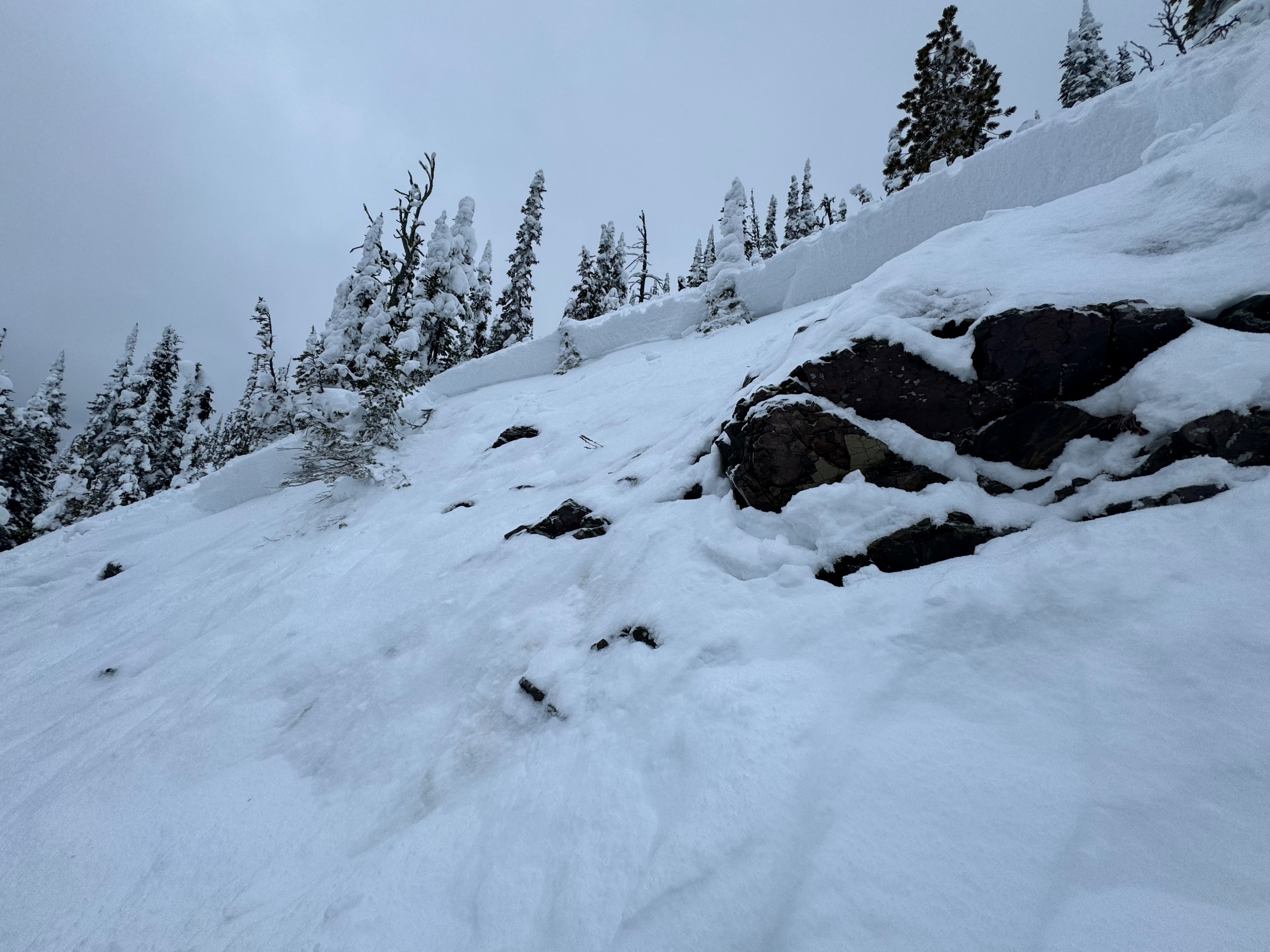
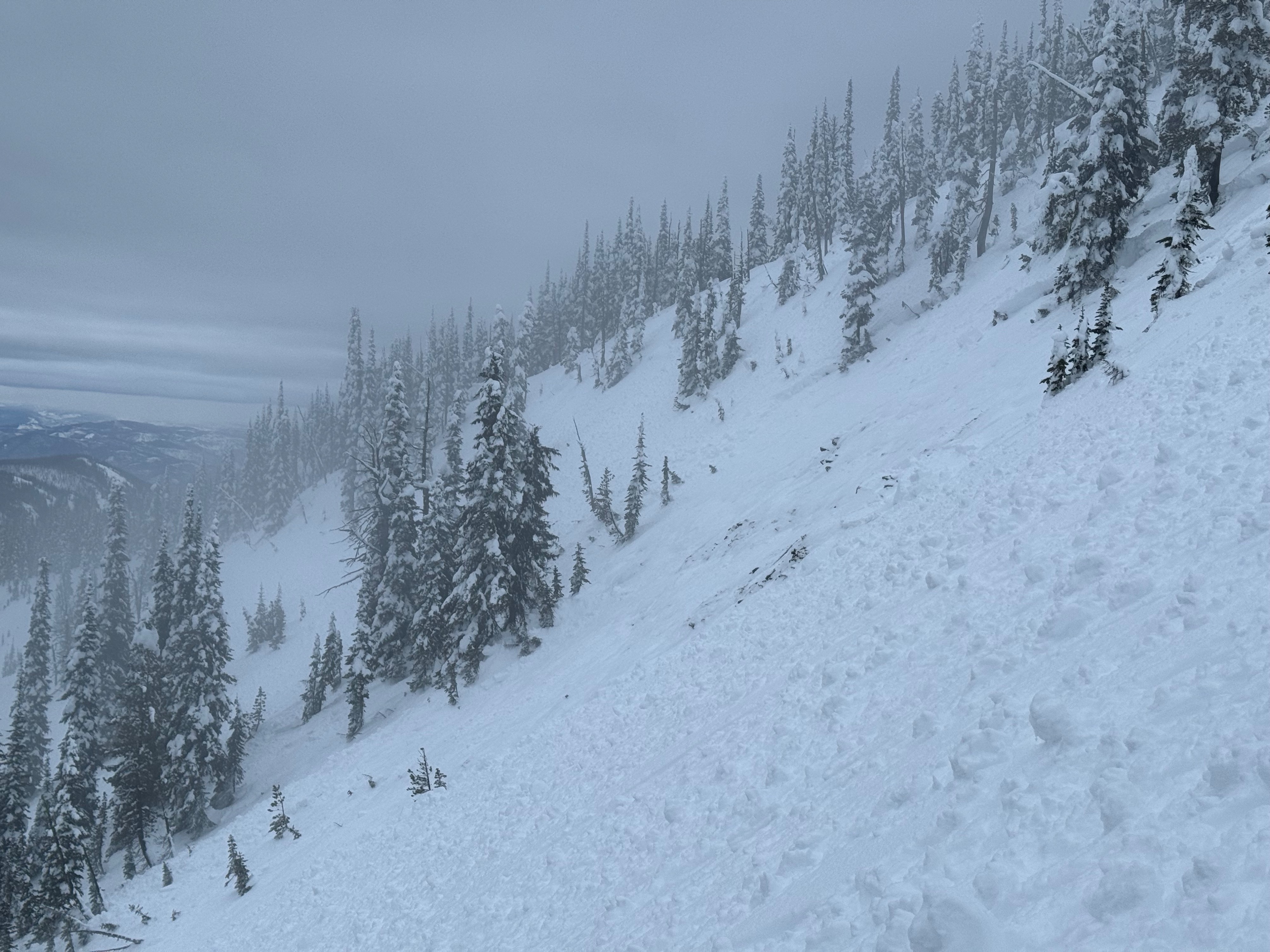
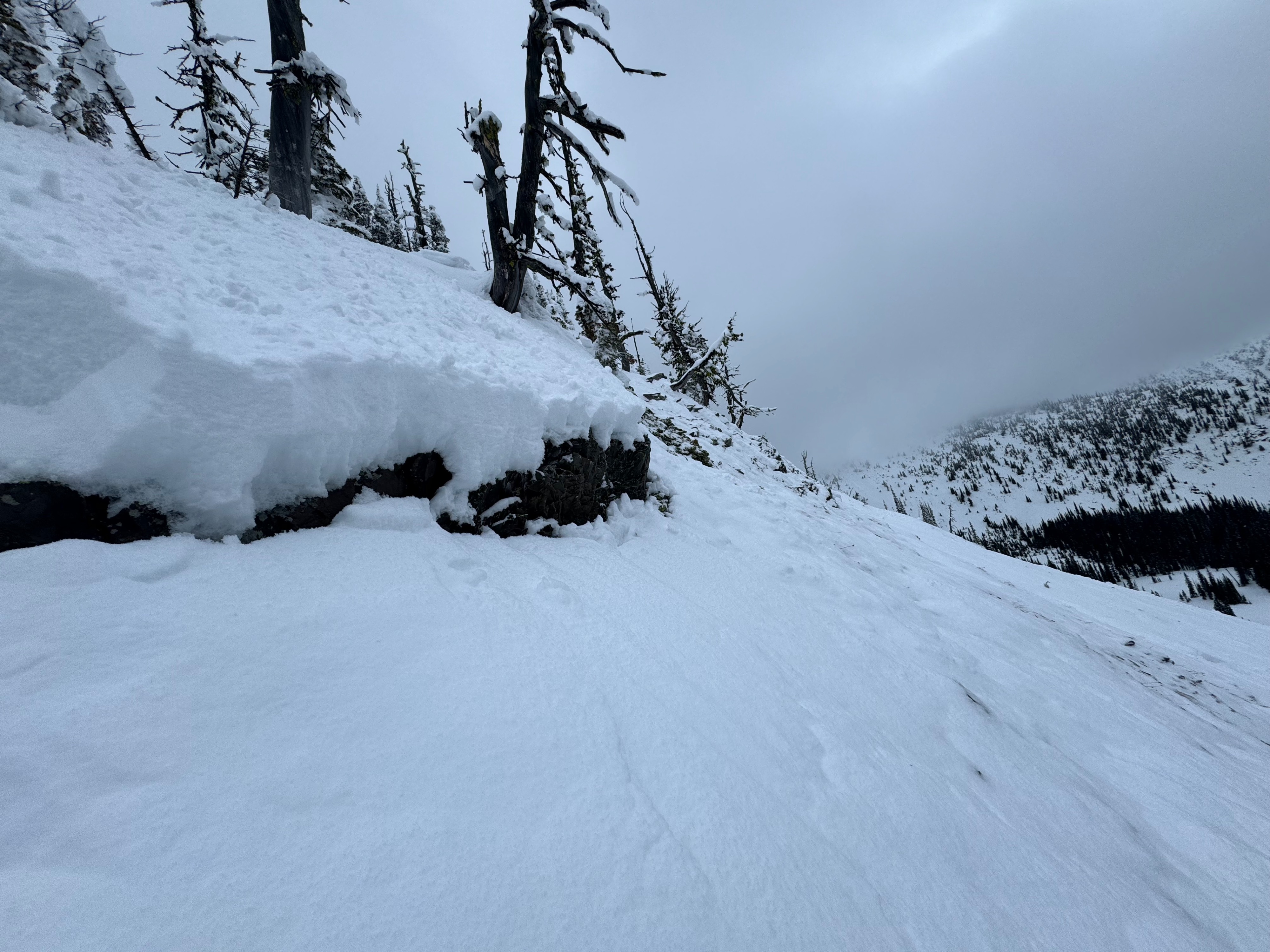
While setting a low traversing track to the east ridge of Point 6, our group remotely triggered a large D2.5/R4 avalanche from a micro-ridge feature in the middle of the east facing slope. Elevation approximately 7500'. From my ski, the slope collapsed 50 feet in front of me and propagated at least 500' following the contour. This wave of energy then remotely triggered the slope behind us (approximately 5 seconds later), propagating another 500' to the north across the main portion of the Three Tiers slide path. The only thing left standing was the sub-ridge we were ascending. No one was caught. The crown profile was 2-3 feet deep and broke on a layer of facets sitting above the crust formed prior to the last storm cycle (week of January 1-5).