
Quick report
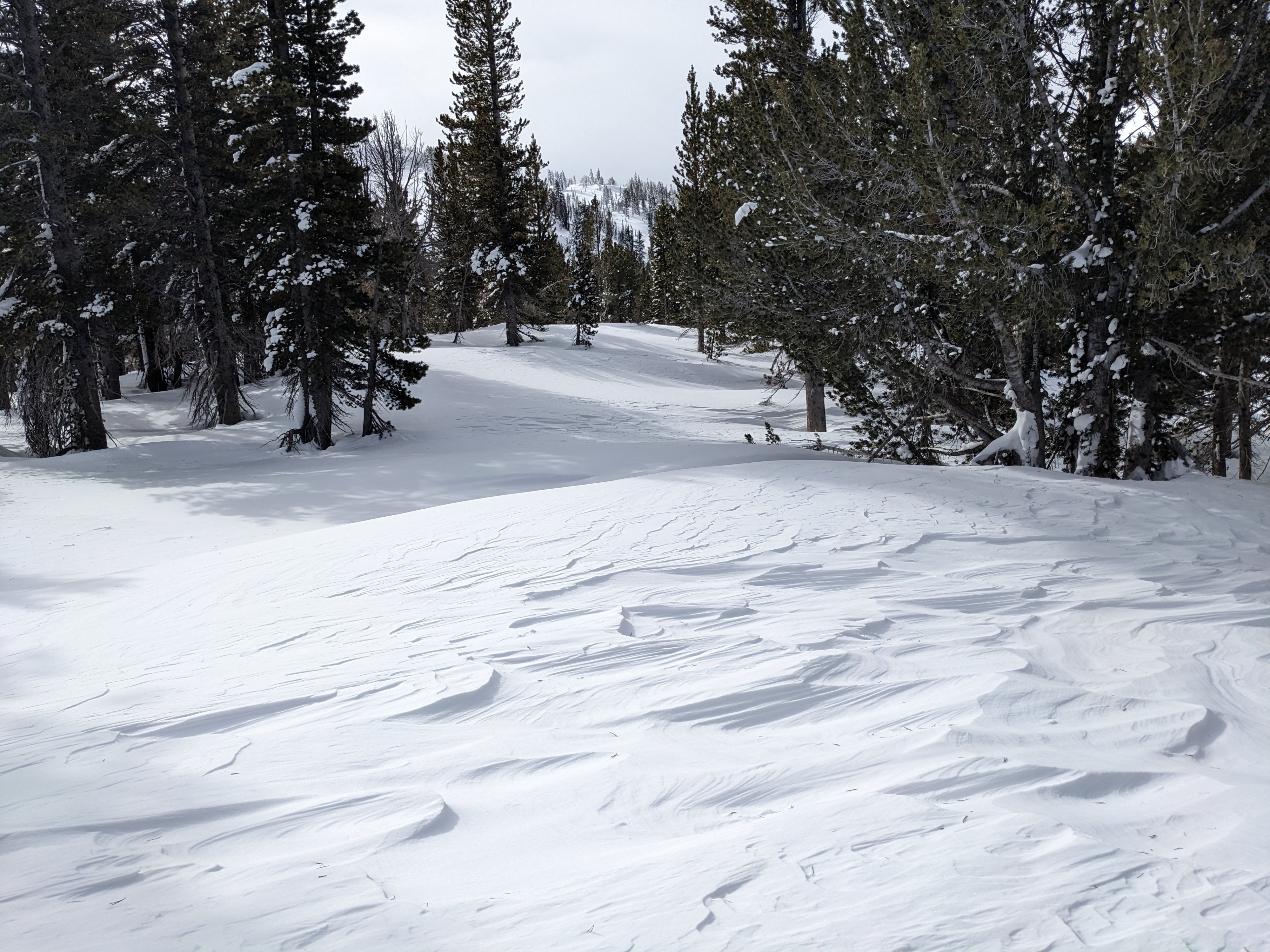
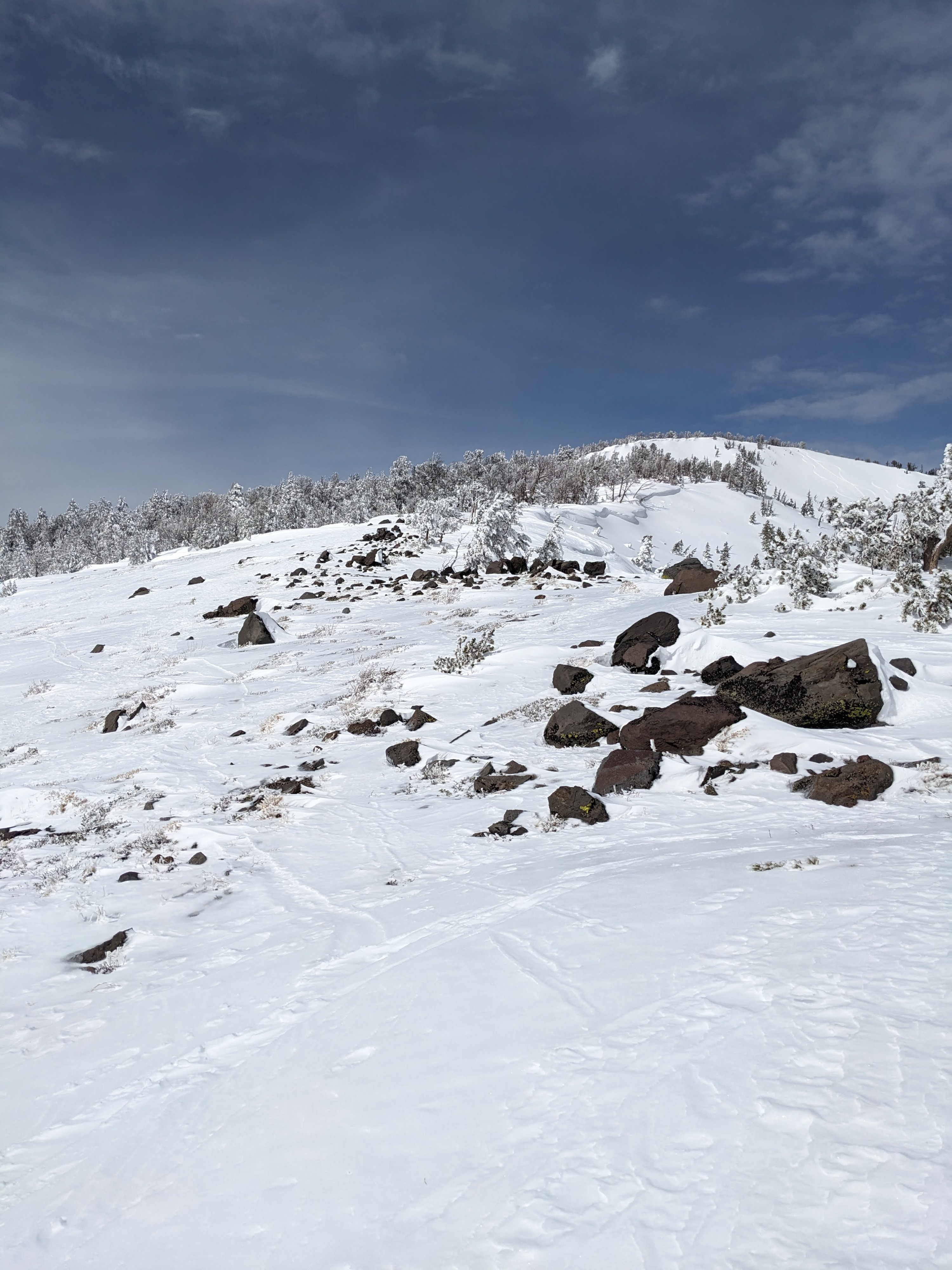
With the Mt. Rose Highway open for the first day since the storm, we toured the Tamarack Peak zone. We saw widespread evidence of the storm's extreme and prolonged winds, with wind-affected snow even in places that normally remain sheltered. These winds had scoured some windward aspects to old crusts or even bare ground. As expected, we observed wind slabs at all elevations and on all aspects (N, NE, E) we toured, but they were unreactive in our informal and formal tests. We saw almost no evidence of previous avalanches, but some of that may be due to additional new snow and wind-blown snow covering up avalanches that may have happened during the storm. The nice, warm, sunny, and calm day helped the storm snow continue to settle. Ski quality ranged from good, supportable wind-stiffened surfaces to punchy, with a few truly soft turns in the odd totally sheltered spot.
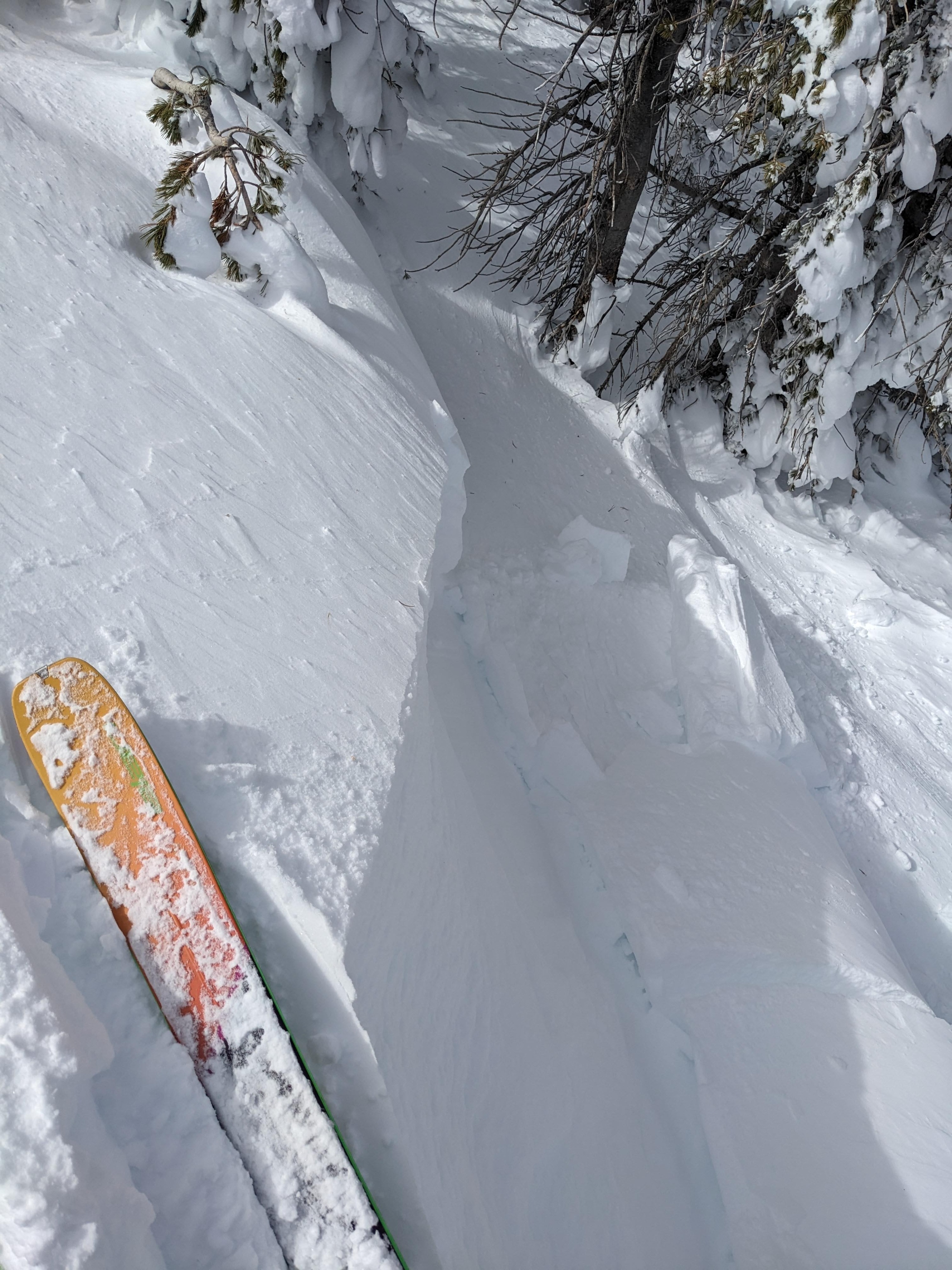
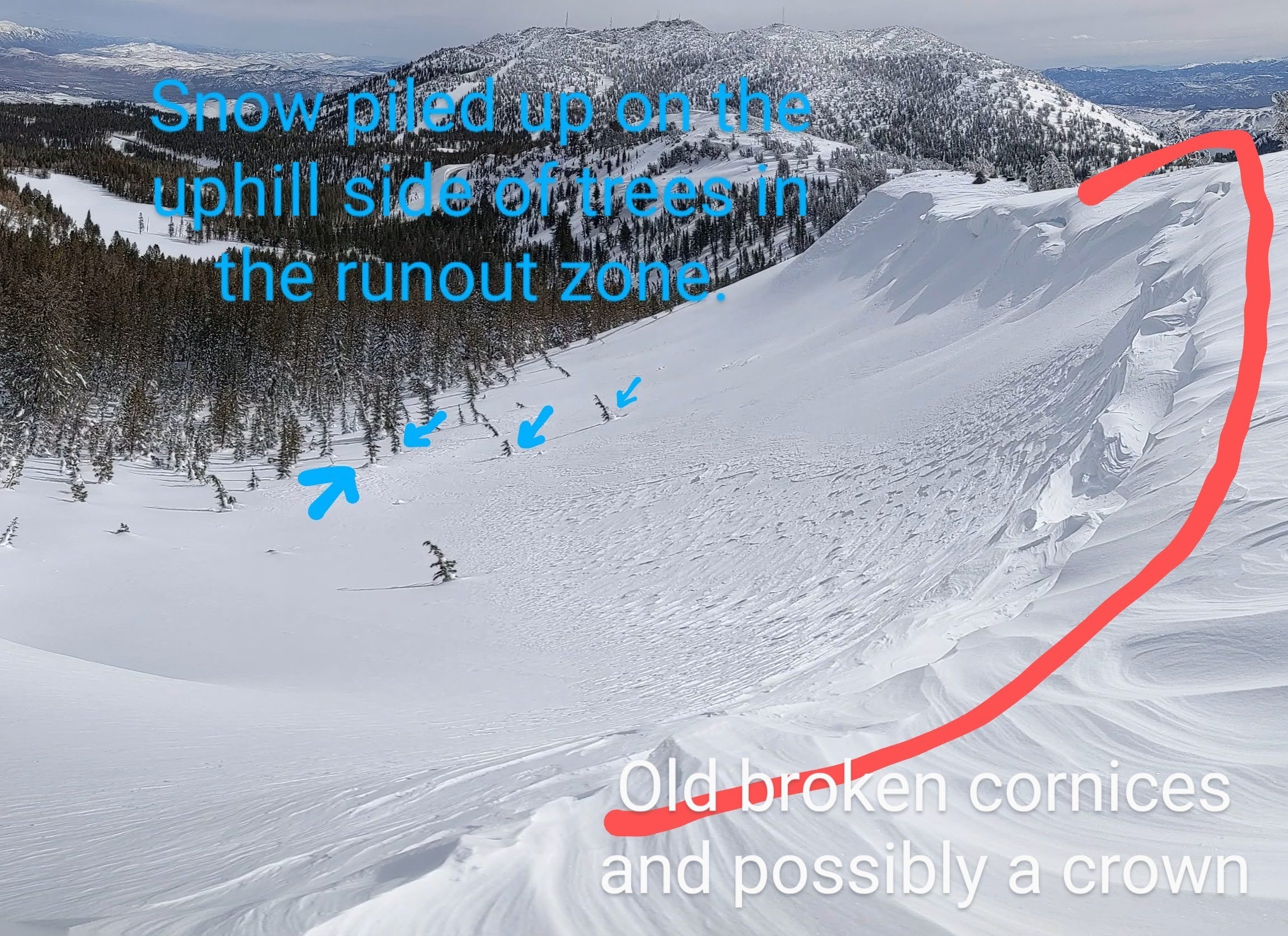
We saw evidence of previous cornice collapses and what looked like one old avalanche, described below. We kicked numerous small cornices and wind-loaded test slopes. The small cornices yielded stubborn breaks, and we avoided the larger cornices. No cracking or failures occurred on any of the wind-loaded test slopes. We saw no evidence of wet, loose instabilities despite the intense March sunshine.Weather
- Air Temp
- 28 to 31° F
- Cloud Cover
- few
- Wind Loading
- previous
- Recent Snowfall
- HN24 0 to trace
- Snow Avail For Transport
- small smounts
Nice day! Skies cleared earlier than forecasted, and mostly sunny skies made it feel warm. Still, we saw no evidence of wet loose instabilities. Light winds died by 10:30, and it then remained calm.
Snowpack
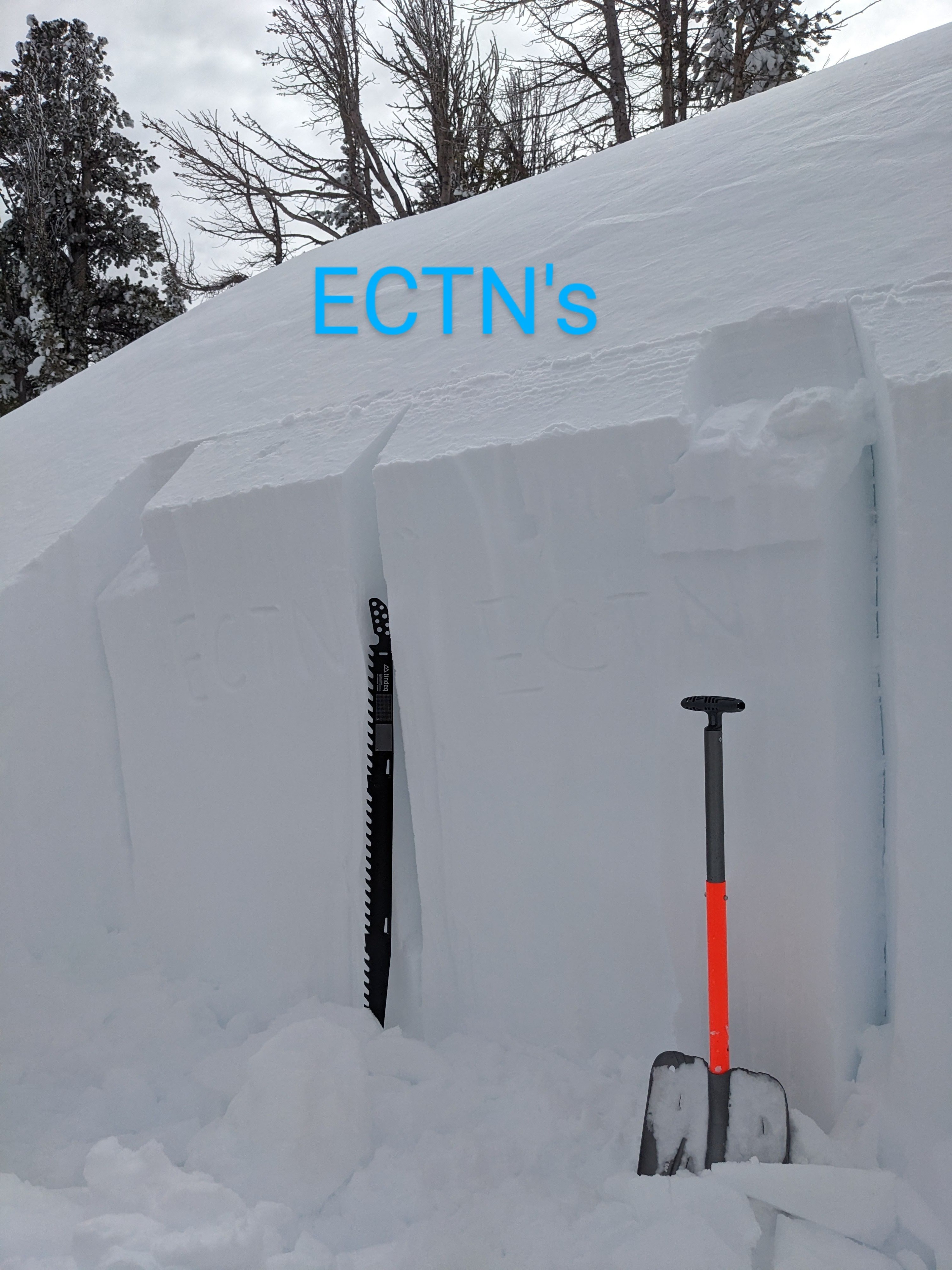
We dug a pit on a wind-loaded N aspect at 9400'; the height of snow there was about 400cm. We performed a series of Extended Column Tests. Results were ECTP 30, where a more dense wind slab broke away from a slightly less dense layer about ~50cm below the surface. Three more ECTs in the same location did not show propagation (ECTX, ECTN x 2). See photos below. The storm snow seemed relatively uniform from probing and a few hand pits during our tour. We also observed continued substantial settlement of the storm snow. By the end of our tour, the surface snow was moist in sun-exposed areas.
Avalanche
We saw faint signs of a natural wind slab avalanche, size D 1.5-2, on a NE aspect at about 9300 ft. It appeared to have been triggered by a cornice collapse sometime during the storm. The start zone, track, and deposit were nearly fully filled in/covered with additional storm and wind-transported snow.