
Quick report
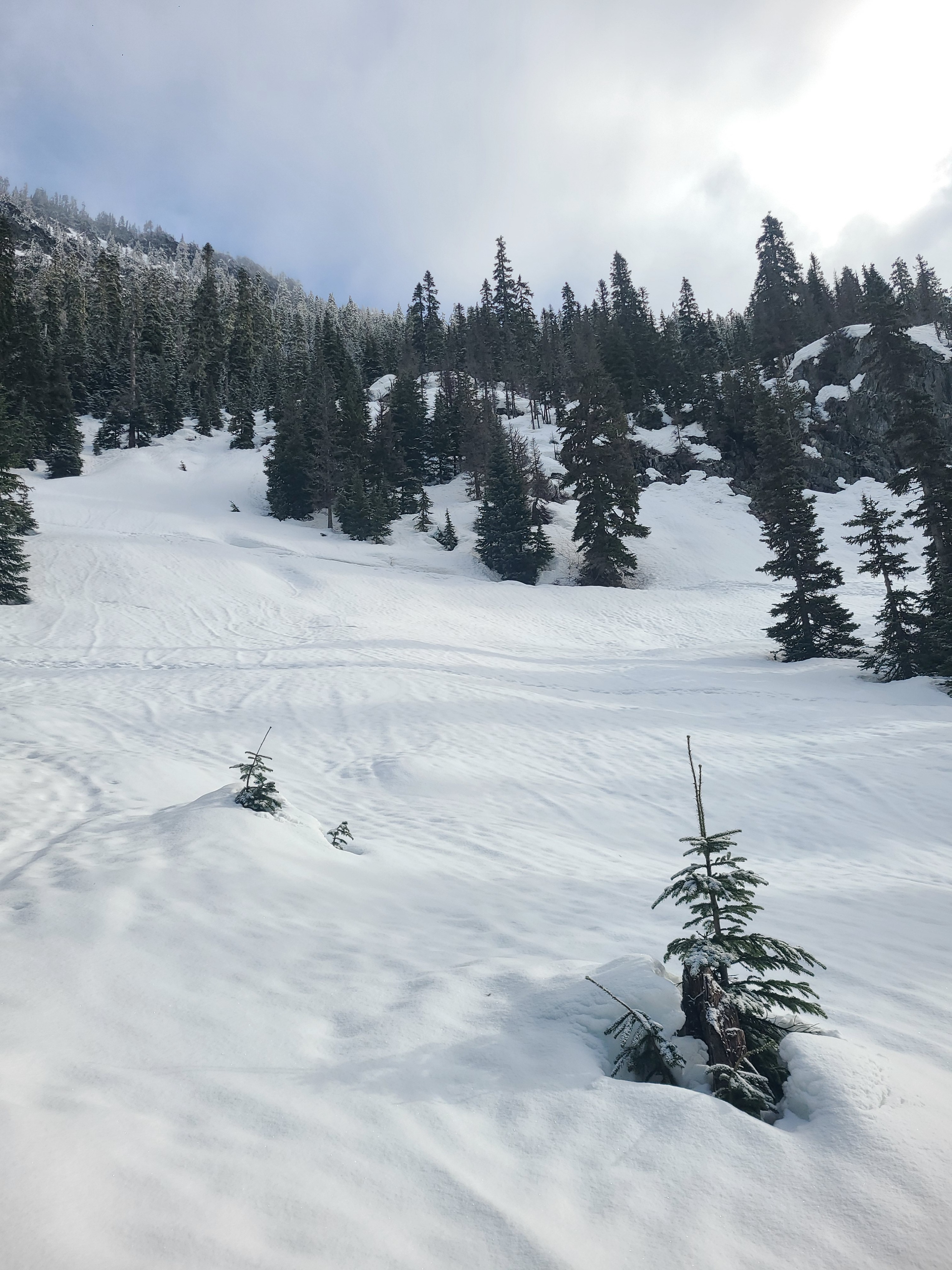
Payton and I enjoyed a spring day at Snoqualmie Pass, a zone neither of us gets to visit much in the winter. It was partly cloudy and classically spring, hot in the sun and cold in the shade. The cooler ambient temperatures and breezy conditions likely helped to reduce the wet loose avalanche hazard. But even so, the fresh snow was readily producing rollerballs, and the snowpack is still moist and punchy in some locations.
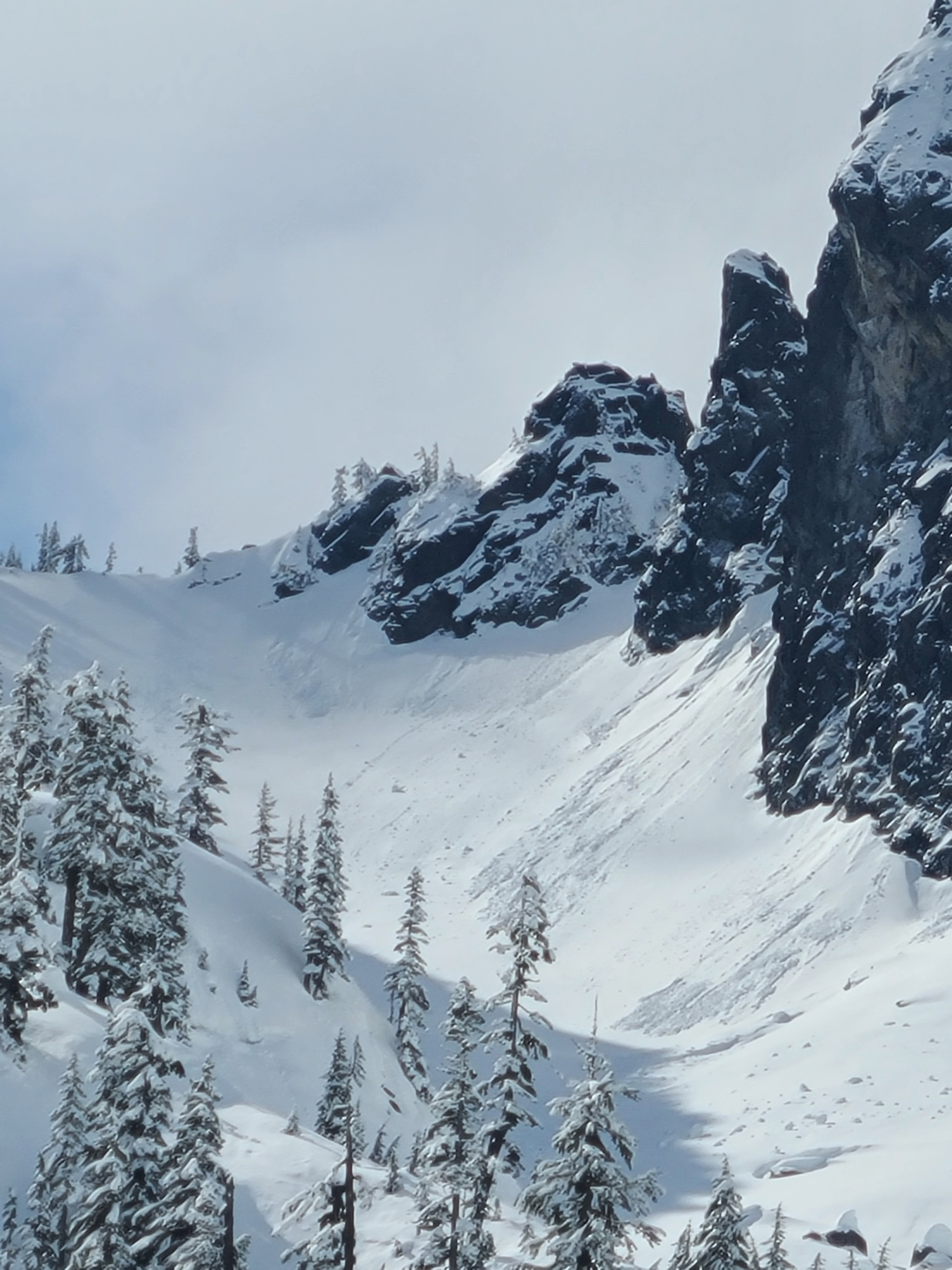
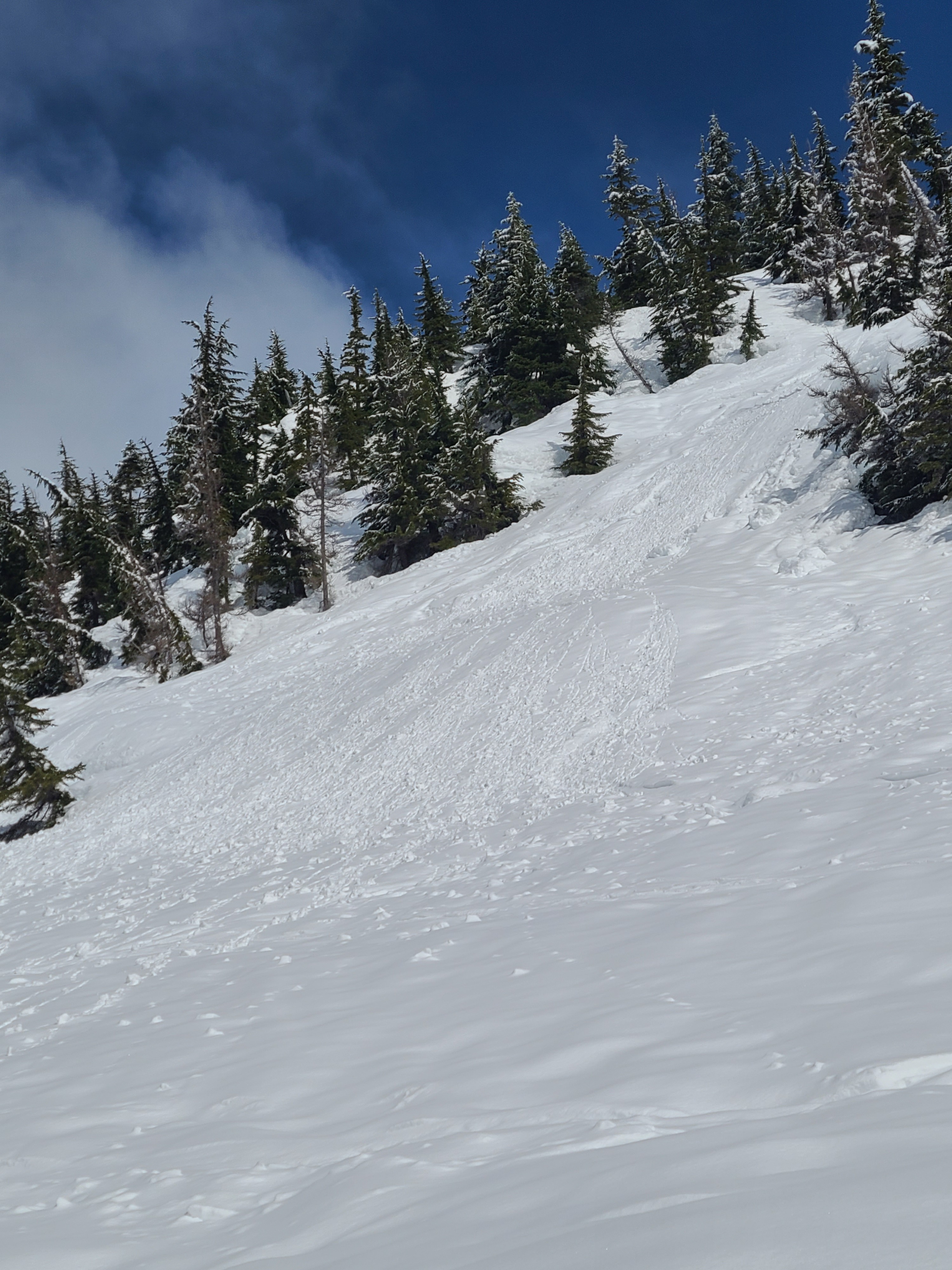
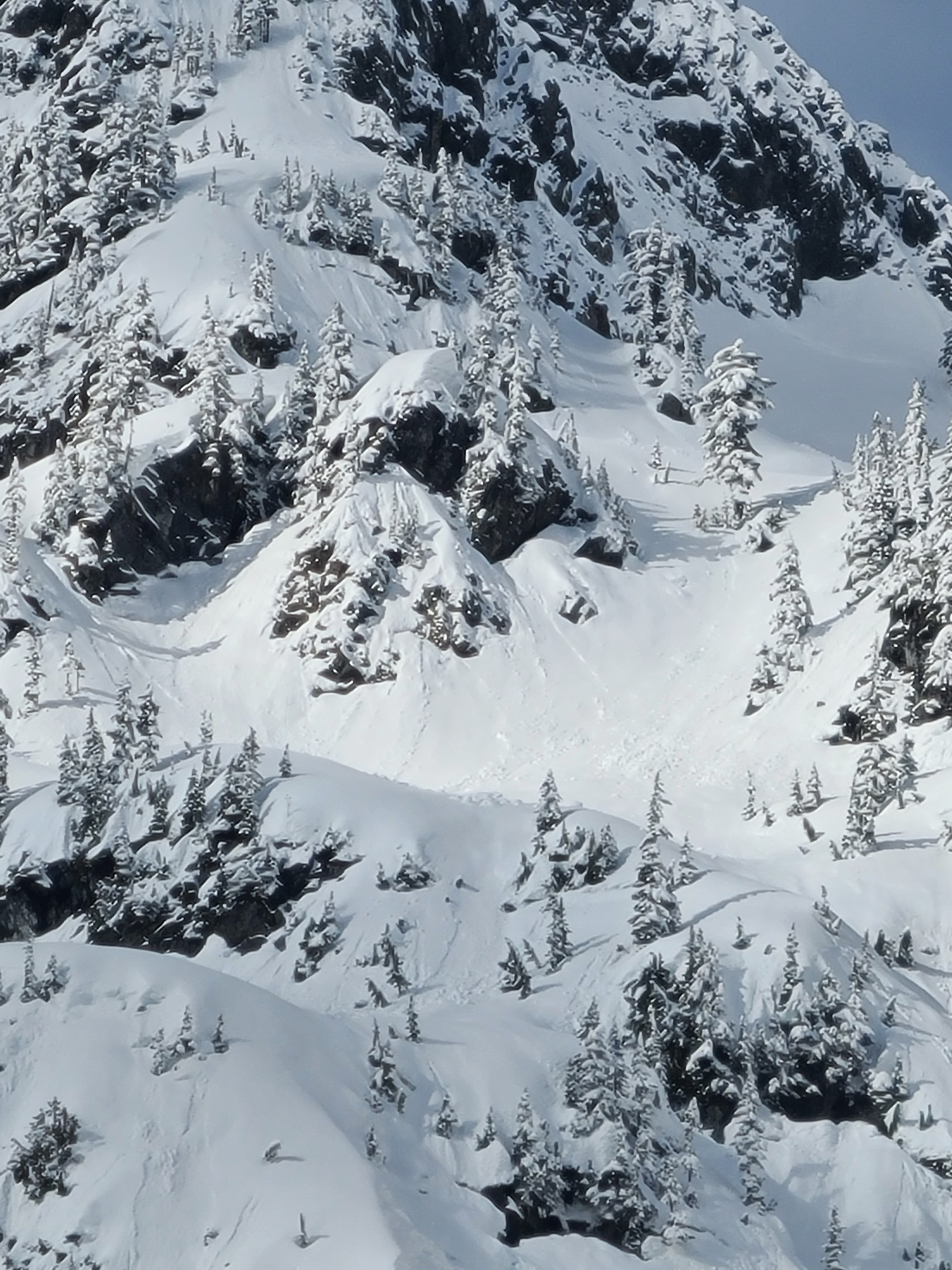
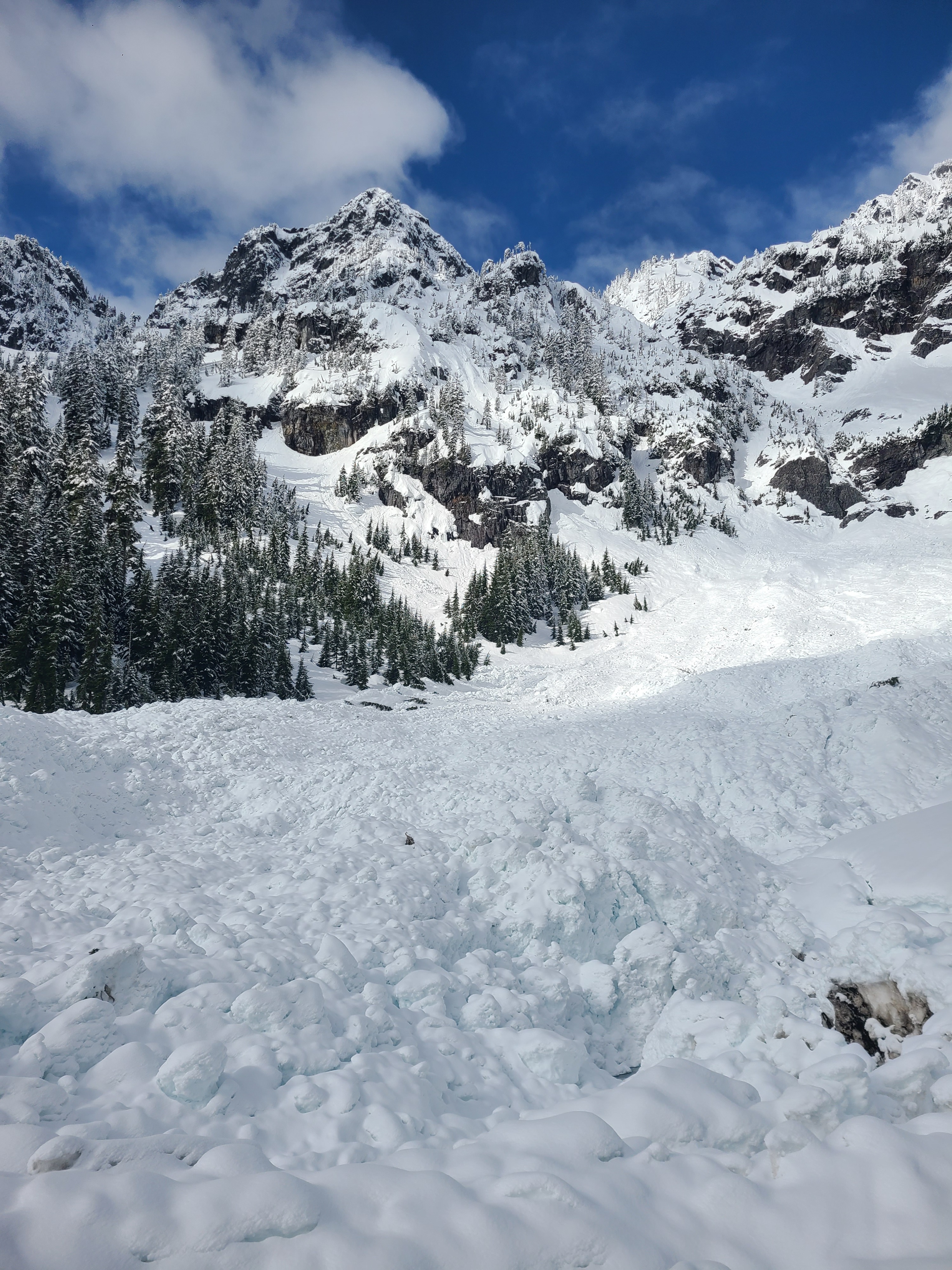
There are many debris piles from the rain-on-snow event late last week and over the weekend. This wet avalanche debris includes all shapes, sizes, ages, and types of wet avalanches, from very large wet slabs to smaller and more recent wet loose slides.
Rollerballs involving the surface snow were the only signs of instability today. Recent snow depths at these elevations was shallow, so where we traveled wet loose avalanches were less of a concern.Weather
- Cloud Cover
- scattered
- Recent Snowfall
- 6cm
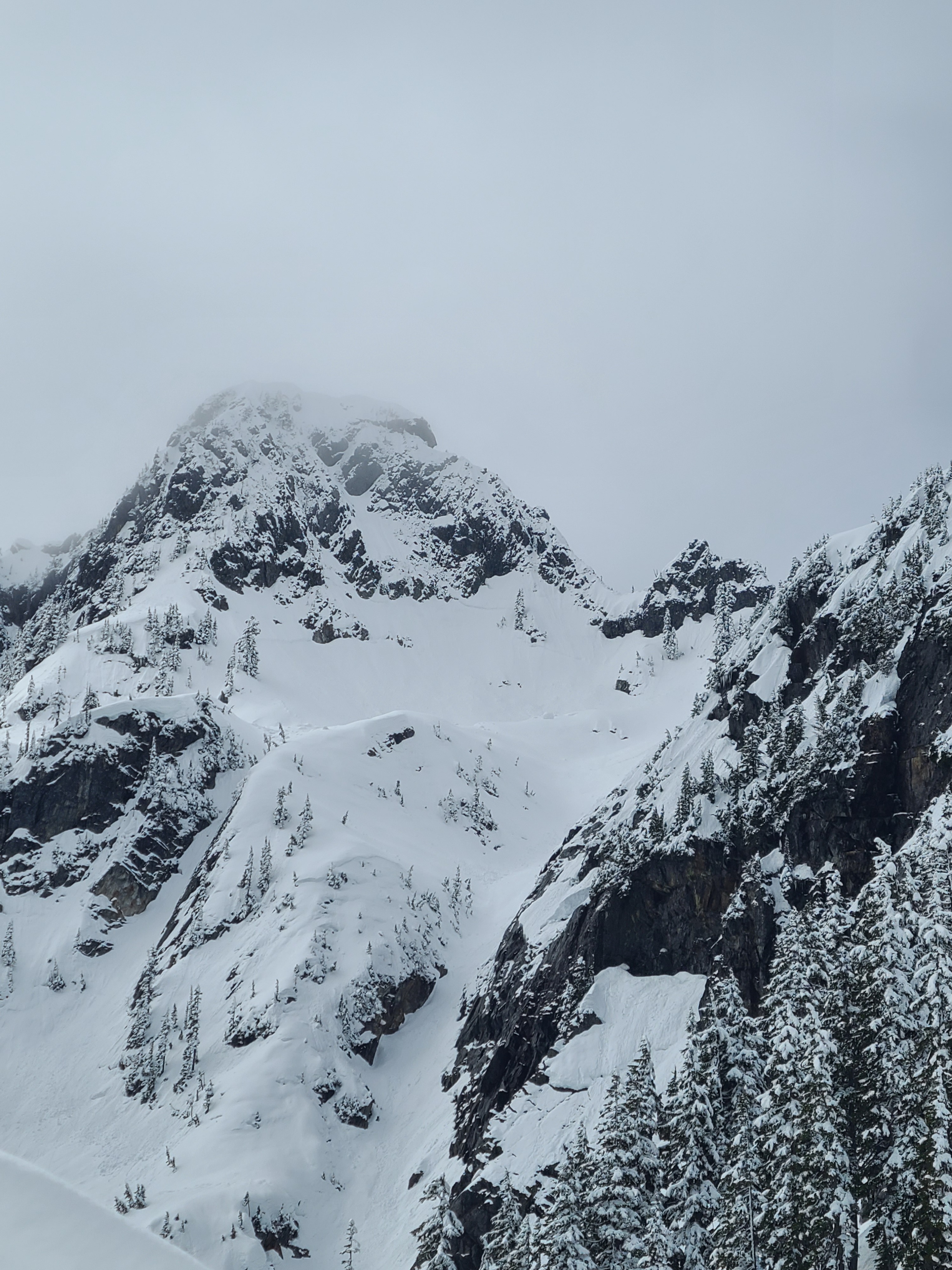
It was a moody spring day that felt hot when the sun was out and chilly when clouds moved through. The higher elevation peaks of Byrant and Chair stayed mostly in the clouds throughout the morning. Winds were moderate from the west, and looked stronger near ridgelines.
Snowpack
Snow Surface Summary: The surfaces were mostly soft and moist but supportable to skis. The boot pen ranged from 25-30cm in open areas and deeper in some places under the forest canopy. There is a lot of avalanche debris to navigate above Source Lake, but due to the warm temperatures, the debris piles were soft. Despite the wind and recent snow, we saw no actively blowing snow or recent wind slabs.
Snowpack Summary: We dug a profile on a SE aspect at 4300ft. The top 17cm of the snowpack is all recent snow that is wet and soft, with a weak melt-freeze crust (4F) down 6cm. Below the recent snow, the upper snowpack is moist. We found two thin melt-freeze crusts buried 17cm (1F-hardness) and 81cm (K-hardness) deep. The snow between these crusts consists of large rounded polycrystals (melt-forms) that are generally 1F-P hard. Below the lower crust at 81cm the snowpack is still moist but well consolidated and stronger, P-hardness to 100cm. Snow stability tests produced a couple of small column, non-planar results.
Total Height of Snow: 360cm
Snowpack Test Results: CT13 RP ↓16, CT17 SC ↓19cm, ECTN23 ↓19cm,
Avalanche
- Size
- D2.5
- Type
- WS
- Aspect
- N
- Trigger
- N
- Elevation
- 5600 ft
Lots of wet avalanches of various types and sizes in the Alpental Valley. Larger wet slabs and wet loose avalanches were older. The more recent wet loose avalanches were small.